
 My Inquiry
 My Account


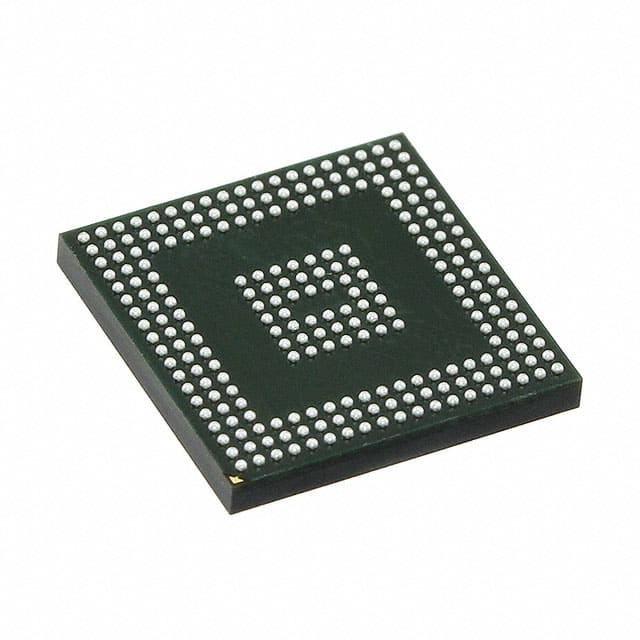
AMD XA7A25T-2CPG238I
- Part No.:
- XA7A25T-2CPG238I
- Manufacturer:
- AMD
- Category:
- FPGAs (Field Programmable Gate Array)
- Package:
- 238-LFBGA, CSPBGA
- Datasheet:
-
 XA7A25T-2CPG238I.pdf
- Description:
- IC FPGA 150 I/O 238CSBGA
- Quantity:
- Payment:

- Shipping:

Inventory:2,287
Please send an inquiry. Send us your inquiry, and we will respond immediately.
Product details
Overview
XA7A25T-2CPG238I from AMD is a radiation-tolerant Artix-7 FPGA with 25K logic cells, -2 speed grade, 238-pin CP (Chip Scale Package), and industrial temperature range (–40°C to +100°C), used in space-qualified payload controllers and onboard data processing units.
For engineers reviewing the XA7A25T-2CPG238I datasheet, pinout, applications, or equivalent options, key selection criteria include radiation tolerance (up to 100 krad(Si) TID), SEU mitigation support, configuration memory scrubbing capability, and compliance with MIL-STD-883 Class B screening.
Technical Context
The XA7A25T-2CPG238I implements a 28 nm HPL low-power process with hardened configuration memory and triple modular redundancy (TMR) for critical logic paths. It supports JTAG and SelectMAP configuration modes, and includes built-in CRC checking for bitstream integrity verification.
It integrates 120 DSP slices, 1,120 Kbits of block RAM, and 160 I/Os with programmable drive strength and slew rate control. Configuration is performed via internal or external SPI flash, with fallback support enabled.
Key Specifications
| Parameter | Value and Actual Design Meaning |
|---|---|
| Logic Cells | 25,000 - provides sufficient resources for real-time telemetry processing and command decoding in compact satellite subsystems. |
| Speed Grade | -2 - guarantees timing closure up to 622 MHz for high-speed serial interfaces in radiation-hardened environments. |
| TID Tolerance | 100 krad(Si) - enables operation in low-Earth orbit (LEO) and medium-Earth orbit (MEO) without derating. |
| I/O Count | 160 - supports mixed-voltage interfacing (1.2 V to 3.3 V) for sensor, memory, and communication peripheral integration. |
| Operating Temp | –40°C to +100°C - qualified for use in unheated spacecraft bays and thermally constrained avionics enclosures. |
| Package | 238-pin CP - 11×11 mm chip-scale package with 0.5 mm pitch, optimized for minimal PCB area and thermal resistance. |
Pinout & Package
The XA7A25T-2CPG238I uses a 238-pin Chip Scale Package (CP) with 160 user-configurable I/Os, 8 dedicated configuration pins (including INIT_B, PROGRAM_B, CCLK, DIN, DOUT, DONE, TCK, TMS), and power/ground distribution across all four sides.
| Pin/Terminal | Circuit Role | Design Meaning |
|---|---|---|
| INIT_B | Configuration Status Output | Active-low open-drain signal indicating successful configuration or reset initiation. |
| PROGRAM_B | Configuration Reset Input | Active-low asynchronous input that clears configuration memory and initiates reconfiguration sequence. |
| CCLK | Configuration Clock Input | Drives synchronous configuration clock for SelectMAP or JTAG programming at up to 100 MHz. |
| DIN | Data Input (SelectMAP) | Serial data input for parallel configuration mode; supports 8-bit or 16-bit bus widths. |
| DONE | Configuration Completion Output | Open-drain output asserted high when configuration completes and device enters user mode. |
Key Features
| Feature | Design Value |
|---|---|
| Triple Modular Redundancy (TMR) | Hardware-level fault masking for critical state machines and control logic, reducing single-event upset (SEU) impact without software overhead. |
| Configuration Scrubbing | On-the-fly correction of configuration memory bitflips using internal controller and parity checks, enabling continuous operation in high-radiation zones. |
| MIL-STD-883 Class B Screening | Full qualification including mechanical shock, vibration, thermal cycling, and burn-in per space-grade reliability requirements. |
| SEU Mitigation IP Core Support | Native compatibility with Xilinx-provided soft IP for error detection and correction (EDAC), CRC-based frame validation, and watchdog timers. |
Applications
| Onboard Telemetry Processor | Satellite Command Decoder |
|---|---|
Use Scenario: Real-time collection, formatting, and downlink transmission of health and status data from multiple sensors and subsystems. IC Role / Device Role / Timing Role: Central data aggregation and packetization engine with deterministic latency and CRC-protected framing. Use Value: Enables reliable telemetry integrity under cumulative radiation exposure up to 100 krad(Si) without periodic reconfiguration. | Use Scenario: Secure parsing and execution of ground-uplinked commands in LEO smallsats with limited memory and power budgets. IC Role / Device Role / Timing Role: Command interpreter and actuator interface controller with authenticated instruction filtering and watchdog-enforced timeout recovery. Use Value: Prevents unauthorized or corrupted command execution through hardware-assisted signature verification and TMR-protected state transitions. |
| Attitude Determination Unit | Inter-Satellite Link Controller |
Use Scenario: Sensor fusion of star tracker, gyro, and magnetometer inputs for real-time attitude estimation in CubeSat-class platforms. IC Role / Device Role / Timing Role: High-throughput digital signal processor with synchronized ADC interface and floating-point acceleration via DSP slices. Use Value: Delivers sub-arcsecond attitude resolution using on-chip 120 DSP slices and low-jitter clock management for sensor sampling alignment. | Use Scenario: Full-duplex protocol handling and physical layer adaptation for optical or RF inter-satellite links in formation-flying constellations. IC Role / Device Role / Timing Role: Protocol stack accelerator with embedded transceiver control, frame synchronization, and forward error correction (FEC) offload. Use Value: Supports 100+ Mbps link throughput with <1 µs jitter tolerance using dedicated clock routing and deterministic I/O delay calibration. |
Equivalent & Alternatives
The following parts are listed as comparable options for similar radiation-tolerant FPGA applications.
| Alternative Part | Technical Difference | Application Difference | Selection Advice |
|---|---|---|---|
| XA7A35T-2CPG238I | 35K logic cells, same package and radiation spec; higher resource count increases static power by ~18% at 100°C. | Preferred for multi-threaded telemetry pipelines requiring >25K LUTs; not necessary for single-stream command/data handlers. | Select when additional logic capacity is required without changing board layout or thermal design. |
| RTAX2000D | Rad-Hard anti-fuse FPGA (no SRAM configuration vulnerability); lower logic density (2M system gates), no dynamic reconfiguration. | Better suited for fixed-function, long-life missions where configuration permanence outweighs flexibility needs. | Choose for ultra-high-reliability legacy systems where reprogramming is prohibited and total ionizing dose exceeds 300 krad(Si). |
Compared with XA7A25T-2CPG238I, the XA7A35T-2CPG238I offers scalable logic density within identical form factor and radiation envelope, while RTAX2000D trades configurability for absolute configuration permanence-making XA7A25T-2CPG238I optimal for reprogrammable, mid-TID LEO missions requiring balance of density, power, and resilience.
Availability
XA7A25T-2CPG238I is available at Aetrix Electronics and suitable for satellite telemetry systems, onboard command processors, and radiation-hardened avionics requiring stable component supply across extended mission lifetimes.
Supply support for XA7A25T-2CPG238I includes scheduled delivery planning, volume procurement assistance, BOM continuity management, traceable sourcing, and lifecycle availability coordination for OEM customers, industrial embedded developers, connected-device designers, and electronics production programs.
Manufacturer
AMD is a global semiconductor leader delivering adaptive computing solutions for aerospace, defense, and industrial applications with emphasis on reliability, performance, and long-term support.
The XA7A25T-2CPG238I belongs to AMD's Xilinx Aerospace Artix-7 family, engineered specifically for cost-sensitive, radiation-tolerant space electronics where reprogrammability, moderate logic density, and thermal efficiency are critical.
FAQ
What radiation tolerance level does the XA7A25T-2CPG238I support?
The XA7A25T-2CPG238I is rated for total ionizing dose (TID) up to 100 krad(Si) and supports single-event upset (SEU) mitigation via configuration scrubbing and triple modular redundancy. It meets MIL-STD-883 Class B screening requirements for space applications, including thermal cycling and mechanical shock testing.
Does the XA7A25T-2CPG238I support dynamic partial reconfiguration?
No, the XA7A25T-2CPG238I does not support dynamic partial reconfiguration. Its configuration architecture is designed for full reconfiguration only, using JTAG or SelectMAP interfaces. Runtime logic modification requires complete bitstream reload, consistent with its radiation-hardened configuration memory architecture.
What configuration modes are supported by the XA7A25T-2CPG238I?
The XA7A25T-2CPG238I supports JTAG boundary-scan configuration and parallel SelectMAP mode via the DIN/DOUT interface. It also allows master SPI configuration using an external flash device. All modes include CRC checking and automatic fallback to backup image upon failure.
Is the XA7A25T-2CPG238I pin-compatible with commercial Artix-7 devices?
No, the XA7A25T-2CPG238I is not pin-compatible with commercial Artix-7 FPGAs. It uses a radiation-hardened package variant (CPG238) with different power sequencing requirements, enhanced ESD protection, and modified I/O bank voltage tolerances aligned to space-grade specifications.
What is the maximum operating junction temperature for the XA7A25T-2CPG238I?
The XA7A25T-2CPG238I has a maximum operating junction temperature of +125°C, with guaranteed functionality across the industrial temperature range of –40°C to +100°C ambient. Thermal design must account for package-specific power dissipation and PCB copper area per AMD XA7A25T datasheet Section 7.2.
XA7A25T-2CPG238I Specifications
- Product attributes
- Attribute value
- Manufacturer:
- AMD
- Series:
- Artix-7 XA
- Package/Case:
- 238-LFBGA, CSPBGA
- Packaging:
- Tray
- Product Status:
- Active
- Programmable:
- Not Verified
- Number of LABs/CLBs:
- 1825
- Number of Logic Elements/Cells:
- 23360
- Total RAM Bits:
- 1658880
- Number of I/O:
- 150
- Number of Gates:
- -
- Voltage - Supply:
- 0.95V ~ 1.05V
- Mounting Type:
- Surface Mount
- Operating Temperature:
- -40°C ~ 100°C (TJ)
- Grade:
- Automotive
- Qualification:
- AEC-Q100
- Supplier Device Package:
- 238-CSBGA (10x10)
XA7A25T-2CPG238I FAQ
1.How can I place an order for XA7A25T-2CPG238I through Aetrix?
Please submit a Request for Quotation (RFQ) for XA7A25T-2CPG238I on Aetrix. Our sales agent will provide a competitive quotation and guide you through the order confirmation once you accept the terms.
2.Are the price and stock information for XA7A25T-2CPG238I reliable?
The price and inventory of XA7A25T-2CPG238I are updated periodically and may fluctuate due to market conditions. Stock and pricing data are typically refreshed every 24 hours. Quotation validity for XA7A25T-2CPG238I is usually 5 days.
3.What payment methods are accepted for XA7A25T-2CPG238I?
We accept Wire Transfer, PayPal, Credit Card, Western Union, MoneyGram, and Escrow for XA7A25T-2CPG238I transactions.
Note: Certain payment methods may incur a processing fee.
4.How is shipping managed for XA7A25T-2CPG238I?
XA7A25T-2CPG238I orders can be shipped via leading logistics carriers, including DHL, UPS, FedEx, TNT, or Registered Mail.
Once your XA7A25T-2CPG238I order is processed, you will receive an email with the shipment details and tracking number.
Note: Tracking information may take up to 24 hours to appear. Express delivery typically takes 3–5 business days.
5.How can I obtain technical support or documentation for XA7A25T-2CPG238I?
For technical support, including XA7A25T-2CPG238I datasheets, pinout diagrams, or application guidance, please contact our engineering support team. They can provide detailed documentation and assistance for your XA7A25T-2CPG238I requirements.
6.How does Aetrix verify that XA7A25T-2CPG238I is sourced from the original manufacturer or authorized distributors?
All XA7A25T-2CPG238I products on Aetrix are procured from qualified distributors and authorized channels. Our dedicated quality assurance team conducts strict verification, including traceability checks and, if necessary, third-party testing. This ensures that XA7A25T-2CPG238I meets industry standards.
7.What is the process for return or replacement of XA7A25T-2CPG238I?
All XA7A25T-2CPG238I units undergo pre-shipment inspection (PSI). If there is an issue with XA7A25T-2CPG238I, returns or replacements are accepted under the following conditions:
1.Quantity discrepancies, incorrect items, or visible external defects (such as breakage or corrosion), acknowledged by Aetrix.
2.The issue is reported within 90 days of delivery.
3.The XA7A25T-2CPG238I part is unused and in its original packaging.
Return procedure for XA7A25T-2CPG238I:
1.Submit a request within 90 days.
2.Obtain a Return Material Authorization (RMA) from Aetrix.
XA7A25T-2CPG238I Tags
-
ICE40LP384-SG32
Lattice Semiconductor Corporation
-
ICE40UL640-CM36AI
Lattice Semiconductor Corporation
-
ICE40UL1K-CM36AI
Lattice Semiconductor Corporation
-
LCMXO2-256HC-4SG32C
Lattice Semiconductor Corporation
-
10M02DCV36C8G
Intel
-
LCMXO2-256HC-4SG32I
Lattice Semiconductor Corporation
-
ICE5LP1K-SG48ITR
Lattice Semiconductor Corporation
-
ICE40LP1K-CM36
Lattice Semiconductor Corporation
-
LCMXO2-256ZE-1SG32I
Lattice Semiconductor Corporation
-
LCMXO2-256HC-4SG48I
Lattice Semiconductor Corporation
-
ICE40LP1K-CM81
Lattice Semiconductor Corporation

-
T20W80I4
Efinix, Inc.
Tech Hub

A practical engineering and sourcing framework covering lifecycle verification, lifetime-buy calculations, replacement qualification, supplier checks and counterfeit-risk controls.

TTL and CMOS logic families differ in thresholds, loading, output drive, power and timing. This engineering guide compares 74HC and 74HCT, calculates noise margins and checks 3.3 V/5 V compatibility.

A practical engineering guide to 3.3V and 5V logic compatibility, input thresholds, resistor dividers, translator ICs, MOSFET level shifting, I2C pull-ups, timing limits and power-sequencing risks.

The 74HC595 uses push-pull logic outputs, while the TPIC6B595 uses 50 V open-drain DMOS sinks for higher-power loads. This guide compares timing, current limits, 3.3 V interfacing, load wiring, thermal…

The 74HC595 converts serial data into eight stable parallel outputs. This guide covers pin functions, shift and storage timing, OE and MR behavior, drive-current limits, cascading, voltage compatibilit…

A technical comparison of level-sensitive latches and edge-triggered flip-flops, covering timing windows, setup and hold limits, master–slave operation, time borrowing, race-through, HDL inference and…

A D latch stores one bit while Enable controls when data can pass. This reference covers gate-level operation, truth tables, transparency, setup and hold timing, LE versus OE, common ICs and practical …

An SR latch stores one bit through cross-coupled feedback. This engineering reference covers NOR and NAND implementations, truth tables, forbidden-state recovery, gated operation, switch debouncing, fa…

Latch circuits retain one bit through feedback. This technical reference covers SR and D latches, truth tables, transparency, timing limits, latch-versus-flip-flop behavior, applications and common log…

An engineering guide to LED driver operation, constant-current and constant-voltage outputs, linear and switching topologies, dimming, IC selection, calculations, replacement compatibility, and fault c…


