
 My Inquiry
 My Account


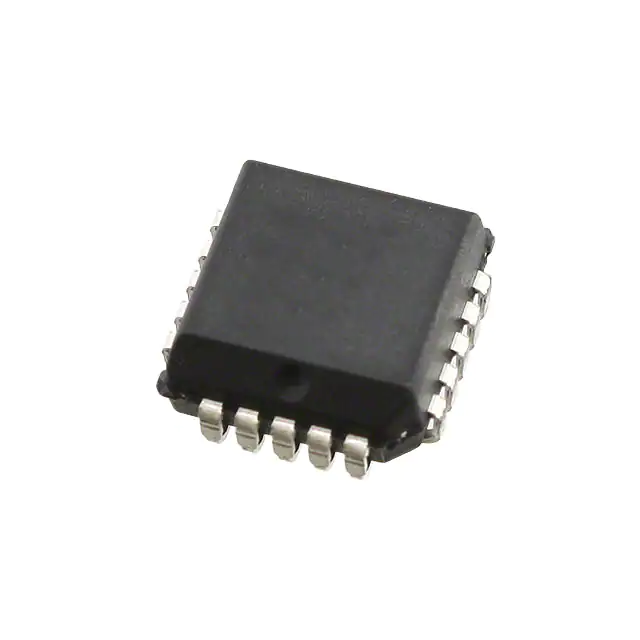
AMD XC17256EPCG20C
- Part No.:
- XC17256EPCG20C
- Manufacturer:
- AMD
- Category:
- Configuration PROMs for FPGAs
- Package:
- 20-LCC (J-Lead)
- Datasheet:
-
 XC17256EPCG20C.pdf
- Description:
- IC PROM SERIAL 256K 20-PLCC
- Quantity:
- Payment:

- Shipping:

Inventory:1,966
Please send an inquiry. Send us your inquiry, and we will respond immediately.
Product details
Overview
XC17256EPCG20C from AMD is a 256-kbit serial configuration PROM designed for Xilinx FPGA initialization, featuring 5V supply voltage, 20-pin PLCC package, 150 ns access time, and industrial temperature range (–40°C to +85°C). It stores bitstream data to configure Spartan, Virtex, and XC9500 CPLD devices at power-up.
For engineers reviewing the XC17256EPCG20C datasheet, pinout, applications, or equivalent options, key selection criteria include VCC compatibility with target FPGA configuration voltage, PLCC-20 mechanical fit in legacy socketed designs, read timing compliance with FPGA INIT clock requirements, and industrial-grade reliability for embedded control systems.
Technical Context
This PROM operates in serial mode using a simple 2-wire interface (CLK and DATA) synchronized to the FPGA's configuration clock. It supports master serial and slave serial configuration modes, with automatic power-on reset detection and internal address counter incrementing on each CLK edge.
Internal architecture includes a static memory array organized as 32K × 8 bits, CMOS-compatible I/O, and a dedicated output enable (OE#) pin for bus sharing. No internal voltage regulation or level-shifting circuitry is present - VCC must match the FPGA's configuration I/O voltage.
Key Specifications
| Parameter | Value and Actual Design Meaning |
|---|---|
| Memory Size | 256 kbit (32K × 8), sufficient to store full bitstreams for mid-complexity Xilinx FPGAs like XC3S200 or XC2VP4. |
| Supply Voltage | 5.0 V ±10%, requires stable 5V rail; not compatible with 3.3V-only configuration interfaces without level translation. |
| Access Time | 150 ns max, meets timing budget for FPGA configuration clocks up to ~5 MHz in master serial mode. |
| Operating Temp | –40°C to +85°C, qualified for industrial automation, motor control, and outdoor telecom equipment. |
| Package | 20-pin Plastic Leaded Chip Carrier (PLCC), 0.75-inch body, surface-mount with J-lead profile for socket or reflow assembly. |
| Interface | Serial 2-wire (CLK, DATA), no parallel addressing or address latching - relies on FPGA-driven sequential read. |
Pinout & Package
20-pin PLCC (Plastic Leaded Chip Carrier), JEDEC MS-018AC compliant, 0.75-inch square body, 0.050-inch lead pitch, J-bend leads for socket insertion or infrared reflow.
| Pin/Terminal | Circuit Role | Design Meaning |
|---|---|---|
| VCC | Power Supply | 5V main supply input; decoupling capacitor required within 1 cm of pin per Xilinx configuration guidelines. |
| GND | Ground Reference | Common return path for all internal logic and I/O; must connect to low-impedance system ground plane. |
| DATA | Serial Data Output | Open-drain output driven by PROM during configuration; pulled up externally (typically 4.7kΩ to VCC) for logic-high level. |
| CLK | Configuration Clock Input | Edge-triggered input; rising edge initiates data output on next cycle; synchronous with FPGA's CCLK. |
| OE# | Output Enable (Active Low) | Enables DATA output when low; high-Z state allows shared bus use or isolation during non-configuration periods. |
| RESET# | Hardware Reset Input | Asynchronous active-low signal that clears internal address counter and forces restart of bitstream read from address 0x0000. |
Key Features
| Feature | Design Value |
|---|---|
| Single 5V Supply Operation | Eliminates need for dual-voltage regulators in legacy 5V FPGA systems; simplifies power design for XC4000/XC5200-era boards. |
| Industrial Temperature Range | Supports deployment in uncontrolled environments such as factory floors, railway signaling cabinets, and base station enclosures. |
| PLCC-20 Socket Compatibility | Enables field-upgradable FPGA configurations via hot-swappable PROM sockets - critical for maintenance in deployed systems. |
| 150 ns Access Time | Guarantees reliable data delivery under worst-case timing margins for Spartan-II and Virtex-E configuration sequences. |
Applications
| Industrial PLC Configuration | Legacy Telecom Line Card Boot |
|---|---|
Use Scenario: Reconfiguring XCV300E FPGAs in programmable logic controllers after firmware updates or hardware revisions. IC Role / Device Role / Timing Role: Nonvolatile bitstream storage and serial delivery on power-up; provides deterministic startup sequence independent of host processor. Use Value: Enables field reprogramming without board removal; PLCC-20 socket allows technician-level replacement without soldering. | Use Scenario: Loading configuration data into XC2V250 FPGAs used in TDM-over-IP gateway line cards operating in central office environments. IC Role / Device Role / Timing Role: Master serial configuration source synchronized to FPGA's CCLK; ensures bit-perfect loading before logic initialization. Use Value: Industrial temp rating ensures uninterrupted operation during summer heat spikes inside sealed telecom cabinets. |
| Automated Test Equipment (ATE) | Avionics Sensor Interface Module |
Use Scenario: Storing multiple FPGA configurations for different DUT (device-under-test) protocols in semiconductor ATE platforms. IC Role / Device Role / Timing Role: Static configuration memory accessed only at power-on; RESET# pin enables rapid reinitialization between test program changes. Use Value: 150 ns access time guarantees timing closure across full 32K-word bitstream, avoiding configuration timeout errors. | Use Scenario: Configuring XC3S1000 FPGAs in airborne sensor preprocessing modules requiring DO-254 compliance. IC Role / Device Role / Timing Role: Certified nonvolatile memory for FPGA bitstream; operates reliably under vibration and thermal cycling per RTCA/DO-160 Section 21. Use Value: PLCC packaging withstands mechanical shock better than SOIC variants, supporting avionics mounting standards. |
Equivalent & Alternatives
The following parts are listed as comparable options for similar FPGA configuration PROM applications.
| Alternative Part | Technical Difference | Application Difference | Selection Advice |
|---|---|---|---|
| XCF02SVO20C | 3.3V-only supply, smaller 2-Mbit density, VQFP-20 package, supports Xilinx SelectMAP mode in addition to serial. | Requires level-shifting in 5V systems; incompatible with legacy 5V-only FPGA configuration circuits. | Select only if migrating to 3.3V FPGA families and redesigning power and layout. |
| AT17LV256-10JC | 3.3V/5V tolerant I/O, 10 ns faster access (140 ns), same PLCC-20 footprint, Atmel-manufactured with Xilinx-qualified compatibility. | Drop-in replacement in most 5V socketed designs; verified interoperability with XC2VPx and Spartan-3 series. | Preferred for new builds where extended temperature margin and faster timing margin are required. |
Compared with XC17256EPCG20C, XCF02SVO20C requires system-level voltage redesign while AT17LV256-10JC offers direct PLCC-20 compatibility with tighter timing and broader voltage tolerance - making it the strongest alternative for industrial upgrades without PCB revision.
Availability
XC17256EPCG20C is available at Aetrix Electronics and suitable for industrial PLCs, legacy telecom line cards, automated test equipment, and avionics sensor modules requiring stable component supply and long-term obsolescence management.
Supply support for XC17256EPCG20C includes scheduled delivery planning, volume procurement assistance, BOM continuity management, traceable sourcing, and lifecycle availability coordination for OEM customers, industrial embedded developers, connected-device designers, and electronics production programs.
Manufacturer
AMD acquired Xilinx in 2022 and now oversees legacy Xilinx configuration PROM product lines including the XC17 family.
The XC17 series was originally developed by Xilinx to provide standardized, single-chip configuration memory for their early FPGA families, targeting cost-sensitive, socket-based industrial and telecom applications.
FAQ
What is the primary function of the XC17256EPCG20C in an FPGA-based system?
The XC17256EPCG20C serves as a nonvolatile serial configuration PROM that stores and delivers the FPGA bitstream at power-up. It initializes Xilinx Spartan, Virtex, and XC9500 devices using a 2-wire interface (CLK/DATA), ensuring deterministic startup without host processor involvement. The XC17256EPCG20C is specifically engineered for 5V systems and legacy socketed designs.
Can the XC17256EPCG20C be used with modern 3.3V FPGAs?
No, the XC17256EPCG20C requires a strict 5V ±10% supply and has 5V-tolerant I/O only. It is incompatible with 3.3V-only FPGA configuration interfaces unless external level-shifting circuitry is added. For native 3.3V support, consider alternatives like the XCF02SVO20C or AT17LV256-10JC, both verified for mixed-voltage operation alongside the XC17256EPCG20C.
Is the XC17256EPCG20C still in production or considered obsolete?
The XC17256EPCG20C is classified as a mature product under AMD's legacy Xilinx portfolio. While no longer in high-volume production, Aetrix Electronics maintains traceable inventory with full lot documentation and supports long-term supply through authorized channels and lifecycle management programs for industrial and aerospace customers relying on the XC17256EPCG20C.
What does the 'C' suffix in XC17256EPCG20C indicate?
The 'C' suffix in XC17256EPCG20C denotes industrial temperature grade (–40°C to +85°C), distinguishing it from commercial-grade variants (e.g., 'I' suffix for 0°C to +70°C). This grading ensures performance stability across thermal extremes encountered in factory automation, outdoor infrastructure, and transportation electronics using the XC17256EPCG20C.
Does the XC17256EPCG20C support in-system programming (ISP)?
No, the XC17256EPCG20C is a one-time programmable (OTP) PROM and does not support in-system programming. Programming must be performed prior to system integration using a compatible PROM programmer (e.g., Xilinx Parallel Cable III or third-party universal programmers). Once programmed, the XC17256EPCG20C retains data indefinitely but cannot be electrically erased or rewritten in-circuit.
XC17256EPCG20C Specifications
- Product attributes
- Attribute value
- Manufacturer:
- AMD
- Series:
- -
- Package/Case:
- 20-LCC (J-Lead)
- Packaging:
- Tray
- Product Status:
- Obsolete
- Programmable:
- Not Verified
- Programmable Type:
- OTP
- Memory Size:
- 256Kb
- Voltage - Supply:
- 4.75V ~ 5.25V
- Operating Temperature:
- 0°C ~ 70°C
- Mounting Type:
- Surface Mount
- Supplier Device Package:
- 20-PLCC (9x9)
XC17256EPCG20C FAQ
1.How can I place an order for XC17256EPCG20C through Aetrix?
Please submit a Request for Quotation (RFQ) for XC17256EPCG20C on Aetrix. Our sales agent will provide a competitive quotation and guide you through the order confirmation once you accept the terms.
2.Are the price and stock information for XC17256EPCG20C reliable?
The price and inventory of XC17256EPCG20C are updated periodically and may fluctuate due to market conditions. Stock and pricing data are typically refreshed every 24 hours. Quotation validity for XC17256EPCG20C is usually 5 days.
3.What payment methods are accepted for XC17256EPCG20C?
We accept Wire Transfer, PayPal, Credit Card, Western Union, MoneyGram, and Escrow for XC17256EPCG20C transactions.
Note: Certain payment methods may incur a processing fee.
4.How is shipping managed for XC17256EPCG20C?
XC17256EPCG20C orders can be shipped via leading logistics carriers, including DHL, UPS, FedEx, TNT, or Registered Mail.
Once your XC17256EPCG20C order is processed, you will receive an email with the shipment details and tracking number.
Note: Tracking information may take up to 24 hours to appear. Express delivery typically takes 3–5 business days.
5.How can I obtain technical support or documentation for XC17256EPCG20C?
For technical support, including XC17256EPCG20C datasheets, pinout diagrams, or application guidance, please contact our engineering support team. They can provide detailed documentation and assistance for your XC17256EPCG20C requirements.
6.How does Aetrix verify that XC17256EPCG20C is sourced from the original manufacturer or authorized distributors?
All XC17256EPCG20C products on Aetrix are procured from qualified distributors and authorized channels. Our dedicated quality assurance team conducts strict verification, including traceability checks and, if necessary, third-party testing. This ensures that XC17256EPCG20C meets industry standards.
7.What is the process for return or replacement of XC17256EPCG20C?
All XC17256EPCG20C units undergo pre-shipment inspection (PSI). If there is an issue with XC17256EPCG20C, returns or replacements are accepted under the following conditions:
1.Quantity discrepancies, incorrect items, or visible external defects (such as breakage or corrosion), acknowledged by Aetrix.
2.The issue is reported within 90 days of delivery.
3.The XC17256EPCG20C part is unused and in its original packaging.
Return procedure for XC17256EPCG20C:
1.Submit a request within 90 days.
2.Obtain a Return Material Authorization (RMA) from Aetrix.
XC17256EPCG20C Tags
-
AT17LV512A-10PU
Microchip Technology

-
EPCQ4ASI8N
Intel
-
AT17LV256-10PU
Microchip Technology

-
AT17LV256-10NU
Microchip Technology
-
EPCQ16ASI8N
Intel
-
AT17LV010-10PU
Microchip Technology
-
EPCQ32ASI8N
Intel
-
EPCQ64ASI16N
Intel
-
EPCQ128ASI16N
Intel
-
AT17LV512A-10JU
Microchip Technology
-
AT17LV512-10JU
Microchip Technology
-
AT17LV010-10JU
Microchip Technology
Tech Hub

A practical engineering and sourcing framework covering lifecycle verification, lifetime-buy calculations, replacement qualification, supplier checks and counterfeit-risk controls.

TTL and CMOS logic families differ in thresholds, loading, output drive, power and timing. This engineering guide compares 74HC and 74HCT, calculates noise margins and checks 3.3 V/5 V compatibility.

A practical engineering guide to 3.3V and 5V logic compatibility, input thresholds, resistor dividers, translator ICs, MOSFET level shifting, I2C pull-ups, timing limits and power-sequencing risks.

The 74HC595 uses push-pull logic outputs, while the TPIC6B595 uses 50 V open-drain DMOS sinks for higher-power loads. This guide compares timing, current limits, 3.3 V interfacing, load wiring, thermal…

The 74HC595 converts serial data into eight stable parallel outputs. This guide covers pin functions, shift and storage timing, OE and MR behavior, drive-current limits, cascading, voltage compatibilit…

A technical comparison of level-sensitive latches and edge-triggered flip-flops, covering timing windows, setup and hold limits, master–slave operation, time borrowing, race-through, HDL inference and…

A D latch stores one bit while Enable controls when data can pass. This reference covers gate-level operation, truth tables, transparency, setup and hold timing, LE versus OE, common ICs and practical …

An SR latch stores one bit through cross-coupled feedback. This engineering reference covers NOR and NAND implementations, truth tables, forbidden-state recovery, gated operation, switch debouncing, fa…

Latch circuits retain one bit through feedback. This technical reference covers SR and D latches, truth tables, transparency, timing limits, latch-versus-flip-flop behavior, applications and common log…

An engineering guide to LED driver operation, constant-current and constant-voltage outputs, linear and switching topologies, dimming, IC selection, calculations, replacement compatibility, and fault c…


