
 My Inquiry
 My Account


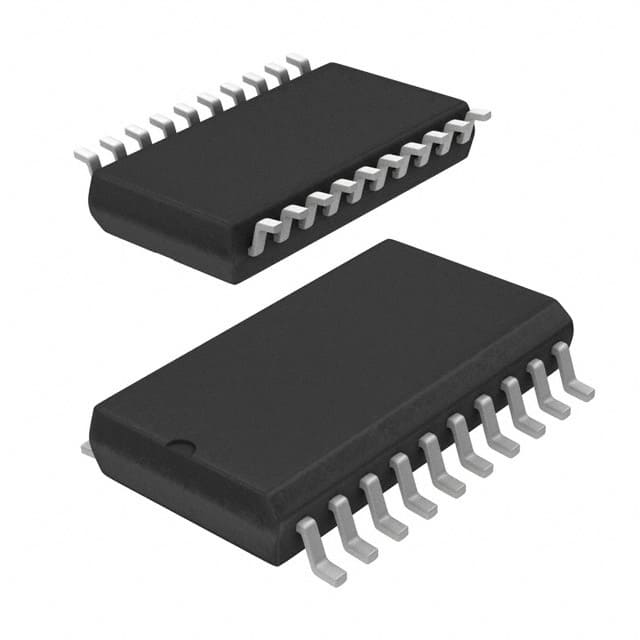
AMD XC17S40XLSO20C
- Part No.:
- XC17S40XLSO20C
- Manufacturer:
- AMD
- Category:
- Configuration PROMs for FPGAs
- Package:
- 20-SOIC (0.295", 7.50mm Width)
- Datasheet:
-
 XC17S40XLSO20C.pdf
- Description:
- IC PROM PROG C-TEMP 3.3V 20-SOIC
- Quantity:
- Payment:

- Shipping:

Inventory:1,330
Please send an inquiry. Send us your inquiry, and we will respond immediately.
Product details
Overview
XC17S40XLSO20C from AMD (formerly Xilinx) is a serial configuration PROM designed to store and load configuration bitstreams for Spartan-XL FPGAs. It provides 4 Mbit storage capacity, operates at 5 V supply voltage, supports 10 MHz read speed, and uses a 20-pin SOIC package. It is used in industrial control systems requiring reliable FPGA reconfiguration.
For engineers reviewing the XC17S40XLSO20C datasheet, pinout, applications, or equivalent options, key selection factors include 5 V compatibility, 4 Mbit density, SOIC-20 footprint, single-supply operation, and support for master-serial FPGA configuration mode.
Technical Context
This PROM implements a synchronous serial interface compatible with Xilinx Spartan-XL family configuration protocols. It features built-in power-on reset circuitry and supports both active-high and active-low chip select, enabling flexible integration into FPGA boot sequences.
It delivers deterministic read access time of 100 ns at 5 V and supports industrial temperature range (–40°C to +85°C), ensuring stable operation in embedded environments where FPGA configuration integrity is critical.
Key Specifications
| Parameter | Value and Actual Design Meaning |
|---|---|
| Memory Capacity | 4 Mbit (512 K × 8) - sufficient to store full configuration bitstream for Spartan-XL devices such as XC2S40. |
| Supply Voltage | 5.0 V ±10% - matches legacy 5 V FPGA system rails without level-shifting. |
| Access Time | 100 ns max at 5 V - ensures timely bitstream delivery during FPGA startup. |
| Interface Type | Synchronous serial (SPI-compatible clocked interface) - directly interfaces with Spartan-XL CCLK and DIN pins. |
| Operating Temp | –40°C to +85°C - qualified for industrial-grade FPGA-based control hardware. |
| Package | 20-pin SOIC (300 mil width) - standard surface-mount footprint with verified thermal and mechanical reliability. |
Pinout & Package
XC17S40XLSO20C is housed in a 20-pin Small Outline Integrated Circuit (SOIC) package with 300 mil body width and standard gull-wing lead form. Pin assignments are defined per Xilinx DS029 specification.
| Pin/Terminal | Circuit Role | Design Meaning |
|---|---|---|
| A0–A18 | Address Inputs | Decode 512 K-word memory space; tied low or controlled by FPGA during serial read. |
| D0–D7 | Data Outputs | Parallel data output bus; driven only when CS# = L and OE# = L in read mode. |
| CS# | Chip Select | Active-low enable; controls device output drivers and internal address latching. |
| OE# | Output Enable | Active-low control for D0–D7 tri-state drivers; used for bus sharing. |
| VCC | Power Supply | +5 V main supply; must be decoupled near package for noise-sensitive configuration timing. |
| GND | Ground | Reference return path for all digital signals and power. |
Key Features
| Feature | Design Value |
|---|---|
| Single 5 V supply operation | Eliminates need for dual-rail power design in legacy FPGA systems using 5 V I/O standards. |
| Industrial temperature rating | Enables deployment in programmable logic controllers (PLCs) and motor drives without derating. |
| Master-serial configuration support | Directly loads Spartan-XL FPGAs via dedicated CCLK/DIN pins without external controller. |
| Hardware power-on reset | Guarantees known initial state before FPGA initiates configuration sequence. |
Applications
| Industrial PLCs | Test Equipment Controllers |
|---|---|
Use Scenario: Reconfigurable logic modules in programmable logic controllers require nonvolatile bitstream storage for cold-start recovery. IC Role / Device Role / Timing Role: Configuration PROM providing deterministic, single-cycle read access to FPGA bitstream on power-up. Use Value: Ensures zero-delay FPGA initialization and eliminates external microcontroller dependency for boot loading. | Use Scenario: Automated test equipment uses Spartan-XL FPGAs to implement custom I/O timing and protocol emulation. IC Role / Device Role / Timing Role: Nonvolatile storage for multiple FPGA configurations, selected via hardware address lines. Use Value: Enables field-upgradable test firmware without PCB redesign or JTAG reprogramming overhead. |
| Motor Drive Logic Boards | Legacy Communication Gateways |
Use Scenario: Variable frequency drives embed Spartan-XL FPGAs for real-time PWM generation and fault monitoring. IC Role / Device Role / Timing Role: Primary configuration source with guaranteed read timing under EMI-prone motor control environments. Use Value: Maintains FPGA functional integrity despite voltage ripple and transient noise on 5 V rail. | Use Scenario: Protocol translation gateways bridge RS-485 fieldbus to Ethernet using FPGA-based packet processing. IC Role / Device Role / Timing Role: Bitstream loader supporting hot-swap FPGA reconfiguration during firmware updates. Use Value: Allows in-service configuration reload without power cycling or system downtime. |
Equivalent & Alternatives
The following parts are listed as comparable options for similar FPGA configuration PROM applications.
| Alternative Part | Technical Difference | Application Difference | Selection Advice |
|---|---|---|---|
| XCF04SVO20C | 4 Mbit, 3.3 V core supply, SO20 package - requires level translation for 5 V Spartan-XL systems. | Designed for Spartan-3 and later families; lacks native 5 V I/O compatibility. | Select only if migrating to newer FPGA families and redesigning power architecture. |
| AT17LV40-10JU | 4 Mbit, 3.3 V/2.5 V/1.8 V multi-voltage support, 20-pin TSSOP - no 5 V operation. | Targets Virtex-II and Spartan-2E; not qualified for Spartan-XL master-serial mode timing. | Use only with voltage translation and verified timing closure for legacy FPGA boot. |
Compared with XC17S40XLSO20C, XCF04SVO20C and AT17LV40-10JU offer higher-density alternatives but require board-level voltage adaptation and lack guaranteed timing compliance with Spartan-XL configuration clocks, making XC17S40XLSO20C the only drop-in solution for existing 5 V industrial designs.
Availability
XC17S40XLSO20C is available at Aetrix Electronics and suitable for industrial PLCs, motor drive logic boards, and legacy communication gateways requiring stable component supply and long-term obsolescence management.
Supply support for XC17S40XLSO20C includes scheduled delivery planning, volume procurement assistance, BOM continuity management, traceable sourcing, and lifecycle availability coordination for OEM customers, industrial embedded developers, connected-device designers, and electronics production programs.
Manufacturer
AMD acquired Xilinx in 2022, inheriting its FPGA and configuration PROM portfolio. Xilinx pioneered SRAM-based FPGA architecture and associated configuration solutions.
The XC17S series was developed specifically to support Spartan-XL FPGAs with 5 V tolerant, serial bitstream loading - targeting cost-sensitive industrial and automation applications where reliability and pin compatibility were critical.
FAQ
What is the primary function of the XC17S40XLSO20C?
The XC17S40XLSO20C is a 4 Mbit serial configuration PROM designed exclusively to store and deliver configuration bitstreams to Spartan-XL family FPGAs. It operates at 5 V, uses a synchronous serial interface, and is qualified for industrial temperatures. The XC17S40XLSO20C enables autonomous FPGA startup without external controllers by directly driving the CCLK and DIN pins during power-up.
Does the XC17S40XLSO20C support 3.3 V operation?
No, the XC17S40XLSO20C is specified only for 5.0 V ±10% operation and is not rated for 3.3 V or lower supply voltages. Attempting to operate the XC17S40XLSO20C at 3.3 V may result in unreliable read timing, incomplete configuration loading, or failure to initialize Spartan-XL FPGAs. Systems requiring mixed-voltage support must use level-shifting or alternative PROMs like XCF04SVO20C with appropriate design validation.
Can the XC17S40XLSO20C be used with Spartan-3 FPGAs?
No, the XC17S40XLSO20C is not compatible with Spartan-3 FPGAs. It is specifically designed for Spartan-XL devices and lacks the voltage tolerance, timing parameters, and command set required by Spartan-3 configuration protocols. Using the XC17S40XLSO20C with Spartan-3 will result in failed configuration. For Spartan-3, XCF04SVO20C or equivalent is the correct PROM family.
What is the maximum clock frequency supported by the XC17S40XLSO20C interface?
The XC17S40XLSO20C supports a maximum read clock frequency of 10 MHz, corresponding to a minimum cycle time of 100 ns. This timing aligns precisely with the master-serial configuration requirements of Spartan-XL FPGAs. Exceeding 10 MHz violates the device's AC specifications and risks bitstream corruption during FPGA configuration - a constraint strictly defined in the XC17S40XLSO20C datasheet and verified across industrial temperature ranges.
Is the XC17S40XLSO20C RoHS compliant?
Yes, the XC17S40XLSO20C is RoHS compliant and meets EU Directive 2011/65/EU requirements for hazardous substances. It contains no lead, mercury, cadmium, hexavalent chromium, polybrominated biphenyls (PBB), or polybrominated diphenyl ethers (PBDE). This compliance applies to units manufactured after the Xilinx RoHS transition date and is documented in official AMD/Xilinx product change notices and material declarations.
XC17S40XLSO20C Specifications
- Product attributes
- Attribute value
- Manufacturer:
- AMD
- Series:
- -
- Package/Case:
- 20-SOIC (0.295", 7.50mm Width)
- Packaging:
- Tube
- Product Status:
- Obsolete
- Programmable:
- Not Verified
- Programmable Type:
- OTP
- Memory Size:
- 400kb
- Voltage - Supply:
- 3V ~ 3.6V
- Operating Temperature:
- 0°C ~ 70°C
- Mounting Type:
- Surface Mount
- Supplier Device Package:
- 20-SOIC
XC17S40XLSO20C FAQ
1.How can I place an order for XC17S40XLSO20C through Aetrix?
Please submit a Request for Quotation (RFQ) for XC17S40XLSO20C on Aetrix. Our sales agent will provide a competitive quotation and guide you through the order confirmation once you accept the terms.
2.Are the price and stock information for XC17S40XLSO20C reliable?
The price and inventory of XC17S40XLSO20C are updated periodically and may fluctuate due to market conditions. Stock and pricing data are typically refreshed every 24 hours. Quotation validity for XC17S40XLSO20C is usually 5 days.
3.What payment methods are accepted for XC17S40XLSO20C?
We accept Wire Transfer, PayPal, Credit Card, Western Union, MoneyGram, and Escrow for XC17S40XLSO20C transactions.
Note: Certain payment methods may incur a processing fee.
4.How is shipping managed for XC17S40XLSO20C?
XC17S40XLSO20C orders can be shipped via leading logistics carriers, including DHL, UPS, FedEx, TNT, or Registered Mail.
Once your XC17S40XLSO20C order is processed, you will receive an email with the shipment details and tracking number.
Note: Tracking information may take up to 24 hours to appear. Express delivery typically takes 3–5 business days.
5.How can I obtain technical support or documentation for XC17S40XLSO20C?
For technical support, including XC17S40XLSO20C datasheets, pinout diagrams, or application guidance, please contact our engineering support team. They can provide detailed documentation and assistance for your XC17S40XLSO20C requirements.
6.How does Aetrix verify that XC17S40XLSO20C is sourced from the original manufacturer or authorized distributors?
All XC17S40XLSO20C products on Aetrix are procured from qualified distributors and authorized channels. Our dedicated quality assurance team conducts strict verification, including traceability checks and, if necessary, third-party testing. This ensures that XC17S40XLSO20C meets industry standards.
7.What is the process for return or replacement of XC17S40XLSO20C?
All XC17S40XLSO20C units undergo pre-shipment inspection (PSI). If there is an issue with XC17S40XLSO20C, returns or replacements are accepted under the following conditions:
1.Quantity discrepancies, incorrect items, or visible external defects (such as breakage or corrosion), acknowledged by Aetrix.
2.The issue is reported within 90 days of delivery.
3.The XC17S40XLSO20C part is unused and in its original packaging.
Return procedure for XC17S40XLSO20C:
1.Submit a request within 90 days.
2.Obtain a Return Material Authorization (RMA) from Aetrix.
XC17S40XLSO20C Tags
-
AT17LV512A-10PU
Microchip Technology

-
EPCQ4ASI8N
Intel
-
AT17LV256-10PU
Microchip Technology

-
AT17LV256-10NU
Microchip Technology
-
EPCQ16ASI8N
Intel
-
AT17LV010-10PU
Microchip Technology
-
EPCQ32ASI8N
Intel
-
EPCQ64ASI16N
Intel
-
EPCQ128ASI16N
Intel
-
AT17LV512A-10JU
Microchip Technology
-
AT17LV512-10JU
Microchip Technology
-
AT17LV010-10JU
Microchip Technology
Tech Hub

A practical engineering and sourcing framework covering lifecycle verification, lifetime-buy calculations, replacement qualification, supplier checks and counterfeit-risk controls.

TTL and CMOS logic families differ in thresholds, loading, output drive, power and timing. This engineering guide compares 74HC and 74HCT, calculates noise margins and checks 3.3 V/5 V compatibility.

A practical engineering guide to 3.3V and 5V logic compatibility, input thresholds, resistor dividers, translator ICs, MOSFET level shifting, I2C pull-ups, timing limits and power-sequencing risks.

The 74HC595 uses push-pull logic outputs, while the TPIC6B595 uses 50 V open-drain DMOS sinks for higher-power loads. This guide compares timing, current limits, 3.3 V interfacing, load wiring, thermal…

The 74HC595 converts serial data into eight stable parallel outputs. This guide covers pin functions, shift and storage timing, OE and MR behavior, drive-current limits, cascading, voltage compatibilit…

A technical comparison of level-sensitive latches and edge-triggered flip-flops, covering timing windows, setup and hold limits, master–slave operation, time borrowing, race-through, HDL inference and…

A D latch stores one bit while Enable controls when data can pass. This reference covers gate-level operation, truth tables, transparency, setup and hold timing, LE versus OE, common ICs and practical …

An SR latch stores one bit through cross-coupled feedback. This engineering reference covers NOR and NAND implementations, truth tables, forbidden-state recovery, gated operation, switch debouncing, fa…

Latch circuits retain one bit through feedback. This technical reference covers SR and D latches, truth tables, transparency, timing limits, latch-versus-flip-flop behavior, applications and common log…

An engineering guide to LED driver operation, constant-current and constant-voltage outputs, linear and switching topologies, dimming, IC selection, calculations, replacement compatibility, and fault c…


