
 My Inquiry
 My Account


AMD XC2C64A-7QFG48I
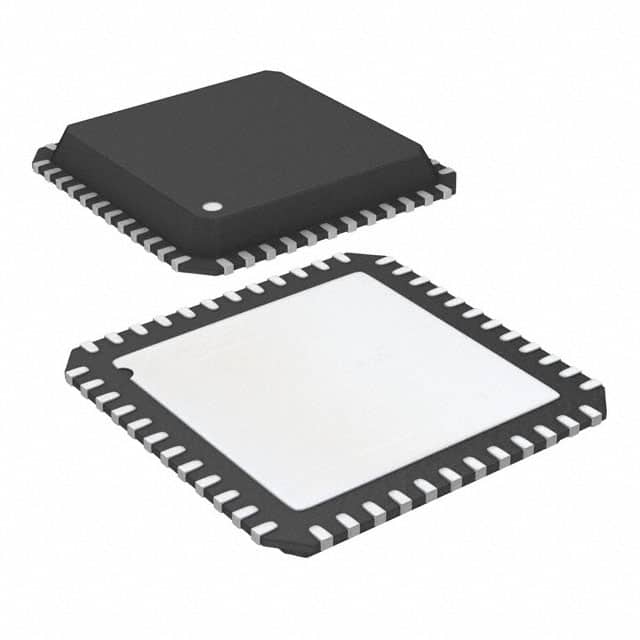
- Part No.:
- XC2C64A-7QFG48I
- Manufacturer:
- AMD
- Package:
- 48-VFQFN Exposed Pad
- Datasheet:
-
 XC2C64A-7QFG48I.pdf
- Description:
- IC CPLD 64MC 6.7NS 48QFN
- Quantity:
- Payment:

- Shipping:

Inventory:3,911
Please send an inquiry. Send us your inquiry, and we will respond immediately.
Product details
Overview
XC2C64A-7QFG48I from AMD is a programmable logic device in the CoolRunner-II line intended for glue logic, state sequencing, and local interface adaptation. With 64 macrocells and a compact exposed-pad QFN footprint that fits space-constrained supervisory logic placement, it is positioned for boards that need fixed startup behavior, field programmability, and more flexible digital control than hardwired gates can offer. Its specific suffix matters because 7ns-grade orderable option. and the industrial temperature option indicated by the suffix. determine whether this exact option matches the board timing budget, package choice, and qualification target rather than only the base family architecture.
The CoolRunner-II family is a low-power nonvolatile CPLD series designed for compact programmable logic, interface adaptation, and always-on control functions with very low standby current and multi-voltage I/O support. For engineers reviewing the XC2C64A-7QFG48I datasheet, XC2C64A-7QFG48I pinout, XC2C64A-7QFG48I application, or XC2C64A-7QFG48I equivalent, this device is widely used in interface glue logic, control sequencing, bus adaptation, industrial embedded modules, communications equipment, and programmable board-support designs.
Technical Context
For embedded platforms, XC2C64A-7QFG48I is typically assigned to board-support logic tasks such as chip-select handling, mode control, handshake conditioning, and local bus adaptation. The 64-macrocell density gives this device enough room to consolidate functions that would otherwise sit across multiple smaller logic parts.
Board designers usually care about this exact suffix because package geometry, timing grade, and operating range can all change final fit decisions. For XC2C64A-7QFG48I, the combination of 48-VFQFN Exposed Pad, 7ns-grade orderable option., and the industrial temperature option indicated by the suffix. directly influences how confidently the part can be placed into a validated BOM.
The XC2C64A density point is commonly used when the board needs more interface and state-machine headroom than the 32-macrocell class while still prioritizing low standby current. That makes XC2C64A-7QFG48I a practical choice for interface glue logic, supervisory state handling, timing coordination, and programmable board management in systems that value predictable CPLD behavior.
Key Specifications
| Parameter | Value and Actual Design Meaning |
|---|---|
| Device Type | CoolRunner-II complex programmable logic device (CPLD). |
| Architecture | 64-macrocell CoolRunner-II programmable logic architecture. |
| Logic Resources | 64 macrocells in this device class. |
| Voltage Positioning | Multi-voltage I/O operation across common low-voltage logic domains. |
| Timing Grade | 7ns-grade orderable option. |
| Package | 48-VFQFN Exposed Pad package with tray packing. |
| Operating Range | Industrial temperature option indicated by the suffix. |
| Programming | JTAG in-system programmability with nonvolatile logic retention. |
Pinout & Package
The XC2C64A-7QFG48I pinout includes programmable user I/O, clock-capable inputs, JTAG programming pins, and dedicated supply and ground pins within 48-VFQFN Exposed Pad.
For PCB design, the main consideration is managing thermal ground attachment, short return paths, and clean local decoupling near the exposed-pad region.
| Pin / Function | PCB Design and Circuit Role |
|---|---|
| User I/O Pins | Programmable inputs and outputs for decode logic, control-state handling, and digital interface adaptation. |
| Clock Inputs | Clock-capable pins supporting synchronous state machines and registered logic paths. |
| JTAG Pins | Boundary-scan and in-system programming interface connections. |
| Power Pins | Supply rails supporting core and I/O operation for the selected CPLD class. |
| Ground Pins | Ground return paths supporting timing integrity and stable digital operation. |
Key Features
- 64-macrocell programmable logic density supports compact board-level control integration.
- Nonvolatile logic retention preserves behavior across power cycles.
- JTAG in-system programmability supports manufacturing and field updates.
- Deterministic CPLD timing suits glue logic, decode, and supervisory control tasks.
- 48-VFQFN Exposed Pad packaging supports board-specific I/O planning and dense layout integration.
- Suitable for replacing multiple discrete logic functions with one programmable device.
Applications
| Bus Adaptation and Address Decode | Platform Supervisory Logic |
|---|---|
|
Use Scenario: Used in systems that need programmable bus glue, register decoding, and device-select logic. IC Role: Maps external interfaces into deterministic local control structures. Use Value: Simplifies board revisions when interface requirements shift. |
Use Scenario: Used for status gating, reset handling, and local supervisory decision logic on embedded boards. IC Role: Provides CPLD-based control logic with stable power-up behavior. Use Value: Improves hardware manageability without firmware dependency. |
| Compact Control Boards | Mixed-Interface Digital Systems |
|
Use Scenario: Used in embedded controllers and mezzanine boards that need flexible digital support logic in limited area. IC Role: Consolidates several local control functions into one programmable device. Use Value: Helps save board area while keeping logic serviceable. |
Use Scenario: Used where multiple local digital standards or timing domains need simple programmable mediation. IC Role: Bridges small digital interfaces and supports local timing coordination. Use Value: Avoids a larger FPGA when the logic scope stays in the CPLD class. |
Equivalent & Alternatives
When evaluating a XC2C64A-7QFG48I equivalent, engineers should compare macrocell count, package, timing grade, operating range, architecture continuity, and board-level logic-fit requirements.
| Alternative Part | Technical Difference | Application Difference | Selection Advice |
|---|---|---|---|
| XC2C64A-7VQG44C | Related programmable logic option in the same or closely aligned density class with a different package, speed, or suffix emphasis. | Used when the design remains in a closely related CPLD class but the orderable fit changes. | Compare package, timing grade, operating suffix, and validated platform fit before substitution. |
| XC9572XL-7VQG44C | Alternative CPLD solution with a different architectural position or power emphasis while serving a comparable board-support role. | Used in similar programmable control or glue-logic applications when architecture preference changes. | Choose according to logic density, power behavior, package, and family continuity requirements. |
Compared with XC2C64A-7VQG44C, XC2C64A-7QFG48I selection depends on exact package, speed grade, and suffix fit within related CPLD classes. XC2C64A-7QFG48I vs XC9572XL-7VQG44C selection depends on whether the design should stay with the same CPLD architecture or move to a different programmable-logic branch with other power or logic-density tradeoffs.
Quality
XC2C64A-7QFG48I should be sourced as original AMD programmable logic inventory through traceable supply channels. Quality checks may include package inspection, top-mark validation, JTAG-programming verification, and logic-image loading review.
Production validation should include timing-closure review, I/O-voltage checks, boundary-scan access, power-integrity verification, and signal-integrity assessment on high-activity control and interface nets.
Availability
XC2C64A-7QFG48I is suitable for programmable board-support logic, interface control, and deterministic CPLD integration in communications, computing, industrial, and embedded systems.
Supply support may include volume procurement planning, scheduled delivery arrangements, traceable sourcing management, and long-term supply support for OEM, industrial electronics, automotive electronics, and embedded product programs. Sample and NPI supply support, as well as urgent in-stock supply support, can also be arranged for prototype builds, pilot runs, and time-critical production needs.
For production builds, confirming package option, speed grade, operating-range suffix, lifecycle status, and sourcing continuity helps reduce programmable-logic procurement risk.
Manufacturer
AMD is a semiconductor manufacturer whose adaptive computing and programmable logic portfolio includes FPGA devices, CPLDs, configuration solutions, embedded processing platforms, and related development technologies for industrial, communication, computing, automotive, and embedded electronic systems.
The CoolRunner-II family is a low-power nonvolatile CPLD series designed for compact programmable logic, interface adaptation, and always-on control functions with very low standby current and multi-voltage I/O support. The XC2C64A density point is commonly used when the board needs more interface and state-machine headroom than the 32-macrocell class while still prioritizing low standby current.
FAQ
What is XC2C64A-7QFG48I used for?
XC2C64A-7QFG48I is used for programmable board-support logic, state sequencing, address decoding, and interface adaptation in embedded, computing, and communications hardware.
Where can I find the XC2C64A-7QFG48I datasheet download?
The XC2C64A-7QFG48I datasheet can be accessed from the confirmed source used for this CPLD family and orderable option.
What should be considered in XC2C64A-7QFG48I pinout design?
Designers should preserve JTAG access, plan I/O assignment carefully, and account for the board consequences of the 48-VFQFN Exposed Pad package and the selected timing grade.
Is XC2C64A-7QFG48I an FPGA?
No. It is a CPLD intended for deterministic programmable logic and board-control functions rather than larger FPGA fabric use.
What are common XC2C64A-7QFG48I equivalent solutions?
Common candidates include XC2C64A-7VQG44C and XC9572XL-7VQG44C depending on package, architecture, logic density, and timing priorities.
XC2C64A-7QFG48I Specifications
- Product attributes
- Attribute value
- Manufacturer:
- AMD
- Series:
- CoolRunner II
- Package/Case:
- 48-VFQFN Exposed Pad
- Packaging:
- Tray
- Product Status:
- Obsolete
- Programmable:
- Not Verified
- Programmable Type:
- In System Programmable
- Delay Time tpd(1) Max:
- 6.7 ns
- Voltage Supply - Internal:
- 1.7V ~ 1.9V
- Number of Logic Elements/Blocks:
- 4
- Number of Macrocells:
- 64
- Number of Gates:
- 1500
- Number of I/O:
- 37
- Operating Temperature:
- -40°C ~ 85°C (TA)
- Grade:
- -
- Qualification:
- -
- Mounting Type:
- Surface Mount
- Supplier Device Package:
- 48-QFN (7x7)
XC2C64A-7QFG48I FAQ
1.How can I place an order for XC2C64A-7QFG48I through Aetrix?
Please submit a Request for Quotation (RFQ) for XC2C64A-7QFG48I on Aetrix. Our sales agent will provide a competitive quotation and guide you through the order confirmation once you accept the terms.
2.Are the price and stock information for XC2C64A-7QFG48I reliable?
The price and inventory of XC2C64A-7QFG48I are updated periodically and may fluctuate due to market conditions. Stock and pricing data are typically refreshed every 24 hours. Quotation validity for XC2C64A-7QFG48I is usually 5 days.
3.What payment methods are accepted for XC2C64A-7QFG48I?
We accept Wire Transfer, PayPal, Credit Card, Western Union, MoneyGram, and Escrow for XC2C64A-7QFG48I transactions.
Note: Certain payment methods may incur a processing fee.
4.How is shipping managed for XC2C64A-7QFG48I?
XC2C64A-7QFG48I orders can be shipped via leading logistics carriers, including DHL, UPS, FedEx, TNT, or Registered Mail.
Once your XC2C64A-7QFG48I order is processed, you will receive an email with the shipment details and tracking number.
Note: Tracking information may take up to 24 hours to appear. Express delivery typically takes 3–5 business days.
5.How can I obtain technical support or documentation for XC2C64A-7QFG48I?
For technical support, including XC2C64A-7QFG48I datasheets, pinout diagrams, or application guidance, please contact our engineering support team. They can provide detailed documentation and assistance for your XC2C64A-7QFG48I requirements.
6.How does Aetrix verify that XC2C64A-7QFG48I is sourced from the original manufacturer or authorized distributors?
All XC2C64A-7QFG48I products on Aetrix are procured from qualified distributors and authorized channels. Our dedicated quality assurance team conducts strict verification, including traceability checks and, if necessary, third-party testing. This ensures that XC2C64A-7QFG48I meets industry standards.
7.What is the process for return or replacement of XC2C64A-7QFG48I?
All XC2C64A-7QFG48I units undergo pre-shipment inspection (PSI). If there is an issue with XC2C64A-7QFG48I, returns or replacements are accepted under the following conditions:
1.Quantity discrepancies, incorrect items, or visible external defects (such as breakage or corrosion), acknowledged by Aetrix.
2.The issue is reported within 90 days of delivery.
3.The XC2C64A-7QFG48I part is unused and in its original packaging.
Return procedure for XC2C64A-7QFG48I:
1.Submit a request within 90 days.
2.Obtain a Return Material Authorization (RMA) from Aetrix.
XC2C64A-7QFG48I Tags
-
5M40ZE64C5N
Intel
-
ATF1502ASV-15AU44
Microchip Technology
-
5M80ZE64C5N
Intel
-
5M80ZT100C5N
Intel
-
ATF1502AS-10AU44
Microchip Technology
-
ATF1502AS-10JU44
Microchip Technology
-
5M80ZE64I5N
Intel
-
5M80ZT100I5N
Intel
-
LC4032V-75TN48C
Lattice Semiconductor Corporation
-
ATF1504ASV-15AU44
Microchip Technology
-
ATF1504AS-10JU44
Microchip Technology
-
5M160ZE64C5N
Intel
Tech Hub

Jumper cables guide covering safe connection order, red and black clamp placement, final ground connection, cable gauge, length, clamp quality, copper vs CCA cables, jump starter comparison and battery…

LDO regulator guide covering low dropout voltage, power dissipation, thermal design, PSRR, output noise, capacitor stability, adjustable LDO circuits, LDO vs buck converter and datasheet selection chec…

Conditional Access Module guide covering CAM meaning, CI/CI+ interface, smart card authorization, DVB security workflow, TV and set-top box compatibility, internal electronics, ESD protection, connecto…

Guide to electronic component obsolescence covering EOL risk, PCN/PDN notices, last-time buy planning, replacement options, form-fit-function validation, counterfeit risk and BOM lifecycle management.

18650 battery guide covering lithium-ion cell basics, 3.6V/3.7V voltage, 4.2V charging, mAh and Wh capacity, protected cells, chargers, BMS, series-parallel packs, holders, welding and sourcing checks.…

Hall effect sensor guide covering working principle, linear and digital sensors, Arduino circuits, current sensing, speed detection, automotive applications, A3144 examples, signal filtering and datash…

Product Change Notification guide for electronic components, covering PCN meaning, PCN vs PDN/EOL, common change types, risk levels, form-fit-function review, engineering validation, BOM control, LTB/L…

A practical guide to blend door actuators, covering HVAC function, symptoms, location, AC and heater issues, reset and calibration, replacement cost, electrical diagnosis, compatibility checks, and rep…

Engineering guide to Raspberry Pi alternatives, covering chip-level differences, Orange Pi, ROCK, Jetson, Banana Pi, NanoPi, Compute Module, Pico, GPIO, camera, HAT compatibility, and replacement risks…
Engineering guide to dynamic load response testing for high-current buck converters, covering load step setup, slew rate, Vcore undershoot, overshoot, recovery time, probe location, output capacitors a…


