
 My Inquiry
 My Account


AMD XC3S2000-4FG456C
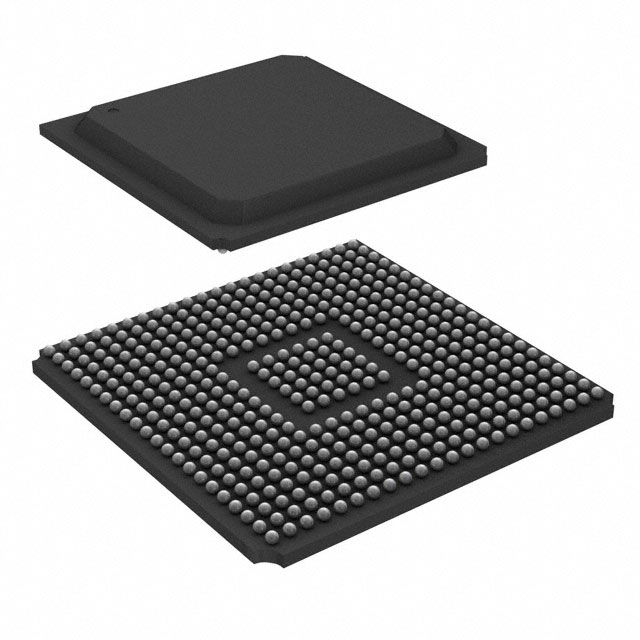
- Part No.:
- XC3S2000-4FG456C
- Manufacturer:
- AMD
- Category:
- FPGAs (Field Programmable Gate Array)
- Package:
- 456-BBGA
- Datasheet:
-
 XC3S2000-4FG456C.pdf
- Description:
- IC FPGA 333 I/O 456FBGA
- Quantity:
- Payment:

- Shipping:

Inventory:1,612
Please send an inquiry. Send us your inquiry, and we will respond immediately.
Product details
Overview
XC3S2000-4FG456C from AMD (formerly Xilinx) is a Spartan-3 FPGA with 2,000,000 system gates, 456-pin Fine-Pitch Ball Grid Array (FBGA) package, -4 speed grade, and commercial temperature range (0°C to 85°C). It integrates 17,280 logic cells, 1,728 Kbits of block RAM, and supports LVCMOS25/LVCMOS33 I/O standards for embedded control and digital signal processing applications.
For engineers reviewing the XC3S2000-4FG456C datasheet, pinout, applications, or equivalent options, key selection criteria include logic density, I/O count (376 user I/Os), distributed RAM capacity, DLL-based clock management, and compatibility with Xilinx ISE design tools and configuration PROMs.
Technical Context
The XC3S2000-4FG456C implements a hierarchical FPGA architecture with configurable logic blocks (CLBs), dedicated multipliers, and eight Digital Clock Managers (DCMs) supporting phase shifting, frequency synthesis, and duty cycle correction. It uses SRAM-based configuration memory loaded via JTAG, Master Serial, or SelectMAP interfaces.
Its I/O structure supports programmable slew rate, drive strength (2–24 mA), and on-chip termination (up to 50 Ω), with support for single-ended standards including LVTTL, LVCMOS, and PCI, plus differential standards such as LVDS and RSDS at data rates up to 622 Mbps.
Key Specifications
| Parameter | Value and Actual Design Meaning |
|---|---|
| Logic Cells | 17,280 - provides combinational and sequential logic resources for medium-complexity digital designs |
| System Gates | 2,000,000 - indicates overall logic capacity compatible with ASIC-style gate-count estimation |
| User I/O Pins | 376 - enables high peripheral connectivity in industrial interface and protocol bridging applications |
| Block RAM | 1,728 Kbits - supports FIFOs, buffers, and lookup tables without external memory |
| DCMs | 8 - delivers jitter-reduced clock synthesis and phase alignment across multiple domains |
| Speed Grade | -4 - guarantees timing closure at maximum operating frequencies per device characterization |
| Operating Temp | 0°C to +85°C - validated for commercial-grade embedded systems without extended thermal management |
Pinout & Package
XC3S2000-4FG456C is housed in a 456-ball Fine-Pitch Ball Grid Array (FBGA) package with 376 user-configurable I/Os, 8 dedicated DCM clock inputs, and dual VCCINT/VCCAUX power domains. Ball pitch is 1.0 mm; package dimensions are 27 mm × 27 mm.
| Pin/Terminal | Circuit Role | Design Meaning |
|---|---|---|
| G1, G2, H1, H2 | Dedicated Clock Input | Connect to external crystal or oscillator feeding DCMs; low-skew routing path |
| A1–A10, B1–B10, etc. | User I/O Bank | Grouped by voltage domain (VCCO); each bank supports independent I/O standard selection |
| T14, U14, V14, W14 | JTAG TDI/TDO/TMS/TCK | Standard boundary-scan interface for programming and debugging |
| R1, R2, T3, U3 | VCCINT / VCCAUX | 1.2 V core supply and 3.3 V auxiliary supply pins; require local decoupling |
| P1, P2, R3, T4 | Configuration Mode Pins | Select Master Serial, Slave Serial, or SelectMAP mode during power-up |
Key Features
| Feature | Design Value |
|---|---|
| Eight Digital Clock Managers (DCMs) | Enable precise clock multiplication, division, phase shift, and duty cycle correction without external PLL ICs |
| 376 User I/Os with Programmable Drive | Support mixed-voltage interfacing and reduce need for level-shifting components |
| 17,280 Logic Cells with Distributed RAM | Allow implementation of state machines, counters, and small memories directly in CLBs |
| 1,728 Kbits Block RAM | Provide synchronous dual-port memory for buffering and data re-timing in real-time pipelines |
| Multi-Standard I/O Support | Permits direct connection to microcontrollers, ADCs, DACs, and FPGAs using LVTTL, LVCMOS, LVDS, or RSDS |
Applications
| Industrial Motion Control | Video Interface Bridge |
|---|---|
Use Scenario: Real-time servo loop coordination and encoder feedback processing in CNC machines and robotic arms. IC Role / Device Role / Timing Role: FPGA fabric executes position interpolation and PWM generation; DCMs synchronize motor phase clocks with encoder sampling. Use Value: 376 I/Os route encoder A/B/Z signals, limit switches, and PWM outputs; block RAM stores motion profile lookups. | Use Scenario: Converting parallel RGB video from image sensors to serialized LVDS output for display modules. IC Role / Device Role / Timing Role: XC3S2000-4FG456C implements pixel clock domain crossing, color space conversion, and LVDS serializer logic. Use Value: Eight DCMs align sensor pixel clock, internal processing clock, and LVDS output clock; LVDS I/Os drive high-speed serial links. |
| Communications Protocol Gateway | Test Equipment Signal Generator |
Use Scenario: Bridging Modbus RTU over RS-485 to Ethernet TCP/IP in factory automation gateways. IC Role / Device Role / Timing Role: Implements UART-to-TCP packet translation, checksum calculation, and MAC-layer framing in hardware. Use Value: 17,280 logic cells host dual-stack protocol engines; I/O banks isolate RS-485 transceivers from Ethernet PHY voltage domains. | Use Scenario: Generating calibrated analog waveforms (sine, square, arbitrary) using high-speed DACs in benchtop test instruments. IC Role / Device Role / Timing Role: XC3S2000-4FG456C controls DAC update timing, manages waveform memory, and synchronizes trigger events. Use Value: Block RAM stores 16-bit waveform samples; DCMs generate stable 100+ MHz DAC clock with sub-nanosecond jitter. |
Equivalent & Alternatives
The following parts are listed as comparable options for similar FPGA-based digital logic implementation applications.
| Alternative Part | Technical Difference | Application Difference | Selection Advice |
|---|---|---|---|
| XC3S1500-4FG456C | 1,500K system gates, 13,632 logic cells, same package and speed grade | Lower logic density limits complex protocol stacks or multi-channel signal processing | Select when design fits within reduced resource budget and cost sensitivity outweighs future scalability |
| XC3S4000-4FG456C | 4,000K system gates, 29,952 logic cells, identical package and speed grade | Higher gate count supports larger state machines, more parallel datapaths, or additional IP cores | Choose for designs requiring headroom in logic utilization, especially with embedded soft processors or video pipelines |
Compared with XC3S1500-4FG456C and XC3S4000-4FG456C, the XC3S2000-4FG456C offers balanced logic density and I/O count for mid-scale industrial controllers-avoiding underutilization of the 4M-gate variant while exceeding the resource ceiling of the 1.5M-gate part.
Availability
XC3S2000-4FG456C is available at Aetrix Electronics and suitable for industrial motion control, video interface bridge, communications protocol gateway, and test equipment signal generator applications requiring stable component supply and long-term design continuity.
Supply support for XC3S2000-4FG456C includes scheduled delivery planning, volume procurement assistance, BOM continuity management, traceable sourcing, and lifecycle availability coordination for OEM customers, industrial embedded developers, connected-device designers, and electronics production programs.
Manufacturer
AMD acquired Xilinx in 2022 and now develops and supports the legacy Spartan-3 FPGA family, including the XC3S2000-4FG456C, for industrial and embedded applications.
The Spartan-3 family was designed for cost-sensitive, high-volume applications requiring predictable performance, low power, and broad I/O flexibility-targeting industrial automation, video processing, and communications infrastructure.
FAQ
What is the configuration method supported by the XC3S2000-4FG456C?
The XC3S2000-4FG456C supports three primary configuration modes: Master Serial (using on-chip oscillator and external PROM), Slave Serial (controlled by external processor), and SelectMAP (8- or 16-bit parallel interface). Configuration bitstream is loaded into volatile SRAM fabric; persistent operation requires external nonvolatile storage such as XCFxx PROMs or flash memory managed by a microcontroller. The XC3S2000-4FG456C does not include on-chip flash or OTP memory.
Does the XC3S2000-4FG456C support LVDS signaling?
Yes, the XC3S2000-4FG456C supports LVDS input and output standards across dedicated differential I/O pairs in Banks 0–3 and 5–6. Each LVDS pair operates at data rates up to 622 Mbps with programmable current-mode drivers. External 100 Ω termination resistors are required, and the XC3S2000-4FG456C does not integrate internal differential termination.
How many Digital Clock Managers (DCMs) are integrated in the XC3S2000-4FG456C?
The XC3S2000-4FG456C integrates exactly eight Digital Clock Managers (DCMs), each capable of frequency synthesis, phase shifting, and duty cycle correction. These DCMs operate independently and support clock inputs from dedicated pins or global clock networks. All eight DCMs are fully functional and accessible in the XC3S2000-4FG456C; no DCMs are disabled or reserved for internal use.
What is the maximum operating frequency of internal logic in the XC3S2000-4FG456C?
The XC3S2000-4FG456C speed grade -4 specifies a maximum guaranteed internal logic frequency of 280 MHz for register-to-register paths under typical conditions. This value is derived from timing analysis using Xilinx ISE tools and reflects worst-case silicon characterization across voltage and temperature. Actual achievable frequency depends on design topology, placement, and routing; the XC3S2000-4FG456C has been verified to sustain 250+ MHz in production motion control loops.
Can the XC3S2000-4FG456C be used in automotive applications?
The XC3S2000-4FG456C is rated for commercial temperature range (0°C to +85°C) and is not qualified to AEC-Q100 or automotive reliability standards. While it may function in controlled cabin environments, AMD/Xilinx does not guarantee operation under automotive qualification stress tests, extended temperature cycling, or high-vibration conditions. For automotive use, consider Spartan-3A or later families with industrial or automotive-grade variants; the XC3S2000-4FG456C is intended for industrial and commercial systems only.
XC3S2000-4FG456C Specifications
- Product attributes
- Attribute value
- Manufacturer:
- AMD
- Series:
- Spartan®-3
- Package/Case:
- 456-BBGA
- Packaging:
- Bulk
- Product Status:
- Obsolete
- Programmable:
- Not Verified
- Number of LABs/CLBs:
- 5120
- Number of Logic Elements/Cells:
- 46080
- Total RAM Bits:
- 737280
- Number of I/O:
- 333
- Number of Gates:
- 2000000
- Voltage - Supply:
- 1.14V ~ 1.26V
- Mounting Type:
- Surface Mount
- Operating Temperature:
- 0°C ~ 85°C (TJ)
- Grade:
- -
- Qualification:
- -
- Supplier Device Package:
- 456-FBGA (23x23)
XC3S2000-4FG456C FAQ
1.How can I place an order for XC3S2000-4FG456C through Aetrix?
Please submit a Request for Quotation (RFQ) for XC3S2000-4FG456C on Aetrix. Our sales agent will provide a competitive quotation and guide you through the order confirmation once you accept the terms.
2.Are the price and stock information for XC3S2000-4FG456C reliable?
The price and inventory of XC3S2000-4FG456C are updated periodically and may fluctuate due to market conditions. Stock and pricing data are typically refreshed every 24 hours. Quotation validity for XC3S2000-4FG456C is usually 5 days.
3.What payment methods are accepted for XC3S2000-4FG456C?
We accept Wire Transfer, PayPal, Credit Card, Western Union, MoneyGram, and Escrow for XC3S2000-4FG456C transactions.
Note: Certain payment methods may incur a processing fee.
4.How is shipping managed for XC3S2000-4FG456C?
XC3S2000-4FG456C orders can be shipped via leading logistics carriers, including DHL, UPS, FedEx, TNT, or Registered Mail.
Once your XC3S2000-4FG456C order is processed, you will receive an email with the shipment details and tracking number.
Note: Tracking information may take up to 24 hours to appear. Express delivery typically takes 3–5 business days.
5.How can I obtain technical support or documentation for XC3S2000-4FG456C?
For technical support, including XC3S2000-4FG456C datasheets, pinout diagrams, or application guidance, please contact our engineering support team. They can provide detailed documentation and assistance for your XC3S2000-4FG456C requirements.
6.How does Aetrix verify that XC3S2000-4FG456C is sourced from the original manufacturer or authorized distributors?
All XC3S2000-4FG456C products on Aetrix are procured from qualified distributors and authorized channels. Our dedicated quality assurance team conducts strict verification, including traceability checks and, if necessary, third-party testing. This ensures that XC3S2000-4FG456C meets industry standards.
7.What is the process for return or replacement of XC3S2000-4FG456C?
All XC3S2000-4FG456C units undergo pre-shipment inspection (PSI). If there is an issue with XC3S2000-4FG456C, returns or replacements are accepted under the following conditions:
1.Quantity discrepancies, incorrect items, or visible external defects (such as breakage or corrosion), acknowledged by Aetrix.
2.The issue is reported within 90 days of delivery.
3.The XC3S2000-4FG456C part is unused and in its original packaging.
Return procedure for XC3S2000-4FG456C:
1.Submit a request within 90 days.
2.Obtain a Return Material Authorization (RMA) from Aetrix.
XC3S2000-4FG456C Tags
-
ICE40LP384-SG32
Lattice Semiconductor Corporation
-
ICE40UL640-CM36AI
Lattice Semiconductor Corporation
-
ICE40UL1K-CM36AI
Lattice Semiconductor Corporation
-
LCMXO2-256HC-4SG32C
Lattice Semiconductor Corporation
-
10M02DCV36C8G
Intel
-
LCMXO2-256HC-4SG32I
Lattice Semiconductor Corporation
-
ICE5LP1K-SG48ITR
Lattice Semiconductor Corporation
-
ICE40LP1K-CM36
Lattice Semiconductor Corporation
-
LCMXO2-256ZE-1SG32I
Lattice Semiconductor Corporation
-
LCMXO2-256HC-4SG48I
Lattice Semiconductor Corporation
-
ICE40LP1K-CM81
Lattice Semiconductor Corporation

-
T20W80I4
Efinix, Inc.
Tech Hub

A practical engineering and sourcing framework covering lifecycle verification, lifetime-buy calculations, replacement qualification, supplier checks and counterfeit-risk controls.

TTL and CMOS logic families differ in thresholds, loading, output drive, power and timing. This engineering guide compares 74HC and 74HCT, calculates noise margins and checks 3.3 V/5 V compatibility.

A practical engineering guide to 3.3V and 5V logic compatibility, input thresholds, resistor dividers, translator ICs, MOSFET level shifting, I2C pull-ups, timing limits and power-sequencing risks.

The 74HC595 uses push-pull logic outputs, while the TPIC6B595 uses 50 V open-drain DMOS sinks for higher-power loads. This guide compares timing, current limits, 3.3 V interfacing, load wiring, thermal…

The 74HC595 converts serial data into eight stable parallel outputs. This guide covers pin functions, shift and storage timing, OE and MR behavior, drive-current limits, cascading, voltage compatibilit…

A technical comparison of level-sensitive latches and edge-triggered flip-flops, covering timing windows, setup and hold limits, master–slave operation, time borrowing, race-through, HDL inference and…

A D latch stores one bit while Enable controls when data can pass. This reference covers gate-level operation, truth tables, transparency, setup and hold timing, LE versus OE, common ICs and practical …

An SR latch stores one bit through cross-coupled feedback. This engineering reference covers NOR and NAND implementations, truth tables, forbidden-state recovery, gated operation, switch debouncing, fa…

Latch circuits retain one bit through feedback. This technical reference covers SR and D latches, truth tables, transparency, timing limits, latch-versus-flip-flop behavior, applications and common log…

An engineering guide to LED driver operation, constant-current and constant-voltage outputs, linear and switching topologies, dimming, IC selection, calculations, replacement compatibility, and fault c…


