
 My Inquiry
 My Account


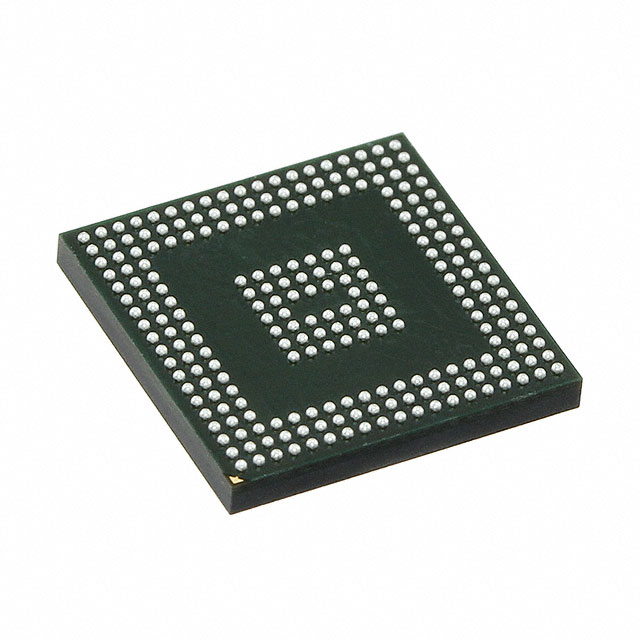
AMD XC7S25-2CSGA324C
- Part No.:
- XC7S25-2CSGA324C
- Manufacturer:
- AMD
- Category:
- FPGAs (Field Programmable Gate Array)
- Package:
- 324-LFBGA, CSPBGA
- Datasheet:
-
 XC7S25-2CSGA324C.pdf
- Description:
- IC FPGA 150 I/O 324CSGA
- Quantity:
- Payment:

- Shipping:

Inventory:369
Please send an inquiry. Send us your inquiry, and we will respond immediately.
Product details
Overview
XC7S25-2CSGA324C from AMD is a Spartan-7 FPGA with 25K logic cells, 1.2V core voltage, and 324-pin CSGA package. It integrates 180 DSP slices, 1,120 Kbits of block RAM, and supports I/O standards up to 1.8V. It is used in industrial motor control and embedded vision preprocessing.
For engineers reviewing the XC7S25-2CSGA324C datasheet, pinout, applications, or equivalent options, key selection factors include logic capacity, I/O bank configuration, single-ended LVCMOS support, and -2 speed grade timing performance for real-time control loops.
Technical Context
The XC7S25-2CSGA324C implements a 28nm low-power FPGA architecture with configurable logic blocks (CLBs), dedicated carry chains, and distributed RAM. It includes SelectIO resources supporting LVCMOS12/15/18/25/33, SSTL15, and HSTL_I standards across 10 I/O banks.
It features integrated configuration logic with dual-boot capability via SPIx4 or JTAG, and supports partial reconfiguration. The device uses a 1.2V core supply with separate VCCO per I/O bank and internal VCCAUX at 1.8V.
Key Specifications
| Parameter | Value and Actual Design Meaning |
|---|---|
| Logic Cells | 25,850 LUTs + flip-flops - enables mid-complexity digital control and protocol bridging |
| Block RAM | 1,120 Kbits - supports frame buffering for 720p video pipelines |
| DSP Slices | 180 - delivers 1.9 GMAC/s at 250 MHz for motor FOC algorithms |
| I/O Banks | 10 independent banks - allows mixed-voltage interface design without level shifters |
| Speed Grade | -2 - guarantees 667 Mbps DDR3 data rate with setup/hold margin |
| Core Voltage | 1.2V ±3% - requires tight-tolerance DC-DC regulation |
Pinout & Package
XC7S25-2CSGA324C uses a 324-ball fine-pitch CSGA (Chip-Scale Grid Array) package with 0.8 mm pitch, 15×15 array, and thermal pad. Package dimensions are 15 mm × 15 mm × 1.05 mm.
| Pin/Terminal | Circuit Role | Design Meaning |
|---|---|---|
| G18 | VCCO_0 | Output bank 0 power supply - must be decoupled with 10 µF + 100 nF near ball |
| K19 | IO_L1P_T0_0 | Bank 0 differential input - supports single-ended LVCMOS18 with internal 10kΩ pull-up |
| M20 | VCCINT | Core logic supply - regulated 1.2V source required, max ripple ±15 mV |
| P17 | M0 | Configuration mode select - tied to GND for master SPI mode |
| T15 | PROGRAM_B | Active-low configuration reset - asynchronous assertion clears CLB state |
Key Features
| Feature | Design Value |
|---|---|
| Integrated Configuration Memory | Embedded 256 Mb SPI flash eliminates external boot PROM footprint and BOM cost |
| Dual-Boot Support | Enables field-upgradable firmware with A/B image storage and fail-safe rollback |
| Partial Reconfiguration | Allows dynamic logic swapping without interrupting system operation or I/O states |
| UltraScale-Compatible Toolflow | Uses Vivado 2022.1+ with identical IP integration and timing closure methodology as higher-end families |
Applications
| Industrial Motor Control | Embedded Vision Preprocessing |
|---|---|
Use Scenario: Real-time field-oriented control (FOC) of 3-phase PMSM motors with current loop update < 1 µs. IC Role / Device Role / Timing Role: FPGA fabric executes PWM generation, ADC sampling synchronization, and Clarke/Park transforms. Use Value: 180 DSP slices deliver deterministic 250 MHz math throughput for torque/flux loop computation. | Use Scenario: On-camera Bayer-to-RGB conversion and noise reduction before JPEG encoding. IC Role / Device Role / Timing Role: Configurable logic implements line buffers, 5×5 median filters, and gamma correction LUTs. Use Value: 1,120 Kbits block RAM provides full-line storage for 1280×720@30fps RGB444 streams. |
| Programmable Logic IO Expansion | Test & Measurement Signal Generation |
Use Scenario: Adding 48-channel LVDS digital I/O to a microcontroller-based PLC base unit. IC Role / Device Role / Timing Role: Translates parallel MCU bus signals into time-aligned LVDS outputs with programmable delays. Use Value: 10 independent I/O banks enable simultaneous 1.2V, 1.8V, and 3.3V signaling without external translators. | Use Scenario: Generating synchronized multi-channel arbitrary waveforms for semiconductor ATE. IC Role / Device Role / Timing Role: Generates precise 125 MSPS sample clocks and manages waveform memory addressing. Use Value: -2 speed grade ensures 667 Mbps DDR3 interface stability for waveform buffer streaming. |
Equivalent & Alternatives
The following parts are listed as comparable options for similar FPGA-based control and interface applications.
| Alternative Part | Technical Difference | Application Difference | Selection Advice |
|---|---|---|---|
| XC7S15-2CSGA225C | 15K logic cells, 225-ball CSGA, no integrated flash | Lower gate count limits multi-protocol bridge depth; lacks dual-boot capability | Select when cost sensitivity outweighs need for field upgradeability and larger logic budget |
| XC7A35T-2CPG236C | Artix-7 family, 35K LUTs, 236-pin CPFGA, higher static power | Better DSP density but larger footprint; requires external configuration memory | Choose for higher arithmetic throughput where board area and boot reliability are secondary |
Compared with XC7S25-2CSGA324C, XC7S15-2CSGA225C reduces logic and I/O count while eliminating integrated flash, whereas XC7A35T-2CPG236C trades lower power and smaller package for greater compute density and external configuration dependency.
Availability
XC7S25-2CSGA324C is available at Aetrix Electronics and suitable for industrial motor control, embedded vision preprocessing, and programmable I/O expansion requiring stable component supply and long-term production support.
Supply support for XC7S25-2CSGA324C includes scheduled delivery planning, volume procurement assistance, BOM continuity management, traceable sourcing, and lifecycle availability coordination for OEM customers, industrial embedded developers, connected-device designers, and electronics production programs.
Manufacturer
AMD designs high-performance adaptive computing solutions including FPGAs, adaptive SoCs, and AI accelerators for data center, edge, and embedded markets.
The Spartan-7 product line targets cost-sensitive, power-efficient applications in industrial automation, vision systems, and communications infrastructure with integrated configuration and robust I/O flexibility.
FAQ
What is the maximum supported I/O standard voltage for XC7S25-2CSGA324C?
XC7S25-2CSGA324C supports single-ended I/O standards up to 1.8V (LVCMOS18) and differential standards including SSTL15 and HSTL_I. Each of its 10 I/O banks has independent VCCO, allowing mixed-voltage operation. The device does not support 2.5V or 3.3V I/O standards on any bank.
Does XC7S25-2CSGA324C include on-chip configuration memory?
Yes, XC7S25-2CSGA324C integrates 256 Mb of SPI flash memory for configuration storage. This eliminates the need for an external serial PROM and enables single-chip boot in master SPI mode. The integrated flash supports dual-image storage for fail-safe firmware updates.
What is the thermal pad requirement for XC7S25-2CSGA324C's CSGA package?
XC7S25-2CSGA324C's 324-ball CSGA package includes an exposed thermal pad on the underside. The pad must be soldered to a solid copper thermal plane on the PCB with ≥60% solder coverage. Thermal vias under the pad should be filled or capped to prevent solder wicking during reflow.
Can XC7S25-2CSGA324C perform partial reconfiguration in-system?
Yes, XC7S25-2CSGA324C supports partial reconfiguration using Vivado tools. This allows dynamic replacement of logic modules without resetting the entire device or disrupting active I/O. Implementation requires dedicated ICAP interface access and proper partitioning during RTL synthesis.
What clocking resources are available in XC7S25-2CSGA324C?
XC7S25-2CSGA324C includes two MMCM (Mixed-Mode Clock Manager) blocks, each supporting input frequency ranges from 10–800 MHz and generating up to six output clocks. These provide jitter filtering, phase shifting, and frequency synthesis for interfaces like DDR3, MIPI CSI-2, and PWM generators within the XC7S25-2CSGA324C fabric.
XC7S25-2CSGA324C Specifications
- Product attributes
- Attribute value
- Manufacturer:
- AMD
- Series:
- Spartan®-7
- Package/Case:
- 324-LFBGA, CSPBGA
- Packaging:
- Tray
- Product Status:
- Active
- Programmable:
- Not Verified
- Number of LABs/CLBs:
- 1825
- Number of Logic Elements/Cells:
- 23360
- Total RAM Bits:
- 1658880
- Number of I/O:
- 150
- Number of Gates:
- -
- Voltage - Supply:
- 0.95V ~ 1.05V
- Mounting Type:
- Surface Mount
- Operating Temperature:
- 0°C ~ 85°C (TJ)
- Grade:
- -
- Qualification:
- -
- Supplier Device Package:
- 324-CSGA (15x15)
XC7S25-2CSGA324C FAQ
1.How can I place an order for XC7S25-2CSGA324C through Aetrix?
Please submit a Request for Quotation (RFQ) for XC7S25-2CSGA324C on Aetrix. Our sales agent will provide a competitive quotation and guide you through the order confirmation once you accept the terms.
2.Are the price and stock information for XC7S25-2CSGA324C reliable?
The price and inventory of XC7S25-2CSGA324C are updated periodically and may fluctuate due to market conditions. Stock and pricing data are typically refreshed every 24 hours. Quotation validity for XC7S25-2CSGA324C is usually 5 days.
3.What payment methods are accepted for XC7S25-2CSGA324C?
We accept Wire Transfer, PayPal, Credit Card, Western Union, MoneyGram, and Escrow for XC7S25-2CSGA324C transactions.
Note: Certain payment methods may incur a processing fee.
4.How is shipping managed for XC7S25-2CSGA324C?
XC7S25-2CSGA324C orders can be shipped via leading logistics carriers, including DHL, UPS, FedEx, TNT, or Registered Mail.
Once your XC7S25-2CSGA324C order is processed, you will receive an email with the shipment details and tracking number.
Note: Tracking information may take up to 24 hours to appear. Express delivery typically takes 3–5 business days.
5.How can I obtain technical support or documentation for XC7S25-2CSGA324C?
For technical support, including XC7S25-2CSGA324C datasheets, pinout diagrams, or application guidance, please contact our engineering support team. They can provide detailed documentation and assistance for your XC7S25-2CSGA324C requirements.
6.How does Aetrix verify that XC7S25-2CSGA324C is sourced from the original manufacturer or authorized distributors?
All XC7S25-2CSGA324C products on Aetrix are procured from qualified distributors and authorized channels. Our dedicated quality assurance team conducts strict verification, including traceability checks and, if necessary, third-party testing. This ensures that XC7S25-2CSGA324C meets industry standards.
7.What is the process for return or replacement of XC7S25-2CSGA324C?
All XC7S25-2CSGA324C units undergo pre-shipment inspection (PSI). If there is an issue with XC7S25-2CSGA324C, returns or replacements are accepted under the following conditions:
1.Quantity discrepancies, incorrect items, or visible external defects (such as breakage or corrosion), acknowledged by Aetrix.
2.The issue is reported within 90 days of delivery.
3.The XC7S25-2CSGA324C part is unused and in its original packaging.
Return procedure for XC7S25-2CSGA324C:
1.Submit a request within 90 days.
2.Obtain a Return Material Authorization (RMA) from Aetrix.
XC7S25-2CSGA324C Tags
-
ICE40LP384-SG32
Lattice Semiconductor Corporation
-
ICE40UL640-CM36AI
Lattice Semiconductor Corporation
-
ICE40UL1K-CM36AI
Lattice Semiconductor Corporation
-
LCMXO2-256HC-4SG32C
Lattice Semiconductor Corporation
-
10M02DCV36C8G
Intel
-
LCMXO2-256HC-4SG32I
Lattice Semiconductor Corporation
-
ICE5LP1K-SG48ITR
Lattice Semiconductor Corporation
-
ICE40LP1K-CM36
Lattice Semiconductor Corporation
-
LCMXO2-256ZE-1SG32I
Lattice Semiconductor Corporation
-
LCMXO2-256HC-4SG48I
Lattice Semiconductor Corporation
-
ICE40LP1K-CM81
Lattice Semiconductor Corporation

-
T20W80I4
Efinix, Inc.
Tech Hub

A practical engineering and sourcing framework covering lifecycle verification, lifetime-buy calculations, replacement qualification, supplier checks and counterfeit-risk controls.

TTL and CMOS logic families differ in thresholds, loading, output drive, power and timing. This engineering guide compares 74HC and 74HCT, calculates noise margins and checks 3.3 V/5 V compatibility.

A practical engineering guide to 3.3V and 5V logic compatibility, input thresholds, resistor dividers, translator ICs, MOSFET level shifting, I2C pull-ups, timing limits and power-sequencing risks.

The 74HC595 uses push-pull logic outputs, while the TPIC6B595 uses 50 V open-drain DMOS sinks for higher-power loads. This guide compares timing, current limits, 3.3 V interfacing, load wiring, thermal…

The 74HC595 converts serial data into eight stable parallel outputs. This guide covers pin functions, shift and storage timing, OE and MR behavior, drive-current limits, cascading, voltage compatibilit…

A technical comparison of level-sensitive latches and edge-triggered flip-flops, covering timing windows, setup and hold limits, master–slave operation, time borrowing, race-through, HDL inference and…

A D latch stores one bit while Enable controls when data can pass. This reference covers gate-level operation, truth tables, transparency, setup and hold timing, LE versus OE, common ICs and practical …

An SR latch stores one bit through cross-coupled feedback. This engineering reference covers NOR and NAND implementations, truth tables, forbidden-state recovery, gated operation, switch debouncing, fa…

Latch circuits retain one bit through feedback. This technical reference covers SR and D latches, truth tables, transparency, timing limits, latch-versus-flip-flop behavior, applications and common log…

An engineering guide to LED driver operation, constant-current and constant-voltage outputs, linear and switching topologies, dimming, IC selection, calculations, replacement compatibility, and fault c…


