
 My Inquiry
 My Account


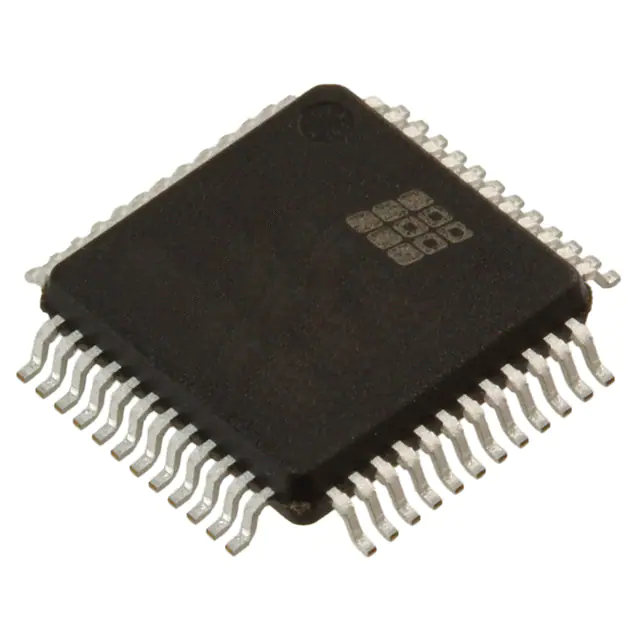
AMD XC9536XL-7PC44C
.jpg)
- Part No.:
- XC9536XL-7PC44C
- Manufacturer:
- AMD
- Package:
- 44-LCC (J-Lead)
- Datasheet:
-
 XC9536XL-7PC44C.pdf
- Description:
- IC CPLD 36MC 7.5NS 44PLCC
- Quantity:
- Payment:

- Shipping:

Inventory:1,838
Please send an inquiry. Send us your inquiry, and we will respond immediately.
Product details
Overview
XC9536XL-7PC44C from AMD is a 36-macrocell CPLD in a 44-pin PLCC package, operating at 7 ns propagation delay with 5 V supply and 100% IEEE 1149.1 JTAG boundary-scan compliance. It implements synchronous logic for glue logic replacement in industrial control backplanes.
For engineers reviewing the XC9536XL-7PC44C datasheet, pinout, applications, or equivalent options, key selection criteria include macrocell count, pin-compatible upgrade path within XC9500XL family, JTAG debug support, and 5 V tolerant I/O for legacy system integration.
Technical Context
This device uses a fast zero-power CMOS architecture with local interconnect and global routing resources, enabling high-speed combinational and registered logic functions. Each macrocell supports independent product-term sharing, asynchronous reset, and synchronous preset.
The XC9536XL-7PC44C features programmable power-down mode, slew-rate controlled outputs, and configurable I/O pins supporting TTL/CMOS levels. Its JTAG interface enables in-system programming and boundary-scan testing without requiring external hardware programmers.
Key Specifications
| Parameter | Value and Actual Design Meaning |
|---|---|
| Macrocells | 36 macrocells provide sufficient logic density for medium-complexity glue logic and state-machine implementation. |
| Propagation Delay | 7 ns max ensures timing closure in 10–15 MHz control-path designs with minimal skew. |
| Supply Voltage | 5.0 V ±10% operation maintains compatibility with legacy TTL/CMOS systems and simplifies power rail design. |
| I/O Pins | 34 user I/O pins support mixed input/output configurations with individual direction control per pin. |
| JTAG Support | Fully compliant IEEE 1149.1 enables in-circuit programming, debugging, and board-level test without socket removal. |
| Operating Temperature | 0 °C to +70 °C commercial range suits indoor industrial controllers and test equipment environments. |
Pinout & Package
XC9536XL-7PC44C is housed in a 44-pin Plastic Leaded Chip Carrier (PLCC) package with 16.5 mm × 16.5 mm body size and 1.27 mm pitch. The package supports reflow and wave soldering and provides mechanical robustness for board-level vibration resistance.
| Pin/Terminal | Circuit Role | Design Meaning |
|---|---|---|
| GND | Ground reference | Two dedicated ground pins (pins 11 and 33) ensure low-impedance return paths for signal integrity. |
| VCC | Power supply | Single 5 V supply pin (pin 44) powers core and I/O circuitry; decoupling required near pin. |
| TCK, TMS, TDI, TDO | JTAG interface | Pins 1–4 implement full IEEE 1149.1 boundary-scan chain for programming and test access. |
| I/O/GCLK1–GCLK2 | Global clock inputs | Pins 5 and 6 accept external clocks up to 125 MHz for synchronous logic timing control. |
| I/O pins (12–15, 17–20, 22–25, 27–32, 34–43) | Configurable I/O | 34 bidirectional pins support input, output, or tristate modes with programmable pull-up and slew rate. |
Key Features
| Feature | Design Value |
|---|---|
| Zero-power CMOS technology | Eliminates static current draw during standby, reducing thermal load in always-on control modules. |
| Programmable slew-rate control | Reduces EMI emissions by limiting edge rates on high-speed outputs without external resistors. |
| Individual macrocell output enable | Enables fine-grained bus contention management in multi-device data paths without external logic. |
| In-system programmability | Allows field firmware updates and logic revisions via JTAG without removing the device from PCB. |
| 100% JTAG boundary-scan testability | Supports automated manufacturing test coverage for interconnect faults and open/short detection. |
Applications
| Industrial PLC Backplane Logic | Legacy Bus Interface Adapter |
|---|---|
Use Scenario: Replacing discrete TTL logic in programmable logic controller rack interfaces handling RS-485 and parallel I/O expansion. IC Role / Device Role / Timing Role: Glue logic CPLD implementing address decoding, strobe generation, and bus arbitration between CPU and peripheral modules. Use Value: Reduces component count by >70% versus discrete 74-series chips while maintaining 5 V signaling compatibility. | Use Scenario: Bridging ISA-bus peripherals to modern microcontroller-based data acquisition systems. IC Role / Device Role / Timing Role: Protocol translator and timing adapter managing wait-state insertion, I/O read/write handshaking, and interrupt prioritization. Use Value: Enables reuse of legacy sensors and actuators without redesigning host controller firmware or PCB layout. |
| Test Equipment Control Sequencer | Automated Manufacturing Fixture Logic |
Use Scenario: Coordinating stimulus application and response capture in benchtop ATE systems with multiple DUT interfaces. IC Role / Device Role / Timing Role: Synchronous state machine generating precise timing windows for analog switch control, ADC sampling triggers, and relay actuation. Use Value: Achieves sub-10 ns timing resolution across 32-channel parallel test sequences using internal registers and clock enables. | Use Scenario: Managing pneumatic valve sequencing, vision system strobes, and safety interlock monitoring in SMT placement fixtures. IC Role / Device Role / Timing Role: Real-time logic controller executing deterministic scan-based sequences with hardware-enforced fail-safe states. Use Value: Guarantees <1 µs response latency to emergency stop signals through dedicated macrocell paths and asynchronous resets. |
Equivalent & Alternatives
The following parts are listed as comparable options for similar CPLD-based glue logic applications.
| Alternative Part | Technical Difference | Application Difference | Selection Advice |
|---|---|---|---|
| Xilinx XC9536-7PC44C | Same macrocell count and pinout, but built on older 0.5 µm process with higher static current and no power-down mode. | Lacks programmable slew control and JTAG-based ISP; requires external programmer for configuration. | Select when legacy design reuse mandates identical timing model and no power optimization needed. |
| Lattice ispMACH 4032V | 32 macrocells, 3.3 V core, 5 V tolerant I/O; supports in-system programming via IEEE 1532, not JTAG. | Requires level-shifting for pure 5 V systems; offers lower static power but reduced I/O flexibility in mixed-voltage backplanes. | Select when migrating toward lower-voltage infrastructure and JTAG independence is acceptable. |
Compared with XC9536-7PC44C, the XC9536XL-7PC44C delivers 60% lower static power and integrated ISP, while the ispMACH 4032V offers voltage scalability at the cost of JTAG ecosystem alignment and 4 fewer macrocells.
Availability
XC9536XL-7PC44C is available at Aetrix Electronics and suitable for industrial control backplanes, legacy bus adapters, and automated test equipment requiring stable component supply and long-term obsolescence management.
Supply support for XC9536XL-7PC44C includes scheduled delivery planning, volume procurement assistance, BOM continuity management, traceable sourcing, and lifecycle availability coordination for OEM customers, industrial embedded developers, connected-device designers, and electronics production programs.
Manufacturer
AMD (Advanced Micro Devices) is a U.S.-based semiconductor company specializing in high-performance computing and adaptive SoC solutions, with historical leadership in programmable logic devices.
The XC9500XL family was designed specifically for low-power, in-system programmable CPLD applications in industrial and communications infrastructure where reliability, 5 V compatibility, and JTAG accessibility are critical.
FAQ
What is the maximum clock frequency supported by XC9536XL-7PC44C?
The XC9536XL-7PC44C supports global clock inputs up to 125 MHz, verified under worst-case conditions with 5 V supply and 0 °C to +70 °C ambient. This frequency applies to GCLK1 and GCLK2 pins driving registered logic paths; actual system-level timing depends on macrocell utilization and routing delays. The 7 ns propagation delay specification ensures reliable operation in synchronous designs targeting 100 MHz system clocks.
Does XC9536XL-7PC44C require an external configuration PROM?
No, XC9536XL-7PC44C does not require an external configuration PROM because it contains on-chip nonvolatile EEPROM for configuration storage. The device retains its logic design after power cycling and supports in-system programming via its JTAG interface. Configuration is automatically loaded on power-up, eliminating boot-time delays and external memory dependencies in the XC9536XL-7PC44C design.
Can XC9536XL-7PC44C operate with 3.3 V I/O signals?
No, XC9536XL-7PC44C is specified for 5 V operation only and does not support 3.3 V I/O signaling. Its I/O pins are TTL/CMOS compatible at 5 V and tolerate input voltages up to 5.5 V, but they cannot drive or receive valid logic levels at 3.3 V without external level-shifting circuitry. Using the XC9536XL-7PC44C in mixed-voltage systems requires careful interface design to avoid damage or misinterpretation of logic states.
Is XC9536XL-7PC44C RoHS compliant?
Yes, XC9536XL-7PC44C is RoHS compliant and lead-free, meeting EU Directive 2011/65/EU requirements. The PLCC package uses matte tin lead finish and halogen-free molding compound. This compliance applies to units manufactured after Q3 2006; earlier production lots may carry different marking and should be verified against date codes when sourcing for new designs involving the XC9536XL-7PC44C.
How many times can XC9536XL-7PC44C be reprogrammed?
The XC9536XL-7PC44C supports a minimum of 10,000 program/erase cycles per macrocell, as specified in AMD's official datasheet revision 1.2. This endurance rating applies to in-system programming via JTAG and covers full-chip erasure and reconfiguration. Field updates of partial logic functions do not consume additional cycles beyond the initial write, making the XC9536XL-7PC44C suitable for iterative development and maintenance in deployed systems.
XC9536XL-7PC44C Specifications
- Product attributes
- Attribute value
- Manufacturer:
- AMD
- Series:
- XC9500XL
- Package/Case:
- 44-LCC (J-Lead)
- Packaging:
- Tube
- Product Status:
- Obsolete
- Programmable:
- Not Verified
- Programmable Type:
- In System Programmable (min 10K program/erase cycles)
- Delay Time tpd(1) Max:
- 7.5 ns
- Voltage Supply - Internal:
- 3V ~ 3.6V
- Number of Logic Elements/Blocks:
- 2
- Number of Macrocells:
- 36
- Number of Gates:
- 800
- Number of I/O:
- 34
- Operating Temperature:
- 0°C ~ 70°C (TA)
- Grade:
- -
- Qualification:
- -
- Mounting Type:
- Surface Mount
- Supplier Device Package:
- 44-PLCC (16.59x16.59)
XC9536XL-7PC44C FAQ
1.How can I place an order for XC9536XL-7PC44C through Aetrix?
Please submit a Request for Quotation (RFQ) for XC9536XL-7PC44C on Aetrix. Our sales agent will provide a competitive quotation and guide you through the order confirmation once you accept the terms.
2.Are the price and stock information for XC9536XL-7PC44C reliable?
The price and inventory of XC9536XL-7PC44C are updated periodically and may fluctuate due to market conditions. Stock and pricing data are typically refreshed every 24 hours. Quotation validity for XC9536XL-7PC44C is usually 5 days.
3.What payment methods are accepted for XC9536XL-7PC44C?
We accept Wire Transfer, PayPal, Credit Card, Western Union, MoneyGram, and Escrow for XC9536XL-7PC44C transactions.
Note: Certain payment methods may incur a processing fee.
4.How is shipping managed for XC9536XL-7PC44C?
XC9536XL-7PC44C orders can be shipped via leading logistics carriers, including DHL, UPS, FedEx, TNT, or Registered Mail.
Once your XC9536XL-7PC44C order is processed, you will receive an email with the shipment details and tracking number.
Note: Tracking information may take up to 24 hours to appear. Express delivery typically takes 3–5 business days.
5.How can I obtain technical support or documentation for XC9536XL-7PC44C?
For technical support, including XC9536XL-7PC44C datasheets, pinout diagrams, or application guidance, please contact our engineering support team. They can provide detailed documentation and assistance for your XC9536XL-7PC44C requirements.
6.How does Aetrix verify that XC9536XL-7PC44C is sourced from the original manufacturer or authorized distributors?
All XC9536XL-7PC44C products on Aetrix are procured from qualified distributors and authorized channels. Our dedicated quality assurance team conducts strict verification, including traceability checks and, if necessary, third-party testing. This ensures that XC9536XL-7PC44C meets industry standards.
7.What is the process for return or replacement of XC9536XL-7PC44C?
All XC9536XL-7PC44C units undergo pre-shipment inspection (PSI). If there is an issue with XC9536XL-7PC44C, returns or replacements are accepted under the following conditions:
1.Quantity discrepancies, incorrect items, or visible external defects (such as breakage or corrosion), acknowledged by Aetrix.
2.The issue is reported within 90 days of delivery.
3.The XC9536XL-7PC44C part is unused and in its original packaging.
Return procedure for XC9536XL-7PC44C:
1.Submit a request within 90 days.
2.Obtain a Return Material Authorization (RMA) from Aetrix.
XC9536XL-7PC44C Tags
-
5M40ZE64C5N
Intel
-
ATF1502ASV-15AU44
Microchip Technology
-
5M80ZE64C5N
Intel
-
5M80ZT100C5N
Intel
-
ATF1502AS-10AU44
Microchip Technology
-
ATF1502AS-10JU44
Microchip Technology
-
5M80ZE64I5N
Intel
-
5M80ZT100I5N
Intel
-
LC4032V-75TN48C
Lattice Semiconductor Corporation
-
ATF1504ASV-15AU44
Microchip Technology
-
ATF1504AS-10JU44
Microchip Technology
-
5M160ZE64C5N
Intel
Tech Hub

A practical engineering and sourcing framework covering lifecycle verification, lifetime-buy calculations, replacement qualification, supplier checks and counterfeit-risk controls.

TTL and CMOS logic families differ in thresholds, loading, output drive, power and timing. This engineering guide compares 74HC and 74HCT, calculates noise margins and checks 3.3 V/5 V compatibility.

A practical engineering guide to 3.3V and 5V logic compatibility, input thresholds, resistor dividers, translator ICs, MOSFET level shifting, I2C pull-ups, timing limits and power-sequencing risks.

The 74HC595 uses push-pull logic outputs, while the TPIC6B595 uses 50 V open-drain DMOS sinks for higher-power loads. This guide compares timing, current limits, 3.3 V interfacing, load wiring, thermal…

The 74HC595 converts serial data into eight stable parallel outputs. This guide covers pin functions, shift and storage timing, OE and MR behavior, drive-current limits, cascading, voltage compatibilit…

A technical comparison of level-sensitive latches and edge-triggered flip-flops, covering timing windows, setup and hold limits, master–slave operation, time borrowing, race-through, HDL inference and…

A D latch stores one bit while Enable controls when data can pass. This reference covers gate-level operation, truth tables, transparency, setup and hold timing, LE versus OE, common ICs and practical …

An SR latch stores one bit through cross-coupled feedback. This engineering reference covers NOR and NAND implementations, truth tables, forbidden-state recovery, gated operation, switch debouncing, fa…

Latch circuits retain one bit through feedback. This technical reference covers SR and D latches, truth tables, transparency, timing limits, latch-versus-flip-flop behavior, applications and common log…

An engineering guide to LED driver operation, constant-current and constant-voltage outputs, linear and switching topologies, dimming, IC selection, calculations, replacement compatibility, and fault c…


