
 My Inquiry
 My Account


AMD XCAU15P-2SBVB484I
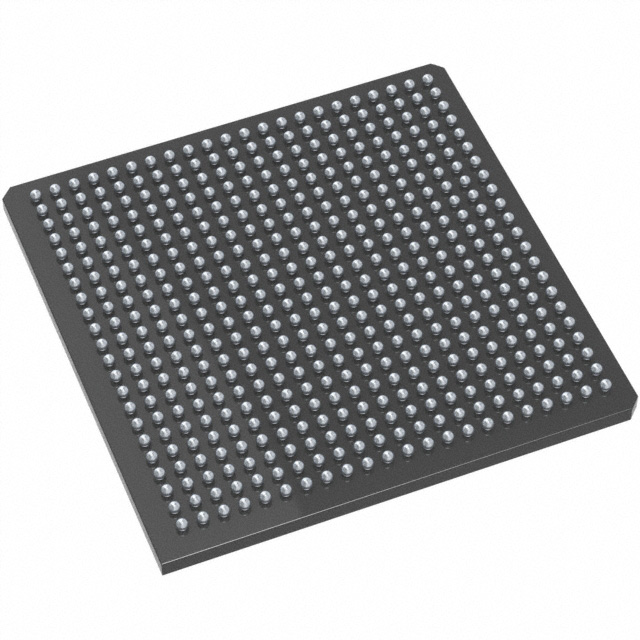
- Part No.:
- XCAU15P-2SBVB484I
- Manufacturer:
- AMD
- Category:
- FPGAs (Field Programmable Gate Array)
- Package:
- 484-BFBGA, FCBGA
- Datasheet:
-
 XCAU15P-2SBVB484I.pdf
- Description:
- IC FPGA ARTIXUP 484BGA
- Quantity:
- Payment:

- Shipping:

Inventory:1,376
Please send an inquiry. Send us your inquiry, and we will respond immediately.
Product details
Overview
XCAU15P-2SBVB484I from AMD is a high-performance adaptive compute accelerator platform (ACAP) based on the Versal AI Core series, featuring 152 AI Engines, 2.5 MB of on-chip memory, and support for PCIe Gen4 x16 interface - deployed in data center acceleration, AI inference, and real-time signal processing applications.
For engineers reviewing the XCAU15P-2SBVB484I datasheet, pinout, applications, or equivalent options, key selection criteria include AI Engine count, memory bandwidth, PCIe Gen4 compliance, thermal design power (TDP), and package ball map compatibility with carrier board layout.
Technical Context
The XCAU15P-2SBVB484I integrates a dual-core Arm Cortex-A72 application processor, a real-time Arm Cortex-R5F subsystem, and programmable logic fabric with 1.2M logic cells. It supports DDR4/DDR5 memory interfaces and includes hardened 100G Ethernet MACs and 100G Interlaken cores.
Its AI Engine array delivers up to 26.5 TOPS at INT8 precision with deterministic latency, and the device implements AXI-Stream and AXI-MM interconnects for heterogeneous data movement between processors, AI Engines, and PL resources.
Key Specifications
| Parameter | Value and Actual Design Meaning |
|---|---|
| AI Engine Count | 152 engines - enables parallel execution of AI inference kernels with scalable throughput |
| Logic Cells | 1.2 million - supports complex RTL-based accelerators and protocol bridging logic |
| On-Chip Memory | 2.5 MB SRAM - provides low-latency buffer storage for AI Engine dataflow and control structures |
| PCIe Interface | Gen4 x16 - delivers 32 GB/s bidirectional host bandwidth for high-throughput data ingestion |
| TDP | 45 W - defines thermal envelope for air-cooled server card integration |
| Memory Support | DDR4/DDR5 up to 3200 MT/s - enables high-bandwidth off-chip data access for large model weights |
Pinout & Package
Package: FC-BGA 484-ball, 23 mm × 23 mm, 0.8 mm pitch, RoHS-compliant, with thermal lid and integrated heat spreader.
| Pin/Terminal | Circuit Role | Design Meaning |
|---|---|---|
| VCCINT | Core supply rail | 1.0 V ±3% for AI Engine and PL logic; requires low-noise regulation |
| VCCAUX | Auxiliary supply | 1.8 V for configuration, clocking, and I/O banks; shared across multiple voltage domains |
| PCIE_RX[15:0] | PCIe Gen4 differential receiver | High-speed serial input lanes supporting x16 link width and 16 GT/s per lane |
| PCIE_TX[15:0] | PCIe Gen4 differential transmitter | High-speed serial output lanes with embedded clock recovery and equalization |
| MGTAVCC | Transceiver analog supply | 0.92 V for multi-gigabit transceivers; sensitive to ripple and noise |
Key Features
| Feature | Design Value |
|---|---|
| Heterogeneous architecture | Combines scalar (Arm A72/R5F), adaptable (PL), and vector (AI Engine) compute units for workload-specific acceleration |
| Hardened 100G Ethernet | Reduces FPGA logic usage and latency for network-intensive AI pipelines; no soft IP synthesis required |
| AXI-Stream interconnect | Enables zero-copy streaming between AI Engines and PL without CPU intervention or memory bottlenecks |
| Deterministic AI latency | Fixed-cycle AI Engine scheduling ensures sub-100 µs inference response time for real-time control loops |
Applications
| AI Inference Acceleration | 5G Baseband Processing |
|---|---|
Use Scenario: Real-time video analytics on edge servers with concurrent object detection and classification. IC Role / Device Role / Timing Role: Primary AI accelerator executing quantized CNN models via AI Engines while managing data flow through PL-based DMA controllers. Use Value: Delivers 26.5 TOPS at INT8 with deterministic latency, enabling <100 ms end-to-end inference pipeline under 45 W TDP. | Use Scenario: Layer 1 PHY and L2 scheduler acceleration in Open RAN distributed units (O-DU). IC Role / Device Role / Timing Role: Real-time signal processing unit handling FFT, channel estimation, and precoding using AI Engines and hardened 100G Interlaken. Use Value: Supports 100 Gbps fronthaul interface and sub-1 µs timing alignment for massive MIMO beamforming. |
| Radar Signal Processing | Data Center SmartNIC Offload |
Use Scenario: Automotive radar point cloud generation and CFAR detection in ADAS domain controllers. IC Role / Device Role / Timing Role: Adaptive compute platform performing range-Doppler FFT, beamforming, and clustering in hardware-accelerated dataflow. Use Value: Achieves 128-point FFT in <200 ns per chirp with synchronized ADC interface and PL-based timing control. | Use Scenario: TLS encryption/decryption and packet classification in cloud infrastructure servers. IC Role / Device Role / Timing Role: Programmable offload engine implementing crypto engines in PL and stateful flow matching in AI Engines. Use Value: Processes 40 Gbps encrypted traffic with <5 µs added latency using dedicated AES-GCM and SHA-3 hardware blocks. |
Equivalent & Alternatives
The following parts are listed as comparable options for similar adaptive compute acceleration applications.
| Alternative Part | Technical Difference | Application Difference | Selection Advice |
|---|---|---|---|
| XCAU15P-2SBVA484I | Same die, lower speed grade (-2 vs -2S), 35 W TDP, reduced AI Engine frequency | Suitable for thermally constrained edge deployments where peak throughput is secondary to power efficiency | Select when system cooling budget limits sustained 45 W operation but same logic capacity and I/O count are required |
| XCAU25P-2SBVB484I | Higher-tier variant with 256 AI Engines, 3.2 MB on-chip memory, and 65 W TDP | Targeted at cloud-scale inference clusters requiring >40 TOPS and higher memory bandwidth | Choose when application demands >50% more AI compute density and can accommodate increased thermal and power delivery requirements |
Compared with XCAU15P-2SBVB484I, the XCAU15P-2SBVA484I trades peak AI performance for lower power, while the XCAU25P-2SBVB484I extends both compute density and memory capacity at higher thermal cost - enabling tiered deployment across edge, enterprise, and cloud environments.
Availability
XCAU15P-2SBVB484I is available at Aetrix Electronics and suitable for AI inference acceleration, 5G baseband processing, and radar signal processing requiring stable component supply across multi-year production cycles.
Supply support for XCAU15P-2SBVB484I includes scheduled delivery planning, volume procurement assistance, BOM continuity management, traceable sourcing, and lifecycle availability coordination for OEM customers, industrial embedded developers, connected-device designers, and electronics production programs.
Manufacturer
AMD designs high-performance computing, graphics, and adaptive SoC solutions for data centers, client devices, and embedded systems.
The Versal AI Core series - including XCAU15P-2SBVB484I - targets AI-driven workloads demanding heterogeneous compute, low-latency I/O, and hardware-programmable acceleration in real-time systems.
FAQ
What is the maximum operating frequency of the AI Engines in XCAU15P-2SBVB484I?
The AI Engines in XCAU15P-2SBVB484I operate at up to 1.2 GHz under the -2S speed grade, delivering deterministic cycle-accurate execution for INT8 and FP16 workloads. This frequency is validated across temperature and voltage corners and directly enables the 26.5 TOPS specification. XCAU15P-2SBVB484I maintains this rate with full utilization of its 152-engine array under thermal limits.
Does XCAU15P-2SBVB484I support PCIe Gen5?
No, XCAU15P-2SBVB484I supports PCIe Gen4 x16 only, with a maximum data rate of 16 GT/s per lane. It does not implement PCIe Gen5 physical layer circuitry or protocol stack extensions. Systems requiring Gen5 must use higher-tier Versal devices such as the Premium series. XCAU15P-2SBVB484I's Gen4 interface remains fully compatible with existing server motherboards and switch fabrics.
What package type and ball pitch does XCAU15P-2SBVB484I use?
XCAU15P-2SBVB484I uses a 484-ball Fine-Pitch Ball Grid Array (FC-BGA) package measuring 23 mm × 23 mm with 0.8 mm ball pitch. The package includes a thermal lid and integrated heat spreader for reliable conduction cooling in PCIe add-in cards. XCAU15P-2SBVB484I's ball map is identical to other Versal AI Core family members in the SBVB484I footprint.
Can XCAU15P-2SBVB484I run Linux on its Arm Cortex-A72 cores?
Yes, XCAU15P-2SBVB484I supports full Linux execution on its dual-core Arm Cortex-A72 application processor, with boot from QSPI flash or SD card, MMU-enabled memory management, and peripheral drivers for UART, I2C, SPI, and PCIe. XCAU15P-2SBVB484I includes PS-PL interface bridges enabling Linux applications to offload tasks to AI Engines and programmable logic via standardized APIs.
Is XCAU15P-2SBVB484I pin-compatible with XCAU15P-2SBVA484I?
Yes, XCAU15P-2SBVB484I is mechanically and electrically pin-compatible with XCAU15P-2SBVA484I - sharing identical FC-BGA 484-ball mapping, voltage rail assignments, and I/O bank configurations. XCAU15P-2SBVB484I differs only in speed grade and thermal specifications, allowing drop-in replacement in existing PCB layouts when higher performance is needed.
XCAU15P-2SBVB484I Specifications
- Product attributes
- Attribute value
- Manufacturer:
- AMD
- Series:
- Artix® UltraScale+
- Package/Case:
- 484-BFBGA, FCBGA
- Packaging:
- Tray
- Product Status:
- Active
- Programmable:
- Not Verified
- Number of LABs/CLBs:
- 9720
- Number of Logic Elements/Cells:
- 170100
- Total RAM Bits:
- 5347738
- Number of I/O:
- 204
- Number of Gates:
- -
- Voltage - Supply:
- 0.825V ~ 0.876V
- Mounting Type:
- Surface Mount
- Operating Temperature:
- -40°C ~ 100°C (TJ)
- Grade:
- -
- Qualification:
- -
- Supplier Device Package:
- 484-FCBGA (19x19)
XCAU15P-2SBVB484I FAQ
1.How can I place an order for XCAU15P-2SBVB484I through Aetrix?
Please submit a Request for Quotation (RFQ) for XCAU15P-2SBVB484I on Aetrix. Our sales agent will provide a competitive quotation and guide you through the order confirmation once you accept the terms.
2.Are the price and stock information for XCAU15P-2SBVB484I reliable?
The price and inventory of XCAU15P-2SBVB484I are updated periodically and may fluctuate due to market conditions. Stock and pricing data are typically refreshed every 24 hours. Quotation validity for XCAU15P-2SBVB484I is usually 5 days.
3.What payment methods are accepted for XCAU15P-2SBVB484I?
We accept Wire Transfer, PayPal, Credit Card, Western Union, MoneyGram, and Escrow for XCAU15P-2SBVB484I transactions.
Note: Certain payment methods may incur a processing fee.
4.How is shipping managed for XCAU15P-2SBVB484I?
XCAU15P-2SBVB484I orders can be shipped via leading logistics carriers, including DHL, UPS, FedEx, TNT, or Registered Mail.
Once your XCAU15P-2SBVB484I order is processed, you will receive an email with the shipment details and tracking number.
Note: Tracking information may take up to 24 hours to appear. Express delivery typically takes 3–5 business days.
5.How can I obtain technical support or documentation for XCAU15P-2SBVB484I?
For technical support, including XCAU15P-2SBVB484I datasheets, pinout diagrams, or application guidance, please contact our engineering support team. They can provide detailed documentation and assistance for your XCAU15P-2SBVB484I requirements.
6.How does Aetrix verify that XCAU15P-2SBVB484I is sourced from the original manufacturer or authorized distributors?
All XCAU15P-2SBVB484I products on Aetrix are procured from qualified distributors and authorized channels. Our dedicated quality assurance team conducts strict verification, including traceability checks and, if necessary, third-party testing. This ensures that XCAU15P-2SBVB484I meets industry standards.
7.What is the process for return or replacement of XCAU15P-2SBVB484I?
All XCAU15P-2SBVB484I units undergo pre-shipment inspection (PSI). If there is an issue with XCAU15P-2SBVB484I, returns or replacements are accepted under the following conditions:
1.Quantity discrepancies, incorrect items, or visible external defects (such as breakage or corrosion), acknowledged by Aetrix.
2.The issue is reported within 90 days of delivery.
3.The XCAU15P-2SBVB484I part is unused and in its original packaging.
Return procedure for XCAU15P-2SBVB484I:
1.Submit a request within 90 days.
2.Obtain a Return Material Authorization (RMA) from Aetrix.
XCAU15P-2SBVB484I Tags
-
ICE40LP384-SG32
Lattice Semiconductor Corporation
-
ICE40UL640-CM36AI
Lattice Semiconductor Corporation
-
ICE40UL1K-CM36AI
Lattice Semiconductor Corporation
-
LCMXO2-256HC-4SG32C
Lattice Semiconductor Corporation
-
10M02DCV36C8G
Intel
-
LCMXO2-256HC-4SG32I
Lattice Semiconductor Corporation
-
ICE5LP1K-SG48ITR
Lattice Semiconductor Corporation
-
ICE40LP1K-CM36
Lattice Semiconductor Corporation
-
LCMXO2-256ZE-1SG32I
Lattice Semiconductor Corporation
-
LCMXO2-256HC-4SG48I
Lattice Semiconductor Corporation
-
ICE40LP1K-CM81
Lattice Semiconductor Corporation

-
T20W80I4
Efinix, Inc.
Tech Hub

A practical engineering and sourcing framework covering lifecycle verification, lifetime-buy calculations, replacement qualification, supplier checks and counterfeit-risk controls.

TTL and CMOS logic families differ in thresholds, loading, output drive, power and timing. This engineering guide compares 74HC and 74HCT, calculates noise margins and checks 3.3 V/5 V compatibility.

A practical engineering guide to 3.3V and 5V logic compatibility, input thresholds, resistor dividers, translator ICs, MOSFET level shifting, I2C pull-ups, timing limits and power-sequencing risks.

The 74HC595 uses push-pull logic outputs, while the TPIC6B595 uses 50 V open-drain DMOS sinks for higher-power loads. This guide compares timing, current limits, 3.3 V interfacing, load wiring, thermal…

The 74HC595 converts serial data into eight stable parallel outputs. This guide covers pin functions, shift and storage timing, OE and MR behavior, drive-current limits, cascading, voltage compatibilit…

A technical comparison of level-sensitive latches and edge-triggered flip-flops, covering timing windows, setup and hold limits, master–slave operation, time borrowing, race-through, HDL inference and…

A D latch stores one bit while Enable controls when data can pass. This reference covers gate-level operation, truth tables, transparency, setup and hold timing, LE versus OE, common ICs and practical …

An SR latch stores one bit through cross-coupled feedback. This engineering reference covers NOR and NAND implementations, truth tables, forbidden-state recovery, gated operation, switch debouncing, fa…

Latch circuits retain one bit through feedback. This technical reference covers SR and D latches, truth tables, transparency, timing limits, latch-versus-flip-flop behavior, applications and common log…

An engineering guide to LED driver operation, constant-current and constant-voltage outputs, linear and switching topologies, dimming, IC selection, calculations, replacement compatibility, and fault c…


