
 My Inquiry
 My Account


AMD XCCACE-TQG144I
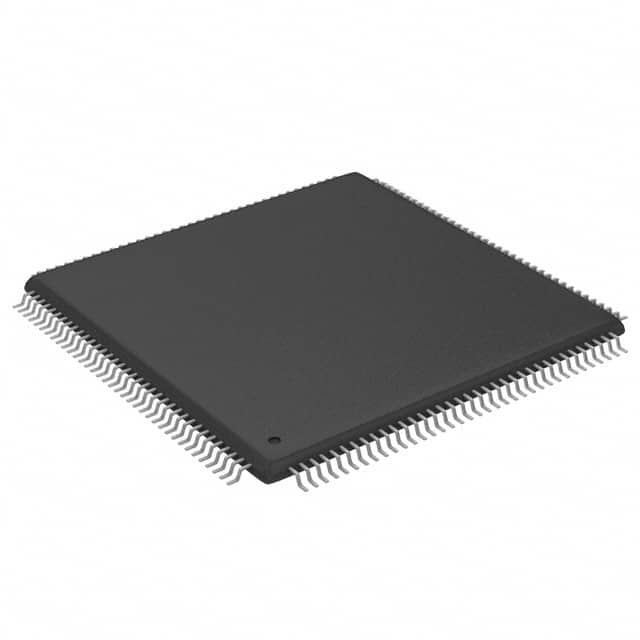
- Part No.:
- XCCACE-TQG144I
- Manufacturer:
- AMD
- Category:
- Controllers
- Package:
- 144-LQFP
- Datasheet:
-
 XCCACE-TQG144I.pdf
- Description:
- IC ACE CONTROLLER CHIP 144TQFP
- Quantity:
- Payment:

- Shipping:

Inventory:2,835
Please send an inquiry. Send us your inquiry, and we will respond immediately.
Product details
Overview
XCCACE-TQG144I from AMD is a System ACE CompactFlash controller for FPGA configuration management and nonvolatile bitstream storage. The device is designed to sit between CompactFlash media and one or more target FPGAs, giving the board a pre-engineered configuration subsystem that supports stored bitstreams, JTAG-based loading, and embedded control access without requiring a dedicated host processor during basic configuration operation.
The System ACE configuration architecture provides XCCACE-TQG144I integrates CompactFlash control, an MPU port, a Test JTAG port, and a Configuration JTAG port for flexible FPGA configuration and management. For engineers reviewing the XCCACE-TQG144I datasheet, XCCACE-TQG144I pinout, XCCACE-TQG144I application, or XCCACE-TQG144I equivalent, this device is widely used in FPGA configuration subsystems, embedded control boards, communications platforms, instrumentation hardware, multi-FPGA systems, and nonvolatile programmable logic storage architectures.
Technical Context
In FPGA-based systems, XCCACE-TQG144I is not a logic device itself; it is a configuration-management controller. It arbitrates between stored configuration data and one or more target FPGAs, using JTAG-based configuration control and CompactFlash media as the nonvolatile storage element for configuration collections and system files.
The System ACE architecture is useful when a board needs field-changeable configuration images, CompactFlash-based storage, and optional MPU-level access to status and control registers. The device also includes status-indicator support and reset behavior for the configuration subsystem, which helps embedded designers monitor configuration progress and error conditions at board level.
XCCACE-TQG144I is commonly used in multi-FPGA or serviceable FPGA platforms where removable configuration media, embedded access, and flexible startup management are more valuable than a simpler one-time serial or parallel configuration memory flow.
Key Specifications
| Parameter | Value and Actual Design Meaning |
|---|---|
| Device Type | System ACE CompactFlash configuration controller for FPGA systems. |
| Primary Function | Manages FPGA configuration data and interfaces between CompactFlash storage and target FPGA JTAG chains. |
| Storage Interface | CompactFlash Type I / Type II media support for nonvolatile configuration storage. |
| Configuration Interfaces | CompactFlash, MPU, Test JTAG, and Configuration JTAG interfaces. |
| Configuration Throughput | Selectable JTAG-based configuration throughput up to about 16.7Mbit/s class per official datasheet description. |
| Package | 144-LQFP package; tube packing in the provided spreadsheet row. |
| Board Role | Configuration manager for FPGA and multi-FPGA embedded platforms. |
| Design Value | Provides removable nonvolatile bitstream storage and flexible configuration control without a full host processor requirement. |
Pinout & Package
The XCCACE-TQG144I pinout is organized around the CompactFlash bus, MPU interface, Test JTAG interface, Configuration JTAG interface, status indicators, reset/control pins, and dedicated power rails for core and interface domains.
For PCB design, CompactFlash bus routing, JTAG-chain continuity, and the relationship between VCCH and VCCL interface levels should be planned carefully so the configuration controller can communicate reliably with storage media and target FPGAs.
| Pin / Function | PCB Design and Circuit Role |
|---|---|
| CompactFlash Address/Data Pins | Provide the media-side bus interface for configuration-file storage access and CompactFlash command/data transfer. |
| CFGJTAG Pins | Drive the target FPGA configuration JTAG chain for bitstream loading and related control. |
| TSTJTAG Pins | Support board-test and JTAG-based access around the System ACE subsystem. |
| MPU Port Pins | Allow an embedded processor or local controller to access status, control, and storage-management functions. |
| STATLED / ERRLED | Status-indicator outputs for configuration progress and error reporting. |
| RESET / POR Control | Manage device-level and configuration-controller reset behavior. |
| VCCH / VCCL | Provide interface and core supply domains for the controller and I/O level planning. |
| GND | Ground return supporting signal integrity across storage and JTAG interfaces. |
Key Features
- CompactFlash-based nonvolatile configuration storage supports removable or field-changeable images.
- Multiple interfaces allow CompactFlash, MPU, and JTAG access paths.
- Status indicators help board-level monitoring of configuration progress and errors.
- Configuration-JTAG management supports one or more target FPGA devices.
- Embedded control access is possible through the MPU port.
- The controller architecture simplifies multi-image FPGA configuration subsystems.
Applications
| FPGA Configuration Subsystems | Multi-FPGA Systems |
|---|---|
|
Use Scenario: Used on FPGA boards that need removable or rewritable nonvolatile configuration storage. IC Role: Manages CompactFlash-stored bitstreams and delivers them to target FPGAs through JTAG. Use Value: Improves field serviceability and configuration flexibility. |
Use Scenario: Used where several target devices must be configured from one managed storage source. IC Role: Provides centralized configuration control and storage arbitration. Use Value: Reduces dependence on separate per-device configuration memories. |
| Embedded Control Platforms | Communications and Instrumentation Hardware |
|
Use Scenario: Used in systems where a local processor needs to inspect or manage configuration resources. IC Role: Exposes MPU-accessible status and control functions. Use Value: Supports deeper board-management integration. |
Use Scenario: Used in boards that must preserve multiple bitstreams or support updateable configuration media. IC Role: Creates a flexible nonvolatile configuration architecture around programmable logic. Use Value: Helps maintain serviceability and product-update capability. |
Equivalent & Alternatives
When evaluating a XCCACE-TQG144I equivalent, engineers should compare CompactFlash support, JTAG configuration management, removable storage workflow, package, and host-control interface needs.
| Alternative Part | Technical Difference | Application Difference | Selection Advice |
|---|---|---|---|
| XCCACE-TQ144I | Non-Pb-free System ACE controller variant associated with the same overall controller function but not supported by the same current official datasheet path. | Used in legacy boards built around the older System ACE controller package option. | Choose only when the existing board and legacy part support are already validated. |
| XCF32PVO48C | AMD Platform Flash solution for FPGA configuration storage using a different nonvolatile configuration architecture rather than CompactFlash-based management. | Used in FPGA systems that need onboard configuration memory without a CompactFlash controller subsystem. | Choose according to storage media preference, update method, JTAG flow, and configuration architecture. |
Compared with XCCACE-TQ144I, XCCACE-TQG144I is the current official-datasheet-backed System ACE controller option visible in current AMD source material. XCCACE-TQG144I vs XCF32PVO48C selection depends on whether the board needs a CompactFlash-based configuration manager or a more conventional dedicated configuration-memory approach.
Quality
XCCACE-TQG144I should be sourced as original AMD programmable-logic support inventory through traceable supply channels. Quality checks may include package inspection, top-mark validation, CompactFlash bus continuity review, and JTAG-based configuration-function verification.
Production validation should include media detection, configuration transfer integrity, reset behavior, status-indicator operation, MPU-access register access, and target FPGA configuration-chain testing.
Availability
XCCACE-TQG144I is suitable for FPGA configuration-management subsystems that require CompactFlash-based bitstream storage and flexible JTAG-centric configuration control.
Supply support may include volume procurement planning, scheduled delivery arrangements, traceable sourcing management, and long-term supply support for OEM, industrial electronics, automotive electronics, and embedded product programs. Sample and NPI supply support, as well as urgent in-stock supply support, can also be arranged for prototype builds, pilot runs, and time-critical production needs.
Supply support may include volume procurement planning, scheduled delivery arrangements, traceable sourcing management, and long-term supply support for OEM, industrial electronics, automotive electronics, and embedded product programs. Sample and NPI supply support, as well as urgent in-stock supply support, can also be arranged for prototype builds, pilot runs, and time-critical production needs.
Manufacturer
AMD is a semiconductor manufacturer whose adaptive computing and programmable logic portfolio includes FPGA devices, CPLDs, configuration solutions, embedded processing platforms, and related development technologies for industrial, communication, computing, automotive, and embedded electronic systems.
The System ACE family is an FPGA configuration-solution platform built around CompactFlash-based nonvolatile storage and controller-driven JTAG configuration management for programmable logic systems.
FAQ
What is XCCACE-TQG144I used for?
XCCACE-TQG144I is used for FPGA configuration management, CompactFlash-based bitstream storage, and multi-image configuration subsystems in programmable logic platforms.
Where can I find the XCCACE-TQG144I datasheet download?
The XCCACE-TQG144I datasheet is available from AMD as the official System ACE CompactFlash Solution data sheet.
What should be considered in XCCACE-TQG144I pinout design?
Designers should plan CompactFlash routing, JTAG-chain continuity, reset behavior, and VCCH/VCCL interface-level relationships so the configuration controller can communicate cleanly with storage media and target FPGAs.
Is XCCACE-TQG144I an FPGA?
No. It is a System ACE configuration controller used to manage FPGA bitstream storage and JTAG-based configuration flow.
What are common XCCACE-TQG144I equivalent solutions?
Common candidates include legacy XCCACE-TQ144I boards and AMD Platform Flash devices depending on whether the design needs CompactFlash-based configuration management or a different nonvolatile configuration architecture.
XCCACE-TQG144I Specifications
- Product attributes
- Attribute value
- Manufacturer:
- AMD
- Series:
- -
- Package/Case:
- 144-LQFP
- Packaging:
- Tube
- Product Status:
- Obsolete
- Controller Type:
- CompactFlash
- Voltage - Supply:
- 2.25V ~ 3.6V
- Operating Temperature:
- -40°C ~ 85°C
- Mounting Type:
- Surface Mount
- Supplier Device Package:
- 144-TQFP (20x20)
XCCACE-TQG144I FAQ
1.How can I place an order for XCCACE-TQG144I through Aetrix?
Please submit a Request for Quotation (RFQ) for XCCACE-TQG144I on Aetrix. Our sales agent will provide a competitive quotation and guide you through the order confirmation once you accept the terms.
2.Are the price and stock information for XCCACE-TQG144I reliable?
The price and inventory of XCCACE-TQG144I are updated periodically and may fluctuate due to market conditions. Stock and pricing data are typically refreshed every 24 hours. Quotation validity for XCCACE-TQG144I is usually 5 days.
3.What payment methods are accepted for XCCACE-TQG144I?
We accept Wire Transfer, PayPal, Credit Card, Western Union, MoneyGram, and Escrow for XCCACE-TQG144I transactions.
Note: Certain payment methods may incur a processing fee.
4.How is shipping managed for XCCACE-TQG144I?
XCCACE-TQG144I orders can be shipped via leading logistics carriers, including DHL, UPS, FedEx, TNT, or Registered Mail.
Once your XCCACE-TQG144I order is processed, you will receive an email with the shipment details and tracking number.
Note: Tracking information may take up to 24 hours to appear. Express delivery typically takes 3–5 business days.
5.How can I obtain technical support or documentation for XCCACE-TQG144I?
For technical support, including XCCACE-TQG144I datasheets, pinout diagrams, or application guidance, please contact our engineering support team. They can provide detailed documentation and assistance for your XCCACE-TQG144I requirements.
6.How does Aetrix verify that XCCACE-TQG144I is sourced from the original manufacturer or authorized distributors?
All XCCACE-TQG144I products on Aetrix are procured from qualified distributors and authorized channels. Our dedicated quality assurance team conducts strict verification, including traceability checks and, if necessary, third-party testing. This ensures that XCCACE-TQG144I meets industry standards.
7.What is the process for return or replacement of XCCACE-TQG144I?
All XCCACE-TQG144I units undergo pre-shipment inspection (PSI). If there is an issue with XCCACE-TQG144I, returns or replacements are accepted under the following conditions:
1.Quantity discrepancies, incorrect items, or visible external defects (such as breakage or corrosion), acknowledged by Aetrix.
2.The issue is reported within 90 days of delivery.
3.The XCCACE-TQG144I part is unused and in its original packaging.
Return procedure for XCCACE-TQG144I:
1.Submit a request within 90 days.
2.Obtain a Return Material Authorization (RMA) from Aetrix.
XCCACE-TQG144I Tags

-
BQ2201SN-N
Texas Instruments
-
DS1314S+
Analog Devices Inc./Maxim Integrated

-
BQ2205LYPW
Texas Instruments
-
MXD1210CSA+
Analog Devices Inc./Maxim Integrated
-
MXD1210CPA+
Analog Devices Inc./Maxim Integrated

-
4RCD0232KC1ATG
Renesas Electronics Corporation
-
DS1312S-2+
Analog Devices Inc./Maxim Integrated
-
DS1314S-2+T&R
Analog Devices Inc./Maxim Integrated
-
DS1321S+
Analog Devices Inc./Maxim Integrated
-
DS1312S+
Analog Devices Inc./Maxim Integrated
-
MXD1210ESA+
Analog Devices Inc./Maxim Integrated
-
DS1321E+
Analog Devices Inc./Maxim Integrated
Tech Hub

An engineering guide to LED driver operation, constant-current and constant-voltage outputs, linear and switching topologies, dimming, IC selection, calculations, replacement compatibility, and fault c…

Operational amplifier guide covering op amp basics, feedback, ideal vs real op amps, common configurations, buffer circuits, offset, bias current, gain-bandwidth, slew rate, rail-to-rail limits and sel…

Jumper cables guide covering safe connection order, red and black clamp placement, final ground connection, cable gauge, length, clamp quality, copper vs CCA cables, jump starter comparison and battery…

LDO regulator guide covering low dropout voltage, power dissipation, thermal design, PSRR, output noise, capacitor stability, adjustable LDO circuits, LDO vs buck converter and datasheet selection chec…

Conditional Access Module guide covering CAM meaning, CI/CI+ interface, smart card authorization, DVB security workflow, TV and set-top box compatibility, internal electronics, ESD protection, connecto…

Guide to electronic component obsolescence covering EOL risk, PCN/PDN notices, last-time buy planning, replacement options, form-fit-function validation, counterfeit risk and BOM lifecycle management.

18650 battery guide covering lithium-ion cell basics, 3.6V/3.7V voltage, 4.2V charging, mAh and Wh capacity, protected cells, chargers, BMS, series-parallel packs, holders, welding and sourcing checks.…

Hall effect sensor guide covering working principle, linear and digital sensors, Arduino circuits, current sensing, speed detection, automotive applications, A3144 examples, signal filtering and datash…

Product Change Notification guide for electronic components, covering PCN meaning, PCN vs PDN/EOL, common change types, risk levels, form-fit-function review, engineering validation, BOM control, LTB/L…

A practical guide to blend door actuators, covering HVAC function, symptoms, location, AC and heater issues, reset and calibration, replacement cost, electrical diagnosis, compatibility checks, and rep…


