
 My Inquiry
 My Account


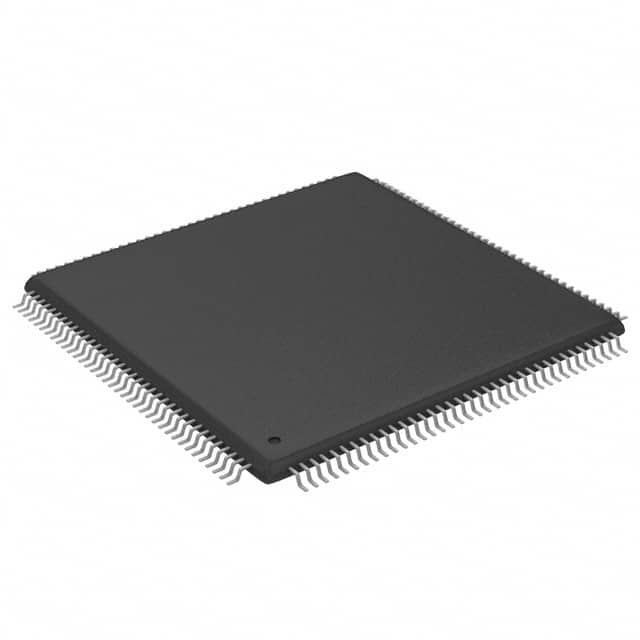
AMD XCS30XL-4TQG144C
- Part No.:
- XCS30XL-4TQG144C
- Manufacturer:
- AMD
- Category:
- FPGAs (Field Programmable Gate Array)
- Package:
- 144-LQFP
- Datasheet:
-
 XCS30XL-4TQG144C.pdf
- Description:
- IC FPGA 113 I/O 144TQFP
- Quantity:
- Payment:

- Shipping:

Inventory:3,567
Please send an inquiry. Send us your inquiry, and we will respond immediately.
Product details
Overview
XCS30XL-4TQG144C from AMD is a Spartan-XL family FPGA with 30,000 system gates, 144-pin TQFP package, -4 speed grade, and commercial temperature range (0°C to 70°C). It implements synchronous logic in digital systems requiring reconfigurable logic fabric, embedded control, and glue logic replacement in industrial I/O modules.
For engineers reviewing the XCS30XL-4TQG144C datasheet, pinout, applications, or equivalent options, key selection factors include gate count, I/O count (118 user I/Os), speed grade (-4), TQFP-144 thermal profile, and legacy Spartan-XL configuration interface compatibility.
Technical Context
The XCS30XL-4TQG144C uses a segmented architecture with configurable logic blocks (CLBs), input/output blocks (IOBs), and interconnect resources. It supports in-system programming via JTAG and configuration through serial PROM or parallel mode.
It operates at 3.3 V core and I/O supply, includes 118 user-programmable I/O pins, and features dedicated carry logic for arithmetic functions. Configuration is volatile and requires external PROM for power-up initialization.
Key Specifications
| Parameter | Value and Actual Design Meaning |
|---|---|
| Logic Gates | 30,000 system gates - defines maximum combinational logic capacity for logic synthesis |
| Speed Grade | -4 - guarantees 4 ns CLB-to-CLB propagation delay under specified conditions |
| User I/O Pins | 118 - supports high-density peripheral interfacing without external bus buffers |
| Package | TQFP-144 - 20 mm × 20 mm footprint with 0.5 mm pitch, suitable for cost-sensitive PCB layouts |
| Operating Temp | 0°C to +70°C - validated for commercial-grade industrial control and instrumentation environments |
| Voltage Supply | 3.3 V ±10% - requires single-supply rail; no separate core/I/O voltage domains |
Pinout & Package
TQFP-144 (Thin Quad Flat Package) with 0.5 mm lead pitch, 20 mm × 20 mm body, and exposed pad not present. RoHS-compliant, lead-free finish.
| Pin/Terminal | Circuit Role | Design Meaning |
|---|---|---|
| GCK0–GCK3 | Global Clock Inputs | Four dedicated low-skew clock inputs driving internal clock networks |
| PROGRAM | Configuration Initiate | Active-low signal that resets configuration memory and initiates reload from PROM |
| DONE | Configuration Status | Open-drain output indicating successful configuration completion |
| INIT | Configuration Status | Active-low output signaling device readiness during configuration sequence |
| TCK/TMS/TDI/TDO | JTAG Boundary Scan | IEEE 1149.1-compliant test access port for programming and debugging |
Key Features
| Feature | Design Value |
|---|---|
| Reconfigurable Logic Fabric | Enables field-upgradable digital logic without hardware redesign or respin |
| 118 User I/Os | Supports direct connection to microcontrollers, sensors, and discrete logic without level-shifting buffers |
| Volatile Configuration Memory | Allows rapid iteration during development; requires external non-volatile PROM for production boot |
| JTAG Programming Support | Enables in-circuit programming, boundary scan testing, and debug visibility without dedicated programming hardware |
Applications
| Industrial PLC I/O Module | Legacy System Glue Logic Replacement |
|---|---|
Use Scenario: Replacing discrete TTL/CMOS logic in programmable logic controller backplanes to consolidate timing, decoding, and bus arbitration functions. IC Role / Device Role / Timing Role: Configurable glue logic engine implementing address decoding, interrupt prioritization, and handshake protocol state machines. Use Value: Reduces component count by >70% and eliminates timing skew between discrete logic paths. | Use Scenario: Upgrading aging avionics maintenance test equipment where original PAL/GAL devices are obsolete and unavailable. IC Role / Device Role / Timing Role: Drop-in functional replacement for 22V10-equivalent logic with identical pin-compatible mapping on existing PCBs. Use Value: Restores system functionality without board rework or firmware changes to host controller. |
| Embedded Motion Controller | Factory Automation Sensor Hub |
Use Scenario: Generating synchronized PWM waveforms and quadrature encoder capture logic for stepper/servo motor drives. IC Role / Device Role / Timing Role: Real-time deterministic logic block handling position feedback sampling, direction control, and fault monitoring. Use Value: Achieves sub-microsecond response latency for overcurrent and stall detection events. | Use Scenario: Aggregating analog sensor signals (RTD, thermocouple) and digital fieldbus inputs (RS-485 Modbus) into a unified data stream for edge gateway processing. IC Role / Device Role / Timing Role: Protocol translation and signal conditioning logic bridging heterogeneous sensor interfaces to microcontroller peripherals. Use Value: Eliminates need for separate UART expanders or ADC interface ASICs in compact sensor node designs. |
Equivalent & Alternatives
The following parts are listed as comparable options for similar FPGA-based logic replacement applications.
| Alternative Part | Technical Difference | Application Difference | Selection Advice |
|---|---|---|---|
| XCS30-4TQ144C | No XL-series low-power enhancements; higher static current (≈25 mA vs. ≈12 mA) | Same gate count and pinout but unsuitable for battery-backed or thermally constrained enclosures | Select XCS30XL-4TQG144C when power efficiency or thermal headroom is critical |
| XCS40XL-4TQG144C | 40,000-gate capacity; identical package and speed grade but larger logic array | Requires updated place-and-route and may increase configuration time; not drop-in for area-constrained designs | Choose XCS40XL-4TQG144C only if additional CLBs or I/Os are required in next design revision |
Compared with XCS30-4TQ144C, the XCS30XL-4TQG144C delivers lower static power without sacrificing speed or I/O count; versus XCS40XL-4TQG144C, it offers tighter fit in legacy footprints while retaining full compatibility with Spartan-XL toolchain and configuration infrastructure.
Availability
XCS30XL-4TQG144C is available at Aetrix Electronics and suitable for industrial PLC I/O modules, legacy system upgrades, and embedded motion controllers requiring stable component supply across extended product lifecycles.
Supply support for XCS30XL-4TQG144C includes scheduled delivery planning, volume procurement assistance, BOM continuity management, traceable sourcing, and lifecycle availability coordination for OEM customers, industrial embedded developers, connected-device designers, and electronics production programs.
Manufacturer
AMD is a global semiconductor company focused on high-performance and adaptive computing solutions, with leadership in FPGA, CPU, GPU, and AI acceleration technologies.
The Spartan-XL family was designed specifically for cost-sensitive, high-volume applications requiring reliable reconfigurable logic in commercial and industrial environments, emphasizing ease of use, low power, and long-term availability.
FAQ
What is the configuration method supported by XCS30XL-4TQG144C?
The XCS30XL-4TQG144C supports master serial, slave serial, and JTAG configuration modes. It requires an external configuration PROM for power-on initialization due to its volatile SRAM-based configuration memory. The XCS30XL-4TQG144C does not support internal non-volatile configuration storage.
Is XCS30XL-4TQG144C pin-compatible with other Spartan-XL devices in TQFP-144?
Yes, the XCS30XL-4TQG144C shares identical pinout with other Spartan-XL family members in the TQFP-144 package, including XCS30-4TQ144C and XCS40XL-4TQG144C. Signal assignments for GCK, I/O, and JTAG pins are consistent across this package variant, enabling layout reuse.
What is the maximum operating frequency for internal logic in XCS30XL-4TQG144C?
The XCS30XL-4TQG144C speed grade -4 specifies a maximum CLB-to-CLB propagation delay of 4 ns, supporting internal logic operation up to approximately 125 MHz in typical routing scenarios. Actual system frequency depends on design complexity, placement, and routing congestion.
Does XCS30XL-4TQG144C support hot-swap or live insertion?
No, the XCS30XL-4TQG144C is not rated for hot-swap operation. Its I/O structure lacks bus-hold or hot-swap protection circuitry, and power sequencing requirements mandate that VCC must be stable before applying signals to I/O pins. Applying signals prior to power-up may damage the XCS30XL-4TQG144C.
Can XCS30XL-4TQG144C be programmed using modern Xilinx tools?
The XCS30XL-4TQG144C is supported only by legacy Xilinx Foundation and Alliance software suites (v3.x–v4.x). It is not compatible with Vivado or newer ISE versions beyond 14.7. Programming the XCS30XL-4TQG144C requires archived toolchains and corresponding device definition files.
XCS30XL-4TQG144C Specifications
- Product attributes
- Attribute value
- Manufacturer:
- AMD
- Series:
- Spartan®-XL
- Package/Case:
- 144-LQFP
- Packaging:
- Tray
- Product Status:
- Obsolete
- Programmable:
- Not Verified
- Number of LABs/CLBs:
- 576
- Number of Logic Elements/Cells:
- 1368
- Total RAM Bits:
- 18432
- Number of I/O:
- 113
- Number of Gates:
- 30000
- Voltage - Supply:
- 3V ~ 3.6V
- Mounting Type:
- Surface Mount
- Operating Temperature:
- 0°C ~ 85°C (TJ)
- Grade:
- -
- Qualification:
- -
- Supplier Device Package:
- 144-TQFP (20x20)
XCS30XL-4TQG144C FAQ
1.How can I place an order for XCS30XL-4TQG144C through Aetrix?
Please submit a Request for Quotation (RFQ) for XCS30XL-4TQG144C on Aetrix. Our sales agent will provide a competitive quotation and guide you through the order confirmation once you accept the terms.
2.Are the price and stock information for XCS30XL-4TQG144C reliable?
The price and inventory of XCS30XL-4TQG144C are updated periodically and may fluctuate due to market conditions. Stock and pricing data are typically refreshed every 24 hours. Quotation validity for XCS30XL-4TQG144C is usually 5 days.
3.What payment methods are accepted for XCS30XL-4TQG144C?
We accept Wire Transfer, PayPal, Credit Card, Western Union, MoneyGram, and Escrow for XCS30XL-4TQG144C transactions.
Note: Certain payment methods may incur a processing fee.
4.How is shipping managed for XCS30XL-4TQG144C?
XCS30XL-4TQG144C orders can be shipped via leading logistics carriers, including DHL, UPS, FedEx, TNT, or Registered Mail.
Once your XCS30XL-4TQG144C order is processed, you will receive an email with the shipment details and tracking number.
Note: Tracking information may take up to 24 hours to appear. Express delivery typically takes 3–5 business days.
5.How can I obtain technical support or documentation for XCS30XL-4TQG144C?
For technical support, including XCS30XL-4TQG144C datasheets, pinout diagrams, or application guidance, please contact our engineering support team. They can provide detailed documentation and assistance for your XCS30XL-4TQG144C requirements.
6.How does Aetrix verify that XCS30XL-4TQG144C is sourced from the original manufacturer or authorized distributors?
All XCS30XL-4TQG144C products on Aetrix are procured from qualified distributors and authorized channels. Our dedicated quality assurance team conducts strict verification, including traceability checks and, if necessary, third-party testing. This ensures that XCS30XL-4TQG144C meets industry standards.
7.What is the process for return or replacement of XCS30XL-4TQG144C?
All XCS30XL-4TQG144C units undergo pre-shipment inspection (PSI). If there is an issue with XCS30XL-4TQG144C, returns or replacements are accepted under the following conditions:
1.Quantity discrepancies, incorrect items, or visible external defects (such as breakage or corrosion), acknowledged by Aetrix.
2.The issue is reported within 90 days of delivery.
3.The XCS30XL-4TQG144C part is unused and in its original packaging.
Return procedure for XCS30XL-4TQG144C:
1.Submit a request within 90 days.
2.Obtain a Return Material Authorization (RMA) from Aetrix.
XCS30XL-4TQG144C Tags
-
ICE40LP384-SG32
Lattice Semiconductor Corporation
-
ICE40UL640-CM36AI
Lattice Semiconductor Corporation
-
ICE40UL1K-CM36AI
Lattice Semiconductor Corporation
-
LCMXO2-256HC-4SG32C
Lattice Semiconductor Corporation
-
10M02DCV36C8G
Intel
-
LCMXO2-256HC-4SG32I
Lattice Semiconductor Corporation
-
ICE5LP1K-SG48ITR
Lattice Semiconductor Corporation
-
ICE40LP1K-CM36
Lattice Semiconductor Corporation
-
LCMXO2-256ZE-1SG32I
Lattice Semiconductor Corporation
-
LCMXO2-256HC-4SG48I
Lattice Semiconductor Corporation
-
ICE40LP1K-CM81
Lattice Semiconductor Corporation

-
T20W80I4
Efinix, Inc.
Tech Hub

A practical engineering and sourcing framework covering lifecycle verification, lifetime-buy calculations, replacement qualification, supplier checks and counterfeit-risk controls.

TTL and CMOS logic families differ in thresholds, loading, output drive, power and timing. This engineering guide compares 74HC and 74HCT, calculates noise margins and checks 3.3 V/5 V compatibility.

A practical engineering guide to 3.3V and 5V logic compatibility, input thresholds, resistor dividers, translator ICs, MOSFET level shifting, I2C pull-ups, timing limits and power-sequencing risks.

The 74HC595 uses push-pull logic outputs, while the TPIC6B595 uses 50 V open-drain DMOS sinks for higher-power loads. This guide compares timing, current limits, 3.3 V interfacing, load wiring, thermal…

The 74HC595 converts serial data into eight stable parallel outputs. This guide covers pin functions, shift and storage timing, OE and MR behavior, drive-current limits, cascading, voltage compatibilit…

A technical comparison of level-sensitive latches and edge-triggered flip-flops, covering timing windows, setup and hold limits, master–slave operation, time borrowing, race-through, HDL inference and…

A D latch stores one bit while Enable controls when data can pass. This reference covers gate-level operation, truth tables, transparency, setup and hold timing, LE versus OE, common ICs and practical …

An SR latch stores one bit through cross-coupled feedback. This engineering reference covers NOR and NAND implementations, truth tables, forbidden-state recovery, gated operation, switch debouncing, fa…

Latch circuits retain one bit through feedback. This technical reference covers SR and D latches, truth tables, transparency, timing limits, latch-versus-flip-flop behavior, applications and common log…

An engineering guide to LED driver operation, constant-current and constant-voltage outputs, linear and switching topologies, dimming, IC selection, calculations, replacement compatibility, and fault c…


