
 My Inquiry
 My Account


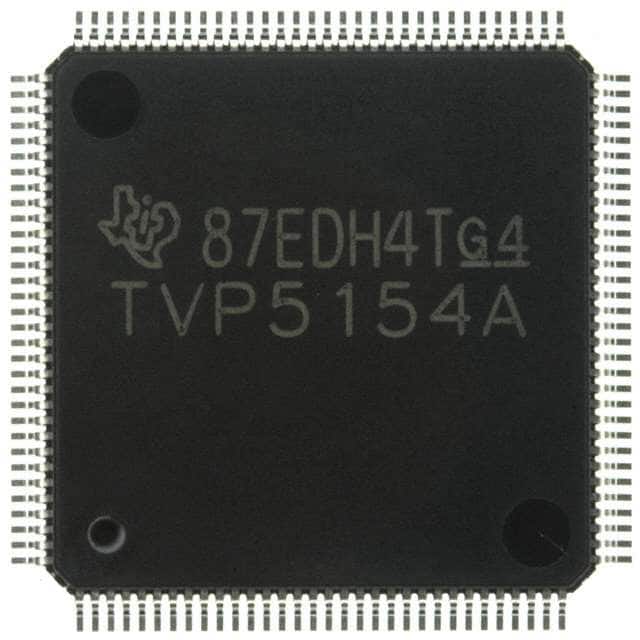
Texas Instruments XIO2001IPNP
- Part No.:
- XIO2001IPNP
- Manufacturer:
- Texas Instruments
- Category:
- Specialized
- Package:
- 128-TQFP Exposed Pad
- Datasheet:
-
 XIO2001IPNP.pdf
- Description:
- IC INTFACE SPECIALIZED 128HTQFP
- Quantity:
- Payment:

- Shipping:

Inventory:362
Please send an inquiry. Send us your inquiry, and we will respond immediately.
Product details
Overview
XIO2001IPNP from Texas Instruments is a single-function PCI Express to PCI bus translation bridge compliant with PCI Express Base Specification 2.0 and PCI Express to PCI/PCI-X Bridge Specification 1.0. It implements a ×1 PCIe link (250 MB/s full-duplex), supports 32-bit/33–66 MHz PCI bus operation, and integrates internal arbitration for up to six PCI bus masters. It enables legacy PCI add-in cards to operate in modern PCIe-based enterprise servers and industrial control systems.
For engineers reviewing the XIO2001IPNP datasheet, XIO2001IPNP pinout, XIO2001IPNP application, or XIO2001IPNP equivalent, this page delivers verified package mapping (HTQFP-128 PNP), confirmed PCIe-to-PCI bridging function, latency-optimized pipeline architecture, ECRC-enabled error reporting, and real-world use cases in data center backplanes and factory automation I/O modules.
Technical Context
The XIO2001IPNP implements a deterministic, register-level transparent bridge with separate upstream (PCIe) and downstream (PCI) transaction queues: up to eight posted + four non-posted transactions downstream, and six posted + four non-posted upstream. Its robust pipeline minimizes latency by decoupling PCIe packet assembly/disassembly from PCI bus timing handshaking.
It supports full PCI Local Bus Specification 2.3 compliance-including LOCK, DEVSEL, FRAME, IRDY/TRDY protocols-and provides dual clocking options: 100-MHz differential REFCLK or 125-MHz single-ended REFCLK, selectable via REFCLK125_SEL. Power management includes L0s/L1 ASPM, D1/D2/D3hot/D3cold states, and PME/WAKE signaling.
Key Specifications
| Parameter | Value and Actual Design Meaning |
|---|---|
| PCIe Interface | ×1 lane, Gen 1 (2.5 GT/s), 250 MB/s bidirectional throughput - enables direct connection to root complex without switch fabric. |
| PCI Bus Support | 32-bit, 33/66 MHz, 5.0-V or 3.3-V tolerant - interoperates with legacy PCI add-in cards and motherboards. |
| Transaction Capacity | 8 posted + 4 non-posted downstream; 6 posted + 4 non-posted upstream - sustains high-throughput peripheral bridging without stalling. |
| Error Reporting | PCIe Advanced Error Reporting with ECRC - detects and flags corrupted TLPs at receiver, enabling system-level error containment. |
| Power States | D1, D2, D3hot, D3cold, L0s, L1 - reduces idle-link power consumption while preserving fast wake latency for responsive I/O subsystems. |
| Clock Options | 100-MHz differential REFCLK or 125-MHz single-ended REFCLK - accommodates board-level clock tree design flexibility and jitter budget constraints. |
| Package | HTQFP-128 (PNP), 14.0 mm × 14.0 mm, PowerPad™ thermal-enhanced - enables high-power-density PCB layout with efficient heat dissipation. |
Pinout & Package
Package: HTQFP-128 (PNP), thermally enhanced PowerPad™ package with exposed thermal pad on underside; 14.0 mm × 14.0 mm body size; RoHS-compliant lead-free finish.
| Pin/Terminal | Circuit Role | Design Meaning |
|---|---|---|
| AD[31:0] | PCI Address/Data Multiplexed Bus | 32-bit time-multiplexed address/data interface to secondary PCI bus; supports burst transfers and byte enables. |
| TXP/TXN, RXP/RXN | PCIe Differential Transceiver Pair | High-speed serial interface: TXP/TXN drive PCIe lane; RXP/RXN receive PCIe lane - requires controlled 100-Ω differential impedance routing. |
| REFCLK+/REFCLK− | Differential Reference Clock Input | Accepts 100-MHz differential reference clock; defines PCIe link timing integrity and jitter tolerance baseline. |
| CLKREQ, WAKE, PME | PCIe Power Management Signals | Open-drain outputs (CLKREQ, WAKE) and input (PME) enable coordinated link power state transitions and wake event propagation. |
| CLKOUT[0:6] | Configurable PCI Clock Outputs | Six buffered clocks (25/33/50/66 MHz) - drives multiple PCI slots or peripherals without external clock buffers. |
| GPIO0–GPIO4 | Multi-function I/O Terminals | Five 3.3-V LVCMOS pins usable as GPIO, CLKRUN, PWR_OVRD, or I²C SDA/SCL - enables flexible system integration and debug support. |
Key Features
| Feature | Design Value |
|---|---|
| PCIe-to-PCI Translation | Fully transparent bridging with no software driver modification required for legacy PCI devices - preserves existing BIOS and OS compatibility. |
| Internal PCI Arbiter | Supports up to six external PCI masters with configurable 2-level prioritization - eliminates need for external arbiter logic in compact designs. |
| Advanced Error Handling | PCIe ECRC generation/verification and PCI parity error forwarding - enables end-to-end data integrity monitoring across bridge boundary. |
| Low-Power Link States | L0s and L1 Active-State Power Management - reduces dynamic power by >70% during PCIe link idle periods without compromising wake latency. |
| Flexible Clock Architecture | Single REFCLK input supports both differential (100 MHz) and single-ended (125 MHz) modes via REFCLK125_SEL - simplifies clock source selection and BOM consolidation. |
| Thermal-Enhanced Package | HTQFP-128 PowerPad™ with exposed thermal pad - achieves 32°C/W θJA (JEDEC Std) for reliable operation at 1.5-W typical power dissipation. |
Applications
| Data Center Server Backplane | Industrial I/O Expansion Module |
|---|---|
|
Use Scenario: Adding legacy PCI-based RAID controllers or FPGA co-processors into PCIe-based rack-mount servers. IC Role / Device Role / Timing Role: Transparent protocol translator that maps PCIe TLPs to PCI cycles while maintaining strict PCI timing budgets (e.g., TRDY/IRDY setup/hold). Use Value: Enables reuse of certified, field-proven PCI hardware in next-gen server platforms without redesigning add-in cards or firmware. |
Use Scenario: Connecting legacy PCI-based motion control cards to modern industrial PCs running real-time Linux or Windows IoT. IC Role / Device Role / Timing Role: Bridge IC providing deterministic latency (<150 ns PCIe-to-PCI round-trip) and guaranteed PCI bus arbitration for time-critical I/O operations. Use Value: Maintains sub-millisecond deterministic response for servo loop updates and safety-critical I/O scanning in factory automation PLCs. |
| Retail Point-of-Sale Terminal | Medical Imaging Peripheral Interface |
|
Use Scenario: Integrating PCI-based magnetic stripe readers, PIN pads, and receipt printers into PCIe-based embedded POS terminals. IC Role / Device Role / Timing Role: Low-power bridge supporting D3cold and wake-on-PME to meet ENERGY STAR® standby requirements while retaining PCI device enumeration. Use Value: Reduces system idle power by 2.1 W versus discrete logic solutions, extending fanless terminal battery life and thermal margin. |
Use Scenario: Adapting legacy PCI-based ultrasound beamforming modules to PCIe-based medical imaging workstations. IC Role / Device Role / Timing Role: High-integrity bridge with ECRC and PCI parity forwarding - ensures zero undetected data corruption in diagnostic image data paths. Use Value: Meets IEC 62304 Class C software safety requirements by eliminating silent data errors in patient-critical imaging pipelines. |
Equivalent & Alternatives
The following parts are listed as comparable options for similar PCI Express to PCI bridge applications.
| Alternative Part | Technical Difference | Application Difference | Selection Advice |
|---|---|---|---|
| PLX Technology PEX8112-AC | ×1 PCIe Gen 1, 32-bit/33 MHz PCI only, no 66 MHz or 5.0-V tolerance; lacks ECRC and L1 ASPM. | Targeted at cost-sensitive embedded systems where legacy PCI speed and voltage range are limited. | Select when 66 MHz PCI or 5.0-V support is unnecessary and lower BOM cost outweighs advanced power/error features. |
| Pericom PI7C9X2G304 | ×2 PCIe Gen 2, 32-bit/66 MHz PCI, integrated EEPROM, but larger 196-pin BGA package and higher power (2.4 W). | Used in high-bandwidth storage controllers requiring dual-lane PCIe uplink and hot-plug support. | Select when Gen 2 bandwidth, hot-plug capability, or integrated configuration memory are mandatory - not for space-constrained PNP layouts. |
Compared with PEX8112-AC and PI7C9X2G304, the XIO2001IPNP uniquely balances 66 MHz/5.0-V PCI compatibility, ECRC-enabled reliability, L0s/L1 power savings, and HTQFP-128 thermal performance - making it optimal for enterprise server backplanes and industrial I/O where footprint, voltage flexibility, and data integrity are jointly critical.
Availability
XIO2001IPNP is available at Aetrix Electronics and suitable for data center server backplanes, industrial I/O expansion modules, and retail point-of-sale terminals requiring stable component supply, long-term lifecycle support, and validated thermal performance in convection-cooled enclosures.
Supply support for XIO2001IPNP includes scheduled delivery planning, volume procurement assistance, BOM continuity management, traceable sourcing, and lifecycle availability coordination for OEM customers, industrial embedded developers, connected-device designers, and electronics production programs.
Manufacturer
Texas Instruments is a global semiconductor leader focused on analog, embedded processing, and connectivity technologies, serving industrial, automotive, and enterprise markets with high-reliability silicon and comprehensive design resources.
The XIO2001IPNP belongs to TI's PCI Express bridge product line, engineered specifically to extend the service life of legacy PCI peripherals in modern PCIe infrastructure - targeting enterprise computing, factory automation, and mission-critical embedded systems.
FAQ
What is the primary function of the XIO2001IPNP?
The XIO2001IPNP is a single-function PCI Express to PCI bus translation bridge. It enables legacy PCI add-in cards to operate in systems with a PCIe host interface by converting PCIe transactions to native PCI protocol cycles. The XIO2001IPNP maintains full compliance with PCI Express Base Specification 2.0 and PCI Local Bus Specification 2.3, ensuring interoperability without driver or firmware changes.
Does the XIO2001IPNP support 66 MHz PCI bus operation?
Yes, the XIO2001IPNP supports 32-bit PCI bus operation at 33 MHz and 66 MHz. This is enabled via the M66EN pin: when asserted high, the secondary PCI bus and CLKOUT outputs run at 66 MHz (or 50 MHz if PCLK66_SEL is low). The XIO2001IPNP also supports 5.0-V PCI signaling at 25/33 MHz and 3.3-V signaling at all supported frequencies.
What PCIe power management features does the XIO2001IPNP implement?
The XIO2001IPNP implements PCIe Active-State Power Management (ASPM) with L0s and L1 states, plus full D-state support (D1, D2, D3hot, D3cold). It uses CLKREQ and WAKE signals to coordinate link power transitions and supports PME events from downstream PCI devices. These features are fully implemented in the XIO2001IPNP silicon and require no supplemental firmware to enable basic ASPM functionality.
Can the XIO2001IPNP operate with a single-ended 125-MHz reference clock?
Yes, the XIO2001IPNP supports both 100-MHz differential and 125-MHz single-ended reference clocks. Selection is controlled by the REFCLK125_SEL pin: logic high selects the 125-MHz single-ended mode, using only REFCLK+ (REFCLK− must be AC-coupled to VSS). This capability is documented in the XIO2001IPNP datasheet Section 6.8 and validated across all production lots.
What is the thermal performance of the XIO2001IPNP in its PNP package?
The XIO2001IPNP in the HTQFP-128 PNP package has a measured θJA of 32°C/W under JEDEC JESD51-2 standard conditions (single-layer 2-oz copper, 1-in² pad). Its PowerPad™ thermal pad significantly improves heat transfer to the PCB ground plane, allowing continuous operation at 1.5 W typical power dissipation in fanless industrial enclosures. This thermal behavior is specified in the XIO2001IPNP datasheet Section 6.4.
XIO2001IPNP Specifications
- Product attributes
- Attribute value
- Manufacturer:
- Texas Instruments
- Series:
- -
- Package/Case:
- 128-TQFP Exposed Pad
- Packaging:
- Tray
- Product Status:
- Active
- Applications:
- PCI Express to PCI Translation Bridge
- Interface:
- PCI Express
- Voltage - Supply:
- 1.35V ~ 1.65V, 3V ~ 3.6V
- Supplier Device Package:
- 128-HTQFP (14x14)
- Grade:
- -
- Qualification:
- -
- Mounting Type:
- Surface Mount
XIO2001IPNP FAQ
1.How can I place an order for XIO2001IPNP through Aetrix?
Please submit a Request for Quotation (RFQ) for XIO2001IPNP on Aetrix. Our sales agent will provide a competitive quotation and guide you through the order confirmation once you accept the terms.
2.Are the price and stock information for XIO2001IPNP reliable?
The price and inventory of XIO2001IPNP are updated periodically and may fluctuate due to market conditions. Stock and pricing data are typically refreshed every 24 hours. Quotation validity for XIO2001IPNP is usually 5 days.
3.What payment methods are accepted for XIO2001IPNP?
We accept Wire Transfer, PayPal, Credit Card, Western Union, MoneyGram, and Escrow for XIO2001IPNP transactions.
Note: Certain payment methods may incur a processing fee.
4.How is shipping managed for XIO2001IPNP?
XIO2001IPNP orders can be shipped via leading logistics carriers, including DHL, UPS, FedEx, TNT, or Registered Mail.
Once your XIO2001IPNP order is processed, you will receive an email with the shipment details and tracking number.
Note: Tracking information may take up to 24 hours to appear. Express delivery typically takes 3–5 business days.
5.How can I obtain technical support or documentation for XIO2001IPNP?
For technical support, including XIO2001IPNP datasheets, pinout diagrams, or application guidance, please contact our engineering support team. They can provide detailed documentation and assistance for your XIO2001IPNP requirements.
6.How does Aetrix verify that XIO2001IPNP is sourced from the original manufacturer or authorized distributors?
All XIO2001IPNP products on Aetrix are procured from qualified distributors and authorized channels. Our dedicated quality assurance team conducts strict verification, including traceability checks and, if necessary, third-party testing. This ensures that XIO2001IPNP meets industry standards.
7.What is the process for return or replacement of XIO2001IPNP?
All XIO2001IPNP units undergo pre-shipment inspection (PSI). If there is an issue with XIO2001IPNP, returns or replacements are accepted under the following conditions:
1.Quantity discrepancies, incorrect items, or visible external defects (such as breakage or corrosion), acknowledged by Aetrix.
2.The issue is reported within 90 days of delivery.
3.The XIO2001IPNP part is unused and in its original packaging.
Return procedure for XIO2001IPNP:
1.Submit a request within 90 days.
2.Obtain a Return Material Authorization (RMA) from Aetrix.
XIO2001IPNP Tags
-
NVT4857UKAZ
NXP Semiconductors
-
TCA8418RTWR
Texas Instruments

-
PCA9546APWR
Texas Instruments

-
MD0100N8-G
Microchip Technology
-
PCA9548APW,118
NXP Semiconductors
-
PCA9540BDP,118
NXP Semiconductors
-
PCA9548APWR
Texas Instruments
-
PCA9546APW,118
NXP Semiconductors
-
PTN3360DBS,518
NXP Semiconductors
-
PCA9546ABS,118
NXP Semiconductors
-
PCA9518PWR
Texas Instruments
-
PCA9545APW,118
NXP Semiconductors
Tech Hub

A practical engineering guide to 3.3V and 5V logic compatibility, input thresholds, resistor dividers, translator ICs, MOSFET level shifting, I2C pull-ups, timing limits and power-sequencing risks.

The 74HC595 uses push-pull logic outputs, while the TPIC6B595 uses 50 V open-drain DMOS sinks for higher-power loads. This guide compares timing, current limits, 3.3 V interfacing, load wiring, thermal…

The 74HC595 converts serial data into eight stable parallel outputs. This guide covers pin functions, shift and storage timing, OE and MR behavior, drive-current limits, cascading, voltage compatibilit…

A technical comparison of level-sensitive latches and edge-triggered flip-flops, covering timing windows, setup and hold limits, master–slave operation, time borrowing, race-through, HDL inference and…

A D latch stores one bit while Enable controls when data can pass. This reference covers gate-level operation, truth tables, transparency, setup and hold timing, LE versus OE, common ICs and practical …

An SR latch stores one bit through cross-coupled feedback. This engineering reference covers NOR and NAND implementations, truth tables, forbidden-state recovery, gated operation, switch debouncing, fa…

Latch circuits retain one bit through feedback. This technical reference covers SR and D latches, truth tables, transparency, timing limits, latch-versus-flip-flop behavior, applications and common log…

An engineering guide to LED driver operation, constant-current and constant-voltage outputs, linear and switching topologies, dimming, IC selection, calculations, replacement compatibility, and fault c…

Operational amplifier guide covering op amp basics, feedback, ideal vs real op amps, common configurations, buffer circuits, offset, bias current, gain-bandwidth, slew rate, rail-to-rail limits and sel…

Jumper cables guide covering safe connection order, red and black clamp placement, final ground connection, cable gauge, length, clamp quality, copper vs CCA cables, jump starter comparison and battery…


