
 My Inquiry
 My Account


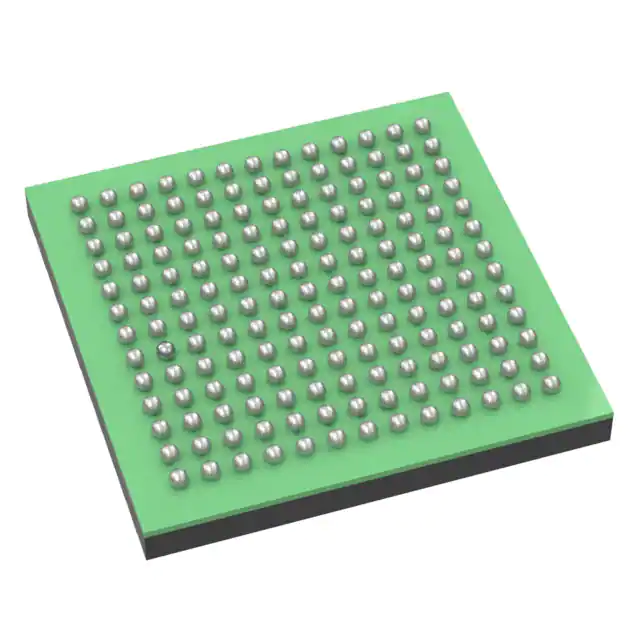
Texas Instruments XIO2001IZWS
- Part No.:
- XIO2001IZWS
- Manufacturer:
- Texas Instruments
- Category:
- Specialized
- Package:
- 169-LFBGA
- Datasheet:
-
 XIO2001IZWS.pdf
- Description:
- IC ISOLATION
- Quantity:
- Payment:

- Shipping:

Inventory:300
Please send an inquiry. Send us your inquiry, and we will respond immediately.
Product details
Overview
XIO2001IZWS from Texas Instruments is a single-function PCI Express to PCI bus translation bridge compliant with PCI Express Base Specification 2.0 and PCI Local Bus Specification 2.3. It provides full ×1 PCIe throughput (250 MB/s bidirectional), supports 32-bit/66-MHz PCI bus operation, and integrates internal arbitration for up to six external PCI masters. It is deployed in enterprise server add-in cards requiring legacy PCI device integration via modern PCIe host interfaces.
For engineers reviewing the XIO2001IZWS datasheet, XIO2001IZWS pinout, XIO2001IZWS application, or XIO2001IZWS equivalent, key selection criteria include PCIe-to-PCI latency behavior, dual-voltage (3.3 V/5.0 V) PCI bus tolerance, ECRC-enabled error reporting, and support for L0s/L1 active-state power management - all critical for reliable bridging in data center and industrial control systems.
Technical Context
The XIO2001IZWS implements a robust pipeline architecture to minimize transaction latency between its ×1 PCIe upstream port and downstream 32-bit PCI bus. It handles up to eight posted and four non-posted downstream transactions simultaneously, and six posted and four non-posted upstream transactions - enabling efficient burst transfers across protocol boundaries.
It supports both 100-MHz differential and 125-MHz single-ended reference clocks, with optional spread-spectrum clocking. The device includes advanced power management features: CLKREQ-driven clock gating, WAKE signal for link reactivation, and integrated AUX power switch that drains VAUX only when main power is off - reducing standby current in always-on systems.
Key Specifications
| Parameter | Value and Actual Design Meaning |
|---|---|
| PCIe Interface | ×1 lane, PCIe Base Spec 2.0 compliant, 250 MB/s full-duplex throughput |
| PCI Bus Interface | 32-bit, 66-MHz max (25/33/50/66 MHz programmable clock outputs), 3.3-V/5.0-V tolerant I/O |
| Error Reporting | PCIe Advanced Error Reporting with ECRC support for end-to-end data integrity |
| Power States | Supports D1, D2, D3hot, D3cold; L0s and L1 ASPM for dynamic link power savings |
| Reference Clock | 100-MHz differential common-ref or 125-MHz single-ended; spread-spectrum compatible |
| Arbitration | Internal PCI arbiter for up to 6 external masters; external arbiter option via EXT_ARB_EN pin |
| Package | 169-ball ZWS nFBGA (12 mm × 12 mm), lead-free, PowerPad™ thermal enhancement |
Pinout & Package
The XIO2001IZWS is packaged in a 169-ball ZWS nFBGA (12.00 mm × 12.00 mm), RoHS-compliant, with exposed thermal pad for enhanced heat dissipation. Pin functions are defined per TI SCPS212J Rev J (Jan 2021), with ball mapping validated for ZWS package.
| Pin/Terminal | Circuit Role | Design Meaning |
|---|---|---|
| TXP / TXN | PCIe differential transmit pair | HS DIFF OUT driving ×1 PCIe lane; requires series AC-coupling capacitors |
| RXP / RXN | PCIe differential receive pair | HS DIFF IN receiving ×1 PCIe lane; 100-Ω differential termination required |
| REFCLK+ / REFCLK− | Differential reference clock input | Accepts 100-MHz common-reference clock; REFCLK− must be AC-coupled to VSS for single-ended mode |
| AD[31:0], C/BE[3:0] | PCI address/data and byte enable bus | 32-bit multiplexed PCI bus interface; supports 3.3-V or 5.0-V clamp rail via PCIR pins |
| CLKOUT[0:6] | Buffered PCI clock outputs | Six programmable outputs (25/33/50/66 MHz); CLKOUT6 must drive CLK input if used |
| GPIO0–GPIO4 | Multi-function I/O terminals | Five 3.3-V LV CMOS pins supporting GPIO, CLKRUN, PWR_OVRD, or I²C (SDA/SCL) |
Key Features
| Feature | Design Value |
|---|---|
| PCIe-to-PCI protocol translation | Full compliance with PCI Express to PCI/PCI-X Bridge Spec 1.0, enabling seamless legacy device integration |
| Robust pipeline architecture | Minimizes transaction latency by decoupling PCIe and PCI timing domains without FIFO bottlenecks |
| Flexible clocking options | Supports both 100-MHz differential and 125-MHz single-ended reference clocks with spread-spectrum capability |
| Advanced power management | CLKREQ-driven clock gating, L0s/L1 ASPM, and VAUX-aware AUX power switch reduce system standby power |
| Configurable PCI bus voltage | 3.3-V/5.0-V tolerance enabled via external PCIR clamp resistors - no hardware redesign needed for legacy 5-V slots |
| Integrated diagnostics & test | JTAG/BS boundary scan support plus memory-mapped EEPROM controller for PCIe power budget extensions |
Applications
| Enterprise Server Add-In Cards | Industrial Control Backplanes |
|---|---|
|
Use Scenario: Adding legacy PCI-based motion controllers or I/O modules to modern PCIe-based industrial PCs. IC Role / Device Role / Timing Role: Protocol bridge translating PCIe host commands into PCI bus cycles while maintaining strict timing for real-time I/O response. Use Value: Enables drop-in replacement of aging PCI motherboards without redesigning peripheral hardware or firmware drivers. |
Use Scenario: Integrating legacy PCI-based vision capture cards into PCIe-equipped factory automation gateways. IC Role / Device Role / Timing Role: Translation bridge providing deterministic latency and PCI bus LOCK support for synchronized multi-camera triggering. Use Value: Preserves investment in certified PCI peripherals while leveraging PCIe's higher bandwidth and lower CPU overhead. |
| Retail Payment Terminal Expansion | Data Center Storage Interposer Boards |
|
Use Scenario: Connecting PCI-based EMV smart-card readers or PIN pads to PCIe-based retail POS controllers. IC Role / Device Role / Timing Role: Secure bridge handling PCI parity errors and PCIe data poisoning to maintain transaction integrity. Use Value: Meets PCI-SIG compliance requirements for payment systems while supporting hot-plug and power-managed states. |
Use Scenario: Bridging PCIe-based RAID controllers to legacy PCI SCSI or SAS HBAs in legacy storage enclosures. IC Role / Device Role / Timing Role: High-throughput bridge supporting full 66-MHz PCI bus bandwidth and ECRC-protected upstream data paths. Use Value: Extends service life of installed storage infrastructure without replacing backplane or enclosure hardware. |
Equivalent & Alternatives
The following parts are listed as comparable options for similar PCI Express-to-PCI bridge applications.
| Alternative Part | Technical Difference | Application Difference | Selection Advice |
|---|---|---|---|
| PLX Technology PEX8112-AA50BCF | ×1 PCIe to PCI-X bridge; supports 133-MHz PCI-X; no native 5.0-V PCI bus tolerance | Targeted at high-bandwidth PCI-X peripherals (e.g., GigE NICs), not standard PCI devices | Select when PCI-X compatibility and higher bandwidth outweigh 5-V slot support needs |
| Pericom PI7C9X20404BQF | ×4 PCIe to PCI bridge; larger footprint (256-pin TQFP); higher power consumption; no integrated AUX switch | Designed for multi-slot expansion chassis requiring multiple downstream PCI buses | Choose for systems needing ≥4 PCI devices behind one PCIe root port, not single-bus bridging |
Compared with PEX8112-AA50BCF and PI7C9X20404BQF, the XIO2001IZWS uniquely balances compact nFBGA packaging, native 3.3-V/5.0-V PCI bus support, and integrated VAUX power switching - making it optimal for space-constrained, mixed-voltage, low-standby-power embedded bridging applications.
Availability
XIO2001IZWS is available at Aetrix Electronics and suitable for enterprise server add-in cards, industrial control backplanes, retail payment terminal expansions, and data center storage interposer boards requiring stable component supply across extended product lifecycles.
Supply support for XIO2001IZWS includes scheduled delivery planning, volume procurement assistance, BOM continuity management, traceable sourcing, and lifecycle availability coordination for OEM customers, industrial embedded developers, connected-device designers, and electronics production programs.
Manufacturer
Texas Instruments is a global semiconductor leader focused on analog, embedded processing, and connectivity technologies, serving industrial, automotive, and communications markets with high-reliability components.
The XIO2001IZWS belongs to TI's PCI Express bridge product line, designed specifically to extend the usability of legacy PCI peripherals in modern PCIe-based systems - targeting enterprise infrastructure, industrial automation, and secure transaction platforms.
FAQ
What is the primary function of the XIO2001IZWS?
The XIO2001IZWS is a single-function PCI Express to PCI bus translation bridge. Its core function is to enable communication between a ×1 PCIe host interface and a legacy 32-bit PCI bus, supporting full 66-MHz operation and dual-voltage (3.3 V/5.0 V) PCI signaling. It complies with PCI Express Base Specification 2.0 and PCI Local Bus Specification 2.3, and is implemented in a 169-ball ZWS nFBGA package. The XIO2001IZWS is used where backward compatibility with existing PCI peripherals is required in PCIe-based systems.
Does the XIO2001IZWS support 5.0-V PCI bus operation?
Yes, the XIO2001IZWS supports 5.0-V PCI bus operation at 25 MHz or 33 MHz, using external 1-kΩ resistors connected to the PCIR pins to set the clamp rail voltage. This capability allows direct integration into legacy 5-V PCI slots without level-shifting circuitry. The XIO2001IZWS also supports 3.3-V PCI operation at up to 66 MHz. Both modes are selectable via hardware configuration, and the device maintains full compliance with PCI Local Bus Specification 2.3 in either configuration.
What reference clock options does the XIO2001IZWS accept?
The XIO2001IZWS accepts two reference clock configurations: a 100-MHz differential common-reference clock applied to REFCLK+ and REFCLK−, or a 125-MHz single-ended clock applied to REFCLK+. The selection is controlled by the REFCLK125_SEL pin. Spread-spectrum clocking is supported in both modes. The XIO2001IZWS uses this reference clock for PCIe PHY timing and internal PLL generation, and its stability directly affects PCIe link reliability and jitter performance.
How does the XIO2001IZWS manage power in low-activity states?
The XIO2001IZWS implements multiple power-saving mechanisms: Active-State Power Management (ASPM) with L0s and L1 states, CLKREQ-driven clock gating, and an integrated AUX power switch that drains VAUX only when main power is off. These features reduce dynamic and static power consumption during idle periods without disrupting PCIe link integrity. The XIO2001IZWS also supports D1, D2, D3hot, and D3cold device power states per PCI Express specification.
Can the XIO2001IZWS be used with an external PCI arbiter?
Yes, the XIO2001IZWS supports both internal and external PCI arbitration. When EXT_ARB_EN is asserted high, the device disables its internal arbiter and uses external GNT/REQ signals for bus control. The internal arbiter supports up to six external PCI masters with configurable 2-level prioritization. This flexibility allows the XIO2001IZWS to adapt to diverse system architectures - from simple single-master designs to complex multi-peripheral backplanes - without requiring changes to the XIO2001IZWS configuration.
XIO2001IZWS Specifications
- Product attributes
- Attribute value
- Manufacturer:
- Texas Instruments
- Series:
- -
- Package/Case:
- 169-LFBGA
- Packaging:
- Tray
- Product Status:
- Active
- Applications:
- PCI Express to PCI Translation Bridge
- Interface:
- PCI Express
- Voltage - Supply:
- 1.35V ~ 1.65V, 3V ~ 3.6V
- Supplier Device Package:
- 169-NFBGA (12x12)
- Grade:
- -
- Qualification:
- -
- Mounting Type:
- Surface Mount
XIO2001IZWS FAQ
1.How can I place an order for XIO2001IZWS through Aetrix?
Please submit a Request for Quotation (RFQ) for XIO2001IZWS on Aetrix. Our sales agent will provide a competitive quotation and guide you through the order confirmation once you accept the terms.
2.Are the price and stock information for XIO2001IZWS reliable?
The price and inventory of XIO2001IZWS are updated periodically and may fluctuate due to market conditions. Stock and pricing data are typically refreshed every 24 hours. Quotation validity for XIO2001IZWS is usually 5 days.
3.What payment methods are accepted for XIO2001IZWS?
We accept Wire Transfer, PayPal, Credit Card, Western Union, MoneyGram, and Escrow for XIO2001IZWS transactions.
Note: Certain payment methods may incur a processing fee.
4.How is shipping managed for XIO2001IZWS?
XIO2001IZWS orders can be shipped via leading logistics carriers, including DHL, UPS, FedEx, TNT, or Registered Mail.
Once your XIO2001IZWS order is processed, you will receive an email with the shipment details and tracking number.
Note: Tracking information may take up to 24 hours to appear. Express delivery typically takes 3–5 business days.
5.How can I obtain technical support or documentation for XIO2001IZWS?
For technical support, including XIO2001IZWS datasheets, pinout diagrams, or application guidance, please contact our engineering support team. They can provide detailed documentation and assistance for your XIO2001IZWS requirements.
6.How does Aetrix verify that XIO2001IZWS is sourced from the original manufacturer or authorized distributors?
All XIO2001IZWS products on Aetrix are procured from qualified distributors and authorized channels. Our dedicated quality assurance team conducts strict verification, including traceability checks and, if necessary, third-party testing. This ensures that XIO2001IZWS meets industry standards.
7.What is the process for return or replacement of XIO2001IZWS?
All XIO2001IZWS units undergo pre-shipment inspection (PSI). If there is an issue with XIO2001IZWS, returns or replacements are accepted under the following conditions:
1.Quantity discrepancies, incorrect items, or visible external defects (such as breakage or corrosion), acknowledged by Aetrix.
2.The issue is reported within 90 days of delivery.
3.The XIO2001IZWS part is unused and in its original packaging.
Return procedure for XIO2001IZWS:
1.Submit a request within 90 days.
2.Obtain a Return Material Authorization (RMA) from Aetrix.
XIO2001IZWS Tags
-
NVT4857UKAZ
NXP Semiconductors
-
TCA8418RTWR
Texas Instruments

-
PCA9546APWR
Texas Instruments

-
MD0100N8-G
Microchip Technology
-
PCA9548APW,118
NXP Semiconductors
-
PCA9540BDP,118
NXP Semiconductors
-
PCA9548APWR
Texas Instruments
-
PCA9546APW,118
NXP Semiconductors
-
PTN3360DBS,518
NXP Semiconductors
-
PCA9546ABS,118
NXP Semiconductors
-
PCA9518PWR
Texas Instruments
-
PCA9545APW,118
NXP Semiconductors
Tech Hub

A practical engineering guide to 3.3V and 5V logic compatibility, input thresholds, resistor dividers, translator ICs, MOSFET level shifting, I2C pull-ups, timing limits and power-sequencing risks.

The 74HC595 uses push-pull logic outputs, while the TPIC6B595 uses 50 V open-drain DMOS sinks for higher-power loads. This guide compares timing, current limits, 3.3 V interfacing, load wiring, thermal…

The 74HC595 converts serial data into eight stable parallel outputs. This guide covers pin functions, shift and storage timing, OE and MR behavior, drive-current limits, cascading, voltage compatibilit…

A technical comparison of level-sensitive latches and edge-triggered flip-flops, covering timing windows, setup and hold limits, master–slave operation, time borrowing, race-through, HDL inference and…

A D latch stores one bit while Enable controls when data can pass. This reference covers gate-level operation, truth tables, transparency, setup and hold timing, LE versus OE, common ICs and practical …

An SR latch stores one bit through cross-coupled feedback. This engineering reference covers NOR and NAND implementations, truth tables, forbidden-state recovery, gated operation, switch debouncing, fa…

Latch circuits retain one bit through feedback. This technical reference covers SR and D latches, truth tables, transparency, timing limits, latch-versus-flip-flop behavior, applications and common log…

An engineering guide to LED driver operation, constant-current and constant-voltage outputs, linear and switching topologies, dimming, IC selection, calculations, replacement compatibility, and fault c…

Operational amplifier guide covering op amp basics, feedback, ideal vs real op amps, common configurations, buffer circuits, offset, bias current, gain-bandwidth, slew rate, rail-to-rail limits and sel…

Jumper cables guide covering safe connection order, red and black clamp placement, final ground connection, cable gauge, length, clamp quality, copper vs CCA cables, jump starter comparison and battery…


