
 My Inquiry
 My Account


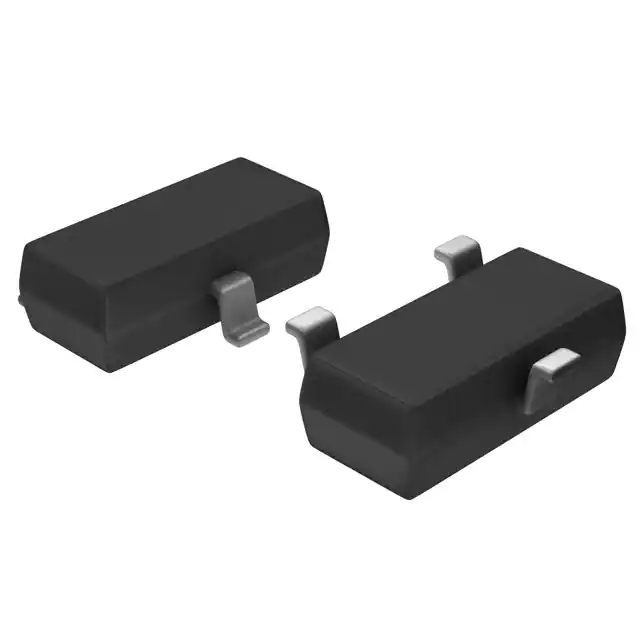
Diodes Incorporated ZC834ATA
- Part No.:
- ZC834ATA
- Manufacturer:
- Diodes Incorporated
- Package:
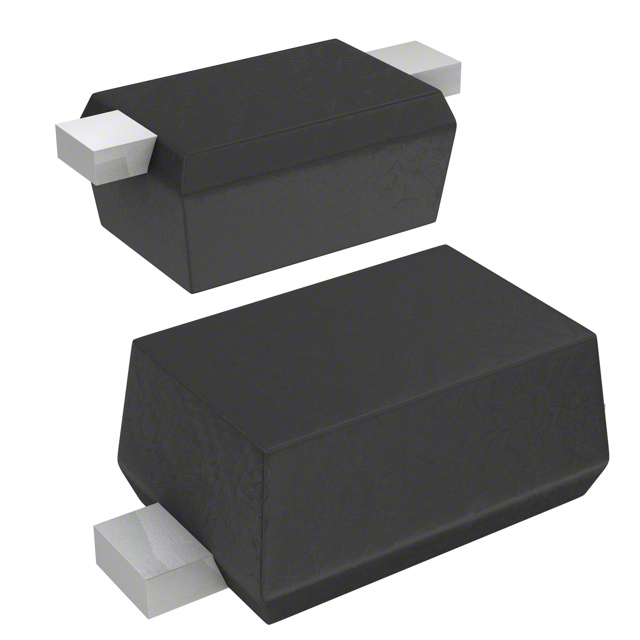
- TO-236-3, SC-59, SOT-23-3
- Datasheet:
-
 ZC834ATA.pdf
- Description:
- DIODE VAR CAP 47PF 25V SOT23-3
- Quantity:
- Payment:

- Shipping:

Inventory:8,417
Please send an inquiry. Send us your inquiry, and we will respond immediately.
Product details
Overview
ZC834ATA from Zetex Semiconductors is a silicon hyperabrupt varactor diode optimized for voltage-controlled frequency tuning in precision oscillators, with nominal capacitance of 47.0 pF at 2 V, capacitance ratio C₂/C₂₀ = 5.0, Q ≥ 200 at 50 MHz, and reverse leakage current ≤ 200 pA - deployed in VCXO/TCXO modules for wireless infrastructure and mobile radio front-ends.
For engineers reviewing the ZC834ATA datasheet, ZC834ATA pinout, ZC834ATA application, or ZC834ATA equivalent, key selection criteria include its 25 V reverse breakdown rating, steep CV slope for fine frequency resolution, low phase noise contribution in closed-loop PLL systems, and SOT23 surface-mount compatibility with automated assembly.
Technical Context
This hyperabrupt junction varactor exhibits a tightly controlled capacitance–voltage (CV) curve with ±5% tolerance on nominal CV, enabling predictable tuning linearity across 2–20 V bias range. Its high Q (>200 @ 50 MHz) and ultra-low IR (<200 pA @ 20 V) directly suppress phase noise in oscillator tank circuits.
The device leverages silicon process control to achieve temperature coefficient of capacitance between 300–400 ppm/°C and stable operation from –55°C to +150°C - critical for thermal drift compensation in temperature-compensated crystal oscillators (TCXOs).
Key Specifications
| Parameter | Value and Actual Design Meaning |
|---|---|
| Capacitance @ 2 V | 47.0 pF (nominal), ±5% tolerance ensures repeatable VCO center-frequency calibration |
| Capacitance Ratio C₂/C₂₀ | 5.0 min (1 MHz), enables wide tuning bandwidth without sacrificing linearity |
| Q Factor @ 50 MHz | ≥200 @ 3 V, minimizes resonator loss and improves oscillator phase noise floor |
| Reverse Leakage Current | ≤200 pA @ 20 V, reduces bias-current-induced drift and long-term frequency instability |
| Reverse Breakdown Voltage | 25 V min, supports robust operation in 12–15 V oscillator supply rails with margin |
| Tempco of Capacitance | 300–400 ppm/°C @ 3 V, allows accurate TCXO compensation modeling |
| Package | SOT23 - 3-pin, gull-wing leaded package compatible with standard reflow profiles |
Pinout & Package
SOT23 package: 3-terminal surface-mount outline with cathode-marked anode-cathode configuration; standardized footprint per JEDEC TO-236AB, 2.9 mm × 1.3 mm body, 0.95 mm nominal lead pitch.
| Pin/Terminal | Circuit Role | Design Meaning |
|---|---|---|
| Anode (Pin 1) | Control voltage input node | Bias terminal for reverse-voltage tuning; must be DC-isolated from RF path |
| Cathode (Pin 2) | RF signal reference | Common connection point for tank circuit ground return and RF coupling capacitor |
| No-Connect (Pin 3) | Thermal pad / mechanical anchor | Internally tied to cathode in single-diode configuration; provides thermal relief and board adhesion |
Key Features
| Feature | Design Value |
|---|---|
| Hyperabrupt junction profile | Delivers steeper dC/dV slope than abrupt junctions - improves frequency resolution per volt in narrowband VCOs |
| Close-tolerance CV characteristics | ±5% capacitance spread at 2 V enables binning-free oscillator calibration in high-volume production |
| Low IR (200 pA typical) | Reduces bias-dependent capacitance drift and eliminates need for active leakage compensation in analog tuning loops |
| High Q (≥200 @ 50 MHz) | Directly lowers phase noise in 10–100 MHz oscillator tanks - measurable improvement over standard varactors |
Applications
| VCXO Frequency Tuning | TCXO Temperature Compensation |
|---|---|
Use Scenario: Fine-tuning of 10–50 MHz crystal oscillator output in telecom base station timing modules. IC Role / Device Role / Timing Role: Voltage-controlled reactance element in Colpitts oscillator tank, adjusting resonant frequency via analog control voltage. Use Value: 5.0 C₂/C₂₀ ratio enables ±50 ppm tuning range with <0.5 ppm/V linearity error - meeting GR-1244-CORE stability requirements. | Use Scenario: Dynamic capacitance adjustment in analog temperature-compensation networks for ±0.1 ppm stability quartz oscillators. IC Role / Device Role / Timing Role: Tuning element in thermistor–varactor hybrid network, counteracting crystal frequency drift over –40°C to +85°C. Use Value: 300–400 ppm/°C tempco matches typical AT-cut crystal drift slope, enabling first-order compensation without digital lookup tables. |
| Wireless Transceiver VCO | Mobile Radio Front-End Filter Tuning |
Use Scenario: Local oscillator generation in 800–900 MHz GSM transceivers requiring low-phase-noise synthesis. IC Role / Device Role / Timing Role: Primary tuning diode in integrated VCO core, biased at 3–8 V to cover full channel band. Use Value: Q ≥ 200 at 50 MHz extrapolates to >150 at 900 MHz - reducing close-in phase noise by 3–4 dBc/Hz vs. standard varactors. | Use Scenario: Adaptive bandpass filter center-frequency alignment in dual-band mobile radio receiver IF stages. IC Role / Device Role / Timing Role: Tuning capacitor in switched-capacitor LC filter bank, adjusted dynamically during channel switching. Use Value: 47 pF nominal value bridges 45–55 MHz IF bands; low IR prevents DC bias shift during fast settling (<10 µs). |
Equivalent & Alternatives
The following parts are listed as comparable options for similar varactor diode applications.
| Alternative Part | Technical Difference | Application Difference | Selection Advice |
|---|---|---|---|
| SMV1232-011LF | Capacitance 42 pF @ 2 V, C₂/C₂₀ = 4.5, Q = 180 @ 50 MHz, SOD-323 package | Lower tuning ratio and Q; suited for cost-sensitive consumer radios, not telecom-grade TCXOs | Select when board space is constrained and ±100 ppm tuning suffices |
| BBY52-02W | Capacitance 45 pF @ 2 V, C₂/C₂₀ = 5.2, Q = 190 @ 50 MHz, SOT-23 package, higher IR (1 nA) | Higher leakage degrades long-term TCXO stability; acceptable for short-duration VCO use | Choose only if tighter C₂/C₂₀ tolerance (5.2 vs. 5.0) outweighs leakage penalty |
Compared with SMV1232-011LF and BBY52-02W, ZC834ATA delivers superior phase noise performance due to its lower IR and higher Q, making it preferred for telecom infrastructure where Allan deviation and aging specifications are stringent.
Availability
ZC834ATA is available at Aetrix Electronics and suitable for VCXO design, TCXO manufacturing, and wireless transceiver development requiring stable component supply and traceable lot history.
Supply support for ZC834ATA includes scheduled delivery planning, volume procurement assistance, BOM continuity management, traceable sourcing, and lifecycle availability coordination for OEM customers, industrial embedded developers, connected-device designers, and electronics production programs.
Manufacturer
Zetex Semiconductors plc was a UK-based ISO 9001 and TS16949 certified manufacturer specializing in high-performance discrete semiconductors before its acquisition by Diodes Incorporated in 2008.
The 830 series varactors were engineered specifically for frequency control in precision timing systems - emphasizing CV repeatability, low phase noise, and thermal stability in oscillator tank circuits.
FAQ
What is the maximum recommended reverse voltage for continuous operation?
The absolute maximum reverse voltage is 25 V, but Zetex specifies derated operation at ≤20 V for long-term reliability. At 20 V, reverse leakage remains ≤20 nA, preserving tuning stability and minimizing bias-network loading in sensitive oscillator designs.
Does ZC834ATA require special ESD handling during PCB assembly?
Yes - as a silicon varactor with thin junction oxide, ZC834ATA is rated Class 1B per ANSI/ESDA/JEDEC JS-001 (≤250 V HBM). Standard ESD workstations, ionized air tools, and grounded tweezers are mandatory; ungrounded handling risks parametric shift or catastrophic failure.
Can ZC834ATA be used in dual-common-cathode configurations?
No - ZC834ATA is a single-diode variant in SOT23. Dual configurations (e.g., ZDC834ATA) use SOD-323 packages with shared cathode pins. Substituting ZC834ATA into dual layouts will result in open-circuit behavior and failed tuning function.
How does temperature affect capacitance tuning linearity?
Capacitance shifts linearly with temperature at 300–400 ppm/°C, causing ~0.2% C-value change over –40°C to +85°C. This introduces <±0.3% nonlinearity in CV slope - compensated in TCXOs via thermistor networks or digital calibration algorithms.
ZC834ATA Specifications
- Product attributes
- Attribute value
- Manufacturer:
- Diodes Incorporated
- Series:
- -
- Package/Case:
- TO-236-3, SC-59, SOT-23-3
- Packaging:
- Tape & Reel (TR)
- Product Status:
- Obsolete
- Capacitance @ Vr, F:
- 51.7pF @ 2V, 1MHz
- Capacitance Ratio:
- 6.5
- Capacitance Ratio Condition:
- C2/C20
- Voltage - Peak Reverse (Max):
- 25 V
- Diode Type:
- Single
- Q @ Vr, F:
- 200 @ 3V, 50MHz
- Operating Temperature:
- -55°C ~ 150°C (TJ)
- Grade:
- -
- Qualification:
- -
- Mounting Type:
- Surface Mount
- Supplier Device Package:
- SOT-23-3
ZC834ATA FAQ
1.How can I place an order for ZC834ATA through Aetrix?
Please submit a Request for Quotation (RFQ) for ZC834ATA on Aetrix. Our sales agent will provide a competitive quotation and guide you through the order confirmation once you accept the terms.
2.Are the price and stock information for ZC834ATA reliable?
The price and inventory of ZC834ATA are updated periodically and may fluctuate due to market conditions. Stock and pricing data are typically refreshed every 24 hours. Quotation validity for ZC834ATA is usually 5 days.
3.What payment methods are accepted for ZC834ATA?
We accept Wire Transfer, PayPal, Credit Card, Western Union, MoneyGram, and Escrow for ZC834ATA transactions.
Note: Certain payment methods may incur a processing fee.
4.How is shipping managed for ZC834ATA?
ZC834ATA orders can be shipped via leading logistics carriers, including DHL, UPS, FedEx, TNT, or Registered Mail.
Once your ZC834ATA order is processed, you will receive an email with the shipment details and tracking number.
Note: Tracking information may take up to 24 hours to appear. Express delivery typically takes 3–5 business days.
5.How can I obtain technical support or documentation for ZC834ATA?
For technical support, including ZC834ATA datasheets, pinout diagrams, or application guidance, please contact our engineering support team. They can provide detailed documentation and assistance for your ZC834ATA requirements.
6.How does Aetrix verify that ZC834ATA is sourced from the original manufacturer or authorized distributors?
All ZC834ATA products on Aetrix are procured from qualified distributors and authorized channels. Our dedicated quality assurance team conducts strict verification, including traceability checks and, if necessary, third-party testing. This ensures that ZC834ATA meets industry standards.
7.What is the process for return or replacement of ZC834ATA?
All ZC834ATA units undergo pre-shipment inspection (PSI). If there is an issue with ZC834ATA, returns or replacements are accepted under the following conditions:
1.Quantity discrepancies, incorrect items, or visible external defects (such as breakage or corrosion), acknowledged by Aetrix.
2.The issue is reported within 90 days of delivery.
3.The ZC834ATA part is unused and in its original packaging.
Return procedure for ZC834ATA:
1.Submit a request within 90 days.
2.Obtain a Return Material Authorization (RMA) from Aetrix.
ZC834ATA Tags
-
BBY5702VH6327XTSA1
Infineon Technologies
-
BBY5602VH6327XTSA1
Infineon Technologies
-
SMV1405-040LF
Skyworks Solutions Inc.
-
BBY6502VH6327XTSA1
Infineon Technologies
-
BBY6602VH6327XTSA1
Infineon Technologies
-
BBY5802VH6327XTSA1
Infineon Technologies
.jpg)
-
BB175X
NXP USA Inc.
-
SMV1430-040LF
Skyworks Solutions Inc.
-
SMV1273-079LF
Skyworks Solutions Inc.
-
SMV1255-079LF
Skyworks Solutions Inc.
-
SMV1213-079LF
Skyworks Solutions Inc.
-
SMV1247-079LF
Skyworks Solutions Inc.
Tech Hub

An engineering guide to LED driver operation, constant-current and constant-voltage outputs, linear and switching topologies, dimming, IC selection, calculations, replacement compatibility, and fault c…

Operational amplifier guide covering op amp basics, feedback, ideal vs real op amps, common configurations, buffer circuits, offset, bias current, gain-bandwidth, slew rate, rail-to-rail limits and sel…

Jumper cables guide covering safe connection order, red and black clamp placement, final ground connection, cable gauge, length, clamp quality, copper vs CCA cables, jump starter comparison and battery…

LDO regulator guide covering low dropout voltage, power dissipation, thermal design, PSRR, output noise, capacitor stability, adjustable LDO circuits, LDO vs buck converter and datasheet selection chec…

Conditional Access Module guide covering CAM meaning, CI/CI+ interface, smart card authorization, DVB security workflow, TV and set-top box compatibility, internal electronics, ESD protection, connecto…

Guide to electronic component obsolescence covering EOL risk, PCN/PDN notices, last-time buy planning, replacement options, form-fit-function validation, counterfeit risk and BOM lifecycle management.

18650 battery guide covering lithium-ion cell basics, 3.6V/3.7V voltage, 4.2V charging, mAh and Wh capacity, protected cells, chargers, BMS, series-parallel packs, holders, welding and sourcing checks.…

Hall effect sensor guide covering working principle, linear and digital sensors, Arduino circuits, current sensing, speed detection, automotive applications, A3144 examples, signal filtering and datash…

Product Change Notification guide for electronic components, covering PCN meaning, PCN vs PDN/EOL, common change types, risk levels, form-fit-function review, engineering validation, BOM control, LTB/L…

A practical guide to blend door actuators, covering HVAC function, symptoms, location, AC and heater issues, reset and calibration, replacement cost, electrical diagnosis, compatibility checks, and rep…


