
 My Inquiry
 My Account


Diodes Incorporated ZMT32TA
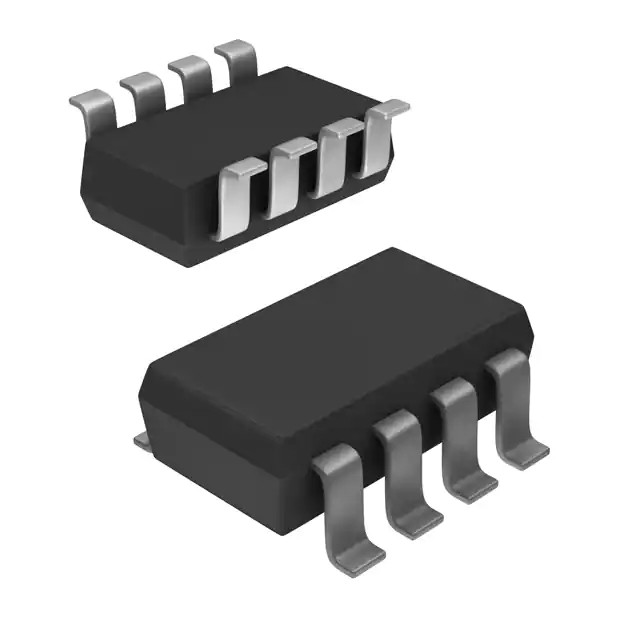
- Part No.:
- ZMT32TA
- Manufacturer:
- Diodes Incorporated
- Category:
- Angle, Linear Position Measuring
- Package:
- SOT-223-8
- Datasheet:
-
 ZMT32TA.pdf
- Description:
- SENSOR ANGLE 180DEG SMD
- Quantity:
- Payment:

- Shipping:

Inventory:1,974
Please send an inquiry. Send us your inquiry, and we will respond immediately.
Product details
Overview
ZMT32TA from Zetex Semiconductors is a passive anisotropic magnetoresistive (AMR) magnetic field angle sensor with two galvanically isolated Wheatstone bridges, designed for high-precision 0–180° contactless angular position measurement under low rotating magnetic fields (8–25 kA/m). It outputs two 90°-phase-shifted sinusoidal signals (VO1, VO2) referenced to VCC1/VCC2, enabling arc-tangent interpolation of field angle. Used in automotive throttle and pedal position sensing where temperature stability up to +160°C is critical.
For engineers reviewing the ZMT32TA datasheet, ZMT32TA pinout, ZMT32TA application, or ZMT32TA equivalent, this page delivers verified technical context, real-world signal behavior under field rotation, bridge matching accuracy (99.77–100.23%), angular inaccuracy (0.05–0.2°), and thermal drift characteristics across –40°C to +160°C - all essential for robust analog angle-sensing system design.
Technical Context
The ZMT32TA implements dual AMR bridges rotated 45° relative to each other on a single die, generating cos(2α) and sin(2α) output voltage ratios when exposed to an in-plane rotating magnetic field. Its passive operation requires external excitation (VCC1/VCC2 = 5–8.5 V) and external signal conditioning for arctan(VO2/VO1) computation.
Bridge resistances range from 2500 Ω (23°C) to 5114 Ω (+160°C), with TCRBB of +0.28 to +0.36 %/K. Output swing varies from 16–24 mV/V at 23°C to 6.7–13.4 mV/V at +160°C under HROT = 8 kA/m, and angular hysteresis is specified at ≤0.1° (HROT = 25 kA/m).
Key Specifications
| Parameter | Value and Actual Design Meaning |
|---|---|
| Sensing Principle | Anisotropic magnetoresistance (AMR) with dual Wheatstone bridges |
| Angular Range | 0–180° absolute angle measurement via arctan(VO2/VO1) |
| Magnetic Field Range | 8–25 kA/m rotating in-plane field; enables low-field operation vs. Hall sensors |
| Bridge Matching (k) | 99.77–100.23% at 23°C; ensures <0.2° angular error before calibration |
| Angular Inaccuracy (∆α) | 0.05–0.2° typical; defines raw measurement fidelity without external compensation |
| Operating Temperature | –40°C to +160°C; supports under-hood automotive environments |
| Bridge Resistance (23°C) | 2500–3000 Ω per bridge; sets excitation current limit (≤4 mA per bridge) |
Pinout & Package
Package: SM-8 surface-mount package (6.3–6.7 mm × 3.3–3.7 mm × 1.7 mm height), lead-free, RoHS-compliant.
| Pin/Terminal | Circuit Role | Design Meaning |
|---|---|---|
| 1 | GND1 | Ground reference for Bridge 1; must be low-impedance return path |
| 2 | –VO1 | Negative output of Bridge 1 (cosine channel); differential pair with Pin 5 |
| 3 | –VO2 | Negative output of Bridge 2 (sine channel); differential pair with Pin 6 |
| 4 | VCC2 | Supply for Bridge 2; independent biasing enables ratiometric output scaling |
| 5 | +VO1 | Positive output of Bridge 1 (cosine channel); used with Pin 2 for differential readout |
| 6 | +VO2 | Positive output of Bridge 2 (sine channel); used with Pin 3 for differential readout |
| 7 | GND2 | Ground reference for Bridge 2; galvanic isolation from GND1 improves noise immunity |
| 8 | VCC1 | Supply for Bridge 1; decoupling required near pin to minimize supply-induced offset |
Key Features
| Feature | Design Value |
|---|---|
| Contactless 0–180° angle sensing | Eliminates mechanical wear and potentiometer drift in throttle/pedal position systems |
| Galvanic isolation between bridges | Enables independent biasing and reduces crosstalk in noisy automotive environments |
| High-temperature operation (–40°C to +160°C) | Validated performance across full automotive under-hood thermal range without derating |
| Low-field sensitivity (8–25 kA/m) | Reduces magnet size/cost and enables use with small ferrite or NdFeB rotors |
| Bridge matching tolerance ±0.23% | Minimizes uncalibrated angular error; simplifies factory calibration routines |
Applications
| Automotive Throttle Position Sensing | Brake Pedal Angle Monitoring |
|---|---|
Use Scenario: Real-time detection of throttle plate angular displacement in gasoline direct injection engines. IC Role / Device Role / Timing Role: Passive AMR transducer converting rotor magnet orientation into dual analog sine/cosine voltages. Use Value: Enables closed-loop engine control with <0.2° raw angular accuracy and stable operation at 150°C exhaust proximity. | Use Scenario: Measuring brake pedal rotation angle to support electronic brake force distribution (EBD) and regenerative braking coordination. IC Role / Device Role / Timing Role: Contactless angular transducer providing ratiometric analog outputs for microcontroller ADC sampling. Use Value: Delivers hysteresis ≤0.1° and long-term stability over 10+ years of cyclic loading without recalibration. |
| Steering Column Angle Feedback | Industrial Rotary Valve Positioning |
Use Scenario: Absolute steering angle measurement for electric power steering (EPS) torque assist algorithms. IC Role / Device Role / Timing Role: Dual-bridge AMR sensor supplying synchronized VO1/VO2 signals for real-time arctan computation. Use Value: Supports ASIL-B functional safety requirements via inherent redundancy and predictable failure modes. | Use Scenario: Monitoring rotational position of large-diameter industrial valves in HVAC or process control systems. IC Role / Device Role / Timing Role: High-temperature-stable magnetic angle sensor interfaced to isolated analog front-end. Use Value: Maintains ±0.2° accuracy after 10,000+ cycles at 120°C ambient, eliminating maintenance downtime. |
Equivalent & Alternatives
The following parts are listed as comparable options for similar magnetic angle sensing applications.
| Alternative Part | Technical Difference | Application Difference | Selection Advice |
|---|---|---|---|
| AMS AS5055A | Integrated signal conditioning, SPI output, active IC; requires 3.3 V supply; no external arctan needed | Replaces external ADC + microcontroller math; higher BOM cost but lower system complexity | Select when digital interface and self-contained computation are prioritized over analog flexibility and temperature range |
| TDK TMR2003D | Tunnel magnetoresistance (TMR) technology; higher sensitivity (100 mV/V), wider field range (1–100 kA/m), but max operating temp = +125°C | Better SNR in weak-field setups; unsuitable for under-hood locations >125°C | Select when field strength varies widely and peak temperature stays below 125°C; avoid for high-temp automotive |
Compared with AMS AS5055A and TDK TMR2003D, the ZMT32TA offers superior high-temperature capability (+160°C) and passive simplicity for analog-centric designs, while trading off integrated processing and ultra-low-field sensitivity - making it optimal for cost-sensitive, thermally demanding automotive subsystems requiring proven reliability.
Availability
ZMT32TA is available at Aetrix Electronics and suitable for automotive throttle control, brake pedal monitoring, steering angle feedback, and industrial rotary valve positioning requiring stable component supply across extended temperature ranges and long production lifecycles.
Supply support for ZMT32TA includes scheduled delivery planning, volume procurement assistance, BOM continuity management, traceable sourcing, and lifecycle availability coordination for OEM customers, industrial embedded developers, connected-device designers, and electronics production programs.
Manufacturer
Zetex Semiconductors plc (now part of Diodes Incorporated) was a UK-based ISO 9001/TS16949-certified designer of high-reliability analog and mixed-signal semiconductors for automotive and industrial markets.
The ZMT series was developed specifically for contactless, high-temperature angular position sensing using AMR physics - targeting applications where Hall-effect devices lack precision and optical encoders fail under thermal stress or contamination.
FAQ
What external circuitry is required to obtain angle output from ZMT32TA?
The ZMT32TA is a passive sensor and requires external excitation (5–8.5 V on VCC1/VCC2), differential amplification of VO1/VO2, and analog or digital arctan computation. A typical implementation uses two instrumentation amplifiers followed by an MCU with ADC and CORDIC algorithm, or dedicated angle encoder ICs like the TI PGA411.
Does ZMT32TA require calibration for accurate angle measurement?
Yes - while bridge matching (k = 99.77–100.23%) and angular inaccuracy (0.05–0.2°) are tightly specified, production systems require two-point offset/gain calibration to correct for PCB layout asymmetry, magnet misalignment, and amplifier drift. The datasheet provides recommended test sequences using left/right field rotation.
Can ZMT32TA operate with unipolar supply only?
No - ZMT32TA requires two independent positive supplies (VCC1 and VCC2) referenced to their respective grounds (GND1 and GND2). These are not split-rail supplies; both are ground-referenced positive voltages. Using a single shared supply degrades bridge isolation and increases common-mode error.
How does temperature affect ZMT32TA's angular accuracy?
Temperature impacts ZMT32TA primarily through bridge resistance drift (TCRBB = +0.28 to +0.36 %/K) and output swing reduction (TCVOB = –0.35 to –0.28 %/K). At +160°C, peak-to-peak output drops to ~13.4 mV/V (vs. 24 mV/V at 23°C), increasing susceptibility to noise unless gain is adjusted - hence system-level temperature compensation is recommended.
ZMT32TA Specifications
- Product attributes
- Attribute value
- Manufacturer:
- Diodes Incorporated
- Package/Case:
- SOT-223-8
- Series:
- -
- Packaging:
- Tape & Reel (TR)
- Product Status:
- Obsolete
- Programmable:
- -
- For Measuring:
- Angle
- Technology:
- Magnetoresistive
- Rotation Angle - Electrical, Mechanical:
- 0° ~ 180°
- Linear Range:
- -
- Output:
- Wheatstone Bridge
- Output Signal:
- -
- Actuator Type:
- External Magnet, Not Included
- Linearity:
- -
- Resistance:
- 3 kOhms
- Resistance Tolerance:
- -
- Voltage - Supply:
- 5V ~ 8.5V
- Mounting Type:
- Surface Mount
- Termination Style:
- SMD (SMT) Tab
- Operating Temperature:
- -40°C ~ 160°C
- Grade:
- -
- Qualification:
- -
- Supplier Device Package:
- SM8
ZMT32TA FAQ
1.How can I place an order for ZMT32TA through Aetrix?
Please submit a Request for Quotation (RFQ) for ZMT32TA on Aetrix. Our sales agent will provide a competitive quotation and guide you through the order confirmation once you accept the terms.
2.Are the price and stock information for ZMT32TA reliable?
The price and inventory of ZMT32TA are updated periodically and may fluctuate due to market conditions. Stock and pricing data are typically refreshed every 24 hours. Quotation validity for ZMT32TA is usually 5 days.
3.What payment methods are accepted for ZMT32TA?
We accept Wire Transfer, PayPal, Credit Card, Western Union, MoneyGram, and Escrow for ZMT32TA transactions.
Note: Certain payment methods may incur a processing fee.
4.How is shipping managed for ZMT32TA?
ZMT32TA orders can be shipped via leading logistics carriers, including DHL, UPS, FedEx, TNT, or Registered Mail.
Once your ZMT32TA order is processed, you will receive an email with the shipment details and tracking number.
Note: Tracking information may take up to 24 hours to appear. Express delivery typically takes 3–5 business days.
5.How can I obtain technical support or documentation for ZMT32TA?
For technical support, including ZMT32TA datasheets, pinout diagrams, or application guidance, please contact our engineering support team. They can provide detailed documentation and assistance for your ZMT32TA requirements.
6.How does Aetrix verify that ZMT32TA is sourced from the original manufacturer or authorized distributors?
All ZMT32TA products on Aetrix are procured from qualified distributors and authorized channels. Our dedicated quality assurance team conducts strict verification, including traceability checks and, if necessary, third-party testing. This ensures that ZMT32TA meets industry standards.
7.What is the process for return or replacement of ZMT32TA?
All ZMT32TA units undergo pre-shipment inspection (PSI). If there is an issue with ZMT32TA, returns or replacements are accepted under the following conditions:
1.Quantity discrepancies, incorrect items, or visible external defects (such as breakage or corrosion), acknowledged by Aetrix.
2.The issue is reported within 90 days of delivery.
3.The ZMT32TA part is unused and in its original packaging.
Return procedure for ZMT32TA:
1.Submit a request within 90 days.
2.Obtain a Return Material Authorization (RMA) from Aetrix.
ZMT32TA Tags
-
TLV493DA1B6HTSA2
Infineon Technologies
-
EVW-AE4001B14
Panasonic Electronic Components
-
3382G-1-103G
Bourns Inc.
-
TLE5501E0001XUMA1
Infineon Technologies
-
HAL830UT-A
TDK-Micronas GmbH
-
TLE5009E1000FUMA1
Infineon Technologies
-
TLE5501E0002XUMA1
Infineon Technologies
-
HAL3725DJ-A
TDK-Micronas GmbH
-
HAL3727DJ-A
TDK-Micronas GmbH
-
HMC1501-TR
Honeywell Aerospace
-
HMC1512-TR
Honeywell Aerospace

-
AAS33001LLEATR-5
Allegro MicroSystems
Tech Hub

Operational amplifier guide covering op amp basics, feedback, ideal vs real op amps, common configurations, buffer circuits, offset, bias current, gain-bandwidth, slew rate, rail-to-rail limits and sel…

Jumper cables guide covering safe connection order, red and black clamp placement, final ground connection, cable gauge, length, clamp quality, copper vs CCA cables, jump starter comparison and battery…

LDO regulator guide covering low dropout voltage, power dissipation, thermal design, PSRR, output noise, capacitor stability, adjustable LDO circuits, LDO vs buck converter and datasheet selection chec…

Conditional Access Module guide covering CAM meaning, CI/CI+ interface, smart card authorization, DVB security workflow, TV and set-top box compatibility, internal electronics, ESD protection, connecto…

Guide to electronic component obsolescence covering EOL risk, PCN/PDN notices, last-time buy planning, replacement options, form-fit-function validation, counterfeit risk and BOM lifecycle management.

18650 battery guide covering lithium-ion cell basics, 3.6V/3.7V voltage, 4.2V charging, mAh and Wh capacity, protected cells, chargers, BMS, series-parallel packs, holders, welding and sourcing checks.…

Hall effect sensor guide covering working principle, linear and digital sensors, Arduino circuits, current sensing, speed detection, automotive applications, A3144 examples, signal filtering and datash…

Product Change Notification guide for electronic components, covering PCN meaning, PCN vs PDN/EOL, common change types, risk levels, form-fit-function review, engineering validation, BOM control, LTB/L…

A practical guide to blend door actuators, covering HVAC function, symptoms, location, AC and heater issues, reset and calibration, replacement cost, electrical diagnosis, compatibility checks, and rep…

Engineering guide to Raspberry Pi alternatives, covering chip-level differences, Orange Pi, ROCK, Jetson, Banana Pi, NanoPi, Compute Module, Pico, GPIO, camera, HAT compatibility, and replacement risks…


