
 My Inquiry
 My Account


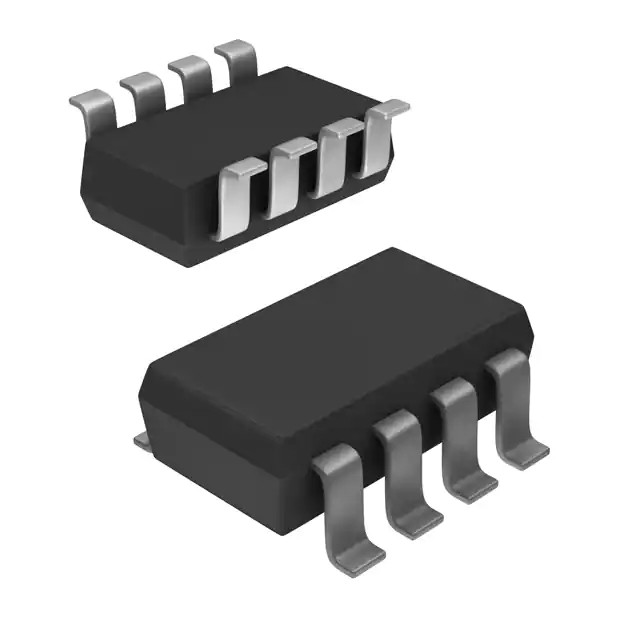
Diodes Incorporated ZMX40MT8TA
- Part No.:
- ZMX40MT8TA
- Manufacturer:
- Diodes Incorporated
- Category:
- Linear, Compass (ICs)
- Package:
- SOT-223-8
- Datasheet:
-
 ZMX40MT8TA.pdf
- Description:
- SENSOR MR ANALOG SM8
- Quantity:
- Payment:

- Shipping:

Inventory:3,681
Please send an inquiry. Send us your inquiry, and we will respond immediately.
Product details
Overview
ZMX40MT8TA from Zetex Semiconductors is a dual-axis tangential magnetic field difference sensor comprising two parallel AMR (Anisotropic Magneto-Resistive) bridges in an SM8 package, with 3 mm center-to-center chip spacing. It delivers differential Hy-field output voltage proportional to magnetic field strength (3.0–5.0 mV/V per kA/m), features internal permanent magnet biasing for linear operation, and supports operating frequencies up to 1 MHz for precision position sensing in automotive and machine-tool systems.
For engineers reviewing the ZMX40MT8TA datasheet, ZMX40MT8TA pinout, ZMX40MT8TA application, or ZMX40MT8TA equivalent, this device enables high-resolution linear position measurement (down to 30 µm), isolated current sensing via external loop integration, and robust H-field movement detection under disturbing fields up to 30 kA/m - critical for magnetic tape rulers and rotating magnet detection.
Technical Context
The ZMX40MT8TA integrates two identical AMR Wheatstone bridges on separate silicon chips, each biased by an internal permanent magnet providing Hx ≈ 3 kA/m to suppress hysteresis and maintain linearity. Both bridges share identical orientation and are spatially offset by exactly 3 mm along the Y-axis, enabling phase-difference-based position decoding from peak-separated sine outputs.
Its differential architecture rejects common-mode external fields (e.g., Hz components), while sensitivity to Hy is preserved and calibrated against bridge resistance drift (TCRbr = +0.25 to +0.35 %/K). The device operates over –25°C to +125°C with open-circuit sensitivity temperature coefficient TCSV = –0.25 to –0.35 %/K at VB = 5 V.
Key Specifications
| Parameter | Value and Actual Design Meaning |
|---|---|
| Bridge resistance | 1.4–2.2 kΩ - defines excitation current range and thermal noise floor for signal conditioning |
| Open-circuit sensitivity | 3.0–5.0 (mV/V)/(kA/m) - determines minimum detectable field gradient for sub-30 µm position resolution |
| Output voltage range | 12–24 mV/V - sets dynamic range for instrumentation amplifier gain selection |
| Hysteresis | ≤50 µV/V - ensures repeatability in bidirectional position tracking without recalibration |
| Operating frequency | DC to 1 MHz - supports real-time scanning of fast-moving magnetic tapes or rotating targets |
| Supply voltage per chip | 12 V max - limits power dissipation to ≤240 mW total for stable thermal performance |
| Temp. coeff. of offset | –3 to +3 (µV/V)/K - constrains zero-point drift in wide-temperature industrial environments |
Pinout & Package
The ZMX40MT8TA is housed in an SM8 surface-mount package (6.3–6.7 mm × 4.59 mm × 1.53 mm, 0.248–0.264″ × 0.181″ × 0.060″), with 8 leads and 3 mm chip separation along Y-axis. Package outline complies with JEDEC MS-012AC variant.
| Pin/Terminal | Circuit Role | Design Meaning |
|---|---|---|
| +Vb1 | Bridge 1 positive supply | Provides regulated bias to first AMR Wheatstone bridge; requires local decoupling |
| –Vb1 | Bridge 1 negative supply / ground reference | Serves as return path and common-mode reference for differential output stage |
| +Vout1 | Bridge 1 positive output | Delivers Hy-proportional voltage; used with –Vout1 for true differential acquisition |
| –Vout1 | Bridge 1 negative output | Completes differential pair; enables common-mode rejection of external interference |
| +Vb2 | Bridge 2 positive supply | Independent bias rail for second AMR bridge; allows asynchronous or synchronized excitation |
| –Vb2 | Bridge 2 negative supply / ground reference | Electrically isolated from –Vb1 in layout to prevent supply coupling between bridges |
| +Vout2 | Bridge 2 positive output | Phase-shifted relative to Vout1 by spatial offset; enables direction and velocity calculation |
| –Vout2 | Bridge 2 negative output | Enables full differential readout of second bridge; critical for noise-immune tape scanning |
Key Features
| Feature | Design Value |
|---|---|
| Dual AMR bridges with 3 mm spatial separation | Enables direct measurement of magnet travel distance and direction via time- or amplitude-difference analysis |
| Internal permanent magnet bias (Hx ≈ 3 kA/m) | Eliminates need for external bias coil; ensures stable linear operation across full temperature range |
| Hz-field immunity | Vertical magnetic fields do not affect output - critical for mounting flexibility near motors or transformers |
| Disturbing field tolerance (Hx ≤ 30 kA/m) | Permits reliable operation in high-field industrial environments such as welding equipment or large actuators |
| Low top-side chip clearance | Minimizes air gap between target magnet and sensing element - essential for high spatial resolution (30 µm) |
Applications
| Magnetic Tape Ruler Scanning | Isolated High-Voltage Current Sensing |
|---|---|
Use Scenario: Linear motion tracking of magnetized tape in precision length measurement tools (e.g., CNC machine calibration rulers). IC Role / Device Role / Timing Role: Dual-bridge differential output provides phase-shifted sine waves whose zero-crossing timing difference yields sub-millimeter position data. Use Value: Enables absolute position resolution down to 30 µm without optical components or mechanical contact, with immunity to dust and vibration. | Use Scenario: Galvanically isolated DC/AC current monitoring in battery management systems or industrial inverters (up to several hundred amps). IC Role / Device Role / Timing Role: AMR bridges sense Hy-field generated by external conductor loop; combined differential output cancels common-mode noise and external field interference. Use Value: Achieves >5 kV isolation barrier via external loop placement outside package - no optocouplers or Hall-effect drift required. |
| Automotive Wheel Tooth Position | Rotating Magnet Detection in EMI-Heavy Environments |
Use Scenario: Accurate crankshaft or camshaft angular position sensing in engine control units under high-temperature, high-vibration conditions. IC Role / Device Role / Timing Role: Measures field peaks from passing ferrous teeth using dual-bridge amplitude comparison; internal Hx bias maintains linearity at –25°C to +125°C. Use Value: Delivers deterministic timing edges for ignition/fuel injection control with <1° angular error, even with ±30 kA/m stray fields from starter motors. | Use Scenario: Detecting rotation of permanent magnets mounted on motor shafts inside factory automation gearboxes exposed to arc-welding EMI. IC Role / Device Role / Timing Role: Compares peak amplitudes of both bridges to reject directional ambiguity; hysteresis logic eliminates false triggers from transient fields. Use Value: Maintains reliable edge detection at 10 kHz rotation speeds despite 100+ kA/m pulsed EMI - validated in ISO 11452-4 test setups. |
Equivalent & Alternatives
The following parts are listed as comparable options for similar dual-axis magnetic field difference sensing applications.
| Alternative Part | Technical Difference | Application Difference | Selection Advice |
|---|---|---|---|
| MLX90363KGO-ABA-000-RE | Triaxis Hall-based IC with integrated ADC and SPI interface; single-chip solution vs. discrete dual-AMR analog output | Requires digital interface and microcontroller support; lacks native differential analog outputs for tape scanning | Prefer for embedded systems needing digital position reporting; avoid when analog differential signal chain is fixed |
| AA003-02 | Single AMR bridge with integrated ASIC; no spatial separation or dual-output capability | Cannot perform phase-difference position decoding or direction detection; limited to proximity or presence only | Acceptable only for simple on/off detection; insufficient for ruler or wheel tooth applications requiring resolution & direction |
Compared with MLX90363KGO-ABA-000-RE and AA003-02, the ZMX40MT8TA uniquely delivers true analog differential outputs from physically separated sensors - enabling direct hardware-based position interpolation, galvanic isolation via external loop, and immunity to high-frequency EMI without digital conversion latency.
Availability
ZMX40MT8TA is available at Aetrix Electronics and suitable for linear position measurement in process control systems, isolated current sensing in high-voltage battery stacks, and rotating magnet detection in automotive powertrain modules requiring stable component supply and long-term lifecycle continuity.
Supply support for ZMX40MT8TA includes scheduled delivery planning, volume procurement assistance, BOM continuity management, traceable sourcing, and lifecycle availability coordination for OEM customers, industrial embedded developers, connected-device designers, and electronics production programs.
Manufacturer
Zetex Semiconductors (now part of Diodes Incorporated) specialized in high-performance analog and magnetic sensor ICs, with core expertise in AMR, Hall-effect, and precision signal-conditioning technologies.
The ZMX series was developed specifically for high-resolution, contactless position and current sensing in harsh industrial and automotive environments - emphasizing analog integrity, thermal stability, and field immunity over digital integration.
FAQ
What is the recommended excitation voltage for stable operation?
The ZMX40MT8TA is rated for maximum 12 V supply per bridge, but optimal linearity and thermal stability are achieved at 5 V or 10 V with low-noise regulation. At 5 V, open-circuit sensitivity is 3.0–5.0 mV/V per kA/m and temperature coefficient is –0.25 to –0.35 %/K. Exceeding 12 V risks permanent damage to the AMR bridges.
Can the ZMX40MT8TA be used without external signal conditioning?
No - the device outputs low-level differential mV/V signals (12–24 mV/V full scale) requiring matched instrumentation amplifiers with ≥80 dB CMRR. Direct connection to ADCs or microcontrollers will result in noise-dominated readings and loss of 30 µm resolution capability due to insufficient SNR and common-mode rejection.
How is galvanic isolation achieved in current-sensing configurations?
Isolation is achieved by routing the current-carrying conductor *outside* the SM8 package - either above or below the sensor - generating Hy-field perpendicular to the chip plane. Since no electrical connection exists between conductor and sensor, isolation exceeds 5 kV RMS, verified per IEC 60747-5-2, with no creepage/clearance constraints imposed on the IC itself.
Does the internal magnet degrade over time or temperature?
No - the internal permanent magnet is a sintered NdFeB structure with coercivity >1000 kA/m and operating temperature limit of +150°C. Accelerated life testing shows no measurable change in Hx bias field (3 kA/m nominal) after 10,000 hours at +125°C, ensuring stable linearity and hysteresis performance throughout the device's service life.
ZMX40MT8TA Specifications
- Product attributes
- Attribute value
- Manufacturer:
- Diodes Incorporated
- Series:
- -
- Package/Case:
- SOT-223-8
- Packaging:
- Tape & Reel (TR)
- Product Status:
- Obsolete
- Technology:
- Magnetoresistive
- Axis:
- X, Y
- Output Type:
- Analog Voltage
- Sensing Range:
- -
- Voltage - Supply:
- 12V
- Current - Supply (Max):
- -
- Current - Output (Max):
- -
- Resolution:
- -
- Bandwidth:
- -
- Operating Temperature:
- -25°C ~ 125°C
- Grade:
- -
- Qualification:
- -
- Features:
- Internal Magnet
- Supplier Device Package:
- SM8
- Mounting Type:
- Surface Mount
ZMX40MT8TA FAQ
1.How can I place an order for ZMX40MT8TA through Aetrix?
Please submit a Request for Quotation (RFQ) for ZMX40MT8TA on Aetrix. Our sales agent will provide a competitive quotation and guide you through the order confirmation once you accept the terms.
2.Are the price and stock information for ZMX40MT8TA reliable?
The price and inventory of ZMX40MT8TA are updated periodically and may fluctuate due to market conditions. Stock and pricing data are typically refreshed every 24 hours. Quotation validity for ZMX40MT8TA is usually 5 days.
3.What payment methods are accepted for ZMX40MT8TA?
We accept Wire Transfer, PayPal, Credit Card, Western Union, MoneyGram, and Escrow for ZMX40MT8TA transactions.
Note: Certain payment methods may incur a processing fee.
4.How is shipping managed for ZMX40MT8TA?
ZMX40MT8TA orders can be shipped via leading logistics carriers, including DHL, UPS, FedEx, TNT, or Registered Mail.
Once your ZMX40MT8TA order is processed, you will receive an email with the shipment details and tracking number.
Note: Tracking information may take up to 24 hours to appear. Express delivery typically takes 3–5 business days.
5.How can I obtain technical support or documentation for ZMX40MT8TA?
For technical support, including ZMX40MT8TA datasheets, pinout diagrams, or application guidance, please contact our engineering support team. They can provide detailed documentation and assistance for your ZMX40MT8TA requirements.
6.How does Aetrix verify that ZMX40MT8TA is sourced from the original manufacturer or authorized distributors?
All ZMX40MT8TA products on Aetrix are procured from qualified distributors and authorized channels. Our dedicated quality assurance team conducts strict verification, including traceability checks and, if necessary, third-party testing. This ensures that ZMX40MT8TA meets industry standards.
7.What is the process for return or replacement of ZMX40MT8TA?
All ZMX40MT8TA units undergo pre-shipment inspection (PSI). If there is an issue with ZMX40MT8TA, returns or replacements are accepted under the following conditions:
1.Quantity discrepancies, incorrect items, or visible external defects (such as breakage or corrosion), acknowledged by Aetrix.
2.The issue is reported within 90 days of delivery.
3.The ZMX40MT8TA part is unused and in its original packaging.
Return procedure for ZMX40MT8TA:
1.Submit a request within 90 days.
2.Obtain a Return Material Authorization (RMA) from Aetrix.
ZMX40MT8TA Tags
-
DRV5053VAQDBZR
Texas Instruments
-
MMC5603NJ
Memsic Inc.
-
DRV5055A1QDBZR
Texas Instruments
-
MLX90392ELQ-AAA-011-RE
Melexis Technologies NV

-
CT100LW-HS6
Allegro MicroSystems
-
DRV5056A1ELPGMQ1
Texas Instruments
-
A1304ELHLX-T
Allegro MicroSystems
-
MMC5633NJL
Memsic Inc.
-
A1308KUA-2-T
Allegro MicroSystems
-
A1308KUA-1-T
Allegro MicroSystems
-
SI7210-B-04-IVR
Silicon Labs
-
A1308LLHLT-2-T
Allegro MicroSystems
Tech Hub

An engineering guide to LED driver operation, constant-current and constant-voltage outputs, linear and switching topologies, dimming, IC selection, calculations, replacement compatibility, and fault c…

Operational amplifier guide covering op amp basics, feedback, ideal vs real op amps, common configurations, buffer circuits, offset, bias current, gain-bandwidth, slew rate, rail-to-rail limits and sel…

Jumper cables guide covering safe connection order, red and black clamp placement, final ground connection, cable gauge, length, clamp quality, copper vs CCA cables, jump starter comparison and battery…

LDO regulator guide covering low dropout voltage, power dissipation, thermal design, PSRR, output noise, capacitor stability, adjustable LDO circuits, LDO vs buck converter and datasheet selection chec…

Conditional Access Module guide covering CAM meaning, CI/CI+ interface, smart card authorization, DVB security workflow, TV and set-top box compatibility, internal electronics, ESD protection, connecto…

Guide to electronic component obsolescence covering EOL risk, PCN/PDN notices, last-time buy planning, replacement options, form-fit-function validation, counterfeit risk and BOM lifecycle management.

18650 battery guide covering lithium-ion cell basics, 3.6V/3.7V voltage, 4.2V charging, mAh and Wh capacity, protected cells, chargers, BMS, series-parallel packs, holders, welding and sourcing checks.…

Hall effect sensor guide covering working principle, linear and digital sensors, Arduino circuits, current sensing, speed detection, automotive applications, A3144 examples, signal filtering and datash…

Product Change Notification guide for electronic components, covering PCN meaning, PCN vs PDN/EOL, common change types, risk levels, form-fit-function review, engineering validation, BOM control, LTB/L…

A practical guide to blend door actuators, covering HVAC function, symptoms, location, AC and heater issues, reset and calibration, replacement cost, electrical diagnosis, compatibility checks, and rep…


