
 My Inquiry
 My Account


Diodes Incorporated ZRT100GC1TC
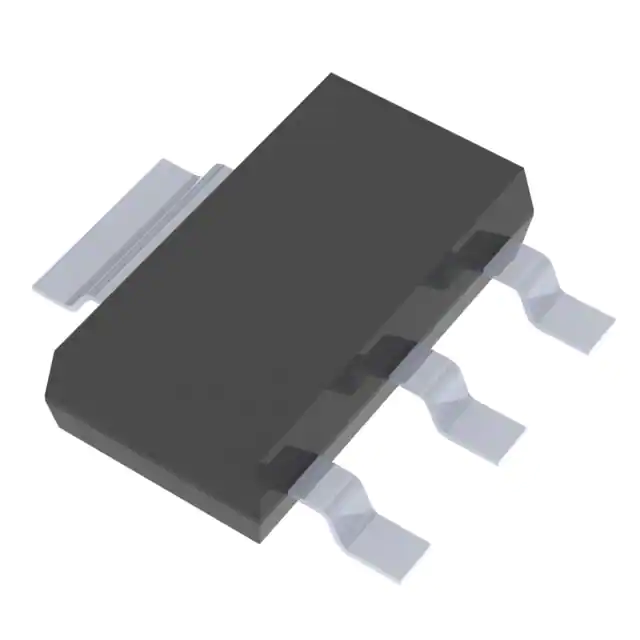
- Part No.:
- ZRT100GC1TC
- Manufacturer:
- Diodes Incorporated
- Category:
- Voltage Reference
- Package:
- TO-261-4, TO-261AA
- Datasheet:
-
 ZRT100GC1TC.pdf
- Description:
- IC VREF SHUNT 1% SOT223
- Quantity:
- Payment:

- Shipping:

Inventory:2,764
Please send an inquiry. Send us your inquiry, and we will respond immediately.
Product details
Overview
ZRT100GC1TC from Zetex Semiconductors is a precision 9.8 V monolithic voltage reference IC with 1% initial tolerance, 15 ppm/°C temperature coefficient, and trimmable output via external resistor. It operates from 150 µA to 30 mA, delivers low 50 µVP-P noise (0.1–10 Hz), and requires no external capacitor in most applications. Used in high-accuracy ADC/DAC biasing, sensor signal conditioning, and programmable power supply setpoints.
For engineers reviewing the ZRT100GC1TC datasheet, ZRT100GC1TC pinout, ZRT100GC1TC application, or ZRT100GC1TC equivalent, key selection criteria include its SOT223 package, ±5% trim range, 1.8 Ω slope resistance, -40°C to +85°C C-grade operation, and absence of mandatory stabilization capacitance.
Technical Context
The ZRT100GC1TC implements a bandgap-derived reference core with on-chip trimming capability, enabling post-assembly calibration of output voltage across a ±5% range using a single external resistor. Its low 15 ppm/°C TCVR and 27 mV total ∆VR over -40°C to +85°C ensure stability in industrial instrumentation and data acquisition systems.
Designed for low-power operation, it maintains regulation down to 150 µA knee current and supports up to 30 mA load while sustaining <4 Ω slope resistance. The SOT223 package integrates thermal mass for improved power dissipation handling (2 W at 25°C ambient) without heatsinking in typical PCB layouts.
Key Specifications
| Parameter | Value and Actual Design Meaning |
|---|---|
| Output Voltage | 9.8 V nominal, ±1% initial tolerance (9.70–9.90 V at 500 µA) |
| Temp. Coefficient | 15 ppm/°C typ., ≤50 ppm/°C max - enables <35 mV drift over full -40°C to +85°C range |
| Trim Range | ±5% via external resistor - allows system-level calibration to compensate for PCB trace resistance or DAC offset |
| Noise (0.1–10 Hz) | 50 µVP-P - suitable for 16-bit+ SAR ADC reference without additional filtering |
| Slope Resistance | 1.8 Ω typ., 4.0 Ω max - ensures <4 mV output shift under 2 mA load variation |
| Knee Current | 150 µA - minimum current to maintain regulation; enables ultra-low-power standby modes |
| Power Dissipation | 2 W at TAMB = 25°C - supports continuous operation at 20 mA × 9.8 V without derating in standard FR4 |
Pinout & Package
SOT223 package (4-pin, pin 4 internally floating or tied to pin 2 per datasheet top view). Thermal pad on underside enhances PCB heat transfer. Standard JEDEC MO-178 footprint with 6.3–6.7 mm body length and 3.3–3.7 mm E1 width.
| Pin/Terminal | Circuit Role | Design Meaning |
|---|---|---|
| Pin 1 | Anode (Input) | Connects to unregulated supply; must be ≥10.5 V for stable 9.8 V output at 500 µA |
| Pin 2 | Cathode (Output) | Delivers regulated 9.8 V; low-impedance node for ADC reference or op-amp biasing |
| Pin 3 | Trim | Adjusts output voltage ±5% via external resistor to ground; open-circuit when unused |
| Pin 4 | Thermal Pad / Cathode Tie | Internally connected to Pin 2; soldered to PCB copper for thermal management and noise reduction |
Key Features
| Feature | Design Value |
|---|---|
| Trimmable output voltage | ±5% adjustment range enables field calibration to counteract system-level gain/offset errors |
| No external capacitor required | Stable operation without bypass cap simplifies layout and reduces BOM count in space-constrained designs |
| Low 50 µVP-P noise | Enables direct use as reference for 16-bit precision converters without added filtering stages |
| 150 µA knee current | Supports micro-power sleep modes while retaining regulation integrity during wake-up transitions |
| SOT223 thermal performance | 2 W power rating at 25°C ambient allows >15 mA continuous output without thermal shutdown in standard layouts |
Applications
| Industrial Sensor Transmitters | Portable Data Loggers |
|---|---|
Use Scenario: 4–20 mA loop-powered pressure transmitter with onboard analog front-end. IC Role / Device Role / Timing Role: Precision voltage reference for current-loop DAC and sensor bridge excitation. Use Value: 15 ppm/°C TCVR and ±1% tolerance ensure <0.1% full-scale error over -40°C to +85°C ambient. | Use Scenario: Battery-operated environmental monitor logging temperature/humidity every 10 seconds. IC Role / Device Role / Timing Role: Reference for 16-bit sigma-delta ADC measuring thermistor and capacitive humidity sensors. Use Value: 50 µVP-P noise and 150 µA knee current enable 16-bit resolution with <1 µA average quiescent draw in sleep mode. |
| Programmable Power Supplies | Calibration Equipment |
Use Scenario: Benchtop DC power supply with digital voltage setpoint control and analog feedback loop. IC Role / Device Role / Timing Role: Trim-adjustable reference for DAC-controlled output voltage setting and feedback divider scaling. Use Value: ±5% trim range allows factory calibration to ±0.01% absolute accuracy after PCB assembly and thermal stress. | Use Scenario: Handheld multimeter calibrator generating precise 10 V, 1 V, and 100 mV reference outputs. IC Role / Device Role / Timing Role: Primary voltage reference source for internal DACs and analog output buffers. Use Value: Low 1.8 Ω slope resistance ensures <0.2 mV load regulation error across 1–10 kΩ output impedance variations. |
Equivalent & Alternatives
The following parts are listed as comparable options for similar precision voltage reference applications.
| Alternative Part | Technical Difference | Application Difference | Selection Advice |
|---|---|---|---|
| REF02CP | 10.0 V fixed output, 25 ppm/°C TC, TO-99 metal can package | Higher thermal mass but larger footprint; no trim capability | Preferred where absolute 10 V is required and board space permits through-hole mounting |
| LM4040CIM3-10 | 10.0 V shunt reference, 20 ppm/°C TC, SOT-23 package, 60 µA min. cathode current | Shunt topology requires external series resistor; higher knee current than ZRT100GC1TC | Selected when cost-sensitive, low-current (<1 mA) applications demand smallest possible footprint |
Compared with REF02CP and LM4040CIM3-10, the ZRT100GC1TC offers unique trimmability in SOT223, lower noise, and lower knee current-making it optimal for calibrated, low-power, surface-mount precision systems requiring post-assembly voltage tuning.
Availability
ZRT100GC1TC is available at Aetrix Electronics and suitable for industrial sensor transmitters, portable data loggers, and programmable power supplies requiring stable component supply, long-term calibration retention, and SMT manufacturability.
Supply support for ZRT100GC1TC includes scheduled delivery planning, volume procurement assistance, BOM continuity management, traceable sourcing, and lifecycle availability coordination for OEM customers, industrial embedded developers, connected-device designers, and electronics production programs.
Manufacturer
Zetex Semiconductors (now part of Diodes Incorporated) specialized in high-performance analog and discrete semiconductors, emphasizing precision, low-noise, and thermal robustness for industrial and instrumentation markets.
The ZRT100 series was developed specifically for applications demanding stable, trimmable voltage references in compact surface-mount packages-targeting data acquisition, sensor signal chains, and programmable power control where calibration flexibility and thermal stability are critical.
FAQ
What is the maximum input voltage the ZRT100GC1TC can tolerate?
The absolute maximum input voltage is not explicitly specified, but the device's power dissipation limit of 2 W at 25°C and 30 mA maximum operating current imply a safe upper bound of ~67 V (2 W ÷ 30 mA). In practice, input should remain ≤15 V to avoid excessive self-heating and maintain specified TCVR performance.
Can the TRIM pin be left unconnected without affecting stability?
Yes - the TRIM pin must be left open-circuit when not in use. Internal circuitry isolates this node, and leaving it floating introduces no leakage path or instability. No pull-up, pull-down, or capacitor is required, preserving reference accuracy and noise performance.
How does the ZRT100GC1TC behave below its 150 µA knee current?
Below 150 µA, output voltage drops nonlinearly and regulation is lost. At 100 µA, typical output falls to ~9.2 V; at 50 µA, it drops further to ~8.1 V. For reliable operation, design must ensure minimum cathode current ≥150 µA under all conditions, including lowest-temperature, highest-resistance scenarios.
Is the thermal pad (Pin 4) electrically isolated from other pins?
No - Pin 4 is internally connected to Pin 2 (cathode/output). It must be soldered to the same net as Pin 2, typically a large copper pour tied to the reference ground plane. This connection provides both thermal conduction and low-inductance return path, reducing noise coupling into the reference output.
ZRT100GC1TC Specifications
- Product attributes
- Attribute value
- Manufacturer:
- Diodes Incorporated
- Package/Case:
- TO-261-4, TO-261AA
- Series:
- -
- Packaging:
- Tape & Reel (TR)
- Product Status:
- Obsolete
- Reference Type:
- Shunt
- Output Type:
- Fixed
- Voltage - Output (Min/Fixed):
- 9.8V
- Voltage - Output (Max):
- -
- Current - Output:
- 30 mA
- Tolerance:
- ±1%
- Temperature Coefficient:
- 50ppm/°C
- Noise - 0.1Hz to 10Hz:
- 50µVp-p
- Noise - 10Hz to 10kHz:
- -
- Voltage - Input:
- -
- Current - Supply:
- -
- Current - Cathode:
- 150 µA
- Operating Temperature:
- -40°C ~ 85°C (TA)
- Grade:
- -
- Qualification:
- -
- Mounting Type:
- Surface Mount
- Supplier Device Package:
- SOT-223-3
ZRT100GC1TC FAQ
1.How can I place an order for ZRT100GC1TC through Aetrix?
Please submit a Request for Quotation (RFQ) for ZRT100GC1TC on Aetrix. Our sales agent will provide a competitive quotation and guide you through the order confirmation once you accept the terms.
2.Are the price and stock information for ZRT100GC1TC reliable?
The price and inventory of ZRT100GC1TC are updated periodically and may fluctuate due to market conditions. Stock and pricing data are typically refreshed every 24 hours. Quotation validity for ZRT100GC1TC is usually 5 days.
3.What payment methods are accepted for ZRT100GC1TC?
We accept Wire Transfer, PayPal, Credit Card, Western Union, MoneyGram, and Escrow for ZRT100GC1TC transactions.
Note: Certain payment methods may incur a processing fee.
4.How is shipping managed for ZRT100GC1TC?
ZRT100GC1TC orders can be shipped via leading logistics carriers, including DHL, UPS, FedEx, TNT, or Registered Mail.
Once your ZRT100GC1TC order is processed, you will receive an email with the shipment details and tracking number.
Note: Tracking information may take up to 24 hours to appear. Express delivery typically takes 3–5 business days.
5.How can I obtain technical support or documentation for ZRT100GC1TC?
For technical support, including ZRT100GC1TC datasheets, pinout diagrams, or application guidance, please contact our engineering support team. They can provide detailed documentation and assistance for your ZRT100GC1TC requirements.
6.How does Aetrix verify that ZRT100GC1TC is sourced from the original manufacturer or authorized distributors?
All ZRT100GC1TC products on Aetrix are procured from qualified distributors and authorized channels. Our dedicated quality assurance team conducts strict verification, including traceability checks and, if necessary, third-party testing. This ensures that ZRT100GC1TC meets industry standards.
7.What is the process for return or replacement of ZRT100GC1TC?
All ZRT100GC1TC units undergo pre-shipment inspection (PSI). If there is an issue with ZRT100GC1TC, returns or replacements are accepted under the following conditions:
1.Quantity discrepancies, incorrect items, or visible external defects (such as breakage or corrosion), acknowledged by Aetrix.
2.The issue is reported within 90 days of delivery.
3.The ZRT100GC1TC part is unused and in its original packaging.
Return procedure for ZRT100GC1TC:
1.Submit a request within 90 days.
2.Obtain a Return Material Authorization (RMA) from Aetrix.
ZRT100GC1TC Tags
-
TL431AIDBZR
Texas Instruments
-
TL431BQDBZR
Texas Instruments
-
AN431AN-ATRG1
Diodes Incorporated
-
LM4040CYM3-2.5-TR
Microchip Technology
-
LM4040CYM3-4.1-TR
Microchip Technology
-
LM4040EIM3-2.5/NOPB
Texas Instruments
-
AZ431LBNTR-G1
Diodes Incorporated
-
LM4040D20IDBZR
Texas Instruments
-
LM4041DIM3-ADJ/NOPB
Texas Instruments
-
LM4040DIM3X-2.5/NOPB
Texas Instruments
-
LM4040DIM3-2.5/NOPB
Texas Instruments
-
AZ431LANTR-G1
Diodes Incorporated
Tech Hub

An engineering guide to LED driver operation, constant-current and constant-voltage outputs, linear and switching topologies, dimming, IC selection, calculations, replacement compatibility, and fault c…

Operational amplifier guide covering op amp basics, feedback, ideal vs real op amps, common configurations, buffer circuits, offset, bias current, gain-bandwidth, slew rate, rail-to-rail limits and sel…

Jumper cables guide covering safe connection order, red and black clamp placement, final ground connection, cable gauge, length, clamp quality, copper vs CCA cables, jump starter comparison and battery…

LDO regulator guide covering low dropout voltage, power dissipation, thermal design, PSRR, output noise, capacitor stability, adjustable LDO circuits, LDO vs buck converter and datasheet selection chec…

Conditional Access Module guide covering CAM meaning, CI/CI+ interface, smart card authorization, DVB security workflow, TV and set-top box compatibility, internal electronics, ESD protection, connecto…

Guide to electronic component obsolescence covering EOL risk, PCN/PDN notices, last-time buy planning, replacement options, form-fit-function validation, counterfeit risk and BOM lifecycle management.

18650 battery guide covering lithium-ion cell basics, 3.6V/3.7V voltage, 4.2V charging, mAh and Wh capacity, protected cells, chargers, BMS, series-parallel packs, holders, welding and sourcing checks.…

Hall effect sensor guide covering working principle, linear and digital sensors, Arduino circuits, current sensing, speed detection, automotive applications, A3144 examples, signal filtering and datash…

Product Change Notification guide for electronic components, covering PCN meaning, PCN vs PDN/EOL, common change types, risk levels, form-fit-function review, engineering validation, BOM control, LTB/L…

A practical guide to blend door actuators, covering HVAC function, symptoms, location, AC and heater issues, reset and calibration, replacement cost, electrical diagnosis, compatibility checks, and rep…


