
 My Inquiry
 My Account


Diodes Incorporated ZSD100N8TA
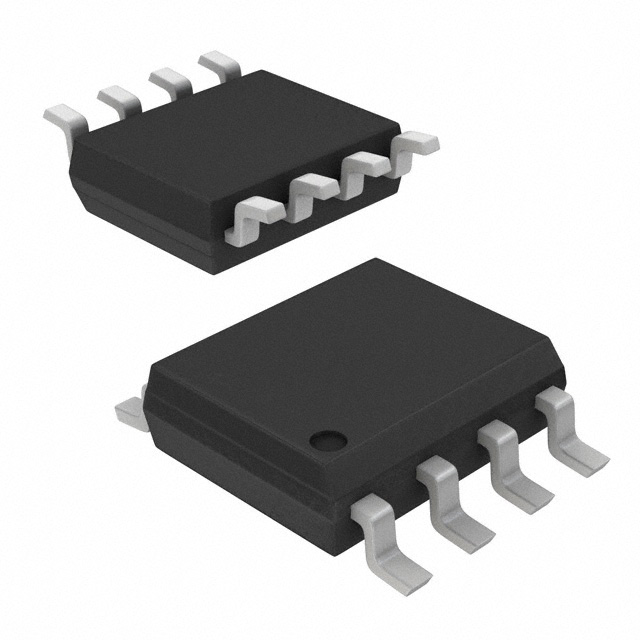
- Part No.:
- ZSD100N8TA
- Manufacturer:
- Diodes Incorporated
- Category:
- Drivers, Receivers, Transceivers
- Package:
- 8-SOIC (0.154", 3.90mm Width)
- Datasheet:
-
 ZSD100N8TA.pdf
- Description:
- IC TRANSCEIVER 1/0 8SO
- Quantity:
- Payment:

- Shipping:

Inventory:3,888
Please send an inquiry. Send us your inquiry, and we will respond immediately.
Product details
Overview
ZSD100N8TA from Zetex Semiconductors is a dedicated siren signal generator IC for automotive and static security alarm systems. It integrates an audio VCO (100 Hz–10 kHz), low-frequency sweep oscillator (0.1–10 Hz), dual complementary output drivers (Q/Q̄), and disable control via RT pin. Operates from 4V to 18V, delivers 120 dB siren output with piezo transducers, and supports triangle/sawtooth modulation waveforms.
For engineers reviewing the ZSD100N8TA datasheet, ZSD100N8TA pinout, ZSD100N8TA application, or ZSD100N8TA equivalent, key selection criteria include modulating frequency programmability (via CMOD), output center frequency tuning (via COUT), dual-driver capability for push-pull or single-ended stages, sleep-mode current (1 µA), and automotive-grade temperature range (−40°C to +125°C).
Technical Context
The ZSD100N8TA implements a two-oscillator architecture: a low-frequency modulator (FMOD = 2850 / [CMOD × (61.5 + RT)] Hz) sweeps the center frequency of an audio VCO (FOUT = 1710 / [COUT × (61.5 + RT)] Hz) over a fixed 2:1 ratio. Both oscillators share the same internal timing resistor (61.5 kΩ) unless overridden by an external RT resistor.
Its Q and Q̄ outputs provide complementary square-wave drive capable of directly interfacing with Darlingtons (e.g., ZTX605), MOSFETs, or IGBTs without base/gate resistors. The RT pin serves dual function - frequency trimming and hardware disable - with open-circuit or VCC connection forcing full shutdown (ICC ≤ 1 µA).
Key Specifications
| Parameter | Value and Actual Design Meaning |
|---|---|
| Supply Voltage Range | 4 V to 18 V - supports 12 V automotive battery and 9 V/6 V portable alarm systems without regulation. |
| Modulation Frequency Range | 0.1 Hz to 10 Hz - sets siren sweep rate; typical 3.3–5.9 Hz with 1–10 µF CMOD and RT = 0–470 kΩ. |
| Output Center Frequency | 100 Hz to 10 kHz - determines base siren pitch; 1.01–1.58 kHz typical with 22 nF COUT and RT = 0. |
| Output Drive Capability | 5 mA source / 0.5 mA sink - sufficient to directly drive Darlington bases or small-signal MOSFET gates. |
| Quiescent Current | 10 mA typical at 12 V - enables low-power operation in battery-backed alarms; drops to 1 µA in disable mode. |
| Operating Temperature | −40°C to +125°C - qualified for under-hood automotive and outdoor security enclosure use. |
| Package | SO-8 - surface-mount, 150 mil width, JEDEC MS-012 compliant, RoHS-compliant lead finish. |
Pinout & Package
Package: SO-8 (Small Outline, 150 mil width), 8-pin plastic gull-wing, moisture sensitivity level MSL3.
| Pin/Terminal | Circuit Role | Design Meaning |
|---|---|---|
| 1. RT | Timing/Disable Control | Connects to GND via resistor to tune both oscillators; open or tied to VCC disables all internal functions (ICC ≤ 1 µA). |
| 2. SAW | Waveform Selection | Open = triangle modulation; tied to CMOD = sawtooth modulation - selects siren timbre without external logic. |
| 3. CMOD | Modulation Oscillator Capacitor | 0.1 µF–100 µF capacitor sets FMOD; value directly scales inverse of sweep frequency per datasheet formula. |
| 4. GND | Power Ground | Analog/digital ground reference for all internal oscillators and output drivers. |
| 5. COUT | Audio Oscillator Capacitor | 1 nF–100 nF capacitor sets FOUT center frequency; smaller values yield higher pitch siren tones. |
| 6. Q | Non-inverted Output Driver | Active-high square-wave output; complements Q̄ for push-pull or H-bridge driver stages. |
| 7. Q̄ | Inverted Output Driver | Active-low square-wave output; phase-aligned with Q for complementary switching without cross-conduction risk. |
| 8. VCC | Positive Supply | 4–18 V DC input; powers all internal blocks including oscillators, logic, and output drivers. |
Key Features
| Feature | Design Value |
|---|---|
| Integrated dual-oscillator architecture | Eliminates need for external sweep generator or audio tone chip - reduces BOM count by ≥4 discrete ICs. |
| Complementary Q/Q̄ outputs | Enables direct connection to H-bridge transistor pairs (e.g., ZTX790A/ZTX690B) without gate/base resistors or level shifters. |
| User-selectable modulation waveform | Triangle (default) or sawtooth via SAW pin - alters harmonic content to meet regional siren sound regulations. |
| Hardware disable via RT pin | Zero-power sleep mode (1 µA) activated by open-circuit or VCC tie - ideal for battery-backed anti-theft systems. |
| Wide supply voltage range | Operates across unregulated 6 V–18 V inputs - accommodates aging batteries and alternator transients in vehicle systems. |
Applications
| Automotive Anti-Theft Siren | Piezo-Based Burglar Alarm |
|---|---|
Use Scenario: Vehicle intrusion detection triggers immediate high-penetration audible alert using 12 V battery power. IC Role / Device Role / Timing Role: Generates frequency-swept 1.2 kHz ±33% siren tone with 4.3 Hz modulation, driving ZTX605 Darlington and piezo transducer via autotransformer. Use Value: Achieves >120 dB SPL with <5 external components; operates reliably at −40°C to +125°C under hood. | Use Scenario: Residential alarm panel activates loud warning upon door/window sensor breach. IC Role / Device Role / Timing Role: Provides standardized EN50131-compliant siren waveform using triangle modulation and 1.5 kHz center frequency. Use Value: Eliminates need for microcontroller-based tone generation; reduces system cost and firmware validation burden. |
| Moving-Coil Automotive Loudspeaker | Low-Power Remote Security Module |
Use Scenario: High-output siren for commercial fleet vehicles requiring 6 Ω speaker drive. IC Role / Device Role / Timing Role: Drives complementary ZTX790A/ZTX690B H-bridge with Q/Q̄ outputs to deliver 10 W peak into 6 Ω load. Use Value: Avoids cross-conduction due to matched rise/fall times; no dead-time circuitry required. | Use Scenario: Wireless sensor node with battery life target >2 years in standby. IC Role / Device Role / Timing Role: Remains in RT-disabled state (1 µA) until MCU asserts wake-up signal; resumes siren on interrupt. Use Value: Enables ultra-low-power security monitoring without compromising acoustic output performance. |
Equivalent & Alternatives
The following parts are listed as comparable options for similar siren signal generator applications.
| Alternative Part | Technical Difference | Application Difference | Selection Advice |
|---|---|---|---|
| MAX6315CSA+ | Single-supply 5 V only; no modulation waveform selection; fixed 2 kHz tone; no Q/Q̄ outputs. | Limited to simple beepers; cannot generate swept siren or drive Darlingtons directly. | Select only for low-cost, non-swept audible indicators where 12 V operation and modulation are unnecessary. |
| TC4467CPD | High-current dual MOSFET driver (1.2 A); no internal oscillators; requires external clock and sweep logic. | Requires MCU or 555-based timing circuitry; increases component count and design complexity. | Choose when custom siren profiles or higher output power (>10 W) are needed beyond ZSD100N8TA's integrated capability. |
Compared with MAX6315CSA+ and TC4467CPD, the ZSD100N8TA uniquely combines full siren waveform synthesis, dual complementary drive, wide supply range, and hardware disable in one SO-8 IC - reducing total solution size and eliminating external timing components required by alternatives.
Availability
ZSD100N8TA is available at Aetrix Electronics and suitable for automotive anti-theft systems, residential burglar alarms, and industrial perimeter security requiring stable component supply across extended temperature ranges and long production lifecycles.
Supply support for ZSD100N8TA includes scheduled delivery planning, volume procurement assistance, BOM continuity management, traceable sourcing, and lifecycle availability coordination for OEM customers, industrial embedded developers, connected-device designers, and electronics production programs.
Manufacturer
Zetex Semiconductors (now part of Diodes Incorporated) specialized in high-performance analog and mixed-signal ICs for industrial, automotive, and security markets before acquisition in 2008.
The ZSD100 product line was engineered specifically for cost-sensitive, high-reliability siren generation - targeting minimal external component count, wide supply tolerance, and guaranteed operation across automotive thermal extremes.
FAQ
What is the minimum and maximum value for the COUT capacitor?
The COUT capacitor must be between 1 nF and 100 nF. Using 1 nF yields ~10 kHz center frequency (with RT = 0), while 100 nF gives ~100 Hz. Values outside this range cause unstable oscillation or failure to start, as confirmed by electrical characteristics testing at VCC = 12 V and Tamb = 25°C.
Can the ZSD100N8TA drive a piezo transducer directly without a transformer?
No - the ZSD100N8TA outputs are designed to drive transistor bases (e.g., ZTX605), not high-impedance piezo elements directly. A coupling transformer or step-up autotransformer is required to match the piezo's impedance and achieve 120 dB output, as shown in the official application circuit.
How does the SAW pin affect modulation waveform and siren sound?
When SAW is left open, the modulator produces a triangle waveform; when tied to CMOD, it generates a sawtooth. Triangle yields smoother, less aggressive siren tone; sawtooth introduces stronger odd harmonics - useful for meeting specific national alarm sound standards like UL 217 or EN 50131.
Is the ZSD100N8TA still in active production and supported by Diodes Incorporated?
Yes - Diodes Incorporated maintains active supply and technical support for the ZSD100N8TA under part number ZSD100N8TA, with full datasheet, application notes, and cross-reference documentation available on their official website and authorized distributors.
ZSD100N8TA Specifications
- Product attributes
- Attribute value
- Manufacturer:
- Diodes Incorporated
- Series:
- -
- Package/Case:
- 8-SOIC (0.154", 3.90mm Width)
- Packaging:
- Tape & Reel (TR)
- Product Status:
- Obsolete
- Type:
- Driver
- Protocol:
- -
- Number of Drivers/Receivers:
- 1/0
- Duplex:
- -
- Receiver Hysteresis:
- -
- Data Rate:
- -
- Voltage - Supply:
- 4V ~ 18V
- Operating Temperature:
- -40°C ~ 125°C
- Grade:
- -
- Qualification:
- -
- Mounting Type:
- Surface Mount
- Supplier Device Package:
- 8-SO
ZSD100N8TA FAQ
1.How can I place an order for ZSD100N8TA through Aetrix?
Please submit a Request for Quotation (RFQ) for ZSD100N8TA on Aetrix. Our sales agent will provide a competitive quotation and guide you through the order confirmation once you accept the terms.
2.Are the price and stock information for ZSD100N8TA reliable?
The price and inventory of ZSD100N8TA are updated periodically and may fluctuate due to market conditions. Stock and pricing data are typically refreshed every 24 hours. Quotation validity for ZSD100N8TA is usually 5 days.
3.What payment methods are accepted for ZSD100N8TA?
We accept Wire Transfer, PayPal, Credit Card, Western Union, MoneyGram, and Escrow for ZSD100N8TA transactions.
Note: Certain payment methods may incur a processing fee.
4.How is shipping managed for ZSD100N8TA?
ZSD100N8TA orders can be shipped via leading logistics carriers, including DHL, UPS, FedEx, TNT, or Registered Mail.
Once your ZSD100N8TA order is processed, you will receive an email with the shipment details and tracking number.
Note: Tracking information may take up to 24 hours to appear. Express delivery typically takes 3–5 business days.
5.How can I obtain technical support or documentation for ZSD100N8TA?
For technical support, including ZSD100N8TA datasheets, pinout diagrams, or application guidance, please contact our engineering support team. They can provide detailed documentation and assistance for your ZSD100N8TA requirements.
6.How does Aetrix verify that ZSD100N8TA is sourced from the original manufacturer or authorized distributors?
All ZSD100N8TA products on Aetrix are procured from qualified distributors and authorized channels. Our dedicated quality assurance team conducts strict verification, including traceability checks and, if necessary, third-party testing. This ensures that ZSD100N8TA meets industry standards.
7.What is the process for return or replacement of ZSD100N8TA?
All ZSD100N8TA units undergo pre-shipment inspection (PSI). If there is an issue with ZSD100N8TA, returns or replacements are accepted under the following conditions:
1.Quantity discrepancies, incorrect items, or visible external defects (such as breakage or corrosion), acknowledged by Aetrix.
2.The issue is reported within 90 days of delivery.
3.The ZSD100N8TA part is unused and in its original packaging.
Return procedure for ZSD100N8TA:
1.Submit a request within 90 days.
2.Obtain a Return Material Authorization (RMA) from Aetrix.
ZSD100N8TA Tags

-
ATA6561-GAQW-N
Microchip Technology
-
ATA6561-GBQW-N
Microchip Technology
-
AM26LS32ACDR
Texas Instruments

-
SP485CN-L/TR
MaxLinear, Inc.
-
SP485EN-L/TR
MaxLinear, Inc.
-
SP485EEN-L/TR
MaxLinear, Inc.
-
SP485ECN-L/TR
MaxLinear, Inc.
-
THVD1400DR
Texas Instruments
-
AM26C31IDR
Texas Instruments

-
TLIN1021ADRQ1
Texas Instruments
-
MAX232IDR
Texas Instruments
-
AM26C32IDR
Texas Instruments
Tech Hub

Operational amplifier guide covering op amp basics, feedback, ideal vs real op amps, common configurations, buffer circuits, offset, bias current, gain-bandwidth, slew rate, rail-to-rail limits and sel…

Jumper cables guide covering safe connection order, red and black clamp placement, final ground connection, cable gauge, length, clamp quality, copper vs CCA cables, jump starter comparison and battery…

LDO regulator guide covering low dropout voltage, power dissipation, thermal design, PSRR, output noise, capacitor stability, adjustable LDO circuits, LDO vs buck converter and datasheet selection chec…

Conditional Access Module guide covering CAM meaning, CI/CI+ interface, smart card authorization, DVB security workflow, TV and set-top box compatibility, internal electronics, ESD protection, connecto…

Guide to electronic component obsolescence covering EOL risk, PCN/PDN notices, last-time buy planning, replacement options, form-fit-function validation, counterfeit risk and BOM lifecycle management.

18650 battery guide covering lithium-ion cell basics, 3.6V/3.7V voltage, 4.2V charging, mAh and Wh capacity, protected cells, chargers, BMS, series-parallel packs, holders, welding and sourcing checks.…

Hall effect sensor guide covering working principle, linear and digital sensors, Arduino circuits, current sensing, speed detection, automotive applications, A3144 examples, signal filtering and datash…

Product Change Notification guide for electronic components, covering PCN meaning, PCN vs PDN/EOL, common change types, risk levels, form-fit-function review, engineering validation, BOM control, LTB/L…

A practical guide to blend door actuators, covering HVAC function, symptoms, location, AC and heater issues, reset and calibration, replacement cost, electrical diagnosis, compatibility checks, and rep…

Engineering guide to Raspberry Pi alternatives, covering chip-level differences, Orange Pi, ROCK, Jetson, Banana Pi, NanoPi, Compute Module, Pico, GPIO, camera, HAT compatibility, and replacement risks…


