
 My Inquiry
 My Account


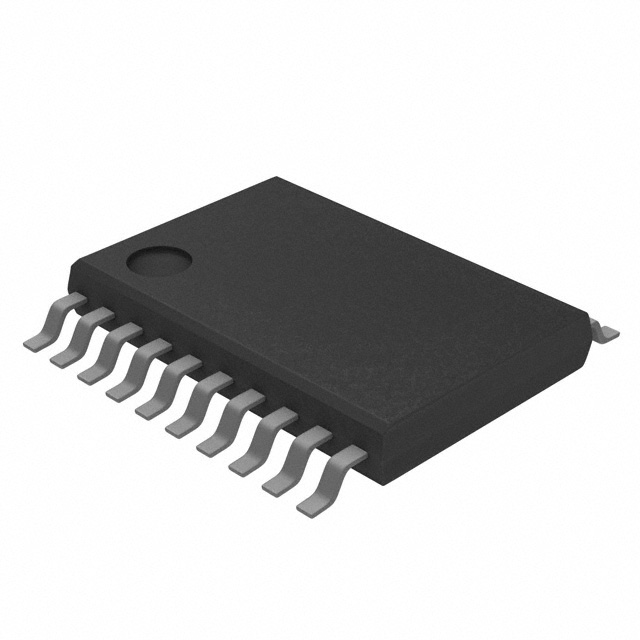
Renesas ZSSC3135BA2T

- Part No.:
- ZSSC3135BA2T
- Manufacturer:
- Renesas
- Category:
- Specialized
- Package:
- 14-SSOP (0.209", 5.30mm Width)
- Datasheet:
-
 ZSSC3135BA2T.pdf
- Description:
- IC INTFACE SPECIALIZED SGNL COND
- Quantity:
- Payment:

- Shipping:

Inventory:3,188
Please send an inquiry. Send us your inquiry, and we will respond immediately.
Product details
Overview
ZSSC3135BA2T from Integrated Device Technology (IDT) is a CMOS sensor signal conditioner IC designed specifically for piezoresistive bridge sensors in automotive and industrial systems. It integrates a 16-bit RISC microcontroller, programmable gain amplifier (PGA) with analog gain up to 105, 13/14-bit ADC, and on-chip EEPROM for one-pass calibration. It delivers ratiometric analog voltage output (12.4-bit effective resolution) or ZACwire™ digital interface, supporting high-accuracy compensation of offset, sensitivity, temperature drift, and non-linearity across -40°C to +125°C.
For engineers reviewing the ZSSC3135BA2T datasheet, ZSSC3135BA2T pinout, ZSSC3135BA2T application, or ZSSC3135BA2T equivalent, this device is selected for precision pressure, force, and load cell conditioning where AEC-Q100 qualification, ±33 V high-voltage protection, and end-of-line I²C/ZACwire™ calibration are required.
Technical Context
The ZSSC3135BA2T implements a fully differential analog front-end with a three-stage PGA, internal common-mode reference (VDDA/2), and switched-capacitor ADC architecture. Its measurement cycle sequences bridge signal, temperature sensor (internal diode or external), and auto-zero phases under control of the embedded calibration microcontroller (CMC).
Digital signal conditioning applies sensor-specific correction coefficients stored in on-chip EEPROM to compute compensated output. Output modes include ratiometric analog voltage (5–95% VDDE, 12-bit DAC) or ZACwire™ one-wire serial readout - both configurable via I²C™ or ZACwire™ during calibration.
Key Specifications
| Parameter | Value and Actual Design Meaning |
|---|---|
| Supply Voltage | 4.5–5.5 V DC - ensures stable operation with standard 5 V industrial/automotive rails and supports ratiometric output referencing. |
| Operating Temperature | -40°C to +125°C - qualified for under-hood automotive and harsh industrial environments without derating. |
| ADC Resolution | 13/14-bit - selectable resolution directly determines system bandwidth (up to 200 Hz at 13-bit) and noise immunity trade-off. |
| Analog Gain Range | 2.8 to 105 - enables precise matching to diverse piezoresistive bridge sensitivities (2–25 kΩ) while maintaining >75% input span utilization. |
| Output Accuracy | 0.5% FSO @ -40°C to +125°C - guaranteed full-scale output error includes all gain, offset, INL, and temperature-induced deviations. |
| High-Voltage Protection | ±33 V on all pins - eliminates need for external TVS diodes in 24 V system interfaces and protects against load-dump transients. |
| Interface Options | I²C™ and ZACwire™ - dual serial interfaces support PC-based calibration (I²C) and low-pin-count field readout (ZACwire™ OWI). |
Pinout & Package
Package: JEDEC-compliant SSOP14 (Small Outline Package, 14-pin, 150 mil width), RoHS-compliant, rated for -40°C to +125°C ambient operation.
| Pin/Terminal | Circuit Role | Design Meaning |
|---|---|---|
| VDDA | Analog supply | Provides clean 4.5–5.5 V power to analog front-end; must be decoupled with ≥100 nF capacitor near pin. |
| VSSA | Analog ground | Reference for all analog inputs and outputs; requires separate low-impedance connection to system AGND. |
| SDA | I²C™ data line | Open-drain bidirectional interface for configuration and calibration; requires external pull-up to VDDA. |
| SCL | I²C™ clock line | Input-only clock for I²C™ communication; supports up to 400 kHz operation when fOSC ≥ 2 MHz. |
| VDD | Digital supply | Internally tied to VDDA; no separate connection required - simplifies layout and reduces BOM count. |
| VDDE | Power supply input | Main 4.5–5.5 V supply rail; powers entire IC and serves as reference for ratiometric analog output (AOUT). |
| IRTEMP | External temperature sensor bias | Provides 6–20 μA current source for external diode or thermistor; enables accurate temperature compensation independent of bridge signal path. |
| VBR_T / VBR_B | Bridge top/bottom sense | Differential inputs for piezoresistive bridge; support common-mode range of 29–65% VDDA depending on PGA gain setting. |
| VBP / VBN | Bridge excitation control | Enable voltage-biased excitation of bridge sensor; allow direct connection to VDDE or external regulated source. |
| AOUT | Analog output | Ratiometric voltage output (5–95% VDDE); 12-bit DAC with 2.5 mA drive capability into ≥2 kΩ load. |
| VSSE | Output ground | Return path for AOUT; must be connected to same ground plane as VSSA to maintain ratiometric accuracy. |
| n.c. | No connect | Pin 5 is unconnected internally; must remain floating or grounded per layout best practices - no routing or component attachment. |
Key Features
| Feature | Design Value |
|---|---|
| One-pass calibration via I²C™/ZACwire™ | Eliminates manual trimming and enables end-of-line calibration in production - reduces test time and cost while ensuring per-unit accuracy. |
| Digital compensation engine | Corrects sensor offset, sensitivity, temperature drift, and non-linearity using ROM-stored algorithm and EEPROM-stored coefficients - achieves 0.5% FSO accuracy without external components. |
| Integrated safety monitoring | Detects open-circuit (>100 kΩ) and short-circuit (<50 Ω) conditions on bridge inputs - provides fail-safe diagnostics for functional safety compliance. |
| Reverse polarity & short-circuit protection | Withstands reverse supply connection and output shorts to VDDE or VSSE - removes need for external protection circuitry in rugged applications. |
| User-defined EEPROM traceability | Allows storage of custom identifiers (e.g., sensor ID, calibration date, lot code) - supports traceability requirements for ISO/TS 16949 and IATF 16949. |
Applications
| Automotive Tire Pressure Monitoring (TPMS) | Industrial Hydraulic Pressure Sensing |
|---|---|
Use Scenario: Real-time pressure measurement inside vehicle tires using silicon piezoresistive bridge elements exposed to wide thermal cycling (-40°C to +125°C). IC Role / Device Role / Timing Role: Signal conditioner performing gain scaling, temperature-compensated linearization, and ratiometric analog output generation synchronized to vehicle ECU sampling. Use Value: Enables <0.5% FSO accuracy over full automotive temperature range without external compensation components - meets OEM TPMS specification requirements. |
Use Scenario: High-reliability pressure monitoring in hydraulic control valves operating in factory automation systems with 24 V supply and EMI exposure. IC Role / Device Role / Timing Role: Front-end conditioner converting bridge mV/V output into robust 0.05–0.95 VDDE analog signal with integrated short/open diagnostics. Use Value: ±33 V pin protection and reverse polarity tolerance eliminate external protection circuitry - reduces PCB area and improves MTBF in industrial settings. |
| Medical Force-Sensing Surgical Instruments | Heavy-Duty Load Cell Interfaces |
Use Scenario: Miniaturized force feedback in robotic surgical tools requiring sub-1% error over sterilization temperature cycles and long-term stability. IC Role / Device Role / Timing Role: Precision bridge signal conditioner applying real-time digital correction using on-chip EEPROM coefficients and internal temperature reference. Use Value: On-chip 16-bit RISC microcontroller executes sensor-specific correction algorithm - avoids reliance on host MCU processing and ensures deterministic latency. |
Use Scenario: Weighing systems in construction equipment using thick-film piezoresistive load cells subject to mechanical shock and voltage transients. IC Role / Device Role / Timing Role: Robust signal conditioner providing calibrated analog output with built-in sensor connection loss detection and diagnostic mode. Use Value: Sensor check function identifies broken wires or solder joint failures before system deployment - prevents field failures in safety-critical weighing applications. |
Equivalent & Alternatives
The following parts are listed as comparable options for similar sensor signal conditioning applications.
| Alternative Part | Technical Difference | Application Difference | Selection Advice |
|---|---|---|---|
| MAX1452ACM+T | 16-bit DAC, 20-bit ADC, but no integrated microcontroller or EEPROM - requires external processor for compensation algorithm execution. | Lacks on-chip calibration engine and one-pass setup; suited for designs with existing host MCU resources and higher resolution needs. | Select MAX1452ACM+T only if system already includes capable microcontroller and requires >14-bit raw ADC resolution. |
| AD8555ARZ | Analog-only signal conditioner with programmable gain/offset; no digital correction, no EEPROM, no temperature compensation logic. | Requires external temperature sensor and analog compensation circuitry; limited to fixed-gain, single-point calibration. | Choose AD8555ARZ for cost-sensitive, non-temperature-critical applications where digital complexity must be minimized. |
Compared with ZSSC3135BA2T, MAX1452ACM+T offers higher ADC resolution but demands external firmware development, while AD8555ARZ reduces integration but sacrifices accuracy and temperature adaptability - ZSSC3135BA2T uniquely balances embedded intelligence, AEC-Q100 qualification, and production-ready calibration.
Availability
ZSSC3135BA2T is available at Aetrix Electronics and suitable for automotive pressure sensing, industrial hydraulic monitoring, medical force feedback, heavy-duty load cell interfaces, and ruggedized sensor module design requiring stable component supply and long-lifecycle support.
Supply support for ZSSC3135BA2T includes scheduled delivery planning, volume procurement assistance, BOM continuity management, traceable sourcing, and lifecycle availability coordination for OEM customers, industrial embedded developers, connected-device designers, and electronics production programs.
Manufacturer
Integrated Device Technology (IDT), now part of Renesas Electronics, is a global semiconductor company specializing in timing, memory interface, RF, and sensor signal conditioning solutions for automotive, industrial, and communications markets.
The ZSSC313x family was engineered to deliver turnkey, AEC-Q100-qualified signal conditioning for piezoresistive sensors - enabling rapid development of high-accuracy, production-ready pressure and force measurement systems without custom firmware or analog tuning.
FAQ
What is the maximum operating temperature range supported by the ZSSC3135BA2T?
The ZSSC3135BA2T is specified for operation from -40°C to +125°C ambient temperature, with extended characterization up to +150°C. This version (BA2) is rated for the Advanced-Performance Temperature Range (TQA), making it suitable for under-hood automotive and industrial environments where thermal stability is critical. The device maintains 0.5% FSO accuracy across the full -40°C to +125°C range.
Does the ZSSC3135BA2T require external components for basic operation?
The ZSSC3135BA2T requires minimal external components: two 100 nF decoupling capacitors on VDDA and VDDE, a 47 nF capacitor on AOUT, and optional external temperature sensing elements. No external trimming resistors, op-amps, or compensation networks are needed - all calibration coefficients and correction logic reside on-chip in EEPROM and ROM, enabling true "connect-and-run" deployment.
How is calibration performed for the ZSSC3135BA2T?
Calibration of the ZSSC3135BA2T is performed via one-pass end-of-line procedure using either the I²C™ or ZACwire™ interface. During calibration, known pressure/force points and temperatures are applied, and the embedded 16-bit RISC microcontroller computes and stores sensor-specific offset, sensitivity, and temperature coefficients directly into on-chip EEPROM - eliminating manual adjustment and ensuring unit-to-unit repeatability.
Can the ZSSC3135BA2T interface with a microcontroller that lacks I²C™ support?
Yes - the ZSSC3135BA2T supports ZACwire™ (a proprietary one-wire digital interface) as an alternative to I²C™. ZACwire™ requires only a single bidirectional GPIO pin and a pull-up resistor, enabling communication with resource-constrained or non-I²C™ microcontrollers. Both interfaces provide full access to configuration registers, calibration data, and real-time sensor readings.
What protection features does the ZSSC3135BA2T include for harsh environments?
The ZSSC3135BA2T integrates multiple protection features: ±33 V absolute maximum rating on all pins, reverse polarity protection on VDDE, short-circuit protection on AOUT (±25 mA), and built-in sensor connection diagnostics (open >100 kΩ, short <50 Ω). These features meet AEC-Q100 stress test requirements and eliminate the need for external protection circuitry in automotive and industrial deployments.
ZSSC3135BA2T Specifications
- Product attributes
- Attribute value
- Manufacturer:
- Renesas
- Series:
- -
- Package/Case:
- 14-SSOP (0.209", 5.30mm Width)
- Packaging:
- Tube
- Product Status:
- Active
- Applications:
- Sensor Signal Conditioner - Resistive
- Interface:
- I2C, ZACwire™
- Voltage - Supply:
- 4.5V ~ 5.5V
- Supplier Device Package:
- 14-SSOP
- Grade:
- Automotive
- Qualification:
- AEC-Q100
- Mounting Type:
- Surface Mount
ZSSC3135BA2T FAQ
1.How can I place an order for ZSSC3135BA2T through Aetrix?
Please submit a Request for Quotation (RFQ) for ZSSC3135BA2T on Aetrix. Our sales agent will provide a competitive quotation and guide you through the order confirmation once you accept the terms.
2.Are the price and stock information for ZSSC3135BA2T reliable?
The price and inventory of ZSSC3135BA2T are updated periodically and may fluctuate due to market conditions. Stock and pricing data are typically refreshed every 24 hours. Quotation validity for ZSSC3135BA2T is usually 5 days.
3.What payment methods are accepted for ZSSC3135BA2T?
We accept Wire Transfer, PayPal, Credit Card, Western Union, MoneyGram, and Escrow for ZSSC3135BA2T transactions.
Note: Certain payment methods may incur a processing fee.
4.How is shipping managed for ZSSC3135BA2T?
ZSSC3135BA2T orders can be shipped via leading logistics carriers, including DHL, UPS, FedEx, TNT, or Registered Mail.
Once your ZSSC3135BA2T order is processed, you will receive an email with the shipment details and tracking number.
Note: Tracking information may take up to 24 hours to appear. Express delivery typically takes 3–5 business days.
5.How can I obtain technical support or documentation for ZSSC3135BA2T?
For technical support, including ZSSC3135BA2T datasheets, pinout diagrams, or application guidance, please contact our engineering support team. They can provide detailed documentation and assistance for your ZSSC3135BA2T requirements.
6.How does Aetrix verify that ZSSC3135BA2T is sourced from the original manufacturer or authorized distributors?
All ZSSC3135BA2T products on Aetrix are procured from qualified distributors and authorized channels. Our dedicated quality assurance team conducts strict verification, including traceability checks and, if necessary, third-party testing. This ensures that ZSSC3135BA2T meets industry standards.
7.What is the process for return or replacement of ZSSC3135BA2T?
All ZSSC3135BA2T units undergo pre-shipment inspection (PSI). If there is an issue with ZSSC3135BA2T, returns or replacements are accepted under the following conditions:
1.Quantity discrepancies, incorrect items, or visible external defects (such as breakage or corrosion), acknowledged by Aetrix.
2.The issue is reported within 90 days of delivery.
3.The ZSSC3135BA2T part is unused and in its original packaging.
Return procedure for ZSSC3135BA2T:
1.Submit a request within 90 days.
2.Obtain a Return Material Authorization (RMA) from Aetrix.
ZSSC3135BA2T Tags
-
NVT4857UKAZ
NXP Semiconductors
-
TCA8418RTWR
Texas Instruments

-
PCA9546APWR
Texas Instruments

-
MD0100N8-G
Microchip Technology
-
PCA9548APW,118
NXP Semiconductors
-
PCA9540BDP,118
NXP Semiconductors
-
PCA9548APWR
Texas Instruments
-
PCA9546APW,118
NXP Semiconductors
-
PTN3360DBS,518
NXP Semiconductors
-
PCA9546ABS,118
NXP Semiconductors
-
PCA9518PWR
Texas Instruments
-
PCA9545APW,118
NXP Semiconductors
Tech Hub

TTL and CMOS logic families differ in thresholds, loading, output drive, power and timing. This engineering guide compares 74HC and 74HCT, calculates noise margins and checks 3.3 V/5 V compatibility.

A practical engineering guide to 3.3V and 5V logic compatibility, input thresholds, resistor dividers, translator ICs, MOSFET level shifting, I2C pull-ups, timing limits and power-sequencing risks.

The 74HC595 uses push-pull logic outputs, while the TPIC6B595 uses 50 V open-drain DMOS sinks for higher-power loads. This guide compares timing, current limits, 3.3 V interfacing, load wiring, thermal…

The 74HC595 converts serial data into eight stable parallel outputs. This guide covers pin functions, shift and storage timing, OE and MR behavior, drive-current limits, cascading, voltage compatibilit…

A technical comparison of level-sensitive latches and edge-triggered flip-flops, covering timing windows, setup and hold limits, master–slave operation, time borrowing, race-through, HDL inference and…

A D latch stores one bit while Enable controls when data can pass. This reference covers gate-level operation, truth tables, transparency, setup and hold timing, LE versus OE, common ICs and practical …

An SR latch stores one bit through cross-coupled feedback. This engineering reference covers NOR and NAND implementations, truth tables, forbidden-state recovery, gated operation, switch debouncing, fa…

Latch circuits retain one bit through feedback. This technical reference covers SR and D latches, truth tables, transparency, timing limits, latch-versus-flip-flop behavior, applications and common log…

An engineering guide to LED driver operation, constant-current and constant-voltage outputs, linear and switching topologies, dimming, IC selection, calculations, replacement compatibility, and fault c…

Operational amplifier guide covering op amp basics, feedback, ideal vs real op amps, common configurations, buffer circuits, offset, bias current, gain-bandwidth, slew rate, rail-to-rail limits and sel…


