
 My Inquiry
 My Account


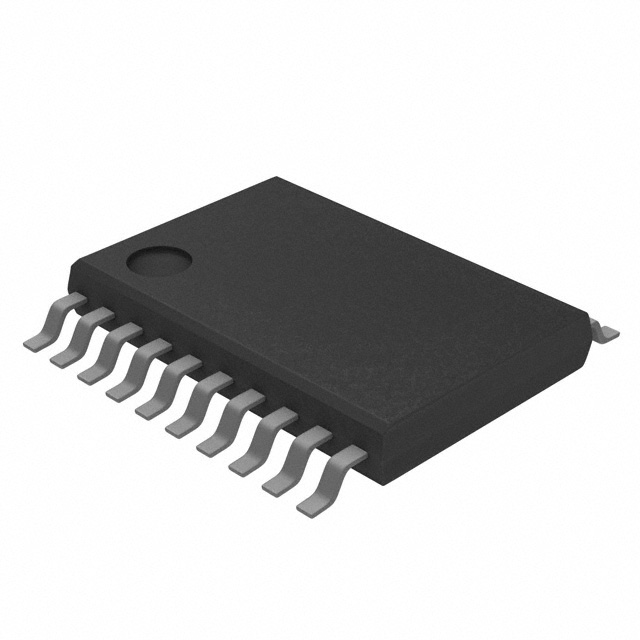
Renesas ZSSC3170EA2R

- Part No.:
- ZSSC3170EA2R
- Manufacturer:
- Renesas
- Category:
- Specialized
- Package:
- 20-SSOP (0.209", 5.30mm Width)
- Datasheet:
-
 ZSSC3170EA2R.pdf
- Description:
- IC INTFACE SPECIALIZED SGNL COND
- Quantity:
- Payment:

- Shipping:

Inventory:3,945
Please send an inquiry. Send us your inquiry, and we will respond immediately.
Product details
Overview
ZSSC3170EA2R from Integrated Device Technology (IDT) is an AEC-Q100-qualified automotive sensor signal conditioner IC designed to condition resistive bridge sensor outputs with digital LIN or PWM interface output. It delivers ±0.50% FSO accuracy over −40°C to +125°C, supports up to 420× analog gain, and performs 16-bit digital compensation of offset, sensitivity, temperature drift (up to 2nd order), and nonlinearity (up to 3rd order) for pressure, force, and level sensing in engine manifolds and brake systems.
For engineers reviewing the ZSSC3170EA2R datasheet, ZSSC3170EA2R pinout, ZSSC3170EA2R application, or ZSSC3170EA2R equivalent, key selection considerations include its dual-output capability (LIN 2.1/PWM), integrated diagnostics (sensor short/connection check), load-dump protected LIN pin (±40 V), SSOP20 RoHS-compliant package, and support for end-of-line calibration using the sensor's own output signal.
Technical Context
The ZSSC3170EA2R integrates a programmable gain amplifier (PGA) with 12 selectable gain stages (2× to 420×), a 14-bit ADC, and a 16-bit RISC microcontroller executing ROM-resident conditioning algorithms. Its analog front-end handles differential bridge inputs (VBP/VBN) with common-mode range from 29–65% of VDDA and supports XZC-based analog offset compensation.
Digital signal conditioning applies stored EEPROM coefficients to correct bridge output for temperature-induced errors using internal or external diode/RTD sensors. Output is delivered via configurable LIN publisher frames (compliant with LIN 1.3/2.0/2.1) or PWM high-side/low-side switch signals (HOUT/LOUT), both supporting real-time end-of-line calibration without analog trimming components.
Key Specifications
| Parameter | Value and Actual Design Meaning |
|---|---|
| Accuracy | ±0.50% FSO over −40°C to +125°C - guarantees full-scale error budget for automotive-grade pressure transducers under extended ambient conditions. |
| Analog Gain Range | 2× to 420× - enables direct interfacing with low-sensitivity bridge sensors (e.g., 1.8 mV/V) without external amplification. |
| ADC Resolution | 14-bit - provides sufficient dynamic range for high-precision bridge measurement before digital correction. |
| LIN Compliance | LIN 1.3 / 2.0 / 2.1 - ensures interoperability with standard automotive body electronics networks and diagnostic tools. |
| PWM Output Resolution | 11-bit full-scale (1%–99% duty cycle) - delivers fine-grained analog-equivalent control for ECU feedback loops. |
| Temperature Range | −40°C to +125°C (operating); extended to +150°C - meets under-hood requirements for engine-mounted pressure sensors. |
| Supply Voltage | 7 V to 18 V - compatible with automotive battery rail including cold-crank and load-dump transients. |
| EEPROM Endurance | 100 write cycles at 150°C - supports field reprogramming for recalibration in high-temp environments. |
Pinout & Package
Package: SSOP20 (RoHS-compliant, 0.65 mm pitch, 7.2 mm × 5.3 mm footprint).
| Pin/Terminal | Circuit Role | Design Meaning |
|---|---|---|
| VBP / VBN | Bridge Sensor Input (Differential) | Accepts Wheatstone bridge output; supports common-mode range 29–65% of VDDA and input spans from 1.8 to 267 mV/V. |
| HOUT / LOUT | PWM Output Switches | HOUT drives high-side switch; LOUT drives low-side switch; each supports 15 mA source/sink and 0.5–4 V logic levels. |
| LIN | LIN Bus Transceiver Pin | Bi-directional LIN physical layer I/O with ±40 V load-dump protection and integrated pull-up resistor (20–47 kΩ). |
| VTN1 / VTN2 | External Temperature Sensor Inputs | Support diode or RTD connections for media temperature sensing; bias current 10–40 µA per channel. |
| SCL / SDA | I²C Interface Pins | Used for factory calibration, coefficient programming, and debug readout; 400 kHz max clock, open-drain operation. |
| VB | Main Supply Input | Accepts 7–18 V automotive rail; powers internal regulators generating VDDA (5 V) and VVBR (bridge excitation). |
| VDDA / VSSA | Analog Power/Ground | Separate analog domain supply (4.3–6 V) and ground to minimize noise coupling into precision AFE path. |
Key Features
| Feature | Design Value |
|---|---|
| Dual digital output interface | LIN 2.1 frame publishing and configurable PWM (HSS/LSS) enable drop-in integration into either body-control modules or simple ECU feedback paths. |
| On-chip 16-bit RISC microcontroller | Executes sensor-specific correction algorithms using EEPROM-stored coefficients - eliminates need for external MCU or firmware development. |
| Integrated diagnostics | Detects sensor open/short faults (RSCCTH = 20–100 kΩ; RSSCTH = 50–1000 Ω) and aging - reduces system-level validation effort for ASIL-B designs. |
| End-of-line calibration via sensor output | Uses actual conditioned output (LIN or PWM) as calibration reference - avoids external DAQ equipment and simplifies production line setup. |
| AEC-Q100 qualified | Qualified to Grade 0 (−40°C to +150°C) - validated for under-hood placement in safety-critical applications like brake pressure monitoring. |
Applications
| Engine Manifold Pressure Sensing | Brake Fluid Pressure Monitoring |
|---|---|
Use Scenario: Measures absolute pressure in intake manifold for air-fuel ratio control and knock detection. IC Role / Device Role / Timing Role: Signal conditioner converts piezoresistive bridge output to calibrated LIN message synchronized to engine control unit timing. Use Value: ±0.50% FSO accuracy over −40°C to +125°C ensures stable MAP readings across cold start to full-load operation without recalibration. | Use Scenario: Monitors hydraulic pressure in ABS/ESC systems to trigger intervention during emergency braking. IC Role / Device Role / Timing Role: Provides fail-safe PWM output to ECU with built-in diagnostics for sensor disconnection or short circuit. Use Value: Load-dump protected LIN pin (±40 V) and 100 µA sleep current ensure robustness and low quiescent power in always-on brake circuits. |
| Transmission Oil Pressure Sensing | EV Battery Coolant Pressure Monitoring |
Use Scenario: Detects oil pressure loss in automatic transmissions to prevent mechanical damage during gear shifts. IC Role / Device Role / Timing Role: Delivers real-time PWM signal with 20 ms response time (PWM mode) for immediate torque-limiting action by TCU. Use Value: Programmable gain (up to 420×) accommodates low-output MEMS bridges used in compact transmission housings. | Use Scenario: Tracks coolant loop integrity in liquid-cooled EV battery packs to detect leaks or pump failure. IC Role / Device Role / Timing Role: Uses dual temperature inputs (VTN1/VTN2) to measure both coolant inlet/outlet temperatures for delta-T calculation. Use Value: Digital compensation of temperature drift up to 2nd order ensures stable pressure reading despite ±40 K coolant temperature gradients. |
Equivalent & Alternatives
The following parts are listed as comparable options for similar sensor signal conditioning applications.
| Alternative Part | Technical Difference | Application Difference | Selection Advice |
|---|---|---|---|
| MAX1452AUA+ | 16-bit DAC-based analog compensation; no integrated LIN/PWM; requires external microcontroller for digital output. | Targeted at industrial test equipment where digital bus interface is not required. | Choose MAX1452AUA+ only when full analog signal chain control is needed and LIN/PWM output is handled externally. |
| AD8422ARZ | Instrumentation amplifier only - no ADC, no digital correction, no EEPROM, no output interface. | Suitable for lab-grade bridge amplification where post-processing occurs in host system. | Select AD8422ARZ if signal conditioning is performed downstream and only high-precision analog gain is required. |
Compared with MAX1452AUA+ and AD8422ARZ, the ZSSC3170EA2R uniquely integrates complete signal chain - from PGA and 14-bit ADC through 16-bit digital correction to LIN/PWM output - enabling single-chip, AEC-Q100-compliant solutions for automotive pressure sensing without external processing or interface components.
Availability
ZSSC3170EA2R is available at Aetrix Electronics and suitable for engine manifold pressure sensing, brake fluid pressure monitoring, transmission oil pressure sensing, and EV battery coolant pressure monitoring requiring stable component supply across automotive production lifecycles.
Supply support for ZSSC3170EA2R includes scheduled delivery planning, volume procurement assistance, BOM continuity management, traceable sourcing, and lifecycle availability coordination for OEM customers, industrial embedded developers, connected-device designers, and electronics production programs.
Manufacturer
Integrated Device Technology (IDT), now part of Renesas Electronics, is a fabless semiconductor company specializing in timing, memory interface, RF, and sensor signal conditioning ICs for automotive, industrial, and communications markets.
The ZSSC3170 product line was designed specifically for high-accuracy, AEC-Q100-qualified bridge sensor conditioning in harsh automotive environments - emphasizing integrated diagnostics, LIN/PWM output flexibility, and end-of-line calibration capability.
FAQ
What is the operating temperature range supported by the ZSSC3170EA2R?
The ZSSC3170EA2R operates from −40°C to +125°C with guaranteed performance, and supports extended operation up to +150°C for 1000 hours. This range is validated per AEC-Q100 Grade 0 requirements and enables use in under-hood applications such as engine manifold and transmission pressure sensing where ambient thermal stress is extreme. The ZSSC3170EA2R maintains ±0.50% FSO accuracy across the full −40°C to +125°C range.
Does the ZSSC3170EA2R support both LIN and PWM output simultaneously?
No, the ZSSC3170EA2R supports either LIN or PWM output mode - selected at configuration time via EEPROM programming - but not both simultaneously. In LIN mode, corrected sensor data is transmitted in standardized LIN frames compliant with versions 1.3, 2.0, and 2.1. In PWM mode, the ZSSC3170EA2R drives HOUT (high-side) or LOUT (low-side) with a configurable 11-bit resolution duty cycle. The ZSSC3170EA2R does not multiplex or time-share these interfaces.
How is end-of-line calibration performed on the ZSSC3170EA2R?
End-of-line calibration for the ZSSC3170EA2R uses the device's own LIN or PWM output as the reference signal - eliminating need for external DAQ equipment. During calibration, known pressure points are applied, and the ZSSC3170EA2R's output is measured while its internal microcontroller calculates and stores correction coefficients in EEPROM. This process is supported by IDT's ZSSC3170 SSC Evaluation Kit and proprietary software tools, and is enabled by the ZSSC3170EA2R's integrated LIN transceiver and PWM drivers.
What diagnostic functions are built into the ZSSC3170EA2R?
The ZSSC3170EA2R includes sensor connection loss detection (RSCCTH = 20–100 kΩ), sensor short detection (RSSCTH = 50–1000 Ω), and sensor aging monitoring. It also features LIN bus diagnostics (dominant/recessive state monitoring), watchdog timer supervision, and internal voltage/temperature monitoring. These diagnostics are accessible via I²C or reported in LIN status frames, enabling ASIL-B–compatible fault reporting without additional external circuitry. All diagnostics are implemented in hardware/firmware within the ZSSC3170EA2R.
Is the ZSSC3170EA2R pin-compatible with other revisions like ZSSC3170EE2 or ZSSC3170FE2?
Yes, the ZSSC3170EA2R is pin-compatible with ZSSC3170EE2 and ZSSC3170FE2 - all share identical SSOP20 pinout, electrical interface definitions, and register mapping. Differences lie in silicon revision (E vs. F), temperature grade (125°C vs. 150°C), and EEPROM endurance (100 vs. 1000 write cycles at 150°C). System-level design using ZSSC3170EA2R can be upgraded to EE2 or FE2 without PCB changes, provided thermal and reliability requirements align with the target revision's qualification scope.
ZSSC3170EA2R Specifications
- Product attributes
- Attribute value
- Manufacturer:
- Renesas
- Series:
- -
- Package/Case:
- 20-SSOP (0.209", 5.30mm Width)
- Packaging:
- Tape & Reel (TR)
- Product Status:
- Active
- Applications:
- Sensor Signal Conditioner - Resistive
- Interface:
- I2C, LIN, PWM, ZACwire™ One-Wire Interface
- Voltage - Supply:
- 4.75V ~ 5.25V
- Supplier Device Package:
- 20-SSOP
- Grade:
- Automotive
- Qualification:
- AEC-Q100
- Mounting Type:
- Surface Mount
ZSSC3170EA2R FAQ
1.How can I place an order for ZSSC3170EA2R through Aetrix?
Please submit a Request for Quotation (RFQ) for ZSSC3170EA2R on Aetrix. Our sales agent will provide a competitive quotation and guide you through the order confirmation once you accept the terms.
2.Are the price and stock information for ZSSC3170EA2R reliable?
The price and inventory of ZSSC3170EA2R are updated periodically and may fluctuate due to market conditions. Stock and pricing data are typically refreshed every 24 hours. Quotation validity for ZSSC3170EA2R is usually 5 days.
3.What payment methods are accepted for ZSSC3170EA2R?
We accept Wire Transfer, PayPal, Credit Card, Western Union, MoneyGram, and Escrow for ZSSC3170EA2R transactions.
Note: Certain payment methods may incur a processing fee.
4.How is shipping managed for ZSSC3170EA2R?
ZSSC3170EA2R orders can be shipped via leading logistics carriers, including DHL, UPS, FedEx, TNT, or Registered Mail.
Once your ZSSC3170EA2R order is processed, you will receive an email with the shipment details and tracking number.
Note: Tracking information may take up to 24 hours to appear. Express delivery typically takes 3–5 business days.
5.How can I obtain technical support or documentation for ZSSC3170EA2R?
For technical support, including ZSSC3170EA2R datasheets, pinout diagrams, or application guidance, please contact our engineering support team. They can provide detailed documentation and assistance for your ZSSC3170EA2R requirements.
6.How does Aetrix verify that ZSSC3170EA2R is sourced from the original manufacturer or authorized distributors?
All ZSSC3170EA2R products on Aetrix are procured from qualified distributors and authorized channels. Our dedicated quality assurance team conducts strict verification, including traceability checks and, if necessary, third-party testing. This ensures that ZSSC3170EA2R meets industry standards.
7.What is the process for return or replacement of ZSSC3170EA2R?
All ZSSC3170EA2R units undergo pre-shipment inspection (PSI). If there is an issue with ZSSC3170EA2R, returns or replacements are accepted under the following conditions:
1.Quantity discrepancies, incorrect items, or visible external defects (such as breakage or corrosion), acknowledged by Aetrix.
2.The issue is reported within 90 days of delivery.
3.The ZSSC3170EA2R part is unused and in its original packaging.
Return procedure for ZSSC3170EA2R:
1.Submit a request within 90 days.
2.Obtain a Return Material Authorization (RMA) from Aetrix.
ZSSC3170EA2R Tags
-
NVT4857UKAZ
NXP Semiconductors
-
TCA8418RTWR
Texas Instruments

-
PCA9546APWR
Texas Instruments

-
MD0100N8-G
Microchip Technology
-
PCA9548APW,118
NXP Semiconductors
-
PCA9540BDP,118
NXP Semiconductors
-
PCA9548APWR
Texas Instruments
-
PCA9546APW,118
NXP Semiconductors
-
PTN3360DBS,518
NXP Semiconductors
-
PCA9546ABS,118
NXP Semiconductors
-
PCA9518PWR
Texas Instruments
-
PCA9545APW,118
NXP Semiconductors
Tech Hub

TTL and CMOS logic families differ in thresholds, loading, output drive, power and timing. This engineering guide compares 74HC and 74HCT, calculates noise margins and checks 3.3 V/5 V compatibility.

A practical engineering guide to 3.3V and 5V logic compatibility, input thresholds, resistor dividers, translator ICs, MOSFET level shifting, I2C pull-ups, timing limits and power-sequencing risks.

The 74HC595 uses push-pull logic outputs, while the TPIC6B595 uses 50 V open-drain DMOS sinks for higher-power loads. This guide compares timing, current limits, 3.3 V interfacing, load wiring, thermal…

The 74HC595 converts serial data into eight stable parallel outputs. This guide covers pin functions, shift and storage timing, OE and MR behavior, drive-current limits, cascading, voltage compatibilit…

A technical comparison of level-sensitive latches and edge-triggered flip-flops, covering timing windows, setup and hold limits, master–slave operation, time borrowing, race-through, HDL inference and…

A D latch stores one bit while Enable controls when data can pass. This reference covers gate-level operation, truth tables, transparency, setup and hold timing, LE versus OE, common ICs and practical …

An SR latch stores one bit through cross-coupled feedback. This engineering reference covers NOR and NAND implementations, truth tables, forbidden-state recovery, gated operation, switch debouncing, fa…

Latch circuits retain one bit through feedback. This technical reference covers SR and D latches, truth tables, transparency, timing limits, latch-versus-flip-flop behavior, applications and common log…

An engineering guide to LED driver operation, constant-current and constant-voltage outputs, linear and switching topologies, dimming, IC selection, calculations, replacement compatibility, and fault c…

Operational amplifier guide covering op amp basics, feedback, ideal vs real op amps, common configurations, buffer circuits, offset, bias current, gain-bandwidth, slew rate, rail-to-rail limits and sel…


