
 My Inquiry
 My Account


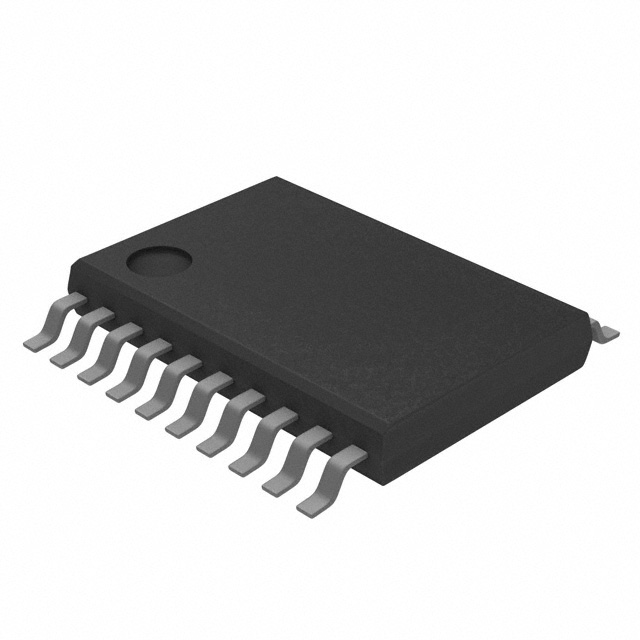
Renesas ZSSC3170FA2R

- Part No.:
- ZSSC3170FA2R
- Manufacturer:
- Renesas
- Category:
- Specialized
- Package:
- 20-SSOP (0.209", 5.30mm Width)
- Datasheet:
-
 ZSSC3170FA2R.pdf
- Description:
- IC INTFACE SPECIALIZED SGNL COND
- Quantity:
- Payment:

- Shipping:

Inventory:2,575
Please send an inquiry. Send us your inquiry, and we will respond immediately.
Product details
Overview
ZSSC3170FA2R from Integrated Device Technology (IDT) is an AEC-Q100-qualified automotive sensor signal conditioner IC designed to condition resistive bridge sensor outputs with digital LIN or PWM interface output. It delivers ±0.50% FSO accuracy over −40°C to +125°C, supports up to 430 Hz data conversion rate, and integrates 16-bit RISC microcontroller-based compensation for offset, sensitivity, temperature drift (2nd order), and nonlinearity (3rd order). It is used in automotive pressure, force, and level sensing systems requiring end-of-line calibration and robust EMC performance.
For engineers reviewing the ZSSC3170FA2R datasheet, ZSSC3170FA2R pinout, ZSSC3170FA2R application, or ZSSC3170FA2R equivalent, key selection criteria include its dual-output interface flexibility (LIN v1.3/2.0/2.1 or PWM high/low-side switch), integrated EEPROM for automotive-grade calibration storage, load-dump protected LIN pin (±40 V), and support for external diode/RTD temperature sensing alongside internal temperature measurement.
Technical Context
The ZSSC3170FA2R implements a two-stage analog front-end with programmable gain amplifier (PGA) offering 12 selectable gains (2× to 420×), enabling precise amplification of bridge signals from 1.8 mV/V to 267 mV/V. Its 14-bit ADC feeds a ROM-resident conditioning algorithm executed by an on-chip 16-bit RISC microcontroller, applying stored coefficients for real-time correction.
Digital outputs are delivered via either a LIN transceiver compliant with specifications 1.3/2.0/2.1 (with configurable frame content and 20 kbit/s channel utilization) or dual PWM outputs (HOUT/LOUT) supporting high-side or low-side switching configurations. The device includes dedicated diagnostic features - sensor connection loss detection (20–100 kΩ threshold), short-circuit check, aging monitoring, and watchdog logic - all managed autonomously without host intervention.
Key Specifications
| Parameter | Value and Actual Design Meaning |
|---|---|
| Accuracy | ±0.50% FSO over −40°C to +125°C - enables direct use in Tier-1 automotive pressure modules without additional trimming. |
| Data Rate | Up to 430 Hz in LIN mode - fully utilizes 20 kbit/s LIN bandwidth for high-resolution sensor reporting. |
| ADC Resolution | 14-bit - provides sufficient dynamic range for <0.1% FSO error budget allocation across temperature and nonlinearity compensation. |
| Interface Options | LIN v1.3/2.0/2.1 or PWM (HOUT/LOUT) - allows system-level choice between bus-integrated or point-to-point analog-like signaling. |
| Temperature Compensation | 2nd-order for bridge, 2nd-order for external diode/RTD - corrects curvature in thermal drift without requiring external lookup tables. |
| EEPROM Endurance | 100 write cycles at 150°C - supports factory calibration and limited field reprogramming under extended temperature conditions. |
| Supply Voltage Range | 7 V to 18 V - compatible with automotive battery rail including cold-crank and load-dump transients. |
| LIN Pin Protection | ±40 V load-dump tolerance - eliminates need for external TVS on LIN bus line in 12 V systems. |
Pinout & Package
ZSSC3170FA2R is packaged in RoHS-compliant SSOP20 (Small Outline Package, 20-pin, 0.65 mm pitch), with exposed pad for thermal dissipation and mechanical stability in automotive under-hood environments.
| Pin/Terminal | Circuit Role | Design Meaning |
|---|---|---|
| VBP / VBN | Bridge Sensor Differential Input | Accepts Wheatstone bridge output; supports common-mode voltage up to 65% of VDDA with XZC disabled. |
| HOUT / LOUT | PWM Output Switch Terminals | HOUT drives high-side load; LOUT drives low-side load; each supports 15 mA source / 12 mA sink with <15 µs edge times. |
| LIN | LIN Bus Transceiver I/O | Bi-directional LIN physical layer interface with integrated driver, receiver, and ±40 V fault protection. |
| VB | Main Supply Input | Connects to vehicle battery (7–18 V); powers internal regulators and LIN driver stage. |
| VSSE / VSS | Analog/Digital Ground Returns | VSSE is dedicated analog ground for bridge inputs; VSS is digital/LIN ground - separation reduces noise coupling. |
| VTN1 / VTN2 | External Temperature Sensor Inputs | Support diode or RTD connections for media temperature measurement; bias current 10–40 µA adjustable via EEPROM. |
| SCL / SDA | I²C Calibration Interface | Used during production calibration to read raw ADC values and program EEPROM coefficients; operates at 400 kHz. |
Key Features
| Feature | Design Value |
|---|---|
| Dual digital output interface | LIN and PWM outputs are mutually exclusive per configuration but share same conditioning engine - enables platform reuse across bus-connected and discrete-sensor architectures. |
| Automotive EEPROM | Three 16-bit words certified for AEC-Q100 operation up to 150°C - stores calibration coefficients, configuration bits, and optional user data without external memory. |
| Integrated diagnostics | On-chip sensor connection loss, short-circuit, and aging checks eliminate need for external supervisory circuitry in ASIL-B designs. |
| Single-pass calibration | End-of-line calibration uses actual sensor output via LIN or I²C - reduces test time and eliminates separate reference instrumentation. |
| Media temperature sensing | Supports both diode and RTD inputs on VTN1/VTN2 - enables compensation of fluid or housing temperature effects independent of die temperature. |
| High-voltage LIN protection | Integrated ±40 V tolerance on LIN pin - meets ISO 16750-2 pulse 4a/b requirements without external clamping components. |
Applications
| Automotive Tire Pressure Monitoring System (TPMS) | Engine Oil Pressure Sensor |
|---|---|
Use Scenario: Mounted inside wheel assembly to monitor real-time tire inflation pressure and temperature under vibration, wide temperature swings, and EMI-rich environments. IC Role / Device Role / Timing Role: Signal conditioner acquires bridge output from piezoresistive pressure element, compensates for temperature-induced zero and span drift using internal and external diode readings, and transmits calibrated value via LIN to body control module. Use Value: Eliminates external trimming and enables single-point calibration at final assembly, reducing manufacturing cost while meeting ISO 21848 long-term stability requirements. | Use Scenario: Installed on engine block to measure oil pressure across cold start (−40°C) to full-load hot operation (+150°C), with simultaneous oil temperature monitoring. IC Role / Device Role / Timing Role: Conditions strain-gauge bridge output, applies 2nd-order temperature compensation using external RTD on VTN1, and outputs pressure and temperature as separate LIN frames at 100 Hz update rate. Use Value: Achieves ±0.5% FSO accuracy over full automotive temperature range without external op-amps or ADCs, simplifying PCB layout and improving system-level reliability. |
| Brake Fluid Level Sensor | Electric Power Steering (EPS) Torque Sensor |
Use Scenario: Detects brake fluid level drop via float-linked potentiometer or capacitive bridge, operating in humid, chemically aggressive under-hood environment. IC Role / Device Role / Timing Role: Interfaces with resistive bridge, performs offset/gain/temperature compensation, and delivers status via PWM duty cycle to MCU with fail-safe diagnostics (open/short detection). Use Value: Built-in sensor diagnostics detect degraded contacts or contamination before failure, supporting functional safety goals without adding external comparators. | Use Scenario: Measures torsion bar twist in EPS column using dual bridge configuration, requiring high immunity to motor EMI and accurate torque reconstruction at 500 Hz sampling. IC Role / Device Role / Timing Role: Acquires differential bridge signals, applies real-time nonlinearity correction (up to 3rd order), and outputs compensated torque value via LIN with configurable frame content including status flags. Use Value: On-chip 3rd-order polynomial compensation replaces software-based lookup tables, reducing MCU computational load and ensuring deterministic latency. |
Equivalent & Alternatives
The following parts are listed as comparable options for similar sensor signal conditioning applications.
| Alternative Part | Technical Difference | Application Difference | Selection Advice |
|---|---|---|---|
| Melexis MLX90371 | Triaxis® Hall-based architecture; SPI output only; no LIN/PWM dual interface; 12-bit resolution. | Targeted at rotary position sensing; lacks bridge input and external RTD/diode support. | Choose MLX90371 for contactless angular position; avoid for resistive bridge pressure/force sensing. |
| Infineon DPS310 | Integrated MEMS pressure sensor + signal chain; I²C/SPI only; no LIN/PWM; fixed 24-bit ADC. | Monolithic pressure transducer; not a standalone conditioner for external bridges. | Choose DPS310 for compact barometric pressure modules; ZSSC3170FA2R required when interfacing custom bridge sensors. |
Compared with MLX90371 and DPS310, the ZSSC3170FA2R uniquely combines programmable bridge input, dual LIN/PWM output, automotive EEPROM, and comprehensive diagnostics - making it the only option among the three capable of end-of-line calibrated resistive bridge sensing in LIN-based automotive subsystems.
Availability
ZSSC3170FA2R is available at Aetrix Electronics and suitable for automotive pressure sensing, brake fluid level monitoring, and EPS torque measurement requiring stable component supply across extended temperature ranges and long product lifecycles.
Supply support for ZSSC3170FA2R includes scheduled delivery planning, volume procurement assistance, BOM continuity management, traceable sourcing, and lifecycle availability coordination for OEM customers, industrial embedded developers, connected-device designers, and electronics production programs.
Manufacturer
Integrated Device Technology (IDT), now part of Renesas Electronics, is a fabless semiconductor company specializing in timing, memory interface, RF, and sensor signal conditioning ICs for communications, computing, and automotive markets.
The ZSSC3170 product line was engineered specifically for AEC-Q100-compliant automotive bridge sensor conditioning, emphasizing LIN integration, on-chip diagnostics, and production-calibration efficiency in harsh environments.
FAQ
What is the maximum operating temperature range supported by the ZSSC3170FA2R?
The ZSSC3170FA2R supports an extended operating temperature range of −40°C to +150°C, with guaranteed performance at ±1.00% FSO accuracy across this full range. Its standard specification covers −40°C to +125°C at ±0.50% FSO, and the device is qualified to AEC-Q100 Grade 0. This makes the ZSSC3170FA2R suitable for under-hood applications such as turbocharger pressure sensing or transmission oil monitoring where ambient temperatures exceed 125°C.
Does the ZSSC3170FA2R support both high-side and low-side PWM switching configurations?
Yes, the ZSSC3170FA2R supports both high-side switch (HSS) and low-side switch (LSS) PWM configurations via its HOUT and LOUT pins. Configuration is selected during EEPROM programming and determines whether the device drives the load between VB and HOUT (HSS) or between LOUT and VSSE (LSS). Each output supports 15 mA source (HOUT) or 12 mA sink (LOUT) capability with controlled slew rates to minimize EMI, and both modes enable end-of-line calibration using the sensor output signal.
How does the ZSSC3170FA2R handle temperature compensation for bridge sensors?
The ZSSC3170FA2R performs digital compensation of temperature effects on bridge sensors up to 2nd order for offset and sensitivity, and up to 3rd order for nonlinearity. It uses either its internal temperature diode or external diode/RTD inputs (VTN1/VTN2) to acquire temperature data, then applies stored coefficients in EEPROM within its 16-bit RISC microcontroller. This eliminates need for external thermistors or lookup tables, and the compensation occurs in real time with no host processor involvement - a core feature of the ZSSC3170FA2R architecture.
Can the ZSSC3170FA2R be calibrated without an external microcontroller?
Yes, the ZSSC3170FA2R supports stand-alone end-of-line calibration using only the sensor output and LIN or PWM interface - no external microcontroller is required. During calibration, the device outputs uncorrected raw values via LIN or I²C, allowing test equipment to compute correction coefficients and write them directly into the on-chip EEPROM. The ZSSC3170FA2R then autonomously applies those coefficients in real time, enabling one-pass calibration that reduces production test time and eliminates dependency on host firmware.
What LIN protocol versions does the ZSSC3170FA2R support?
The ZSSC3170FA2R complies with LIN specifications 1.3, 2.0, and 2.1, and supports configurable publisher frame content to match specific ECU requirements. Its LIN transceiver includes integrated driver/receiver with ±40 V load-dump protection, programmable slew rate (0.5–3 V/µs), and automatic synchronization to bus baud rate. Frame timing and duty cycle parameters (D1–D4) are defined per LIN spec version and supply voltage, and all are implemented in hardware - no firmware updates are needed to change LIN compatibility for the ZSSC3170FA2R.
ZSSC3170FA2R Specifications
- Product attributes
- Attribute value
- Manufacturer:
- Renesas
- Series:
- -
- Package/Case:
- 20-SSOP (0.209", 5.30mm Width)
- Packaging:
- Tape & Reel (TR)
- Product Status:
- Active
- Applications:
- Sensor Signal Conditioner - Resistive
- Interface:
- I2C, LIN, PWM, ZACwire™ One-Wire Interface
- Voltage - Supply:
- 4.75V ~ 5.25V
- Supplier Device Package:
- 20-SSOP
- Grade:
- Automotive
- Qualification:
- AEC-Q100
- Mounting Type:
- Surface Mount
ZSSC3170FA2R FAQ
1.How can I place an order for ZSSC3170FA2R through Aetrix?
Please submit a Request for Quotation (RFQ) for ZSSC3170FA2R on Aetrix. Our sales agent will provide a competitive quotation and guide you through the order confirmation once you accept the terms.
2.Are the price and stock information for ZSSC3170FA2R reliable?
The price and inventory of ZSSC3170FA2R are updated periodically and may fluctuate due to market conditions. Stock and pricing data are typically refreshed every 24 hours. Quotation validity for ZSSC3170FA2R is usually 5 days.
3.What payment methods are accepted for ZSSC3170FA2R?
We accept Wire Transfer, PayPal, Credit Card, Western Union, MoneyGram, and Escrow for ZSSC3170FA2R transactions.
Note: Certain payment methods may incur a processing fee.
4.How is shipping managed for ZSSC3170FA2R?
ZSSC3170FA2R orders can be shipped via leading logistics carriers, including DHL, UPS, FedEx, TNT, or Registered Mail.
Once your ZSSC3170FA2R order is processed, you will receive an email with the shipment details and tracking number.
Note: Tracking information may take up to 24 hours to appear. Express delivery typically takes 3–5 business days.
5.How can I obtain technical support or documentation for ZSSC3170FA2R?
For technical support, including ZSSC3170FA2R datasheets, pinout diagrams, or application guidance, please contact our engineering support team. They can provide detailed documentation and assistance for your ZSSC3170FA2R requirements.
6.How does Aetrix verify that ZSSC3170FA2R is sourced from the original manufacturer or authorized distributors?
All ZSSC3170FA2R products on Aetrix are procured from qualified distributors and authorized channels. Our dedicated quality assurance team conducts strict verification, including traceability checks and, if necessary, third-party testing. This ensures that ZSSC3170FA2R meets industry standards.
7.What is the process for return or replacement of ZSSC3170FA2R?
All ZSSC3170FA2R units undergo pre-shipment inspection (PSI). If there is an issue with ZSSC3170FA2R, returns or replacements are accepted under the following conditions:
1.Quantity discrepancies, incorrect items, or visible external defects (such as breakage or corrosion), acknowledged by Aetrix.
2.The issue is reported within 90 days of delivery.
3.The ZSSC3170FA2R part is unused and in its original packaging.
Return procedure for ZSSC3170FA2R:
1.Submit a request within 90 days.
2.Obtain a Return Material Authorization (RMA) from Aetrix.
ZSSC3170FA2R Tags
-
NVT4857UKAZ
NXP Semiconductors
-
TCA8418RTWR
Texas Instruments

-
PCA9546APWR
Texas Instruments

-
MD0100N8-G
Microchip Technology
-
PCA9548APW,118
NXP Semiconductors
-
PCA9540BDP,118
NXP Semiconductors
-
PCA9548APWR
Texas Instruments
-
PCA9546APW,118
NXP Semiconductors
-
PTN3360DBS,518
NXP Semiconductors
-
PCA9546ABS,118
NXP Semiconductors
-
PCA9518PWR
Texas Instruments
-
PCA9545APW,118
NXP Semiconductors
Tech Hub

TTL and CMOS logic families differ in thresholds, loading, output drive, power and timing. This engineering guide compares 74HC and 74HCT, calculates noise margins and checks 3.3 V/5 V compatibility.

A practical engineering guide to 3.3V and 5V logic compatibility, input thresholds, resistor dividers, translator ICs, MOSFET level shifting, I2C pull-ups, timing limits and power-sequencing risks.

The 74HC595 uses push-pull logic outputs, while the TPIC6B595 uses 50 V open-drain DMOS sinks for higher-power loads. This guide compares timing, current limits, 3.3 V interfacing, load wiring, thermal…

The 74HC595 converts serial data into eight stable parallel outputs. This guide covers pin functions, shift and storage timing, OE and MR behavior, drive-current limits, cascading, voltage compatibilit…

A technical comparison of level-sensitive latches and edge-triggered flip-flops, covering timing windows, setup and hold limits, master–slave operation, time borrowing, race-through, HDL inference and…

A D latch stores one bit while Enable controls when data can pass. This reference covers gate-level operation, truth tables, transparency, setup and hold timing, LE versus OE, common ICs and practical …

An SR latch stores one bit through cross-coupled feedback. This engineering reference covers NOR and NAND implementations, truth tables, forbidden-state recovery, gated operation, switch debouncing, fa…

Latch circuits retain one bit through feedback. This technical reference covers SR and D latches, truth tables, transparency, timing limits, latch-versus-flip-flop behavior, applications and common log…

An engineering guide to LED driver operation, constant-current and constant-voltage outputs, linear and switching topologies, dimming, IC selection, calculations, replacement compatibility, and fault c…

Operational amplifier guide covering op amp basics, feedback, ideal vs real op amps, common configurations, buffer circuits, offset, bias current, gain-bandwidth, slew rate, rail-to-rail limits and sel…


