
 My Inquiry
 My Account


Renesas ZSSC3230BC3R
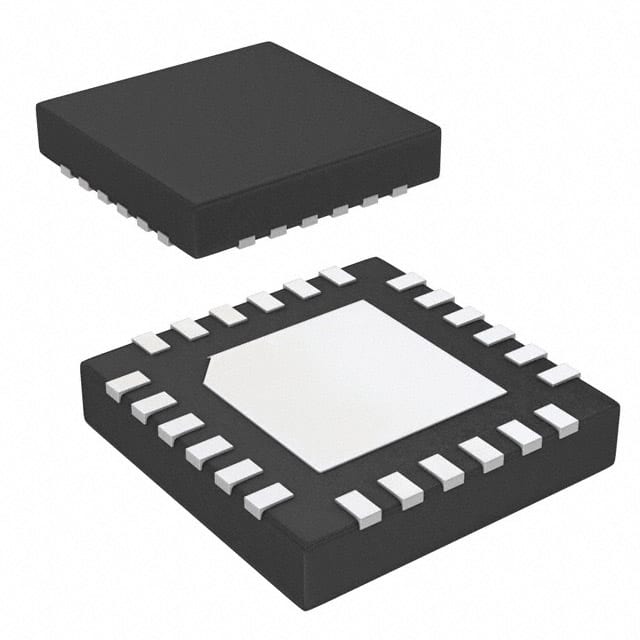
- Part No.:
- ZSSC3230BC3R
- Manufacturer:
- Renesas
- Category:
- Sensor and Detector Interfaces
- Package:
- 24-VFQFN Exposed Pad
- Datasheet:
-
 ZSSC3230BC3R.pdf
- Description:
- IC CAP SENSOR SIGN COND 24VFQFPN
- Quantity:
- Payment:

- Shipping:

Inventory:2,853
Please send an inquiry. Send us your inquiry, and we will respond immediately.
Product details
Overview
ZSSC3230BC3R from Renesas Electronics is a capacitive sensor signal conditioner IC performing high-accuracy capacitance-to-digital conversion with on-chip digital compensation for offset, sensitivity, and temperature drift. It supports 0–30 pF sensor capacitance, delivers up to 18-bit resolution, operates from 1.68–3.6 V, and outputs corrected values via I²C up to 3.4 MHz - used in humidity and pressure sensing systems requiring energy-efficient real-time measurement.
For engineers reviewing the ZSSC3230BC3R datasheet, ZSSC3230BC3R pinout, ZSSC3230BC3R application, or ZSSC3230BC3R equivalent, key selection criteria include its integrated NVM-programmable correction math, single-ended/differential capacitive front-end flexibility, sub-µA sleep current, 14-bit internal temperature sensor, and PDM output capability for embedded sensor nodes.
Technical Context
The ZSSC3230BC3R implements a dedicated DSP core executing sensor-specific correction algorithms using calibration coefficients stored in multiple-time programmable (MTP) NVM. Its charge-voltage converter (CVC) front-end supports both differential (CC/C0) and single-ended (CC/VSS) capacitive sensor configurations, with programmable bias current enabling SNR vs. power trade-offs.
It integrates an 18-bit programmable ADC, auto-zeroing, internal temperature reference sensor (55 LSB/K resolution), and dual-output capability: I²C (Standard/Fast/High-Speed modes) and pulse-density modulated (PDM) output. Measurement sequencing - including automatic cycling, end-of-conversion (EOC) interrupt, and configurable CYC_period - enables autonomous operation in cyclic mode without host intervention.
Key Specifications
| Parameter | Value and Actual Design Meaning |
|---|---|
| Capacitance Range | 0–30 pF input range with 0–15 pF offset compensation - supports common MEMS and polymer-based capacitive sensors without external trimming. |
| ADC Resolution | Programmable 12–18 bits - enables optimization of conversion speed (up to 1250 Hz raw) versus resolution for system latency or precision requirements. |
| Supply Voltage | 1.68–3.6 V - compatible with coin-cell, Li-ion, and low-voltage industrial rails; includes internal voltage regulator. |
| I²C Speed | Up to 3.4 MHz High-Speed Mode - reduces host polling overhead and supports high-throughput sensor fusion in multi-node systems. |
| Current Consumption | 1.3 µA average at 1 sample/s; 70 nA idle - enables >10-year battery life in wireless sensor endpoints. |
| Operating Temp | −40°C to +125°C - qualified for automotive cabin, HVAC, and industrial pressure transducer environments. |
| NVM Endurance | 1,000–10,000 write cycles with 10-year data retention - sufficient for factory calibration and field re-tuning during product lifetime. |
Pinout & Package
Package: 4 × 4 mm², 24-pin PQFN (wettable flank), RoHS-compliant, thermal pad exposed on underside.
| Pin/Terminal | Circuit Role | Design Meaning |
|---|---|---|
| C0 | Analog Input | Primary capacitive sensor input terminal; used with CC or CC′ in differential mode, or tied to VSS in single-ended mode. |
| CC / CC′ | Analog Input | Duplicated capacitive input pins (pins 3 & 17); selection between CC and CC′ is software-configurable for PCB layout flexibility. |
| SDA / SCL | Digital I/O | Open-drain I²C interface pins with internal pull-up support; compatible with 100 kHz / 400 kHz / 3.4 MHz timing. |
| EOC | Digital Output | Active-low end-of-conversion interrupt - signals completion of full SSC cycle (capacitance + temperature) for deterministic host synchronization. |
| PDM | Digital Output | Pulse-density modulated output - provides continuous, self-clocking analog-equivalent stream for low-CPU-load sensor monitoring. |
| RESQ | Digital Input | Low-active reset pin with internal pull-up - enables hardware-initiated recovery without I²C command sequence. |
| VDD / VSS | Power Supply | Single 1.68–3.6 V supply rail and ground; internal LDO ensures stable analog core operation across input variation. |
Key Features
| Feature | Design Value |
|---|---|
| Integrated NVM Calibration Storage | Multiple-time programmable memory holds sensor-specific offset, gain, and 1st/2nd-order temperature coefficients - eliminates external EEPROM and calibration firmware overhead. |
| Configurable Sensor Interface Modes | Software-selectable differential (isolated C), single-ended (grounded C), shield driver, and subtraction modes - adapts to diverse PCB parasitic and EMI conditions. |
| Autonomous Cyclic Operation | Hardware-timed measurement sequences with programmable sleep duration (CYC_period) - enables zero-host-intervention sensor nodes in battery-powered IoT deployments. |
| Oversampling & Noise Reduction | Internal averaging and programmable noise_mode (bit[8]) adjust bias current to optimize SNR for low-power or high-precision use cases. |
| Internal Temperature Reference | On-die temperature sensor with 55 LSB/K resolution and no stress sensitivity - provides accurate, co-located thermal compensation without external thermistor routing. |
Applications
| Humidity Sensing | Industrial Pressure Transducers |
|---|---|
|
Use Scenario: Polymer-based capacitive humidity sensor in HVAC control units operating across −25°C to +85°C ambient. IC Role / Device Role / Timing Role: Primary signal conditioner performing real-time capacitance-to-digital conversion and 2nd-order temperature-compensated output via I²C. Use Value: Delivers ±0.1%FSO accuracy over temperature without external calibration components, reducing BOM count and assembly cost. |
Use Scenario: MEMS capacitive pressure die mounted in stainless-steel housing for water/gas metering in utility infrastructure. IC Role / Device Role / Timing Role: Front-end conditioner handling sensor excitation, ratiometric measurement, and digital correction before transmission to MCU. Use Value: Enables <1.3 µA average current draw per reading - extends battery life beyond 15 years in AMI (Advanced Metering Infrastructure) endpoints. |
| Medical Disposable Sensors | White Goods Liquid Level Detection |
|
Use Scenario: Single-use capacitive fluid-level sensor in infusion pump cartridges requiring FDA-compliant, low-power, and calibrated output. IC Role / Device Role / Timing Role: Self-contained signal processor generating validated, temperature-compensated digital readings for safety-critical host validation. Use Value: Integrated NVM stores factory calibration data and device-specific limits - satisfies traceability and audit requirements without external memory. |
Use Scenario: Capacitive tank-level sensing in washing machines and dishwashers exposed to condensation, vibration, and wide voltage swings. IC Role / Device Role / Timing Role: Robust conditioner supporting shield driver mode to reject moisture-induced parasitic coupling and maintain linearity. Use Value: Programmable leakage compensation and differential measurement eliminate false triggers from condensation or detergent residue. |
Equivalent & Alternatives
The following parts are listed as comparable options for similar capacitive sensor signal conditioning applications.
| Alternative Part | Technical Difference | Application Difference | Selection Advice |
|---|---|---|---|
| TDK InvenSense ICM-42688-P | IMU with integrated capacitive pressure channel; lacks dedicated NVM-based 2nd-order temperature compensation math. | Targeted at motion + pressure fusion; requires external calibration and host-side correction logic. | Choose only if simultaneous 6-axis inertial sensing is required alongside basic pressure readout. |
| Analog Devices AD7746 | 24-bit sigma-delta CDC with fixed 16-bit temperature sensor; no on-chip correction engine or NVM storage. | Requires external microcontroller to execute polynomial compensation - increases firmware complexity and latency. | Select when ultra-high-resolution raw capacitance capture is prioritized over autonomous compensated output. |
Compared with ICM-42688-P and AD7746, the ZSSC3230BC3R uniquely integrates full sensor-specific correction math, factory-programmable NVM, and autonomous cyclic operation - delivering calibrated digital output with minimal host involvement and lowest system-level power.
Availability
ZSSC3230BC3R is available at Aetrix Electronics and suitable for humidity sensing, industrial pressure transduction, and medical disposable sensor applications requiring stable component supply, long-term calibration integrity, and extended battery life.
Supply support for ZSSC3230BC3R includes scheduled delivery planning, volume procurement assistance, BOM continuity management, traceable sourcing, and lifecycle availability coordination for OEM customers, industrial embedded developers, connected-device designers, and electronics production programs.
Manufacturer
Renesas Electronics is a global semiconductor leader delivering microcontrollers, analog, power, and SoC solutions for automotive, industrial, and IoT markets.
The ZSSC3230BC3R belongs to Renesas' Smart Sensor Signal Conditioning product line, designed specifically for ultra-low-power, high-accuracy capacitive sensing in battery-operated and safety-critical embedded systems.
FAQ
What is the primary function of the ZSSC3230BC3R in a capacitive sensing system?
The ZSSC3230BC3R serves as a complete capacitive sensor signal conditioner IC that performs analog front-end amplification, 12–18-bit digitization, and on-chip digital compensation for sensor offset, sensitivity, and temperature drift. It outputs fully corrected digital values via I²C or PDM, eliminating the need for host-based correction algorithms. The ZSSC3230BC3R integrates all necessary functions - including NVM storage for calibration coefficients, internal temperature sensing, and autonomous measurement sequencing - into a single 4 × 4 mm² package.
Does the ZSSC3230BC3R support both differential and single-ended capacitive sensor configurations?
Yes, the ZSSC3230BC3R supports both configurations through dedicated pin assignments and register-controlled setup. Differential mode uses C0 and CC (or CC′) with the sensor bridging both inputs; single-ended mode connects the sensor between CC (or CC′) and VSS, with C0 internally grounded. The CC_pin_selection bits in memory register 19HEX allow software selection between CC and CC′, and the Sensor_config register (12HEX) enables mode configuration - providing layout flexibility and robustness against PCB parasitics.
How does the ZSSC3230BC3R achieve ultra-low power operation in battery-powered applications?
The ZSSC3230BC3R achieves ultra-low power via multiple design features: deep-sleep current of 70 nA, average current of 1.3 µA at 1 sample/s, programmable noise_mode to scale bias current, and autonomous cyclic operation that eliminates continuous host polling. Its power-on-reset circuitry and fast wake-up times (≤2 ms analog, ≤0.5 ms communication) ensure rapid, deterministic response while minimizing active time. These characteristics enable multi-year operation on standard coin cells - critical for ZSSC3230BC3R deployments in wireless sensor networks and portable medical devices.
Can the ZSSC3230BC3R be calibrated after manufacturing, and where are coefficients stored?
Yes, the ZSSC3230BC3R supports post-manufacturing calibration via its serial I²C interface using Renesas-provided PC software. Calibration coefficients - including offset, gain, and 1st/2nd-order temperature terms - are written into its internal multiple-time programmable (MTP) NVM memory. This memory offers 1,000–10,000 write cycles and guaranteed 10-year data retention, enabling field recalibration or end-of-line tuning without external memory. The ZSSC3230BC3R executes correction math autonomously using these stored values, ensuring consistent accuracy across temperature and lifetime.
What output interfaces does the ZSSC3230BC3R provide, and how are they used in system design?
The ZSSC3230BC3R provides two complementary digital outputs: I²C (up to 3.4 MHz) and pulse-density modulated (PDM). I²C delivers formatted, corrected sensor values (capacitance and temperature) with status and interrupt support - ideal for microcontroller-based systems requiring precise timestamping and configurability. PDM provides a continuous, self-clocking bitstream representing the compensated sensor value - suited for FPGA or ASIC interfaces where low-latency, low-CPU-load streaming is preferred. Both outputs operate simultaneously in Cyclic Measurement Mode, giving designers flexibility in host architecture choice.
ZSSC3230BC3R Specifications
- Product attributes
- Attribute value
- Manufacturer:
- Renesas
- Package/Case:
- 24-VFQFN Exposed Pad
- Series:
- -
- Packaging:
- Tape & Reel (TR)
- Product Status:
- Active
- Programmable:
- Not Verified
- Type:
- Capacitive Sensor
- Input Type:
- Analog, Digital
- Output Type:
- I2C
- Current - Supply:
- 1.1 mA
- Operating Temperature:
- -40°C ~ 85°C (TA)
- Grade:
- -
- Qualification:
- -
- Mounting Type:
- Surface Mount
- Supplier Device Package:
- 24-VFQFPN (4x4)
ZSSC3230BC3R FAQ
1.How can I place an order for ZSSC3230BC3R through Aetrix?
Please submit a Request for Quotation (RFQ) for ZSSC3230BC3R on Aetrix. Our sales agent will provide a competitive quotation and guide you through the order confirmation once you accept the terms.
2.Are the price and stock information for ZSSC3230BC3R reliable?
The price and inventory of ZSSC3230BC3R are updated periodically and may fluctuate due to market conditions. Stock and pricing data are typically refreshed every 24 hours. Quotation validity for ZSSC3230BC3R is usually 5 days.
3.What payment methods are accepted for ZSSC3230BC3R?
We accept Wire Transfer, PayPal, Credit Card, Western Union, MoneyGram, and Escrow for ZSSC3230BC3R transactions.
Note: Certain payment methods may incur a processing fee.
4.How is shipping managed for ZSSC3230BC3R?
ZSSC3230BC3R orders can be shipped via leading logistics carriers, including DHL, UPS, FedEx, TNT, or Registered Mail.
Once your ZSSC3230BC3R order is processed, you will receive an email with the shipment details and tracking number.
Note: Tracking information may take up to 24 hours to appear. Express delivery typically takes 3–5 business days.
5.How can I obtain technical support or documentation for ZSSC3230BC3R?
For technical support, including ZSSC3230BC3R datasheets, pinout diagrams, or application guidance, please contact our engineering support team. They can provide detailed documentation and assistance for your ZSSC3230BC3R requirements.
6.How does Aetrix verify that ZSSC3230BC3R is sourced from the original manufacturer or authorized distributors?
All ZSSC3230BC3R products on Aetrix are procured from qualified distributors and authorized channels. Our dedicated quality assurance team conducts strict verification, including traceability checks and, if necessary, third-party testing. This ensures that ZSSC3230BC3R meets industry standards.
7.What is the process for return or replacement of ZSSC3230BC3R?
All ZSSC3230BC3R units undergo pre-shipment inspection (PSI). If there is an issue with ZSSC3230BC3R, returns or replacements are accepted under the following conditions:
1.Quantity discrepancies, incorrect items, or visible external defects (such as breakage or corrosion), acknowledged by Aetrix.
2.The issue is reported within 90 days of delivery.
3.The ZSSC3230BC3R part is unused and in its original packaging.
Return procedure for ZSSC3230BC3R:
1.Submit a request within 90 days.
2.Obtain a Return Material Authorization (RMA) from Aetrix.
ZSSC3230BC3R Tags

-
RE46C100S8TF
Microchip Technology
-
XTR111AIDRCR
Texas Instruments
-
XTR111AIDGQR
Texas Instruments
-
XTR117AIDGKR
Texas Instruments
-
XTR111AIDGQT
Texas Instruments

-
XTR115UA/2K5
Texas Instruments
-
MAX14626ETT+T
Analog Devices Inc./Maxim Integrated
-
XTR116UA/2K5
Texas Instruments
-
XTR115U/2K5
Texas Instruments
-
XTR116U/2K5
Texas Instruments
-
PGA308AIDGSR
Texas Instruments
-
XTR300AIRGWR
Texas Instruments
Tech Hub

TTL and CMOS logic families differ in thresholds, loading, output drive, power and timing. This engineering guide compares 74HC and 74HCT, calculates noise margins and checks 3.3 V/5 V compatibility.

A practical engineering guide to 3.3V and 5V logic compatibility, input thresholds, resistor dividers, translator ICs, MOSFET level shifting, I2C pull-ups, timing limits and power-sequencing risks.

The 74HC595 uses push-pull logic outputs, while the TPIC6B595 uses 50 V open-drain DMOS sinks for higher-power loads. This guide compares timing, current limits, 3.3 V interfacing, load wiring, thermal…

The 74HC595 converts serial data into eight stable parallel outputs. This guide covers pin functions, shift and storage timing, OE and MR behavior, drive-current limits, cascading, voltage compatibilit…

A technical comparison of level-sensitive latches and edge-triggered flip-flops, covering timing windows, setup and hold limits, master–slave operation, time borrowing, race-through, HDL inference and…

A D latch stores one bit while Enable controls when data can pass. This reference covers gate-level operation, truth tables, transparency, setup and hold timing, LE versus OE, common ICs and practical …

An SR latch stores one bit through cross-coupled feedback. This engineering reference covers NOR and NAND implementations, truth tables, forbidden-state recovery, gated operation, switch debouncing, fa…

Latch circuits retain one bit through feedback. This technical reference covers SR and D latches, truth tables, transparency, timing limits, latch-versus-flip-flop behavior, applications and common log…

An engineering guide to LED driver operation, constant-current and constant-voltage outputs, linear and switching topologies, dimming, IC selection, calculations, replacement compatibility, and fault c…

Operational amplifier guide covering op amp basics, feedback, ideal vs real op amps, common configurations, buffer circuits, offset, bias current, gain-bandwidth, slew rate, rail-to-rail limits and sel…


