
 My Inquiry
 My Account


Renesas ZSSC4169DE5T-APC

- Part No.:
- ZSSC4169DE5T-APC
- Manufacturer:
- Renesas
- Category:
- Sensor and Detector Interfaces
- Package:
- 24-VFQFN Exposed Pad
- Datasheet:
-
 ZSSC4169DE5T-APC.pdf
- Description:
- TSSOP / 16 / 5X4MM-0
- Quantity:
- Payment:

- Shipping:

Inventory:4,857
Please send an inquiry. Send us your inquiry, and we will respond immediately.
Product details
Overview
ZSSC4169DE5T-APC from Renesas Electronics is an automotive-grade resistive sensor signal conditioner IC with SENT digital output, designed for high-accuracy conditioning of differential bridge sensors. It delivers 14-bit ADC resolution, ±0.5% FS accuracy over −40°C to +150°C, and supports both internal PTAT and external diode temperature references for full-sensor compensation in brake pressure and hydraulic systems.
For engineers reviewing the ZSSC4169DE5T-APC datasheet, ZSSC4169DE5T-APC pinout, ZSSC4169DE5T-APC application, or ZSSC4169DE5T-APC equivalent, key selection criteria include SENT v3.0 Fast/SDM channel support, AEC-Q100 Grade 0 qualification, 16-TSSOP wettable-flank package, one-pass end-of-line calibration, and integrated 16-bit RISC microcontroller for digital nonlinearity correction.
Technical Context
The ZSSC4169DE5T-APC implements a fully digital signal path: a programmable gain amplifier (PGA) with up to 200× analog gain feeds a 14-bit ADC; offset, gain, sensitivity, temperature drift, and nonlinearity are corrected via on-chip 16-bit RISC MCU executing stored calibration coefficients. Temperature compensation uses either internal PTAT junction or external diode sensing.
Digital output is delivered exclusively through a single-pin SENT interface compliant with SAE J2716 Rev. 3.0, supporting simultaneous transmission of primary sensor data (Fast Channel) and supplementary diagnostics or ID (Serial Data Message Channel), plus One-Wire Interface (OWI) for end-of-line calibration-all without external trimming components.
Key Specifications
| Parameter | Value and Actual Design Meaning |
|---|---|
| Operating Temp Range | −40°C to +150°C - qualified for under-hood automotive environments including brake and steering systems. |
| Accuracy | ±0.5% FS - guaranteed full-scale error across full temperature range, enabling high-reliability pressure sensing. |
| Bridge Input Span | 1–800 mV/V - configurable for nearly all resistive full-bridge sensors without external scaling. |
| ADC Resolution | 14-bit - provides fine-grained digitization of raw bridge signals prior to digital correction. |
| SENT Output Resolution | 12-bit - defines effective data precision delivered to ECU via Fast Channel. |
| Supply Voltage | 4.75 V to 5.25 V - tightly regulated rail required; includes ±18 V overvoltage/reverse polarity protection. |
| NVM Storage | Nonvolatile memory - stores calibration coefficients, configuration, and user-defined conditioning logic for production-ready deployment. |
Pinout & Package
Package: 16-TSSOP (4.4 mm × 5.0 mm, exposed thermal pad), MSL1, wettable flanks for automated optical solder inspection.
| Pin/Terminal | Circuit Role | Design Meaning |
|---|---|---|
| VCC | Power supply input | Primary 4.75–5.25 V supply for digital core and SENT driver. |
| VDDA / VSSA | Analog power/ground | Separate analog domain supply and ground for PGA/ADC noise isolation. |
| BR1P / BR1N / BR2P / BR2N | Differential bridge inputs | Full-bridge sensor connection terminals; support 1–800 mV/V span with programmable gain. |
| TS1 / TS2 | Temperature sensor inputs | Accept external diode or connect to internal PTAT junction for dual-point temperature compensation. |
| SENT | Digital output | Single-pin SENT v3.0 interface carrying Fast Channel (sensor data), SDM (supplementary data), and OWI (calibration). |
| GND / VSSE | Ground terminals | Dedicated system ground (GND) and exposed pad ground (VSSE) for thermal and EMI performance. |
Key Features
| Feature | Design Value |
|---|---|
| Digital nonlinearity correction | 16-bit RISC MCU applies polynomial compensation up to 5th order, eliminating need for analog linearization circuits. |
| SENT v3.0 dual-channel output | Simultaneous Fast Channel (primary measurement) and SDM Channel (diagnostics, ID, status) on one pin-reducing wiring and ECU pin count. |
| One-pass end-of-line calibration | Reduces manufacturing time/cost by completing full calibration-including temperature sweep-in a single station pass via OWI. |
| AEC-Q100 Grade 0 qualification | Validated for operation up to +150°C ambient, meeting stringent reliability requirements for safety-critical automotive subsystems. |
| No external trimming required | Calibration coefficients stored in NVM eliminate laser trimming, potentiometers, or discrete compensation networks. |
Applications
| Fluid Brake Pressure Sensing | Hydraulic Steering Support |
|---|---|
Use Scenario: Monitoring master cylinder pressure in ABS/EBA systems to enable real-time braking force modulation. IC Role / Device Role / Timing Role: Signal conditioner converting strain-gauge bridge output into SENT-coded pressure value with temperature-compensated accuracy. Use Value: ±0.5% FS accuracy ensures reliable pressure threshold detection across −40°C to +150°C, critical for ASIL-B functional safety compliance. | Use Scenario: Measuring hydraulic assist pressure in electric-hydraulic power steering (EHPS) systems. IC Role / Device Role / Timing Role: Bridge signal conditioner with dual temperature reference (internal PTAT + external diode) for robust compensation during rapid thermal transients. Use Value: 14-bit ADC resolution and SENT Fast Channel delivery enable <100 µs latency for closed-loop assist torque control. |
| Pneumatic Air Brake Systems | Pneumatic Shock Absorbers |
Use Scenario: Real-time monitoring of reservoir and line pressure in commercial vehicle air brake circuits. IC Role / Device Role / Timing Role: Automotive signal conditioner providing SENT output with diagnostic SDM messages for fault reporting and system health monitoring. Use Value: Integrated overvoltage (±18 V) and reverse polarity protection ensure survivability in harsh 24 V truck electrical environments. | Use Scenario: Adaptive damping control using pressure feedback from pneumatic suspension chambers. IC Role / Device Role / Timing Role: High-temperature-stable signal conditioner delivering calibrated pressure data via SENT to vehicle dynamics controller. Use Value: −40°C to +150°C operation and AEC-Q100 Grade 0 qualification guarantee reliability in under-vehicle mounting locations subject to thermal cycling and vibration. |
Equivalent & Alternatives
The following parts are listed as comparable options for similar resistive bridge signal conditioning applications.
| Alternative Part | Technical Difference | Application Difference | Selection Advice |
|---|---|---|---|
| Melexis MLX90393 | Tri-axis Hall sensor front-end with I²C output; no SENT interface; 16-bit resolution but no built-in bridge PGA. | Targeted at magnetic position sensing-not resistive bridge pressure sensing-requiring different sensor topology and ECU interface. | Select only for Hall-based rotary/linear position systems; not a functional substitute for ZSSC4169DE5T-APC in bridge sensor applications. |
| Infineon DPS310 | Integrated MEMS pressure sensor with I²C/SPI output; includes on-die temperature compensation but no external bridge input or SENT support. | Self-contained absolute pressure sensor; lacks configurable bridge input, PGA, or SENT protocol-unsuitable for custom strain-gauge or piezoresistive bridges. | Choose when using monolithic MEMS pressure die; not applicable where external bridge sensors and SENT bus integration are mandatory. |
Compared with MLX90393 and DPS310, the ZSSC4169DE5T-APC uniquely combines configurable bridge input, SENT v3.0 output, and AEC-Q100 Grade 0 qualification-making it the only option among the three that supports end-of-line calibrated resistive bridge sensing in automotive safety-critical pressure systems.
Availability
ZSSC4169DE5T-APC is available at Aetrix Electronics and suitable for fluid brake pressure sensing, hydraulic steering support, and pneumatic air brake systems requiring stable component supply, automotive qualification, and SENT protocol compatibility.
Supply support for ZSSC4169DE5T-APC includes scheduled delivery planning, volume procurement assistance, BOM continuity management, traceable sourcing, and lifecycle availability coordination for OEM customers, industrial embedded developers, connected-device designers, and electronics production programs.
Manufacturer
Renesas Electronics Corporation is a global semiconductor manufacturer headquartered in Tokyo, Japan, specializing in microcontrollers, analog, power, and sensor interface solutions for automotive, industrial, and IoT markets.
The ZSSC4169DE5T-APC belongs to Renesas' Smart Sensor Conditioner (SSC) product line, engineered specifically for high-accuracy, production-ready signal conditioning of resistive bridge sensors in ASIL-C automotive subsystems.
FAQ
What is the SENT interface configuration supported by the ZSSC4169DE5T-APC?
The ZSSC4169DE5T-APC implements SAE J2716 Revision 3.0 SENT with dual-channel capability: Fast Channel transmits primary sensor data (e.g., pressure) with 12-bit resolution, while Serial Data Message (SDM) Channel carries supplementary information such as diagnostics, device ID, or status flags-all on a single SENT output pin. The ZSSC4169DE5T-APC also uses this pin for One-Wire Interface calibration.
Does the ZSSC4169DE5T-APC support external temperature sensing?
Yes, the ZSSC4169DE5T-APC supports both internal PTAT junction and external diode temperature sensing via dedicated TS1 and TS2 pins. This enables dual-point temperature compensation for improved accuracy across wide thermal ranges, especially critical in under-hood automotive applications where ambient and sensor self-heating vary significantly.
What is the maximum bridge input sensitivity the ZSSC4169DE5T-APC can handle?
The ZSSC4169DE5T-APC accepts bridge input spans from 1 mV/V to 800 mV/V, adjustable via its programmable gain amplifier (PGA) with up to 200× analog gain. This wide dynamic range allows direct interfacing with low-output strain gauges and high-output piezoresistive elements without external amplification or attenuation circuitry.
Is the ZSSC4169DE5T-APC qualified for automotive safety applications?
Yes, the ZSSC4169DE5T-APC is qualified per AEC-Q100 Grade 0 (−40°C to +150°C) and explicitly supports ASIL C safety applications. Its integrated diagnostics, NVM integrity checking, SENT message CRC, and robust EMC performance meet functional safety requirements for pressure sensing in braking, steering, and suspension systems.
What package type does the ZSSC4169DE5T-APC use, and why is it significant?
The ZSSC4169DE5T-APC uses a 16-TSSOP package (4.4 mm × 5.0 mm) with exposed thermal pad and wettable flanks. This package enables reliable thermal dissipation in high-temperature automotive environments and supports automated optical inspection (AOI) of solder joints-critical for zero-defect manufacturing in safety-critical automotive electronics.
ZSSC4169DE5T-APC Specifications
- Product attributes
- Attribute value
- Manufacturer:
- Renesas
- Package/Case:
- 24-VFQFN Exposed Pad
- Series:
- -
- Packaging:
- Tube
- Product Status:
- Active
- Programmable:
- -
- Type:
- Signal Conditioner
- Input Type:
- Differential
- Output Type:
- 1-Wire®
- Current - Supply:
- -
- Operating Temperature:
- -40°C ~ 150°C
- Grade:
- Automotive
- Qualification:
- AEC-Q100
- Mounting Type:
- Surface Mount, Wettable Flank
- Supplier Device Package:
- 24-QFN (4x4)
ZSSC4169DE5T-APC FAQ
1.How can I place an order for ZSSC4169DE5T-APC through Aetrix?
Please submit a Request for Quotation (RFQ) for ZSSC4169DE5T-APC on Aetrix. Our sales agent will provide a competitive quotation and guide you through the order confirmation once you accept the terms.
2.Are the price and stock information for ZSSC4169DE5T-APC reliable?
The price and inventory of ZSSC4169DE5T-APC are updated periodically and may fluctuate due to market conditions. Stock and pricing data are typically refreshed every 24 hours. Quotation validity for ZSSC4169DE5T-APC is usually 5 days.
3.What payment methods are accepted for ZSSC4169DE5T-APC?
We accept Wire Transfer, PayPal, Credit Card, Western Union, MoneyGram, and Escrow for ZSSC4169DE5T-APC transactions.
Note: Certain payment methods may incur a processing fee.
4.How is shipping managed for ZSSC4169DE5T-APC?
ZSSC4169DE5T-APC orders can be shipped via leading logistics carriers, including DHL, UPS, FedEx, TNT, or Registered Mail.
Once your ZSSC4169DE5T-APC order is processed, you will receive an email with the shipment details and tracking number.
Note: Tracking information may take up to 24 hours to appear. Express delivery typically takes 3–5 business days.
5.How can I obtain technical support or documentation for ZSSC4169DE5T-APC?
For technical support, including ZSSC4169DE5T-APC datasheets, pinout diagrams, or application guidance, please contact our engineering support team. They can provide detailed documentation and assistance for your ZSSC4169DE5T-APC requirements.
6.How does Aetrix verify that ZSSC4169DE5T-APC is sourced from the original manufacturer or authorized distributors?
All ZSSC4169DE5T-APC products on Aetrix are procured from qualified distributors and authorized channels. Our dedicated quality assurance team conducts strict verification, including traceability checks and, if necessary, third-party testing. This ensures that ZSSC4169DE5T-APC meets industry standards.
7.What is the process for return or replacement of ZSSC4169DE5T-APC?
All ZSSC4169DE5T-APC units undergo pre-shipment inspection (PSI). If there is an issue with ZSSC4169DE5T-APC, returns or replacements are accepted under the following conditions:
1.Quantity discrepancies, incorrect items, or visible external defects (such as breakage or corrosion), acknowledged by Aetrix.
2.The issue is reported within 90 days of delivery.
3.The ZSSC4169DE5T-APC part is unused and in its original packaging.
Return procedure for ZSSC4169DE5T-APC:
1.Submit a request within 90 days.
2.Obtain a Return Material Authorization (RMA) from Aetrix.
ZSSC4169DE5T-APC Tags

-
RE46C100S8TF
Microchip Technology
-
XTR111AIDRCR
Texas Instruments
-
XTR111AIDGQR
Texas Instruments
-
XTR117AIDGKR
Texas Instruments
-
XTR111AIDGQT
Texas Instruments

-
XTR115UA/2K5
Texas Instruments
-
MAX14626ETT+T
Analog Devices Inc./Maxim Integrated
-
XTR116UA/2K5
Texas Instruments
-
XTR115U/2K5
Texas Instruments
-
XTR116U/2K5
Texas Instruments
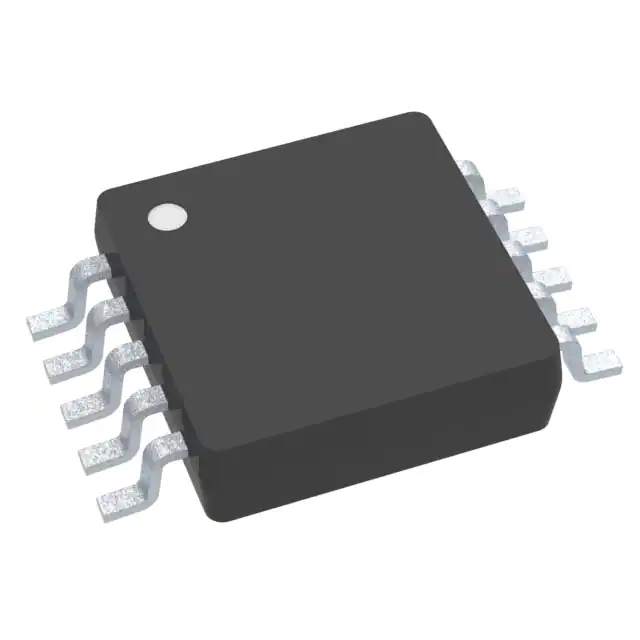
-
PGA308AIDGSR
Texas Instruments
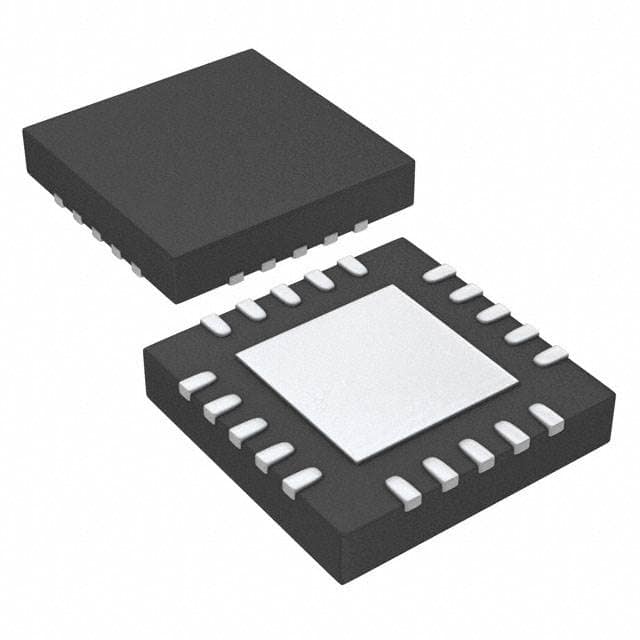
-
XTR300AIRGWR
Texas Instruments
Tech Hub

TTL and CMOS logic families differ in thresholds, loading, output drive, power and timing. This engineering guide compares 74HC and 74HCT, calculates noise margins and checks 3.3 V/5 V compatibility.

A practical engineering guide to 3.3V and 5V logic compatibility, input thresholds, resistor dividers, translator ICs, MOSFET level shifting, I2C pull-ups, timing limits and power-sequencing risks.

The 74HC595 uses push-pull logic outputs, while the TPIC6B595 uses 50 V open-drain DMOS sinks for higher-power loads. This guide compares timing, current limits, 3.3 V interfacing, load wiring, thermal…

The 74HC595 converts serial data into eight stable parallel outputs. This guide covers pin functions, shift and storage timing, OE and MR behavior, drive-current limits, cascading, voltage compatibilit…

A technical comparison of level-sensitive latches and edge-triggered flip-flops, covering timing windows, setup and hold limits, master–slave operation, time borrowing, race-through, HDL inference and…

A D latch stores one bit while Enable controls when data can pass. This reference covers gate-level operation, truth tables, transparency, setup and hold timing, LE versus OE, common ICs and practical …

An SR latch stores one bit through cross-coupled feedback. This engineering reference covers NOR and NAND implementations, truth tables, forbidden-state recovery, gated operation, switch debouncing, fa…

Latch circuits retain one bit through feedback. This technical reference covers SR and D latches, truth tables, transparency, timing limits, latch-versus-flip-flop behavior, applications and common log…

An engineering guide to LED driver operation, constant-current and constant-voltage outputs, linear and switching topologies, dimming, IC selection, calculations, replacement compatibility, and fault c…

Operational amplifier guide covering op amp basics, feedback, ideal vs real op amps, common configurations, buffer circuits, offset, bias current, gain-bandwidth, slew rate, rail-to-rail limits and sel…


