
 My Inquiry
 My Account


Microchip Technology 469-03

- Part No.:
- 469-03
- Manufacturer:
- Microchip Technology
- Category:
- Bridge Rectifiers
- Package:
- 8-SOIC (0.154", 3.90mm Width)
- Datasheet:
-
 469-03.pdf
- Description:
- BRIDGE RECT 1P 600V 10A 8-SOIC
- Quantity:
- Payment:

- Shipping:

Inventory:5,485
Please send an inquiry. Send us your inquiry, and we will respond immediately.
Product details
Overview
469-03 from Microsemi is a hermetically sealed, JANTXV-qualified single-phase 10 A bridge rectifier with 600 V peak reverse voltage per leg, voidless glass encapsulation, Category 1 metallurgical bonds, and electrically isolated aluminum case-designed for military power conversion in radar transmitters and avionics power supplies.
For engineers reviewing the 469-03 datasheet, 469-03 pinout, 469-03 application, or 469-03 equivalent, this part supports high-reliability DC power generation where thermal robustness (RθJC = 5 °C/W), controlled avalanche behavior, and radiation hardness per MicroNote 050 are critical selection criteria.
Technical Context
This device implements a four-diode single-phase full-wave bridge topology with all legs rated for 600 V VRWM and 100 A surge current. Its construction uses triple-layer passivation and voidless glass-to-metal seals to ensure long-term stability under thermal cycling and ionizing radiation exposure.
The 469-03 operates across –65 °C to +150 °C junction temperature range, with isolation voltage of 2800 V DC and reverse recovery time of 2.5 µs at IF = 0.5 A, IR = 1.0 A, IREC = 0.25 A-enabling use in high-dV/dt switching environments without snubber dependency.
Key Specifications
| Parameter | Value and Actual Design Meaning |
|---|---|
| VRWM (per leg) | 600 V peak - defines maximum continuous reverse voltage each diode leg withstands without breakdown |
| IO @ TC = +55 °C | 10 A average DC output - usable full-load current when case temperature maintained at 55 °C |
| RθJC | 5 °C/W - enables efficient heat transfer from junction to case, supporting compact heatsink design |
| IF(surge) | 100 A peak (8.3 ms) - sustains short-duration line surges common in MIL-STD-704 aircraft power systems |
| VISO | 2800 V DC - provides galvanic isolation between AC input terminals and grounded case |
| trr | 2.5 µs - ensures fast turn-off for reduced switching losses in high-frequency rectification |
| TJ/TSTG | –65 °C to +150 °C - qualified for operation in extreme environmental conditions including space-grade thermal vacuum |
Pinout & Package
Package: MD - hermetically sealed aluminum case with tin/lead or RoHS-compliant matte tin terminals; weight ≈10 g; polarity marked as AC (input), + (cathode output), – (anode output); terminal 1 identified by mechanical index (flattened corner or line).
| Pin/Terminal | Circuit Role | Design Meaning |
|---|---|---|
| 1 (AC) | Alternating Current Input | Common AC input node connecting both anodes and cathodes of internal diode pairs |
| 2 (+) | Cathode Output | Positive DC output terminal - connected to cathodes of both upper diodes in bridge configuration |
| 3 (–) | Anode Output | Negative DC output terminal - connected to anodes of both lower diodes in bridge configuration |
Key Features
| Feature | Design Value |
|---|---|
| Voidless glass encapsulation | Eliminates internal delamination risk during thermal shock, extending lifetime in mission-critical power systems |
| Category 1 metallurgical bonds | Ensures bond integrity under mechanical vibration and radiation exposure per MIL-STD-883 method 2011 |
| Electrically isolated aluminum case | Allows direct mounting to grounded heatsinks without additional insulation, reducing system BOM cost |
| Controlled avalanche characteristics | Enables safe energy absorption during overvoltage transients without catastrophic failure |
| Inherent radiation hardness | Validated per Microsemi MicroNote 050 for TID tolerance >100 krad(Si), suitable for low-earth orbit applications |
Applications
| Avionics Power Supplies | Radar Transmitter HVPS |
|---|---|
Use Scenario: Converting 115 VAC 400 Hz aircraft bus to regulated DC for flight control computers and sensors. IC Role / Device Role / Timing Role: Primary AC/DC rectification stage delivering 10 A DC output with zero failure tolerance. Use Value: JANTXV qualification and –65 °C to +150 °C operation ensure reliability across all flight envelopes and storage conditions. | Use Scenario: High-current DC supply for magnetron or klystron modulator circuits requiring stable 600 V DC bus. IC Role / Device Role / Timing Role: High-surge-capable bridge rectifier handling repetitive 100 A pulses during RF burst transmission. Use Value: 100 A surge rating and 2.5 µs trr minimize voltage overshoot and reduce need for external snubbers. |
| Spacecraft Power Conditioning | Nuclear Instrumentation Systems |
Use Scenario: Front-end rectification in solar array regulators for LEO satellites exposed to total ionizing dose. IC Role / Device Role / Timing Role: Radiation-hardened bridge enabling unattended operation over multi-year missions. Use Value: Inherent radiation hardness per MicroNote 050 eliminates need for shielding or derating in TID >100 krad(Si) environments. | Use Scenario: DC power generation for neutron detection electronics operating inside reactor containment zones. IC Role / Device Role / Timing Role: Isolated, high-reliability rectifier interfacing with safety-critical instrumentation buses. Use Value: 2800 V isolation voltage and hermetic sealing prevent leakage path formation in high-humidity, high-radiation zones. |
Equivalent & Alternatives
The following parts are listed as comparable options for similar high-reliability bridge rectifier applications.
| Alternative Part | Technical Difference | Application Difference | Selection Advice |
|---|---|---|---|
| 469-02 | 400 V VRWM per leg (vs. 600 V); identical package, thermal, and surge ratings | Suitable for 28 VDC or 115 VAC 400 Hz systems with lower peak reverse stress | Select when system VRWM requirement is ≤400 V and cost optimization is prioritized |
| 469-04 | 800 V VRWM per leg (vs. 600 V); same construction, qualification level, and thermal performance | Required for 270 VDC aircraft bus or 400 VAC industrial systems with higher transient margins | Select when VRWM margin must exceed 600 V while retaining JANTXV qualification and MD package footprint |
Compared with 469-02 and 469-04, the 469-03 delivers optimal balance of voltage margin, surge capability, and qualification level for 600 V-class military power systems-avoiding overdesign or under-specification in avionics and radar applications.
Availability
469-03 is available at Aetrix Electronics and suitable for avionics power supplies, radar transmitter HVPS, and spacecraft power conditioning requiring stable component supply with full traceability and long-term obsolescence management.
Supply support for 469-03 includes scheduled delivery planning, volume procurement assistance, BOM continuity management, traceable sourcing, and lifecycle availability coordination for OEM customers, industrial embedded developers, connected-device designers, and electronics production programs.
Manufacturer
Microsemi Corporation (now part of Microchip Technology) designs high-reliability analog and mixed-signal semiconductors for aerospace, defense, and industrial markets.
The 469-03 belongs to Microsemi's MIL-PRF-19500/469 qualified bridge rectifier product line, engineered specifically for mission-critical power conversion where failure is not an option.
FAQ
What is the working peak reverse voltage rating of the 469-03?
The 469-03 has a working peak reverse voltage (VRWM) of 600 V per leg, verified per MIL-PRF-19500/469 test requirements. This rating reflects the maximum continuous sinusoidal reverse voltage the device can block without breakdown under specified thermal conditions, and it is distinct from breakdown voltage (V(BR) = 660 V min).
Is the 469-03 qualified to JANTXV level?
Yes, the 469-03 is fully qualified to JANTXV level per MIL-PRF-19500/469, including extended temperature screening, burn-in, and lot acceptance testing. The JANTXV designation appears in its full part number (e.g., M19500/469-03) and confirms compliance with the highest reliability tier for military applications.
What is the thermal resistance from junction to case for the 469-03?
The 469-03 has a thermal resistance from junction to case (RθJC) of 5 °C/W, measured under standard test conditions. This value enables predictable thermal modeling when mounted on a heatsink and directly informs maximum allowable power dissipation at a given case temperature.
Does the 469-03 have radiation hardness certification?
Yes, the 469-03 exhibits inherent radiation hardness validated per Microsemi MicroNote 050, demonstrating tolerance to total ionizing dose (TID) exceeding 100 krad(Si). No additional radiation qualification testing is required for low-earth orbit or nuclear instrumentation use cases.
What are the terminal markings and polarity identification for the 469-03?
The 469-03 is marked with "AC" for the alternating current input terminal, "+" for the cathode (positive) output, and "–" for the anode (negative) output. Terminal 1 (AC) is identified by a mechanical index-either a flattened corner or line visible from the top surface-as defined in the MD package drawing.
469-03 Specifications
- Product attributes
- Attribute value
- Manufacturer:
- Microchip Technology
- Series:
- -
- Package/Case:
- 8-SOIC (0.154", 3.90mm Width)
- Packaging:
- Bulk
- Product Status:
- Active
- Diode Type:
- Single Phase
- Technology:
- Standard
- Voltage - Peak Reverse (Max):
- 600 V
- Current - Average Rectified (Io):
- 10 A
- Voltage - Forward (Vf) (Max) @ If:
- 1.35 V @ 15.7 A
- Current - Reverse Leakage @ Vr:
- 2 µA @ 600 V
- Operating Temperature:
- -65°C ~ 150°C (TJ)
- Grade:
- -
- Qualification:
- -
- Mounting Type:
- Surface Mount
- Supplier Device Package:
- 8-SOIC
469-03 FAQ
1.How can I place an order for 469-03 through Aetrix?
Please submit a Request for Quotation (RFQ) for 469-03 on Aetrix. Our sales agent will provide a competitive quotation and guide you through the order confirmation once you accept the terms.
2.Are the price and stock information for 469-03 reliable?
The price and inventory of 469-03 are updated periodically and may fluctuate due to market conditions. Stock and pricing data are typically refreshed every 24 hours. Quotation validity for 469-03 is usually 5 days.
3.What payment methods are accepted for 469-03?
We accept Wire Transfer, PayPal, Credit Card, Western Union, MoneyGram, and Escrow for 469-03 transactions.
Note: Certain payment methods may incur a processing fee.
4.How is shipping managed for 469-03?
469-03 orders can be shipped via leading logistics carriers, including DHL, UPS, FedEx, TNT, or Registered Mail.
Once your 469-03 order is processed, you will receive an email with the shipment details and tracking number.
Note: Tracking information may take up to 24 hours to appear. Express delivery typically takes 3–5 business days.
5.How can I obtain technical support or documentation for 469-03?
For technical support, including 469-03 datasheets, pinout diagrams, or application guidance, please contact our engineering support team. They can provide detailed documentation and assistance for your 469-03 requirements.
6.How does Aetrix verify that 469-03 is sourced from the original manufacturer or authorized distributors?
All 469-03 products on Aetrix are procured from qualified distributors and authorized channels. Our dedicated quality assurance team conducts strict verification, including traceability checks and, if necessary, third-party testing. This ensures that 469-03 meets industry standards.
7.What is the process for return or replacement of 469-03?
All 469-03 units undergo pre-shipment inspection (PSI). If there is an issue with 469-03, returns or replacements are accepted under the following conditions:
1.Quantity discrepancies, incorrect items, or visible external defects (such as breakage or corrosion), acknowledged by Aetrix.
2.The issue is reported within 90 days of delivery.
3.The 469-03 part is unused and in its original packaging.
Return procedure for 469-03:
1.Submit a request within 90 days.
2.Obtain a Return Material Authorization (RMA) from Aetrix.
469-03 Tags
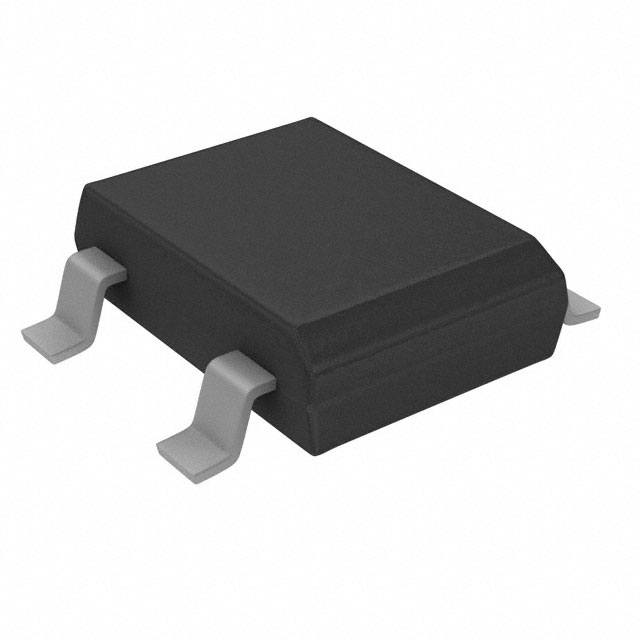
-
HDS10M-13
Diodes Incorporated
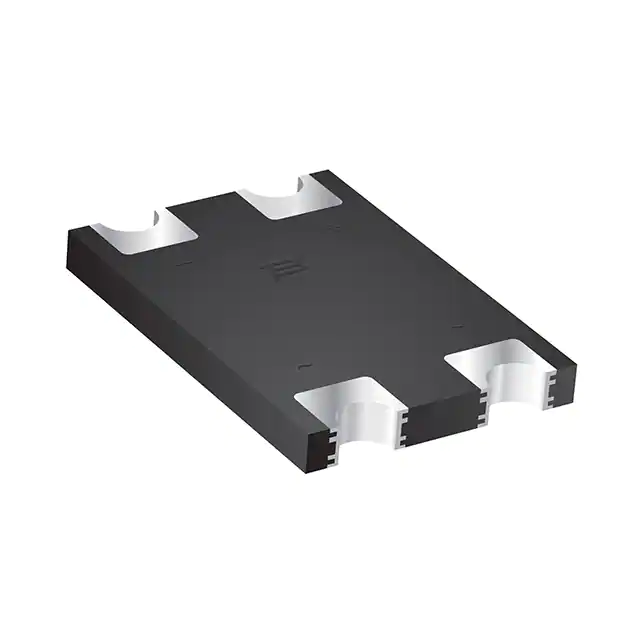
-
CD-MBL106S
Bourns Inc.
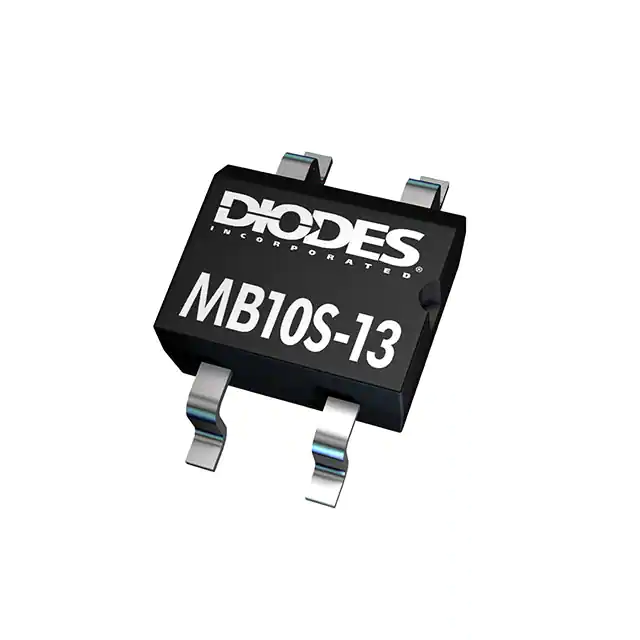
-
MB10S-13
Diodes Incorporated
-
CD-MBL206SL
Bourns Inc.
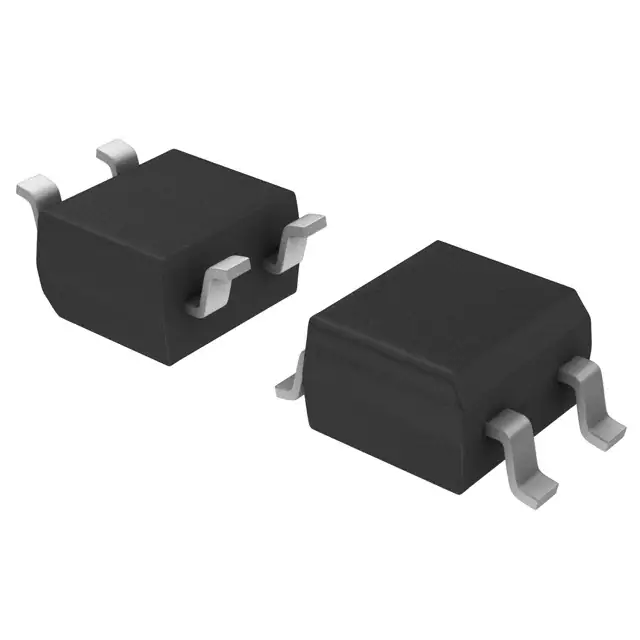
-
MB4S-TP
Micro Commercial Co
-
MB6S-TP
Micro Commercial Co
-
CD-MBL210S
Bourns Inc.
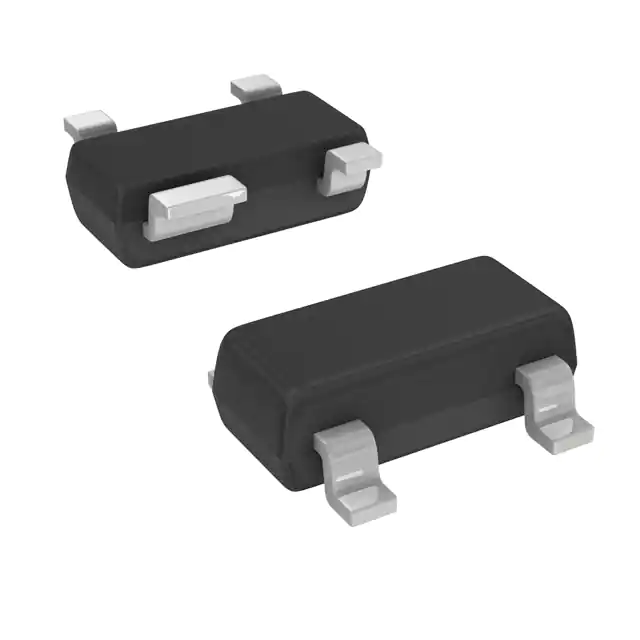
-
BAS3007ARPPE6327HTSA1
Infineon Technologies
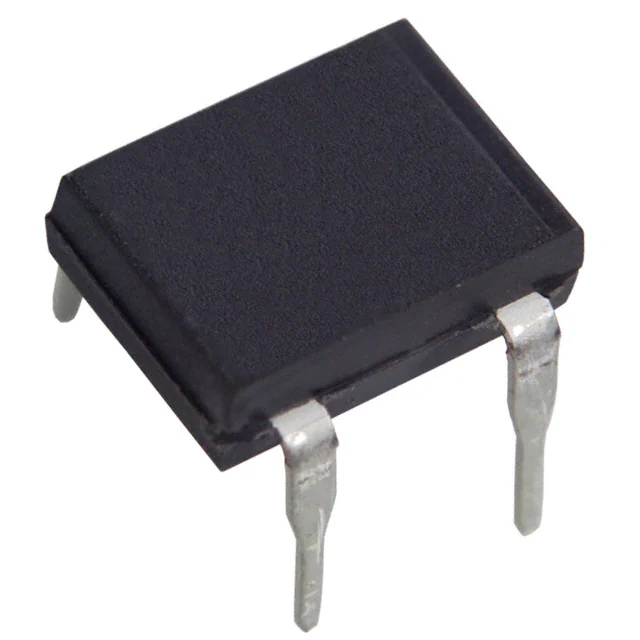
-
DF02M
Diodes Incorporated
-
CD-MBL210SL
Bourns Inc.
-
DF04M
Diodes Incorporated
-
DF01M
Diodes Incorporated
Tech Hub

TTL and CMOS logic families differ in thresholds, loading, output drive, power and timing. This engineering guide compares 74HC and 74HCT, calculates noise margins and checks 3.3 V/5 V compatibility.

A practical engineering guide to 3.3V and 5V logic compatibility, input thresholds, resistor dividers, translator ICs, MOSFET level shifting, I2C pull-ups, timing limits and power-sequencing risks.

The 74HC595 uses push-pull logic outputs, while the TPIC6B595 uses 50 V open-drain DMOS sinks for higher-power loads. This guide compares timing, current limits, 3.3 V interfacing, load wiring, thermal…

The 74HC595 converts serial data into eight stable parallel outputs. This guide covers pin functions, shift and storage timing, OE and MR behavior, drive-current limits, cascading, voltage compatibilit…

A technical comparison of level-sensitive latches and edge-triggered flip-flops, covering timing windows, setup and hold limits, master–slave operation, time borrowing, race-through, HDL inference and…

A D latch stores one bit while Enable controls when data can pass. This reference covers gate-level operation, truth tables, transparency, setup and hold timing, LE versus OE, common ICs and practical …

An SR latch stores one bit through cross-coupled feedback. This engineering reference covers NOR and NAND implementations, truth tables, forbidden-state recovery, gated operation, switch debouncing, fa…

Latch circuits retain one bit through feedback. This technical reference covers SR and D latches, truth tables, transparency, timing limits, latch-versus-flip-flop behavior, applications and common log…

An engineering guide to LED driver operation, constant-current and constant-voltage outputs, linear and switching topologies, dimming, IC selection, calculations, replacement compatibility, and fault c…

Operational amplifier guide covering op amp basics, feedback, ideal vs real op amps, common configurations, buffer circuits, offset, bias current, gain-bandwidth, slew rate, rail-to-rail limits and sel…


