
 My Inquiry
 My Account


NXP Semiconductors A7004CIHN1/T1AGBAJ
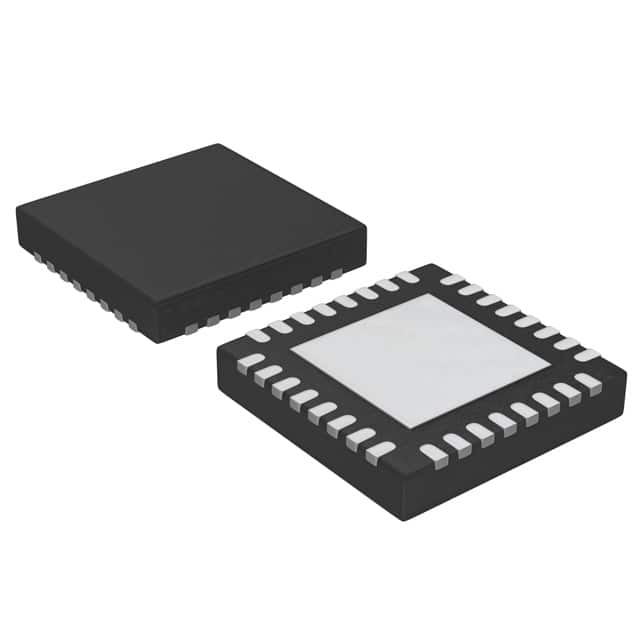
- Part No.:
- A7004CIHN1/T1AGBAJ
- Manufacturer:
- NXP Semiconductors
- Category:
- Application Specific Microcontrollers
- Package:
- 32-VFQFN Exposed Pad
- Datasheet:
-
 A7004CIHN1/T1AGBAJ.pdf
- Description:
- AU10TICS
- Quantity:
- Payment:

- Shipping:

Inventory:4,877
Please send an inquiry. Send us your inquiry, and we will respond immediately.
Product details
Overview
A7004CIHN1/T1AGBAJ from NXP Semiconductors is a tamper-resistant secure microcontroller (MCU) built on the hardened MX51CPU core, delivering Java Card Open Platform (JCOP) 2.4.2 R1 OS with pre-installed X.509 client authentication. It features 76.4 kB EEPROM, I²C slave interface (100 kbit/s), ISO/IEC 7816 contact interface, and operates from −40 °C to +90 °C - designed for embedded secure element applications in industrial IoT gateways requiring high-assurance device identity and PKI-based TLS handshake offload.
For engineers reviewing the A7004CIHN1/T1AGBAJ datasheet, A7004CIHN1/T1AGBAJ pinout, A7004CIHN1/T1AGBAJ application, or A7004CIHN1/T1AGBAJ equivalent, key selection criteria include its certified secure fetch technology, hardware-accelerated RSA-2048/ECC-320 coprocessor, JCOP V3.0.1 classic compliance, die-specific key provisioning, and support for GlobalPlatform 2.1.1 applet management - all within an HVQFN32 package optimized for space-constrained trusted execution environments.
Technical Context
The A7004CIHN1/T1AGBAJ implements an asynchronous self-timed handshake architecture to resist timing-based side-channel attacks, paired with active shielding and NXP glue logic for physical tamper resistance. Its Secure_MX51 CPU executes Java Card applets under JCOP 2.4.2 R1 while coordinating cryptographic operations across dedicated AES, Triple-DES, and PKI coprocessors.
Hardware security is enforced via integrated sensors (voltage, temperature, light, SFI detection), low-power TRNG (AIS-31 compliant), and on-chip key generation. The I²C slave interface supports wake-up from 40 µA sleep mode, and the ISO/IEC 7816 interface enables interoperability with legacy smart card infrastructure - both confirmed for this exact variant per Table 4 and Section 2.2.
Key Specifications
| Parameter | Value and Actual Design Meaning |
|---|---|
| Core Architecture | Secure_MX51 (enhanced 80C51) with asynchronous handshaking circuitry for DPA/SPA resilience |
| Operating Voltage | 1.62 V to 5.5 V - supports wide-range host power domains without level-shifting |
| EEPROM Capacity | 76.4 kB - stores applets, keys, certificates, and persistent data with 25-year retention |
| Crypto Acceleration | RSA up to 2048-bit, ECC over GF(p) up to 320-bit, AES-128/192/256, Triple-DES - offloads TLS/DTLS stack from host MCU |
| Interface Support | I²C slave (100 kbit/s) + ISO/IEC 7816 T=0/T=1 - dual-channel secure communication for host and card-reader coexistence |
| Temperature Range | −40 °C to +90 °C - qualified for industrial edge nodes and automotive telematics modules |
| Security Certification | Common Criteria EAL5+ ready; includes Secure Fetch, active shielding, and die-specific key injection in certified HSM environment |
Pinout & Package
HVQFN32 package (SOT617-1), 5 × 5 × 0.85 mm body, no leads, thermal pad exposed on underside - optimized for reflow assembly and thermal dissipation in compact PCB layouts.
| Pin/Terminal | Circuit Role | Design Meaning |
|---|---|---|
| VDD | Power supply input | Primary 1.62–5.5 V supply rail; decoupling required per JEDEC J-STD-002B |
| VSS | Ground reference | Digital and analog ground return; must be connected to low-impedance PCB plane |
| SDA/IO1 | I²C data / bidirectional I/O | Open-drain I²C data line; supports weak pull-up mode in sleep (40 µA) without bus contention |
| SCL/IO2 | I²C clock / bidirectional I/O | Input-only I²C clock during normal operation; configurable as GPIO in JCOPX API |
| RST_N | Active-low reset input | Asynchronous hardware reset; internal POR active at power-up; no external reset controller needed |
| PVDD/CLK | ISO/IEC 7816 power/clock | Supplies and clocks external contact interface; independent of VDD; supports 1–5 MHz clock rates |
| IO3 | General-purpose I/O | Configurable as input/output via JCOPX IO control API; supports interrupt-on-change |
Key Features
| Feature | Design Value |
|---|---|
| Die-specific key & certificate provisioning | Keys generated and injected in certified Common Criteria environment using HSMs - eliminates post-silicon key injection risk |
| Secure Fetch Technology | Protects ROM/RAM/EEPROM code fetches against laser fault injection and spatially resolved optical attacks - validated per CRI SPA/DPA license |
| JCOPX extended APIs | Enables native code execution in Secure Box, GPIO reconfiguration, and MIFARE Flex compatibility - extends beyond Java Card 3.0.1 baseline |
| Hardware TRNG | AIS-31 Class P2 compliant true random number generator - provides entropy for key derivation and nonces without software bias |
| GlobalPlatform 2.1.1 support | Enables standardized applet lifecycle management, secure channel establishment, and multi-application isolation - reduces integration effort for enterprise PKI deployments |
Applications
| Industrial IoT Gateway Authentication | Medical Device Identity Module |
|---|---|
Use Scenario: Securing TLS handshakes between field sensors and cloud platform in factory automation systems. IC Role / Device Role / Timing Role: Dedicated secure element performing X.509 client certificate signing and ECDHE key exchange offload. Use Value: Eliminates host MCU crypto overhead and prevents private key exposure - meets IEC 62443-3-3 SL2 requirements for secure boot and attestation. | Use Scenario: Enabling HIPAA-compliant remote firmware updates for FDA-cleared diagnostic equipment. IC Role / Device Role / Timing Role: Trusted identity anchor storing device-specific signing keys and validating update signatures via PKI coprocessor. Use Value: Ensures only authorized vendors can sign firmware; prevents rollback attacks via certificate revocation list (CRL) checking in JCOP runtime. |
| Automotive Telematics eSIM Companion | Smart Energy Meter Root-of-Trust |
Use Scenario: Providing hardware-backed identity and secure storage for eUICC profile switching in connected vehicle ECUs. IC Role / Device Role / Timing Role: Secure element co-located with eSIM controller, managing carrier credentials and enforcing profile access policies. Use Value: Enables GSMA SGP.22-compliant remote SIM provisioning with tamper-proof key storage - withstands −40 °C to +90 °C ambient cycling. | Use Scenario: Authenticating firmware and metering data uploads in ANSI C12.22-compliant smart meters deployed in utility substations. IC Role / Device Role / Timing Role: Root-of-trust executing SHA-256 integrity checks and AES-GCM encryption of consumption logs before transmission. Use Value: Meets NIST SP 800-53 RA-10 and IEEE 1363a requirements for cryptographic module validation - ensures regulatory audit readiness. |
Equivalent & Alternatives
The following parts are listed as comparable options for similar secure authentication microcontroller applications.
| Alternative Part | Technical Difference | Application Difference | Selection Advice |
|---|---|---|---|
| ST33HTPH2048A | ARM SecurCore SC000 core; 2048-bit RSA; supports ISO/IEC 14443 but lacks I²C slave interface | Targeted at contactless payment terminals; requires SPI host interface instead of I²C | Select when contactless reader integration is primary requirement and I²C connectivity is not needed |
| Infineon SLB9670 | TPM 2.0-compliant; discrete TPM chip with LPC interface; no Java Card OS or applet support | Designed for PC/server BIOS-level trust anchors; not suitable for embedded applet deployment | Select for x86/ARM server platforms requiring standard TPM 2.0 stack - not for custom Java Card applet development |
Compared with ST33HTPH2048A and Infineon SLB9670, the A7004CIHN1/T1AGBAJ uniquely combines I²C slave + ISO/IEC 7816 dual-interface support, JCOP 2.4.2 R1 with X.509 client auth pre-installed, and −40 °C to +90 °C qualification - making it the only option for industrial embedded systems needing both wired host communication and smart-card interoperability in one die.
Availability
A7004CIHN1/T1AGBAJ is available at Aetrix Electronics and suitable for industrial IoT gateways, medical device identity modules, automotive telematics units, and smart energy meters requiring stable component supply across extended temperature ranges and long product lifecycles.
Supply support for A7004CIHN1/T1AGBAJ includes scheduled delivery planning, volume procurement assistance, BOM continuity management, traceable sourcing, and lifecycle availability coordination for OEM customers, industrial embedded developers, connected-device designers, and electronics production programs.
Manufacturer
NXP Semiconductors is a global semiconductor leader specializing in secure connectivity solutions, with decades of expertise in smart card ICs used in banking, ID, and mobile secure elements.
The A700x family was engineered specifically for embedded secure element applications demanding certified tamper resistance, Java Card-based applet flexibility, and hardware-accelerated cryptography - targeting high-assurance identity and authentication in constrained devices.
FAQ
What is the operating temperature range specified for the A7004CIHN1/T1AGBAJ?
The A7004CIHN1/T1AGBAJ is rated for −40 °C to +90 °C operational ambient temperature, as confirmed in Section 2.2 and Table 4 of the A700x family short data sheet. This extended range qualifies the device for industrial control panels, automotive under-hood telematics modules, and outdoor smart grid infrastructure where thermal cycling exceeds commercial-grade limits. The specification applies to the full A7004 variant regardless of packaging or firmware configuration.
Does the A7004CIHN1/T1AGBAJ support both I²C and ISO/IEC 7816 interfaces simultaneously?
Yes, the A7004CIHN1/T1AGBAJ supports concurrent I²C slave (100 kbit/s) and ISO/IEC 7816 T=0/T=1 contact interfaces, as explicitly stated in Section 2.2 and Table 4. This dual-interface capability enables hybrid system architectures - for example, using I²C for host MCU communication while connecting to legacy smart card readers via the 7816 interface. Both interfaces operate independently with separate power domains (VDD and PVDD/CLK).
What cryptographic algorithms are accelerated in hardware by the A7004CIHN1/T1AGBAJ?
The A7004CIHN1/T1AGBAJ integrates dedicated hardware coprocessors for RSA up to 2048-bit, ECC over GF(p) up to 320-bit, AES-128/192/256, and 2-key/3-key Triple-DES. These accelerators are documented in Sections 1.1, 2.1, and Figure 1, and enable full TLS 1.2 handshake offload without host CPU involvement. SHA-1, SHA-224, SHA-256, MD5, and SEED are also supported in hardware per Section 2.1.
Is JCOP 2.4.2 R1 pre-installed on the A7004CIHN1/T1AGBAJ, and what does it include?
Yes, JCOP 2.4.2 R1 is factory-preloaded on the A7004CIHN1/T1AGBAJ, including X.509 certificate-based client authentication applet, GlobalPlatform 2.1.1 support, and Java Card 3.0.1 Classic API compliance. As stated in Sections 1.1 and 5.1.3, this OS image is delivered with die-specific keys and certificates provisioned in a certified HSM environment - no field personalization is required to begin secure TLS client authentication.
What package type is used for the A7004CIHN1/T1AGBAJ, and are thermal pads exposed?
The A7004CIHN1/T1AGBAJ uses the HVQFN32 package (SOT617-1), measuring 5 × 5 × 0.85 mm with no external leads. Per Table 3, this package includes an exposed thermal pad on the underside of the body - essential for thermal management in high-reliability industrial applications. The pad must be soldered to a PCB thermal plane per IPC-7351B guidelines to maintain junction temperature within safe limits during sustained cryptographic operation.
A7004CIHN1/T1AGBAJ Specifications
- Product attributes
- Attribute value
- Manufacturer:
- NXP Semiconductors
- Series:
- -
- Package/Case:
- 32-VFQFN Exposed Pad
- Packaging:
- Tape & Reel (TR)
- Product Status:
- Active
- Programmable:
- Not Verified
- Applications:
- Authentication
- Core Processor:
- MX51
- Program Memory Type:
- EEPROM (76.4kB)
- Controller Series:
- A700x
- RAM Size:
- 3.2K x 8
- Interface:
- I2C
- Number of I/O:
- -
- Voltage - Supply:
- 1.62V ~ 5.5V
- Operating Temperature:
- -40°C ~ 90°C (TA)
- Grade:
- -
- Qualification:
- -
- Mounting Type:
- Surface Mount
- Supplier Device Package:
- 32-HVQFN (5x5)
A7004CIHN1/T1AGBAJ FAQ
1.How can I place an order for A7004CIHN1/T1AGBAJ through Aetrix?
Please submit a Request for Quotation (RFQ) for A7004CIHN1/T1AGBAJ on Aetrix. Our sales agent will provide a competitive quotation and guide you through the order confirmation once you accept the terms.
2.Are the price and stock information for A7004CIHN1/T1AGBAJ reliable?
The price and inventory of A7004CIHN1/T1AGBAJ are updated periodically and may fluctuate due to market conditions. Stock and pricing data are typically refreshed every 24 hours. Quotation validity for A7004CIHN1/T1AGBAJ is usually 5 days.
3.What payment methods are accepted for A7004CIHN1/T1AGBAJ?
We accept Wire Transfer, PayPal, Credit Card, Western Union, MoneyGram, and Escrow for A7004CIHN1/T1AGBAJ transactions.
Note: Certain payment methods may incur a processing fee.
4.How is shipping managed for A7004CIHN1/T1AGBAJ?
A7004CIHN1/T1AGBAJ orders can be shipped via leading logistics carriers, including DHL, UPS, FedEx, TNT, or Registered Mail.
Once your A7004CIHN1/T1AGBAJ order is processed, you will receive an email with the shipment details and tracking number.
Note: Tracking information may take up to 24 hours to appear. Express delivery typically takes 3–5 business days.
5.How can I obtain technical support or documentation for A7004CIHN1/T1AGBAJ?
For technical support, including A7004CIHN1/T1AGBAJ datasheets, pinout diagrams, or application guidance, please contact our engineering support team. They can provide detailed documentation and assistance for your A7004CIHN1/T1AGBAJ requirements.
6.How does Aetrix verify that A7004CIHN1/T1AGBAJ is sourced from the original manufacturer or authorized distributors?
All A7004CIHN1/T1AGBAJ products on Aetrix are procured from qualified distributors and authorized channels. Our dedicated quality assurance team conducts strict verification, including traceability checks and, if necessary, third-party testing. This ensures that A7004CIHN1/T1AGBAJ meets industry standards.
7.What is the process for return or replacement of A7004CIHN1/T1AGBAJ?
All A7004CIHN1/T1AGBAJ units undergo pre-shipment inspection (PSI). If there is an issue with A7004CIHN1/T1AGBAJ, returns or replacements are accepted under the following conditions:
1.Quantity discrepancies, incorrect items, or visible external defects (such as breakage or corrosion), acknowledged by Aetrix.
2.The issue is reported within 90 days of delivery.
3.The A7004CIHN1/T1AGBAJ part is unused and in its original packaging.
Return procedure for A7004CIHN1/T1AGBAJ:
1.Submit a request within 90 days.
2.Obtain a Return Material Authorization (RMA) from Aetrix.
A7004CIHN1/T1AGBAJ Tags
-
CYPD3175-24LQXQ
Infineon Technologies

-
SLB9672VU20FW1523XTMA1
Infineon Technologies
-
SLB9670VQ20FW785XTMA1
Infineon Technologies
-
SLB9672XU20FW1523XTMA1
Infineon Technologies
-
SLB9673XU20FW2613XTMA1
Infineon Technologies
-
CYPD3125-40LQXIT
Infineon Technologies
-
AT97SC3204-U2A1A-20
Microchip Technology
-
AT97SC3204-U2A1A-10
Microchip Technology
-
SLM9670AQ20FW1311XTMA1
Infineon Technologies
-
SLB9672XU20FW1613XTMA1
Infineon Technologies
-
SLB9672AU20FW1613XTMA1
Infineon Technologies
-
SLB9673AU20FW2613XTMA1
Infineon Technologies
Tech Hub

A practical engineering guide to 3.3V and 5V logic compatibility, input thresholds, resistor dividers, translator ICs, MOSFET level shifting, I2C pull-ups, timing limits and power-sequencing risks.

The 74HC595 uses push-pull logic outputs, while the TPIC6B595 uses 50 V open-drain DMOS sinks for higher-power loads. This guide compares timing, current limits, 3.3 V interfacing, load wiring, thermal…

The 74HC595 converts serial data into eight stable parallel outputs. This guide covers pin functions, shift and storage timing, OE and MR behavior, drive-current limits, cascading, voltage compatibilit…

A technical comparison of level-sensitive latches and edge-triggered flip-flops, covering timing windows, setup and hold limits, master–slave operation, time borrowing, race-through, HDL inference and…

A D latch stores one bit while Enable controls when data can pass. This reference covers gate-level operation, truth tables, transparency, setup and hold timing, LE versus OE, common ICs and practical …

An SR latch stores one bit through cross-coupled feedback. This engineering reference covers NOR and NAND implementations, truth tables, forbidden-state recovery, gated operation, switch debouncing, fa…

Latch circuits retain one bit through feedback. This technical reference covers SR and D latches, truth tables, transparency, timing limits, latch-versus-flip-flop behavior, applications and common log…

An engineering guide to LED driver operation, constant-current and constant-voltage outputs, linear and switching topologies, dimming, IC selection, calculations, replacement compatibility, and fault c…

Operational amplifier guide covering op amp basics, feedback, ideal vs real op amps, common configurations, buffer circuits, offset, bias current, gain-bandwidth, slew rate, rail-to-rail limits and sel…

Jumper cables guide covering safe connection order, red and black clamp placement, final ground connection, cable gauge, length, clamp quality, copper vs CCA cables, jump starter comparison and battery…


