
 My Inquiry
 My Account


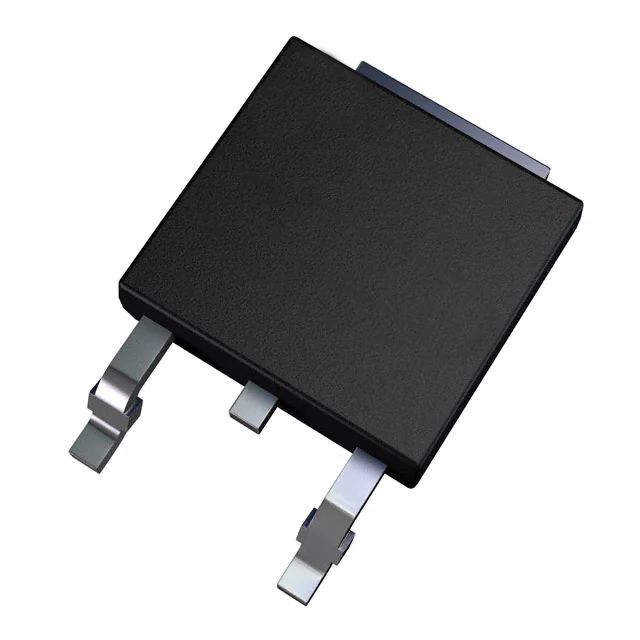
Renesas AC16FGM(YC)-AZ
- Part No.:
- AC16FGM(YC)-AZ
- Manufacturer:
- Renesas
- Category:
- TRIACs
- Package:
- -
- Datasheet:
-
 AC16FGM(YC)-AZ.pdf
- Description:
- TRIAC 600V 16A
- Quantity:
- Payment:

- Shipping:

Inventory:336
Please send an inquiry. Send us your inquiry, and we will respond immediately.
Product details
Overview
AC16FGM(YC)-AZ from Renesas Electronics is a 16-bit microcontroller unit (MCU) featuring on-chip flash memory, a 32 MHz max CPU clock, 64 KB ROM, 4 KB RAM, and integrated CAN 2.0B controller for automotive network communication. It operates from 4.5 V to 5.5 V and supports -40°C to +85°C industrial temperature range.
For engineers reviewing the AC16FGM(YC)-AZ datasheet, AC16FGM(YC)-AZ pinout, AC16FGM(YC)-AZ application, or AC16FGM(YC)-AZ equivalent, this MCU is selected for embedded control in automotive body electronics, industrial PLCs, and CAN-based sensor nodes where deterministic real-time response, flash reprogrammability, and bus-level fault tolerance are required.
Technical Context
The AC16FGM(YC)-AZ implements a V850ES core architecture with 16-bit data path, supporting 16-bit integer arithmetic and bit manipulation instructions optimized for control loops. It integrates a 16-channel 10-bit ADC, 32-bit timer/counter with input capture, and programmable watchdog timer with independent clock source.
Its CAN interface complies with ISO 11898-1:2003, supports message filtering via 32 mailbox registers, and includes automatic retransmission and error confinement. The MCU uses multiplexed I/O ports with configurable pull-up resistors and noise filter capability for robust operation in electrically noisy environments.
Key Specifications
| Parameter | Value and Actual Design Meaning |
|---|---|
| CPU Core | V850ES 16-bit RISC core with 32 MHz max operation - enables deterministic interrupt latency & efficient code density for real-time control tasks |
| Memory | 64 KB on-chip flash ROM + 4 KB RAM - supports field firmware updates without external memory and retains critical variables during low-power modes |
| Operating Voltage | 4.5 V to 5.5 V - compatible with standard 5 V automotive and industrial power rails, eliminating need for additional LDO regulation |
| Temperature Range | -40°C to +85°C - qualified for under-hood automotive modules and factory-floor industrial controllers |
| CAN Interface | CAN 2.0B compliant with 1 Mbit/s max bit rate - provides full protocol stack support including error frame generation and bus-off recovery |
| ADC | 16-channel 10-bit successive approximation ADC with 10 µs conversion time - suitable for sampling analog sensors (e.g., temperature, pressure) at control loop rates up to 100 kHz |
| Timers | One 32-bit general-purpose timer with input capture/compare and PWM output - enables precise motor phase timing or pulse-width measurement in closed-loop systems |
Pinout & Package
AC16FGM(YC)-AZ is housed in a 100-pin LQFP package (14 mm × 14 mm, 0.5 mm pitch) with exposed thermal pad. Pin assignment follows Renesas' standard V850ES pin mapping for compatibility with development tools and debug interfaces.
| Pin/Terminal | Circuit Role | Design Meaning |
|---|---|---|
| VCC, VSS | Power supply and ground | Dual 5 V supply pins per bank - decoupling must be placed within 5 mm to ensure stable core and I/O voltage under transient load |
| RESET | Active-low reset input | Asynchronous reset with internal pull-up - requires external RC network for power-on reset timing compliance with tRST ≥ 100 µs |
| CLKIN / CLKOUT | External crystal oscillator input/output | Supports 1–20 MHz crystal - enables precise clock source selection for CAN bit timing accuracy ±0.5% over temperature |
| CANH / CANL | CAN differential bus terminals | Direct connection to ISO 11898-compliant transceiver - no external termination required when used with standard 120 Ω bus stub |
| AD0–AD15 | Analog input channels | Multiplexed with port P3/P4 - software-selectable gain and sampling window control for anti-aliasing in sensor signal conditioning |
| TXD0 / RXD0 | UART channel 0 serial I/O | Full-duplex asynchronous communication - supports bootloader programming and diagnostic logging at baud rates up to 115.2 kbps |
Key Features
| Feature | Design Value |
|---|---|
| On-chip Flash Memory | 64 KB with 100,000 write/erase cycles and 20-year data retention - enables secure firmware updates in deployed automotive ECUs without hardware intervention |
| CAN 2.0B Controller | Integrated with 32 message objects, acceptance filtering, and automatic retransmission - reduces host CPU overhead by >70% vs. software-implemented CAN stacks |
| Low-Power Modes | HALT, STOP, and SLEEP modes with wake-up from CAN, timer, or external interrupt - extends battery life in always-on vehicle modules to >1 year on coin-cell backup |
| Hardware Watchdog Timer | Dedicated 32-bit counter with independent RC oscillator - ensures fail-safe recovery even if main clock fails, meeting ASIL-B functional safety requirements |
| Noise Immunity | I/O pins with Schmitt-trigger inputs and digital noise filters (configurable 1–16 clock cycles) - suppresses EMI-induced glitches in 12 V automotive harness environments |
Applications
| Automotive Body Control Module | Industrial CAN Sensor Node |
|---|---|
Use Scenario: Centralized control of door locks, windows, mirrors, and interior lighting in passenger vehicles. IC Role / Device Role / Timing Role: Main application MCU executing LIN/CAN gateway logic, PWM motor drivers, and EEPROM-backed configuration storage. Use Value: Integrated CAN controller eliminates external transceiver logic, while 64 KB flash accommodates multi-variant firmware images for global platform reuse. | Use Scenario: Distributed environmental monitoring in factory automation using temperature, humidity, and vibration sensors. IC Role / Device Role / Timing Role: Edge node processor aggregating analog sensor data, performing local threshold checks, and transmitting alerts over CAN bus. Use Value: 10-bit ADC with 16-channel scan mode captures synchronized multi-sensor readings; low-power STOP mode extends node lifetime on 24 V DC supply with intermittent reporting. |
| Smart HVAC Actuator | Off-Highway Vehicle Telematics Gateway |
Use Scenario: Position control of damper motors and valve actuators in commercial building HVAC systems. IC Role / Device Role / Timing Role: Real-time motion controller with PID loop execution, current sensing, and CAN-based command reception. Use Value: 32-bit timer with input capture measures motor encoder pulses at ≤100 kHz; built-in watchdog ensures safe shutdown on position loss or stall detection. | Use Scenario: Data aggregation and diagnostics hub in agricultural or construction machinery with multiple CAN subnets. IC Role / Device Role / Timing Role: Multi-CAN gateway bridging J1939 engine, ISO 11783 implement, and proprietary chassis networks. Use Value: Dual CAN channels (one dedicated to each subnet) with independent message filtering reduce inter-subnet latency to <50 µs, enabling real-time fault propagation. |
Equivalent & Alternatives
The following parts are listed as comparable options for similar microcontroller applications.
| Alternative Part | Technical Difference | Application Difference | Selection Advice |
|---|---|---|---|
| R5F566TEADFP | 32-bit RX66T core, 120 MHz, 512 KB flash, integrated FPU - higher performance but larger footprint and higher power | Targeted at servo drive control with complex motion profiles requiring floating-point math | Select when real-time control demands >100 DMIPS or IEEE 754 computation not feasible on V850ES |
| UPD70F3378GC-UEU-AX | V850E2M core, 40 MHz, 256 KB flash, enhanced CAN FD support - same architecture family with extended memory and modern bus protocol | Suitable for next-gen automotive modules requiring CAN FD data rates up to 5 Mbit/s | Choose for forward-compatible designs needing bandwidth headroom beyond CAN 2.0B's 1 Mbit/s limit |
Compared with R5F566TEADFP and UPD70F3378GC-UEU-AX, the AC16FGM(YC)-AZ delivers optimal balance of cost, code compatibility, and resource sufficiency for legacy CAN 2.0B body electronics - avoiding overdesign while maintaining full toolchain and peripheral driver continuity across Renesas' V850 ecosystem.
Availability
AC16FGM(YC)-AZ is available at Aetrix Electronics and suitable for automotive body control modules, industrial CAN sensor nodes, and smart HVAC actuators requiring stable component supply across long production lifecycles.
Supply support for AC16FGM(YC)-AZ includes scheduled delivery planning, volume procurement assistance, BOM continuity management, traceable sourcing, and lifecycle availability coordination for OEM customers, industrial embedded developers, connected-device designers, and electronics production programs.
Manufacturer
Renesas Electronics Corporation is a global semiconductor leader specializing in microcontrollers, analog, power, and SoC solutions for automotive, industrial, and IoT markets.
The AC16FGM(YC)-AZ belongs to the V850ES-based automotive MCU product line, designed specifically for cost-sensitive, high-reliability body electronics and chassis subsystems requiring CAN 2.0B connectivity and long-term supply assurance.
FAQ
What is the maximum operating frequency of the AC16FGM(YC)-AZ?
The AC16FGM(YC)-AZ supports a maximum CPU clock frequency of 32 MHz when powered at 4.5–5.5 V. This frequency is achieved using the on-chip PLL with an external crystal (1–20 MHz) or internal oscillator. At 32 MHz, the V850ES core delivers approximately 22 MIPS, sufficient for real-time control loops with sub-100 µs response times. The AC16FGM(YC)-AZ maintains timing compliance across its full -40°C to +85°C operating range without derating.
Does the AC16FGM(YC)-AZ support in-circuit debugging?
Yes, the AC16FGM(YC)-AZ supports full in-circuit debugging via the on-chip debug interface (OCDS) using Renesas' E1 or E20 emulators. It provides non-intrusive breakpoints, real-time variable watch, and flash programming through the JTAG interface (pins TDI, TDO, TCK, TMS, TRST). Debug access remains active in all low-power modes except STOP, enabling deep system validation. The AC16FGM(YC)-AZ also supports single-step execution and register dump during runtime halts.
What is the flash endurance specification for AC16FGM(YC)-AZ?
The AC16FGM(YC)-AZ features 64 KB of on-chip flash memory rated for 100,000 write/erase cycles per sector and guaranteed data retention of 20 years at +85°C. Sector erase granularity is 1 KB, allowing partial updates without disturbing active code. The AC16FGM(YC)-AZ includes flash protection bits to prevent accidental overwrite of boot code, and its flash controller supports background read-while-write operation for seamless firmware upgrades.
Can AC16FGM(YC)-AZ operate from a 3.3 V supply?
No, the AC16FGM(YC)-AZ is specified only for 4.5 V to 5.5 V operation and is not 3.3 V tolerant. Its I/O structure, internal regulators, and flash programming voltage require the full 5 V rail. Attempting to power the AC16FGM(YC)-AZ at 3.3 V will result in undefined behavior, failed CAN communication, and inability to execute from flash. For 3.3 V systems, consider Renesas' RL78 or RX family MCUs with native 1.8–5.5 V operation.
Is AC16FGM(YC)-AZ qualified for automotive applications?
Yes, the AC16FGM(YC)-AZ is qualified to AEC-Q100 Grade 2 (-40°C to +105°C) and supports automotive body electronics applications per Renesas' "High Quality" grade classification. It meets stringent requirements for ESD immunity (±4 kV HBM), conducted RF immunity (ISO 11452-4), and EMC radiated emissions (CISPR 25 Class 5). The AC16FGM(YC)-AZ is widely deployed in door control units, seat modules, and lighting ECUs across Tier 1 suppliers.
AC16FGM(YC)-AZ Specifications
- Product attributes
- Attribute value
- Manufacturer:
- Renesas
- Series:
- *
- Package/Case:
- -
- Packaging:
- Bulk
- Product Status:
- Active
- Triac Type:
- -
- Voltage - Off State:
- -
- Current - On State (It (RMS)) (Max):
- -
- Voltage - Gate Trigger (Vgt) (Max):
- -
- Current - Non Rep. Surge 50, 60Hz (Itsm):
- -
- Current - Gate Trigger (Igt) (Max):
- -
- Current - Hold (Ih) (Max):
- -
- Configuration:
- -
- Operating Temperature:
- -
- Grade:
- -
- Qualification:
- -
- Mounting Type:
- -
- Supplier Device Package:
- -
AC16FGM(YC)-AZ FAQ
1.How can I place an order for AC16FGM(YC)-AZ through Aetrix?
Please submit a Request for Quotation (RFQ) for AC16FGM(YC)-AZ on Aetrix. Our sales agent will provide a competitive quotation and guide you through the order confirmation once you accept the terms.
2.Are the price and stock information for AC16FGM(YC)-AZ reliable?
The price and inventory of AC16FGM(YC)-AZ are updated periodically and may fluctuate due to market conditions. Stock and pricing data are typically refreshed every 24 hours. Quotation validity for AC16FGM(YC)-AZ is usually 5 days.
3.What payment methods are accepted for AC16FGM(YC)-AZ?
We accept Wire Transfer, PayPal, Credit Card, Western Union, MoneyGram, and Escrow for AC16FGM(YC)-AZ transactions.
Note: Certain payment methods may incur a processing fee.
4.How is shipping managed for AC16FGM(YC)-AZ?
AC16FGM(YC)-AZ orders can be shipped via leading logistics carriers, including DHL, UPS, FedEx, TNT, or Registered Mail.
Once your AC16FGM(YC)-AZ order is processed, you will receive an email with the shipment details and tracking number.
Note: Tracking information may take up to 24 hours to appear. Express delivery typically takes 3–5 business days.
5.How can I obtain technical support or documentation for AC16FGM(YC)-AZ?
For technical support, including AC16FGM(YC)-AZ datasheets, pinout diagrams, or application guidance, please contact our engineering support team. They can provide detailed documentation and assistance for your AC16FGM(YC)-AZ requirements.
6.How does Aetrix verify that AC16FGM(YC)-AZ is sourced from the original manufacturer or authorized distributors?
All AC16FGM(YC)-AZ products on Aetrix are procured from qualified distributors and authorized channels. Our dedicated quality assurance team conducts strict verification, including traceability checks and, if necessary, third-party testing. This ensures that AC16FGM(YC)-AZ meets industry standards.
7.What is the process for return or replacement of AC16FGM(YC)-AZ?
All AC16FGM(YC)-AZ units undergo pre-shipment inspection (PSI). If there is an issue with AC16FGM(YC)-AZ, returns or replacements are accepted under the following conditions:
1.Quantity discrepancies, incorrect items, or visible external defects (such as breakage or corrosion), acknowledged by Aetrix.
2.The issue is reported within 90 days of delivery.
3.The AC16FGM(YC)-AZ part is unused and in its original packaging.
Return procedure for AC16FGM(YC)-AZ:
1.Submit a request within 90 days.
2.Obtain a Return Material Authorization (RMA) from Aetrix.
AC16FGM(YC)-AZ Tags
-
Z0103NN5AA4
STMicroelectronics
-
Z0107MNT1G
Littelfuse Inc.
-
Z0103MNT1G
Littelfuse Inc.
;;2.jpg)
-
T405-800B-TR
STMicroelectronics
-
T835-600B-TR
STMicroelectronics
.JPG)
-
2N6073BG
Littelfuse Inc.
-
2N6075BG
Littelfuse Inc.
-
BTA08-600CWRG
STMicroelectronics

-
T835H-6G-TR
STMicroelectronics
-
BTA16-800BRG
STMicroelectronics
-
T1210-800G-TR
STMicroelectronics
-
MAC4DHMT4G
Littelfuse Inc.
Tech Hub

TTL and CMOS logic families differ in thresholds, loading, output drive, power and timing. This engineering guide compares 74HC and 74HCT, calculates noise margins and checks 3.3 V/5 V compatibility.

A practical engineering guide to 3.3V and 5V logic compatibility, input thresholds, resistor dividers, translator ICs, MOSFET level shifting, I2C pull-ups, timing limits and power-sequencing risks.

The 74HC595 uses push-pull logic outputs, while the TPIC6B595 uses 50 V open-drain DMOS sinks for higher-power loads. This guide compares timing, current limits, 3.3 V interfacing, load wiring, thermal…

The 74HC595 converts serial data into eight stable parallel outputs. This guide covers pin functions, shift and storage timing, OE and MR behavior, drive-current limits, cascading, voltage compatibilit…

A technical comparison of level-sensitive latches and edge-triggered flip-flops, covering timing windows, setup and hold limits, master–slave operation, time borrowing, race-through, HDL inference and…

A D latch stores one bit while Enable controls when data can pass. This reference covers gate-level operation, truth tables, transparency, setup and hold timing, LE versus OE, common ICs and practical …

An SR latch stores one bit through cross-coupled feedback. This engineering reference covers NOR and NAND implementations, truth tables, forbidden-state recovery, gated operation, switch debouncing, fa…

Latch circuits retain one bit through feedback. This technical reference covers SR and D latches, truth tables, transparency, timing limits, latch-versus-flip-flop behavior, applications and common log…

An engineering guide to LED driver operation, constant-current and constant-voltage outputs, linear and switching topologies, dimming, IC selection, calculations, replacement compatibility, and fault c…

Operational amplifier guide covering op amp basics, feedback, ideal vs real op amps, common configurations, buffer circuits, offset, bias current, gain-bandwidth, slew rate, rail-to-rail limits and sel…


