
 My Inquiry
 My Account


Analog Devices Inc. ADIS16475-2BMLZ
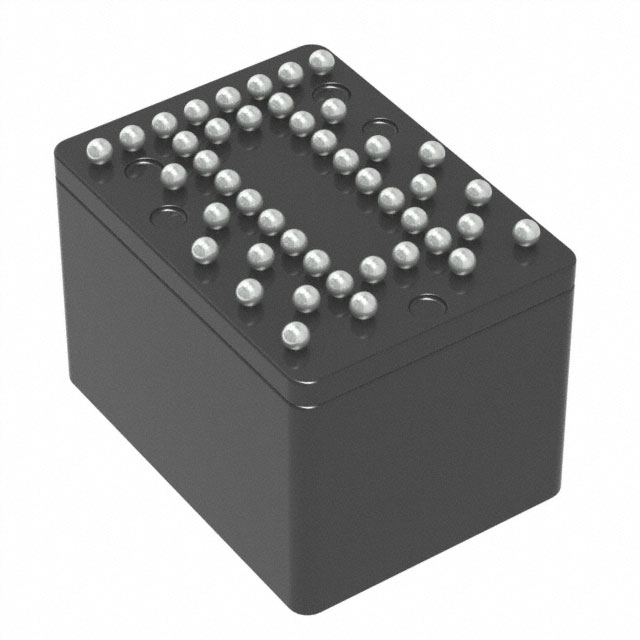
- Part No.:
- ADIS16475-2BMLZ
- Manufacturer:
- Analog Devices Inc.
- Category:
- IMUs (Inertial Measurement Units)
- Package:
- 44-BBGA Module
- Datasheet:
-
 ADIS16475-2BMLZ.pdf
- Description:
- 6 DOF PREC IMU, 8G (500 DPS DNR)
- Quantity:
- Payment:

- Shipping:

Inventory:3,694
Please send an inquiry. Send us your inquiry, and we will respond immediately.
Product details
Overview
ADIS16475-2BMLZ from Analog Devices is a precision, miniature MEMS inertial measurement unit (IMU) integrating triaxial gyroscope (±500°/sec range), triaxial accelerometer (±8 g), delta angle/delta velocity outputs, factory-calibrated bias and alignment, and SPI interface - deployed in high-dynamic industrial navigation and autonomous vehicle stabilization systems.
For engineers reviewing the ADIS16475-2BMLZ datasheet, ADIS16475-2BMLZ pinout, ADIS16475-2BMLZ application, or ADIS16475-2BMLZ equivalent, this page delivers verified specifications including 2.5°/hr in-run bias stability, 0.15°/√hr angular random walk, 44-ball BGA package (11 mm × 15 mm × 11 mm), 2000 SPS output rate, and −40°C to +105°C operating temperature - all confirmed from Analog Devices Rev. D datasheet.
Technical Context
The ADIS16475-2BMLZ implements a dual-stage digital signal chain: gyroscopes sample at 4100 Hz and accelerometers at 4000 Hz, both decimated to 2000 SPS output via Bartlett window FIR filtering and averaging. Factory calibration applies temperature-compensated 3×3 matrix correction for sensitivity, bias, axis misalignment (±0.1°), and linear-g effects on gyros and point-of-percussion correction on accelerometers.
It supports four external sync modes (direct, pulse, scaled, output) via SYNC pin, programmable self-test (inertial sensors and flash), automatic/manual bias correction, and data-ready (DR) signaling - all controlled through SPI-accessible registers including MSC_CTRL and FILT_CTRL with nonvolatile flash storage (10,000 write cycles, 20-year retention at 85°C).
Key Specifications
| Parameter | Value and Actual Design Meaning |
|---|---|
| Gyroscope Range | ±500°/sec - enables accurate angular rate capture in medium-dynamic applications like robotic arm control and stabilized camera gimbals. |
| In-Run Bias Stability | 2.5°/hr (1σ) - ensures minimal drift during extended operation without recalibration, critical for dead-reckoning navigation. |
| Angular Random Walk | 0.15°/√hr - defines low-frequency noise floor limiting orientation accuracy over short integration periods. |
| Accelerometer Range | ±8 g - supports high-shock environments including construction machinery and UAV takeoff/landing transients. |
| Output Rate | 2000 SPS - provides high temporal resolution for real-time closed-loop control in motion-critical systems. |
| Operating Temp | −40°C to +105°C - validated for under-hood automotive, industrial automation, and outdoor unmanned systems. |
| Supply Voltage | 3.0 V to 3.6 V - compatible with standard industrial 3.3 V power rails; 44–55 mA typical current draw. |
| Package | 44-ball BGA, 11 mm × 15 mm × 11 mm - compact footprint with thermal resistance θJA = 158.2°C/W for FR4-08 PCBs. |
Pinout & Package
The ADIS16475-2BMLZ uses a 44-ball BGA package (ML-44-13) with 0.8 mm ball pitch, designed for reflow soldering on standard FR4 PCBs. Ground planes occupy 32 balls; six VDD balls provide low-impedance power distribution; dedicated SPI signals (CS, SCLK, DIN, DOUT), DR, SYNC, and RST enable deterministic timing and synchronization.
| Pin/Terminal | Circuit Role | Design Meaning |
|---|---|---|
| CS, SCLK, DIN, DOUT | SPI Interface | Full-duplex serial communication at up to 2 MHz; supports burst reads and register configuration with tDAV = 25 ns DOUT validity. |
| DR | Data Ready Output | Active-low pulse synchronized to new 2000 SPS data availability - eliminates polling and enables precise acquisition timing. |
| SYNC | External Clock Input | Accepts 1.9–2.1 kHz clock for deterministic sampling alignment across distributed IMU networks. |
| RST | Hardware Reset | Active-low input requiring ≥1 µs pulse width; initiates 193 ms recovery with full register reset and calibration reload. |
| VDD (6 pins) | Power Supply | Distributed 3.0–3.6 V supply connections minimize IR drop and improve PSRR for analog sensor front-end stability. |
| GND (32 pins) | Reference Plane | Extensive ground ball array reduces impedance, suppresses EMI coupling, and stabilizes internal reference voltages. |
Key Features
| Feature | Design Value |
|---|---|
| Factory Calibration | Per-device 3×3 scale/alignment matrices and bias offsets stored in flash - eliminates system-level calibration effort and reduces integration time. |
| Delta Angle/Delta Velocity Outputs | Integrated angular displacement and linear velocity increments - directly usable for strapdown inertial navigation without host-side integration. |
| On-Demand Self-Test | Electromechanical excitation of MEMS structures validates sensor functionality pre-deployment - meets functional safety diagnostic coverage requirements. |
| Programmable FIR Filtering | Bartlett window filter configurable via FILT_CTRL register - balances noise reduction against latency for application-specific bandwidth trade-offs. |
| Temperature-Compensated Operation | Calibration valid across −40°C to +85°C; in-run bias stability and ARW specified at 25°C - ensures consistent performance in uncontrolled thermal environments. |
Applications
| Navigation & Stabilization | Unmanned Vehicles |
|---|---|
Use Scenario: High-accuracy attitude estimation in GNSS-denied indoor or urban canyon environments using inertial dead reckoning. IC Role / Device Role / Timing Role: Primary inertial sensor providing synchronized 2000 SPS delta-angle and delta-velocity outputs to navigation processor. Use Value: 2.5°/hr in-run bias stability and 0.15°/√hr angular random walk enable <1° heading error after 60 sec of GNSS outage. | Use Scenario: Real-time roll/pitch/yaw stabilization for VTOL drones during aggressive maneuvering and wind gust rejection. IC Role / Device Role / Timing Role: Core motion sensing element feeding closed-loop flight controller with low-latency, temperature-stable angular rate data. Use Value: ±0.1° axis-to-axis misalignment and factory linear-g compensation maintain control fidelity across 0–5 g acceleration profiles. |
| Industrial Robotics | Smart Agriculture Machinery |
Use Scenario: Joint angle feedback and end-effector orientation tracking in collaborative robot arms operating near human workspaces. IC Role / Device Role / Timing Role: Compact, shock-survivable (2000 g) IMU mounted directly on manipulator links for real-time kinematic modeling. Use Value: 44-ball BGA package (11 × 15 mm) fits constrained mechanical envelopes while −40°C to +105°C rating supports factory ambient extremes. | Use Scenario: Terrain-adaptive implement leveling and GPS-augmented guidance for autonomous tractors operating on uneven fields. IC Role / Device Role / Timing Role: Motion reference unit supplying tilt-compensated acceleration and angular rate to guidance ECU for slope-aware path planning. Use Value: ±8 g accelerometer range and 3.6 μg in-run bias stability ensure accurate grade measurement even during tractor suspension rebound events. |
Equivalent & Alternatives
The following parts are listed as comparable options for similar inertial measurement applications.
| Alternative Part | Technical Difference | Application Difference | Selection Advice |
|---|---|---|---|
| ADIS16477-2BMLZ | Same 44-ball BGA package and pinout; adds integrated magnetometer (±8 gauss) and higher gyro bias stability (1.8°/hr). | Enables full 9-DOF AHRS without external compass; suited for magnetic-field-stable indoor navigation. | Select ADIS16477-2BMLZ when heading accuracy requires absolute yaw reference and magnetic interference is minimal. |
| ADIS16505-2BMLZ | Lower cost variant with reduced gyro bias stability (4.0°/hr), no delta-angle/delta-velocity outputs, and simplified calibration model. | Targeted at cost-sensitive stabilization where full inertial navigation capability is not required. | Choose ADIS16505-2BMLZ for gimbal or platform stabilization where long-term orientation hold is secondary to budget constraints. |
Compared with ADIS16475-2BMLZ, ADIS16477-2BMLZ adds magnetometer-based yaw fusion but increases BOM cost and magnetic susceptibility, while ADIS16505-2BMLZ sacrifices navigation-grade bias stability and delta-output convenience for price-sensitive motion feedback.
Availability
ADIS16475-2BMLZ is available at Aetrix Electronics and suitable for industrial robotics, unmanned vehicle stabilization, and precision navigation systems requiring stable component supply, long-lifecycle support, and guaranteed traceability.
Supply support for ADIS16475-2BMLZ includes scheduled delivery planning, volume procurement assistance, BOM continuity management, traceable sourcing, and lifecycle availability coordination for OEM customers, industrial embedded developers, connected-device designers, and electronics production programs.
Manufacturer
Analog Devices is a global semiconductor leader specializing in high-performance analog, mixed-signal, and digital signal processing technologies for precision measurement and control.
The ADIS16475 product line delivers factory-calibrated, miniature MEMS IMUs optimized for industrial navigation, autonomous systems, and high-reliability motion sensing where size, accuracy, and thermal robustness are critical.
FAQ
What is the gyroscope dynamic range of the ADIS16475-2BMLZ?
The ADIS16475-2BMLZ has a gyroscope dynamic range of ±500°/sec, confirmed in Table 1 of the Rev. D datasheet. This range balances sensitivity and headroom for medium-dynamic applications such as robotic joint control and stabilized imaging platforms. It differs from the ±125°/sec (ADIS16475-1) and ±2000°/sec (ADIS16475-3) variants in the same family.
Does the ADIS16475-2BMLZ support external synchronization?
Yes, the ADIS16475-2BMLZ supports four external sync modes - direct, pulse, scaled, and output - via the SYNC pin, as defined in Register MSC_CTRL Bits[4:2]. This enables deterministic sampling alignment across multiple IMUs in distributed systems, with timing parameters including tSTDR = 256 µs and t1 = 5 µs for pulse mode.
What is the in-run bias stability specification for the ADIS16475-2BMLZ?
The ADIS16475-2BMLZ has an in-run bias stability of 2.5°/hr (1σ), per Table 1 of the Rev. D datasheet. This value reflects short-term bias repeatability during continuous operation and is critical for minimizing drift in inertial navigation solutions over tens of seconds without external aiding.
How many power supply pins does the ADIS16475-2BMLZ have, and what is their function?
The ADIS16475-2BMLZ has six dedicated VDD pins (A7, D6, E3, H1, J4, J5, K6 - note A7 is VDD per Table 5 correction) and 32 GND balls. These distributed supply connections reduce impedance, improve power supply rejection ratio (PSRR), and stabilize the analog front-end for low-noise inertial sensing across its −40°C to +105°C operating range.
Can the ADIS16475-2BMLZ perform self-test, and what does it verify?
Yes, the ADIS16475-2BMLZ supports on-demand self-test of both inertial sensors and flash memory via GLOB_CMD register commands. The inertial self-test electrostatically excites MEMS structures to validate mechanical integrity and signal chain functionality - a key diagnostic for functional safety compliance in industrial and automotive deployments.
ADIS16475-2BMLZ Specifications
- Product attributes
- Attribute value
- Manufacturer:
- Analog Devices Inc.
- Series:
- -
- Package/Case:
- 44-BBGA Module
- Packaging:
- Tray
- Product Status:
- Active
- Sensor Type:
- Accelerometer, Gyroscope, 6 Axis
- Output Type:
- SPI
- Operating Temperature:
- -40°C ~ 105°C
- Grade:
- -
- Qualification:
- -
- Supplier Device Package:
- 44-BGA Module
- Mounting Type:
- Surface Mount
ADIS16475-2BMLZ FAQ
1.How can I place an order for ADIS16475-2BMLZ through Aetrix?
Please submit a Request for Quotation (RFQ) for ADIS16475-2BMLZ on Aetrix. Our sales agent will provide a competitive quotation and guide you through the order confirmation once you accept the terms.
2.Are the price and stock information for ADIS16475-2BMLZ reliable?
The price and inventory of ADIS16475-2BMLZ are updated periodically and may fluctuate due to market conditions. Stock and pricing data are typically refreshed every 24 hours. Quotation validity for ADIS16475-2BMLZ is usually 5 days.
3.What payment methods are accepted for ADIS16475-2BMLZ?
We accept Wire Transfer, PayPal, Credit Card, Western Union, MoneyGram, and Escrow for ADIS16475-2BMLZ transactions.
Note: Certain payment methods may incur a processing fee.
4.How is shipping managed for ADIS16475-2BMLZ?
ADIS16475-2BMLZ orders can be shipped via leading logistics carriers, including DHL, UPS, FedEx, TNT, or Registered Mail.
Once your ADIS16475-2BMLZ order is processed, you will receive an email with the shipment details and tracking number.
Note: Tracking information may take up to 24 hours to appear. Express delivery typically takes 3–5 business days.
5.How can I obtain technical support or documentation for ADIS16475-2BMLZ?
For technical support, including ADIS16475-2BMLZ datasheets, pinout diagrams, or application guidance, please contact our engineering support team. They can provide detailed documentation and assistance for your ADIS16475-2BMLZ requirements.
6.How does Aetrix verify that ADIS16475-2BMLZ is sourced from the original manufacturer or authorized distributors?
All ADIS16475-2BMLZ products on Aetrix are procured from qualified distributors and authorized channels. Our dedicated quality assurance team conducts strict verification, including traceability checks and, if necessary, third-party testing. This ensures that ADIS16475-2BMLZ meets industry standards.
7.What is the process for return or replacement of ADIS16475-2BMLZ?
All ADIS16475-2BMLZ units undergo pre-shipment inspection (PSI). If there is an issue with ADIS16475-2BMLZ, returns or replacements are accepted under the following conditions:
1.Quantity discrepancies, incorrect items, or visible external defects (such as breakage or corrosion), acknowledged by Aetrix.
2.The issue is reported within 90 days of delivery.
3.The ADIS16475-2BMLZ part is unused and in its original packaging.
Return procedure for ADIS16475-2BMLZ:
1.Submit a request within 90 days.
2.Obtain a Return Material Authorization (RMA) from Aetrix.
ADIS16475-2BMLZ Tags

-
BMI323
Bosch Sensortec
-
ICM-42670-P
TDK InvenSense
-
ICM-42605
TDK InvenSense

-
LSM6DSO32TR
STMicroelectronics
-
LSM6DSOTR
STMicroelectronics
-
LSM6DSVTR
STMicroelectronics
-
LSM6DSRTR
STMicroelectronics
-
BMI270
Bosch Sensortec
-
LSM6DSOXTR
STMicroelectronics
-
LSM6DSV16XTR
STMicroelectronics
-
LSM6DSO16ISTR
STMicroelectronics
-
LSM303AGRTR
STMicroelectronics
Tech Hub

A practical engineering guide to 3.3V and 5V logic compatibility, input thresholds, resistor dividers, translator ICs, MOSFET level shifting, I2C pull-ups, timing limits and power-sequencing risks.

The 74HC595 uses push-pull logic outputs, while the TPIC6B595 uses 50 V open-drain DMOS sinks for higher-power loads. This guide compares timing, current limits, 3.3 V interfacing, load wiring, thermal…

The 74HC595 converts serial data into eight stable parallel outputs. This guide covers pin functions, shift and storage timing, OE and MR behavior, drive-current limits, cascading, voltage compatibilit…

A technical comparison of level-sensitive latches and edge-triggered flip-flops, covering timing windows, setup and hold limits, master–slave operation, time borrowing, race-through, HDL inference and…

A D latch stores one bit while Enable controls when data can pass. This reference covers gate-level operation, truth tables, transparency, setup and hold timing, LE versus OE, common ICs and practical …

An SR latch stores one bit through cross-coupled feedback. This engineering reference covers NOR and NAND implementations, truth tables, forbidden-state recovery, gated operation, switch debouncing, fa…

Latch circuits retain one bit through feedback. This technical reference covers SR and D latches, truth tables, transparency, timing limits, latch-versus-flip-flop behavior, applications and common log…

An engineering guide to LED driver operation, constant-current and constant-voltage outputs, linear and switching topologies, dimming, IC selection, calculations, replacement compatibility, and fault c…

Operational amplifier guide covering op amp basics, feedback, ideal vs real op amps, common configurations, buffer circuits, offset, bias current, gain-bandwidth, slew rate, rail-to-rail limits and sel…

Jumper cables guide covering safe connection order, red and black clamp placement, final ground connection, cable gauge, length, clamp quality, copper vs CCA cables, jump starter comparison and battery…


