
 My Inquiry
 My Account


STMicroelectronics LSM6DSO16ISTR
- Part No.:
- LSM6DSO16ISTR
- Manufacturer:
- STMicroelectronics
- Category:
- IMUs (Inertial Measurement Units)
- Package:
- 14-VFLGA
- Datasheet:
-
 LSM6DSO16ISTR.pdf
- Description:
- INEMO INERTIAL MODULE: ALWAYS-ON
- Quantity:
- Payment:

- Shipping:

Inventory:3,497
Please send an inquiry. Send us your inquiry, and we will respond immediately.
Product details
Overview
LSM6DSO16ISTR from STMicroelectronics is a 3-axis accelerometer and 3-axis gyroscope system-in-package with integrated ISPU (Intelligent Sensor Processing Unit), supporting ±2/±4/±8/±16 g full-scale acceleration, ±125–±2000 dps angular rate range, and ultra-low-power edge AI execution. It delivers 70 µg/√Hz noise in high-performance mode and operates at 0.59 mA (HP mode) for motion sensing in wearables and IoT endpoints.
For engineers reviewing the LSM6DSO16ISTR datasheet, LSM6DSO16ISTR pinout, LSM6DSO16ISTR application, or LSM6DSO16ISTR equivalent, key selection criteria include ISPU programmability (32 KB program RAM, 8 KB data RAM), dual-mode SPI/I²C interface with sensor hub support for up to 4 external sensors, and LGA-14L package compatibility with space-constrained personal electronics designs.
Technical Context
The LSM6DSO16ISTR integrates two independent MEMS sensing elements-capacitive accelerometers and vibratory gyroscopes-fabricated using ST's proprietary micromachining process, with CMOS interface circuitry trimmed per-die for matched sensitivity and offset. Its ISPU core implements STRED architecture, enabling C-programmable real-time signal processing directly on sensor data without host CPU involvement.
Sensor hub functionality routes data from internal accelerometer/gyro and up to four external I²C sensors into ISPU-accessible registers (e.g., ISPU_ARAW_X_L at 6880h, ISPU_ERAW_0_L at 6898h), while programmable interrupts (INT1/INT2) support wake-on-motion and algorithm-triggered events. All register access occurs via 8-bit interface registers mapped to the 32-bit ISPU address space.
Key Specifications
| Parameter | Value and Actual Design Meaning |
|---|---|
| Accelerometer FS Range | ±2/±4/±8/±16 g - selectable per application; ±2 g enables highest resolution (0.061 mg/LSB) for subtle motion detection |
| Gyroscope FS Range | ±125 to ±2000 dps - wide dynamic range supports both slow gestures (e.g., wrist rotation) and fast motion (e.g., sports impact) |
| ISPU Memory | 32 KB program RAM + 8 KB data RAM - sufficient for ML inference kernels (e.g., activity classification) without external memory |
| Current Consumption | 0.59 mA (HP mode, accel+gyro); 0.46 mA (LP mode) - enables multi-day battery life in always-on wearable use cases |
| Noise Density | 70 µg/√Hz (accel, HP mode); 3.4 mdps/√Hz (gyro, HP mode) - ensures clean signal acquisition for low-amplitude motion analytics |
| Output Data Rate | Up to 6.667 kHz (accel); up to 6.667 kHz (gyro) - supports high-fidelity vibration analysis and real-time gesture tracking |
| Interface | SPI (up to 10 MHz) and I²C (fast mode plus, 1 MHz) - dual protocol flexibility simplifies integration across MCU platforms |
| Operating Temp | −40 °C to +85 °C - qualified for consumer and industrial edge environments including smartwatches and remote controllers |
Pinout & Package
LSM6DSO16ISTR uses a 14-pin plastic land grid array (LGA-14L) package measuring 2.5 mm × 3.0 mm × 0.83 mm, optimized for ultra-thin wearable PCBs and requiring no through-hole vias.
| Pin | Circuit Role | Design Meaning |
|---|---|---|
| 1 SDO/SA0 | Serial data output / I²C address LSB | Configurable as SPI SDO (Mode 1) or SA0 for I²C device addressing (Mode 2); enables dual-interface routing on same footprint |
| 4 INT1 | Programmable interrupt output | Asserts on configurable events (e.g., FIFO threshold, motion detection, ISPU-generated flag) to wake host MCU from sleep |
| 5 Vdd_IO | I/O power supply | Independent 1.62–3.6 V rail decouples logic-level integrity from core Vdd (1.71–3.6 V), easing level-shifting in mixed-voltage systems |
| 8 Vdd | Analog/digital core supply | Powers MEMS sensing elements and internal digital logic; requires local 100 nF decoupling per datasheet TN0018 |
| 9 INT2 | Dual-function interrupt/output | Supports either second interrupt source or MDRDY (master-ready) signal when configured as I²C master for external sensors |
| 12 CS | Interface mode select | High = I²C enabled / SPI idle; Low = SPI enabled / I²C disabled - hardware-selectable protocol avoids software configuration overhead |
| 13 SCL/SPC | I²C clock / SPI clock | Shared pin reduces PCB routing complexity; internal logic auto-detects protocol based on CS state and bus activity |
| 14 SDA/SDI/SDO | I²C data / SPI input / SPI 3-wire output | Tri-function pin supports 2-wire I²C, 4-wire SPI, or 3-wire SPI - maximizes interface options within fixed pin count |
Key Features
| Feature | Design Value |
|---|---|
| Embedded ISPU Core | STRED-based 32-bit programmable processor with FPU, enabling on-sensor C-coded ML inference (e.g., fall detection) without host intervention |
| Sensor Hub Architecture | Hardware-accelerated aggregation of data from internal accel/gyro + up to 4 external I²C sensors (e.g., magnetometer, barometer) into unified ISPU-accessible buffers |
| Low-Power Motion Sensing | 0.46 mA current draw in LP mode with 208 Hz ODR - extends coin-cell battery life beyond 12 months in activity trackers |
| Self-Test Capability | Verified mechanical actuation (50–1700 mg accel; 20–700 dps gyro) confirms MEMS element integrity during production test and field diagnostics |
| Temperature Sensor | Integrated 16-bit ADC with 256 LSB/°C sensitivity and 52 Hz refresh - enables thermal compensation of IMU bias drift in real time |
| Robust Interface Timing | 10 MHz SPI and 1 MHz I²C fast-mode-plus compliance - ensures reliable communication with low-cost MCUs even under EMI-prone conditions |
Applications
| Smart Wearables | Sports Activity Tracking |
|---|---|
|
Use Scenario: Continuous wrist motion monitoring in fitness bands and smartwatches during daily activities and sleep. IC Role / Device Role / Timing Role: Primary inertial measurement unit (IMU) delivering synchronized 6-DoF motion data to host MCU for step counting, sleep staging, and gesture recognition. Use Value: ISPU executes lightweight neural networks locally to classify activity type (walking, running, cycling) with <10 µA added current, eliminating host CPU wake-ups and extending battery life. |
Use Scenario: Real-time biomechanical analysis during athletic training using compact sensor nodes attached to limbs or equipment. IC Role / Device Role / Timing Role: High-bandwidth (6.667 kHz) motion capture node feeding raw accel/gyro streams to edge AI models for gait analysis and fatigue detection. Use Value: 70 µg/√Hz noise floor and ±2000 dps gyro range preserve fidelity during rapid directional changes (e.g., tennis serve, basketball jump), enabling sub-degree angular accuracy. |
| IoT Remote Controllers | Smart Pen Digitization |
|
Use Scenario: Gesture-controlled TV remotes and presentation pointers requiring tilt, swipe, and shake detection. IC Role / Device Role / Timing Role: Edge motion classifier generating discrete commands (e.g., "volume up", "next slide") via INT1-triggered interrupts to reduce RF transmission frequency. Use Value: Programmable ISPU filters out hand tremor and detects intentional gestures with <50 ms latency, improving user experience versus cloud-dependent solutions. |
Use Scenario: Pressureless handwriting capture in styluses and digital notebooks where pen orientation and stroke dynamics define character shape. IC Role / Device Role / Timing Role: Precision 6-DoF motion tracker feeding quaternion-based orientation estimates to host for real-time ink rendering and palm rejection. Use Value: ±2 g accelerometer full-scale combined with 0.061 mg/LSB sensitivity resolves sub-millimeter pen tip displacement, enabling accurate cursive script reconstruction. |
Equivalent & Alternatives
The following parts are listed as comparable options for similar 6-DoF inertial sensing applications.
| Alternative Part | Technical Difference | Application Difference | Selection Advice |
|---|---|---|---|
| LSM6DSRTR | Lacks ISPU; retains same accel/gyro specs, pinout, and package but replaces programmable core with fixed-function finite-state machine | Suitable for cost-sensitive designs needing basic motion triggers (tap, tilt) but not custom ML inference | Select when firmware simplicity and BOM cost outweigh need for on-sensor AI - saves ~$0.15/unit at volume |
| BMI270 | Higher gyro noise (6.5 mdps/√Hz vs. 3.4 mdps/√Hz); includes built-in feature engine (not C-programmable) and lower max ODR (3.2 kHz) | Better suited for automotive-grade rollover detection than consumer gesture recognition due to AEC-Q100 qualification | Choose for functional safety-critical systems requiring ASIL-B compliance, not for edge AI workloads demanding ISPU flexibility |
Compared with LSM6DSRTR and BMI270, the LSM6DSO16ISTR uniquely combines production-ready C-programmable ISPU, lowest-in-class gyro noise, and 6.667 kHz ODR - making it the only option capable of deploying custom neural networks directly on the sensor die for latency-sensitive wearable AI.
Availability
LSM6DSO16ISTR is available at Aetrix Electronics and suitable for smart wearables, sports activity trackers, and IoT remote controllers requiring stable component supply, long-term lifecycle support, and RoHS-compliant packaging.
Supply support for LSM6DSO16ISTR includes scheduled delivery planning, volume procurement assistance, BOM continuity management, traceable sourcing, and lifecycle availability coordination for OEM customers, industrial embedded developers, connected-device designers, and electronics production programs.
Manufacturer
STMicroelectronics is a global semiconductor leader headquartered in Geneva, Switzerland, designing and manufacturing analog, microcontroller, power, and sensor solutions for industrial, automotive, and consumer markets.
The LSM6DSO16ISTR belongs to ST's iNEMO inertial module family, engineered specifically for ultra-low-power, intelligent edge sensing in battery-operated personal electronics - emphasizing on-sensor processing, minimal host dependency, and seamless integration into compact form factors.
FAQ
What development tools support ISPU programming for the LSM6DSO16ISTR?
ST provides the X-CUBE-MEMS1 software package with STM32CubeMX integration, ISPU compiler toolchain (based on GCC), and pre-validated libraries for activity recognition, gesture detection, and sensor fusion. Development requires STM32 Nucleo boards or ST's dedicated ISPU evaluation adapter (STEVAL-MKI215V1), and all ISPU firmware is loaded at power-up via SPI/I²C from host MCU memory.
How does the LSM6DSO16ISTR handle temperature-induced bias drift in accelerometer and gyroscope outputs?
The device integrates a factory-calibrated 16-bit temperature sensor (256 LSB/°C sensitivity) sampled at 52 Hz. ISPU firmware can read ISPU_TEMP_L/H registers (68A4h/68A5h) and apply real-time polynomial compensation to accel/gyro zero-rate and sensitivity coefficients stored in non-volatile memory, reducing temperature-induced error by >80% across −40 °C to +85 °C.
Can the LSM6DSO16ISTR operate as an I²C master to manage external sensors without host MCU intervention?
Yes - when configured in Mode 2 (MSDA/MSCL pins enabled), the LSM6DSO16ISTR acts as autonomous I²C master, polling up to four external sensors (e.g., magnetometer, humidity sensor) at programmable intervals and storing raw data in ISPU-accessible registers (ISPU_ERAW_0_L/H through ISPU_ERAW_3_L/H). This offloads timing-critical sensor synchronization from the host MCU.
What is the maximum sustained data throughput achievable using the LSM6DSO16ISTR's embedded FIFO?
The 3.2 kB FIFO supports burst reads at full ODR (6.667 kHz for both accel and gyro), enabling continuous 6-DoF streaming for ≥480 ms before overflow. With ISPU preprocessing, raw FIFO data can be compressed into feature vectors (e.g., RMS, peak count) reducing bandwidth by 90%, allowing sustained transmission over Bluetooth LE at 1 Mbps with <2% duty cycle.
LSM6DSO16ISTR Specifications
- Product attributes
- Attribute value
- Manufacturer:
- STMicroelectronics
- Series:
- -
- Package/Case:
- 14-VFLGA
- Packaging:
- Tape & Reel (TR)
- Product Status:
- Active
- Sensor Type:
- Accelerometer, Gyroscope, Temperature, 6 Axis
- Output Type:
- I2C, SPI
- Operating Temperature:
- -40°C ~ 85°C
- Grade:
- -
- Qualification:
- -
- Supplier Device Package:
- 14-LGA (2.5x3)
- Mounting Type:
- Surface Mount
LSM6DSO16ISTR FAQ
1.How can I place an order for LSM6DSO16ISTR through Aetrix?
Please submit a Request for Quotation (RFQ) for LSM6DSO16ISTR on Aetrix. Our sales agent will provide a competitive quotation and guide you through the order confirmation once you accept the terms.
2.Are the price and stock information for LSM6DSO16ISTR reliable?
The price and inventory of LSM6DSO16ISTR are updated periodically and may fluctuate due to market conditions. Stock and pricing data are typically refreshed every 24 hours. Quotation validity for LSM6DSO16ISTR is usually 5 days.
3.What payment methods are accepted for LSM6DSO16ISTR?
We accept Wire Transfer, PayPal, Credit Card, Western Union, MoneyGram, and Escrow for LSM6DSO16ISTR transactions.
Note: Certain payment methods may incur a processing fee.
4.How is shipping managed for LSM6DSO16ISTR?
LSM6DSO16ISTR orders can be shipped via leading logistics carriers, including DHL, UPS, FedEx, TNT, or Registered Mail.
Once your LSM6DSO16ISTR order is processed, you will receive an email with the shipment details and tracking number.
Note: Tracking information may take up to 24 hours to appear. Express delivery typically takes 3–5 business days.
5.How can I obtain technical support or documentation for LSM6DSO16ISTR?
For technical support, including LSM6DSO16ISTR datasheets, pinout diagrams, or application guidance, please contact our engineering support team. They can provide detailed documentation and assistance for your LSM6DSO16ISTR requirements.
6.How does Aetrix verify that LSM6DSO16ISTR is sourced from the original manufacturer or authorized distributors?
All LSM6DSO16ISTR products on Aetrix are procured from qualified distributors and authorized channels. Our dedicated quality assurance team conducts strict verification, including traceability checks and, if necessary, third-party testing. This ensures that LSM6DSO16ISTR meets industry standards.
7.What is the process for return or replacement of LSM6DSO16ISTR?
All LSM6DSO16ISTR units undergo pre-shipment inspection (PSI). If there is an issue with LSM6DSO16ISTR, returns or replacements are accepted under the following conditions:
1.Quantity discrepancies, incorrect items, or visible external defects (such as breakage or corrosion), acknowledged by Aetrix.
2.The issue is reported within 90 days of delivery.
3.The LSM6DSO16ISTR part is unused and in its original packaging.
Return procedure for LSM6DSO16ISTR:
1.Submit a request within 90 days.
2.Obtain a Return Material Authorization (RMA) from Aetrix.
LSM6DSO16ISTR Tags

-
BMI323
Bosch Sensortec
-
ICM-42670-P
TDK InvenSense
-
ICM-42605
TDK InvenSense

-
LSM6DSO32TR
STMicroelectronics
-
LSM6DSOTR
STMicroelectronics
-
LSM6DSVTR
STMicroelectronics
-
LSM6DSRTR
STMicroelectronics
-
BMI270
Bosch Sensortec
-
LSM6DSOXTR
STMicroelectronics
-
LSM6DSV16XTR
STMicroelectronics
-
LSM6DSO16ISTR
STMicroelectronics
-
LSM303AGRTR
STMicroelectronics
Tech Hub

Jumper cables guide covering safe connection order, red and black clamp placement, final ground connection, cable gauge, length, clamp quality, copper vs CCA cables, jump starter comparison and battery…

LDO regulator guide covering low dropout voltage, power dissipation, thermal design, PSRR, output noise, capacitor stability, adjustable LDO circuits, LDO vs buck converter and datasheet selection chec…

Conditional Access Module guide covering CAM meaning, CI/CI+ interface, smart card authorization, DVB security workflow, TV and set-top box compatibility, internal electronics, ESD protection, connecto…

Guide to electronic component obsolescence covering EOL risk, PCN/PDN notices, last-time buy planning, replacement options, form-fit-function validation, counterfeit risk and BOM lifecycle management.

18650 battery guide covering lithium-ion cell basics, 3.6V/3.7V voltage, 4.2V charging, mAh and Wh capacity, protected cells, chargers, BMS, series-parallel packs, holders, welding and sourcing checks.…

Hall effect sensor guide covering working principle, linear and digital sensors, Arduino circuits, current sensing, speed detection, automotive applications, A3144 examples, signal filtering and datash…

Product Change Notification guide for electronic components, covering PCN meaning, PCN vs PDN/EOL, common change types, risk levels, form-fit-function review, engineering validation, BOM control, LTB/L…

A practical guide to blend door actuators, covering HVAC function, symptoms, location, AC and heater issues, reset and calibration, replacement cost, electrical diagnosis, compatibility checks, and rep…

Engineering guide to Raspberry Pi alternatives, covering chip-level differences, Orange Pi, ROCK, Jetson, Banana Pi, NanoPi, Compute Module, Pico, GPIO, camera, HAT compatibility, and replacement risks…
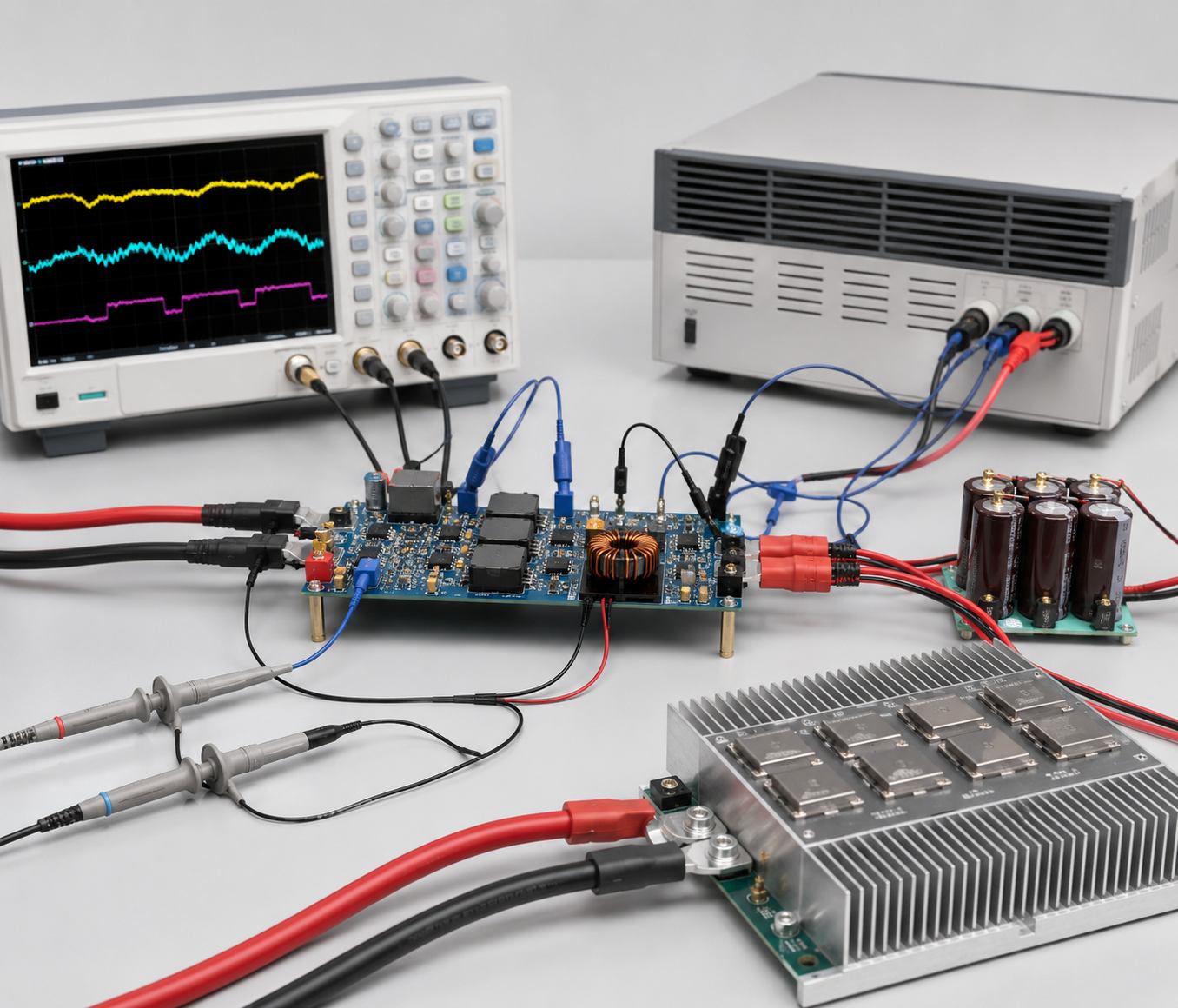
Engineering guide to dynamic load response testing for high-current buck converters, covering load step setup, slew rate, Vcore undershoot, overshoot, recovery time, probe location, output capacitors a…


