
 My Inquiry
 My Account


NXP Semiconductors ASC8850AETE
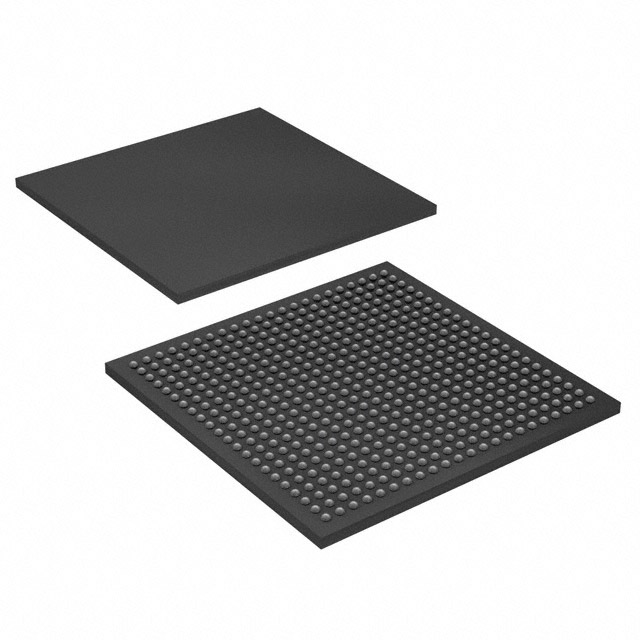
- Part No.:
- ASC8850AETE
- Manufacturer:
- NXP Semiconductors
- Category:
- Application Specific Microcontrollers
- Package:
- 484-TFBGA
- Datasheet:
-
 ASC8850AETE.pdf
- Description:
- IC VIDEO PROCESSOR ADV 484TFBGA
- Quantity:
- Payment:

- Shipping:

Inventory:2,804
Please send an inquiry. Send us your inquiry, and we will respond immediately.
Product details
Overview
ASC8850AETE from NXP Semiconductors is a high-performance IP camera SoC integrating ARM926EJ-S CPU (600 MHz), 12 MPixel sensor interface, dual H.264/MJPEG hardware encoders, and 24-bit RGB video output supporting 1080p @ 60 fps. It delivers full HD surveillance encoding with ROI, SVC-T, and intelligent video analytics including motion detection across 16 windows - deployed in networked security cameras requiring low-bitrate, low-power 1080p streaming.
For engineers reviewing the ASC8850AETE datasheet, ASC8850AETE pinout, ASC8850AETE application, or ASC8850AETE equivalent, this page provides verified technical context, package mapping to TFBGA-484, confirmed multi-stream compression capabilities (H.264 High Profile + MJPEG @ 1080p/45 fps), power consumption (<1.5 W at 1080p/60), and pin-to-pin compatibility within the ASC885xA family for seamless design migration.
Technical Context
The ASC8850AETE implements a dedicated image signal processing (ISP) pipeline with 3D noise reduction, motion-adaptive de-interlacing, digital WDR, and photometric/geometric lens correction. Its dual independent hardware encoders support simultaneous H.264 High Profile (1080p @ 35 fps) and MJPEG (1080p @ 45 fps) streams with CAVLC/CABAC entropy coding and up to two reference frames.
It integrates a 600 MHz ARM926EJ-S core with 16 KB I-Cache and 16 KB D-Cache running Linux 2.6, paired with dual 16-bit DDR-II/III channels (up to 2 GB total). Video input supports 16-bit raw CMOS/CCD sensors (up to 180 MHz pixel clock), BT.656 (8-channel), and BT.1120, while output includes 24-bit RGB, BT.1120, and BT.656 for HDMI/HD-SDI/LCD interfaces.
Key Specifications
| Parameter | Value and Actual Design Meaning |
|---|---|
| ARM CPU | ARM926EJ-S @ 600 MHz with 16 KB I-Cache and 16 KB D-Cache - enables real-time Linux-based firmware execution for ISP tuning and network stack handling. |
| Max Sensor Resolution | 12 MPixels with 16-bit raw input - supports high-resolution CMOS/CCD sensors for forensic-grade detail in surveillance applications. |
| H.264 Compression | High Profile up to 1080p @ 35 fps - delivers low-bitrate, high-fidelity streaming suitable for bandwidth-constrained IP networks. |
| MJPEG Compression | Baseline MJPEG up to 1080p @ 45 fps - provides low-latency, visually lossless substream for local monitoring or secondary analytics. |
| Video Output | 24-bit RGB @ 1080p @ 60 fps - drives HDMI/HD-SDI transmitters or LCD panels without external frame buffers. |
| Memory Interface | Dual 16-bit DDR-II/III channels @ 400 MHz - supports up to 2 GB SDRAM for multi-stream buffering and AI-accelerated analytics preprocessing. |
| Power Consumption | <1.5 W at 1080p @ 60 fps operation - enables fanless, compact camera housing designs with thermal reliability. |
| Cryptography | AES, TDES, SHA-256/384/512 - secures video transmission and firmware updates against tampering and eavesdropping. |
Pinout & Package
ASC8850AETE is housed in a compact TFBGA-484 package (15 mm × 15 mm, 0.65 mm pitch), optimized for high-density IP camera PCB layouts with thermal vias and controlled impedance routing for video and DDR interfaces.
| Pin/Terminal | Circuit Role | Design Meaning |
|---|---|---|
| VDD_CORE | Core power supply | 1.2 V supply for ARM926EJ-S and ISP logic - requires low-noise regulation and local decoupling. |
| VDD_IO | I/O power supply | 3.3 V or 1.8 V selectable for interface voltage compliance with sensors, DDR, and peripherals. |
| CLKIN | Reference clock input | 27 MHz crystal or oscillator input for PLL generation of system clocks (CPU, DDR, video). |
| SDRAM_DQ[15:0] | DDR data bus | 16-bit bidirectional data path per channel - routed as length-matched differential pairs for signal integrity. |
| VIDEO_OUT_R[7:0] | RGB red component output | 8-bit parallel RGB red data - part of 24-bit bus driving HDMI/SDI transmitter or LCD controller. |
| I2S0_SDI | Audio input data | Primary I2S channel for microphone or line-in audio - supports G.711, AAC, AMR codecs in firmware. |
| ETH_MDIO | PHY management interface | Serial MDIO bus for configuring integrated 10/100/1000 Ethernet MAC and external PHY. |
Key Features
| Feature | Design Value |
|---|---|
| ROI encoding | Enables selective H.264 compression on user-defined regions - reduces bandwidth by 30–50% while preserving critical scene areas like faces or license plates. |
| SVC-T temporal scalability | Supports four-tier temporal layers (1080p @ 30/15/7.5/3.75 fps) - allows adaptive bitrate streaming over fluctuating network conditions without re-encoding. |
| 16-window motion detection | Hardware-accelerated analytics engine - eliminates host CPU load for perimeter alerts, virtual fence breaches, and boundary crossing events. |
| Independent H.264 & MJPEG engines | Simultaneous encoding of primary H.264 stream and MJPEG substream - enables low-latency local preview while maintaining secure remote transmission. |
| Advanced AWB/AE/AF accumulators | On-chip statistical processors for real-time white balance, exposure, and focus control - reduces dependency on external microcontrollers and simplifies sensor bring-up. |
| Pin-to-pin compatibility | Direct replacement for ASC884xA and other ASC885xA variants - allows resolution, frame rate, or feature upgrades without PCB redesign. |
Applications
| Surveillance IP Cameras | Car Video Recorders |
|---|---|
Use Scenario: Outdoor PTZ dome camera capturing 12 MPixel wide-area coverage with night-vision IR illumination. IC Role / Device Role / Timing Role: Primary SoC handling raw sensor ingestion, ISP enhancement, dual-stream H.264/MJPEG encoding, and encrypted Ethernet transmission. Use Value: Delivers forensic-level detail at 1080p/35 fps while maintaining <1.5 W power draw - enabling PoE+ compliance and silent operation. | Use Scenario: Dual-camera automotive DVR recording front and cabin views with timestamped GPS overlay. IC Role / Device Role / Timing Role: Central encoder managing synchronized BT.656 inputs from two sensors, applying motion-adaptive de-interlacing and WDR correction. Use Value: Enables simultaneous 1080p/30 fps H.264 main stream + 720p/30 fps MJPEG backup stream - ensuring crash evidence integrity under vibration and lighting transitions. |
| Digital Video Recorders (8×D1) | Industrial Vision Systems |
Use Scenario: Embedded NVR appliance decoding and re-encoding up to eight D1 streams for centralized storage and remote viewing. IC Role / Device Role / Timing Role: Encoder subsystem providing scalable D1 @ 30 fps performance (7×D1 @ 30 fps confirmed) with hardware-based bitstream multiplexing. Use Value: Achieves 8×D1 throughput using single ASC8850AETE - reducing BOM count versus multi-chip solutions and lowering thermal footprint. | Use Scenario: Factory-floor machine vision camera inspecting PCB solder joints with sub-pixel accuracy and real-time defect flagging. IC Role / Device Role / Timing Role: Real-time ISP engine performing geometric lens distortion correction, gamma linearization, and privacy masking on ROI. Use Value: Eliminates need for external FPGA-based preprocessing - cuts latency to <10 ms and supports deterministic trigger-to-output timing for closed-loop control. |
Equivalent & Alternatives
The following parts are listed as comparable options for similar IP camera SoC applications.
| Alternative Part | Technical Difference | Application Difference | Selection Advice |
|---|---|---|---|
| ASC8851AETE | Same TFBGA-484 package, identical pinout, but rated for 1080p @ 45 fps H.264 and 9×D1 @ 30 fps - higher compression throughput. | Better suited for multi-sensor aggregation or higher-frame-rate analytics pipelines where bandwidth headroom is critical. | Select ASC8851AETE when >35 fps 1080p H.264 encoding or >7×D1 throughput is required; ASC8850AETE remains optimal for cost-sensitive 1080p/35 fps deployments. |
| ASC8849AETE | Lower 500 MHz ARM926EJ-S clock, max 5 MPixel sensor support, and 1080p @ 25 fps H.264 - reduced compute and memory bandwidth. | Targeted at entry-level 1080p/25 fps fixed-focus cameras with basic motion detection and no SVC-T or ROI requirements. | Choose ASC8849AETE for lower-power, lower-cost designs where 12 MPixel support and advanced encoding features are unnecessary. |
Compared with ASC8851AETE and ASC8849AETE, the ASC8850AETE balances 12 MPixel sensor capability, 1080p/35 fps H.264 encoding, and <1.5 W power consumption - making it the optimal choice for mainstream HD surveillance cameras needing upgrade path compatibility without over-spec'ing performance or cost.
Availability
ASC8850AETE is available at Aetrix Electronics and suitable for surveillance IP cameras, car video recorders, and industrial vision systems requiring stable component supply, long-term lifecycle assurance, and consistent manufacturing traceability.
Supply support for ASC8850AETE includes scheduled delivery planning, volume procurement assistance, BOM continuity management, traceable sourcing, and lifecycle availability coordination for OEM customers, industrial embedded developers, connected-device designers, and electronics production programs.
Manufacturer
NXP Semiconductors is a global semiconductor leader focused on secure connectivity solutions for automotive, industrial, and IoT applications, with deep expertise in embedded processing and edge intelligence.
The ASC885xA family - including ASC8850AETE - was engineered specifically for high-definition IP camera systems, integrating ISP, multi-standard video encoding, and network security into a single SoC to accelerate time-to-market for OEM surveillance equipment.
FAQ
What is the maximum H.264 encoding resolution and frame rate supported by ASC8850AETE?
The ASC8850AETE supports H.264 High Profile encoding up to 1080p @ 35 fps or 7×D1 @ 30 fps, as confirmed in the official NXP selection guide. This performance level is enabled by its dedicated hardware encoder with CABAC/CAVLC entropy coding and up to two reference frames - sufficient for full HD streaming in bandwidth-constrained environments without compromising visual fidelity.
Does ASC8850AETE support both H.264 and MJPEG encoding simultaneously?
Yes, ASC8850AETE integrates independent H.264 and MJPEG hardware encoding engines. It can generate concurrent streams such as H.264 (1080p @ 30 fps) plus MJPEG (1080p @ 45 fps), enabling low-latency local preview while maintaining secure, compressed remote transmission - a key requirement for professional surveillance systems using the ASC8850AETE.
What video input interfaces does ASC8850AETE support?
ASC8850AETE supports 16-bit raw Bayer/CMYG sensor input (up to 12 MPixels, 180 MHz pixel clock), BT.656 (8-channel), BT.1120, and BT.601. It also interfaces with external HDMI/HD-SDI receivers and analog front-ends for CCD sensors - providing flexible integration across CMOS and legacy imaging technologies in designs using the ASC8850AETE.
Is ASC8850AETE pin-to-pin compatible with other members of the ASC885xA family?
Yes, ASC8850AETE is fully pin-to-pin and software-compatible with ASC8851AETE and ASC8852AETE, as stated in NXP documentation. This allows direct substitution to scale frame rate or resolution without PCB changes - a critical advantage when upgrading existing camera platforms that already use the ASC8850AETE or adjacent variants.
What memory configurations does ASC8850AETE support?
ASC8850AETE supports two independent 16-bit DDR-II or DDR-III channels, each configurable up to 1 GB DDR-III or 512 MB DDR-II, operating at 400 MHz. This enables up to 2 GB total SDRAM capacity - essential for multi-stream buffering, ISP frame stores, and Linux application memory in systems built around the ASC8850AETE.
ASC8850AETE Specifications
- Product attributes
- Attribute value
- Manufacturer:
- NXP Semiconductors
- Series:
- -
- Package/Case:
- 484-TFBGA
- Packaging:
- Tray
- Product Status:
- Obsolete
- Programmable:
- Not Verified
- Applications:
- Embedded Multimedia Communication, Security and Entertainment
- Core Processor:
- ARM9®
- Program Memory Type:
- -
- Controller Series:
- -
- RAM Size:
- -
- Interface:
- EBI/EMI, Ethernet, I2S, IrDA, SD/MMC, SPI, UART/USART, USB OTG
- Number of I/O:
- -
- Voltage - Supply:
- -
- Operating Temperature:
- -
- Grade:
- -
- Qualification:
- -
- Mounting Type:
- Surface Mount
- Supplier Device Package:
- 484-TFBGA (15x15)
ASC8850AETE FAQ
1.How can I place an order for ASC8850AETE through Aetrix?
Please submit a Request for Quotation (RFQ) for ASC8850AETE on Aetrix. Our sales agent will provide a competitive quotation and guide you through the order confirmation once you accept the terms.
2.Are the price and stock information for ASC8850AETE reliable?
The price and inventory of ASC8850AETE are updated periodically and may fluctuate due to market conditions. Stock and pricing data are typically refreshed every 24 hours. Quotation validity for ASC8850AETE is usually 5 days.
3.What payment methods are accepted for ASC8850AETE?
We accept Wire Transfer, PayPal, Credit Card, Western Union, MoneyGram, and Escrow for ASC8850AETE transactions.
Note: Certain payment methods may incur a processing fee.
4.How is shipping managed for ASC8850AETE?
ASC8850AETE orders can be shipped via leading logistics carriers, including DHL, UPS, FedEx, TNT, or Registered Mail.
Once your ASC8850AETE order is processed, you will receive an email with the shipment details and tracking number.
Note: Tracking information may take up to 24 hours to appear. Express delivery typically takes 3–5 business days.
5.How can I obtain technical support or documentation for ASC8850AETE?
For technical support, including ASC8850AETE datasheets, pinout diagrams, or application guidance, please contact our engineering support team. They can provide detailed documentation and assistance for your ASC8850AETE requirements.
6.How does Aetrix verify that ASC8850AETE is sourced from the original manufacturer or authorized distributors?
All ASC8850AETE products on Aetrix are procured from qualified distributors and authorized channels. Our dedicated quality assurance team conducts strict verification, including traceability checks and, if necessary, third-party testing. This ensures that ASC8850AETE meets industry standards.
7.What is the process for return or replacement of ASC8850AETE?
All ASC8850AETE units undergo pre-shipment inspection (PSI). If there is an issue with ASC8850AETE, returns or replacements are accepted under the following conditions:
1.Quantity discrepancies, incorrect items, or visible external defects (such as breakage or corrosion), acknowledged by Aetrix.
2.The issue is reported within 90 days of delivery.
3.The ASC8850AETE part is unused and in its original packaging.
Return procedure for ASC8850AETE:
1.Submit a request within 90 days.
2.Obtain a Return Material Authorization (RMA) from Aetrix.
ASC8850AETE Tags
-
CYPD3175-24LQXQ
Infineon Technologies

-
SLB9672VU20FW1523XTMA1
Infineon Technologies
-
SLB9670VQ20FW785XTMA1
Infineon Technologies
-
SLB9672XU20FW1523XTMA1
Infineon Technologies
-
SLB9673XU20FW2613XTMA1
Infineon Technologies
-
CYPD3125-40LQXIT
Infineon Technologies
-
AT97SC3204-U2A1A-20
Microchip Technology
-
AT97SC3204-U2A1A-10
Microchip Technology
-
SLM9670AQ20FW1311XTMA1
Infineon Technologies
-
SLB9672XU20FW1613XTMA1
Infineon Technologies
-
SLB9672AU20FW1613XTMA1
Infineon Technologies
-
SLB9673AU20FW2613XTMA1
Infineon Technologies
Tech Hub

A practical engineering guide to 3.3V and 5V logic compatibility, input thresholds, resistor dividers, translator ICs, MOSFET level shifting, I2C pull-ups, timing limits and power-sequencing risks.

The 74HC595 uses push-pull logic outputs, while the TPIC6B595 uses 50 V open-drain DMOS sinks for higher-power loads. This guide compares timing, current limits, 3.3 V interfacing, load wiring, thermal…

The 74HC595 converts serial data into eight stable parallel outputs. This guide covers pin functions, shift and storage timing, OE and MR behavior, drive-current limits, cascading, voltage compatibilit…

A technical comparison of level-sensitive latches and edge-triggered flip-flops, covering timing windows, setup and hold limits, master–slave operation, time borrowing, race-through, HDL inference and…

A D latch stores one bit while Enable controls when data can pass. This reference covers gate-level operation, truth tables, transparency, setup and hold timing, LE versus OE, common ICs and practical …

An SR latch stores one bit through cross-coupled feedback. This engineering reference covers NOR and NAND implementations, truth tables, forbidden-state recovery, gated operation, switch debouncing, fa…

Latch circuits retain one bit through feedback. This technical reference covers SR and D latches, truth tables, transparency, timing limits, latch-versus-flip-flop behavior, applications and common log…

An engineering guide to LED driver operation, constant-current and constant-voltage outputs, linear and switching topologies, dimming, IC selection, calculations, replacement compatibility, and fault c…

Operational amplifier guide covering op amp basics, feedback, ideal vs real op amps, common configurations, buffer circuits, offset, bias current, gain-bandwidth, slew rate, rail-to-rail limits and sel…

Jumper cables guide covering safe connection order, red and black clamp placement, final ground connection, cable gauge, length, clamp quality, copper vs CCA cables, jump starter comparison and battery…


