
 My Inquiry
 My Account


NXP Semiconductors ASC8850ET/M2,551
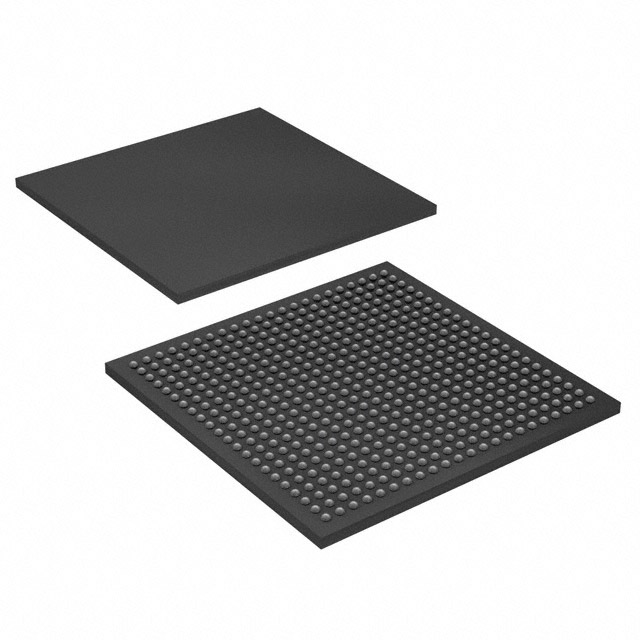
- Part No.:
- ASC8850ET/M2,551
- Manufacturer:
- NXP Semiconductors
- Category:
- Application Specific Microcontrollers
- Package:
- 484-TFBGA
- Datasheet:
-
 ASC8850ET/M2,551.pdf
- Description:
- IC IP CAMERA MPU SXGA TFBGA
- Quantity:
- Payment:

- Shipping:

Inventory:3,021
Please send an inquiry. Send us your inquiry, and we will respond immediately.
Product details
Overview
ASC8850ET/M2,551 from NXP Semiconductors is a full HD IP camera system-on-chip (SoC) integrating ARM926EJ-S CPU (600 MHz), dual-channel DDR-II/III SDRAM controller (up to 2 GB total), H.264/MPEG-4/MJPEG video encoder (1080p @ 45 fps), and 10/100/1000 Ethernet MAC. It processes raw image data up to 12 MPixels, performs digital WDR, and supports BT.656/BT.1120 video input for security IP cameras.
For engineers reviewing the ASC8850ET/M2,551 datasheet, ASC8850ET/M2,551 pinout, ASC8850ET/M2,551 application, or ASC8850ET/M2,551 equivalent, key selection factors include multi-stream H.264 encoding performance, 24-bit RGB video output at 1080p @ 60 fps, hardware-accelerated image processing pipeline, AES/SHA encryption support, and TFBGA-484 (15 × 15 mm, 0.65 mm pitch) package compatibility with reference designs.
Technical Context
The ASC8850ET/M2,551 implements a dedicated hardware video compression engine supporting Baseline/Main/High Profile H.264 with CABAC/CAVLC, up to 2 reference frames, ROI encoding, and SVC-T for temporal scalability. Its image processing pipeline includes auto exposure, auto white balance, digital WDR, lens distortion correction, and motion detection across 16 windows.
It integrates a 600 MHz ARM926EJ-S core with 16 KB I-cache and 16 KB D-cache, dual 16-bit DDR-II/III memory channels (400 MHz), five I2S interfaces (four input-only, one bidirectional), and a 10/100/1000 Ethernet MAC with MII/GMII/RGMII support - all optimized for low-latency, high-fidelity video streaming in resource-constrained embedded vision systems.
Key Specifications
| Parameter | Value and Actual Design Meaning |
|---|---|
| CPU Core | ARM926EJ-S @ 600 MHz with 16 KB I-cache and 16 KB D-cache for real-time Linux 2.6 execution |
| Max Sensor Input | 12 MPixels raw Bayer/CMYG @ 16-bit, pixel clock ≤180 MHz - enables ultra-HD CMOS sensor interfacing |
| H.264 Encoding | 1080p @ 45 fps or D1 @ 270 fps - supports multi-stream surveillance with temporal scalability (SVC-T) |
| Video Output | 24-bit RGB @ 1080p @ 60 fps or BT.1120 @ 1080p @ 60 fps - drives HDMI/HD-SDI transmitters or LCD panels directly |
| Memory Interface | Dual 16-bit DDR-II/III channels, each up to 1 GB DDR-III @ 400 MHz - delivers ≥6.4 GB/s bandwidth for video buffering |
| Security Features | AES, TDES, DES, SHA-1/224/256/384/512 - enables secure firmware updates and encrypted video streams |
| Package | TFBGA-484, 15 × 15 mm, 0.65 mm pitch - compact footprint compatible with IPC reference layouts |
Pinout & Package
ASC8850ET/M2,551 is housed in a 484-ball TFBGA package (15 mm × 15 mm, 0.65 mm ball pitch) with 24-bit RGB video output pins, dual DDR-II/III memory bus lanes, 10/100/1000 Ethernet MAC interface (MII/GMII/RGMII), five I2S channels, and 20 GPIOs for PTZ control, IR-cut, and alarm signaling.
| Pin/Terminal | Circuit Role | Design Meaning |
|---|---|---|
| VDD_DDR / VSS_DDR | DDR memory power/ground | Separate 1.5 V/1.35 V supply domains for stable dual-channel DDR-III operation |
| CLKIN / CLKOUT | System clock input/output | Accepts 27 MHz crystal input; generates internal PLL clocks for CPU, video, and Ethernet subsystems |
| RGB[23:0] | 24-bit parallel video output | Drives HDMI Tx or LCD controller at 1080p @ 60 fps with programmable timing and polarity |
| ETH_MDIO / ETH_MDC | Ethernet PHY management | Configures external 10/100/1000 PHY via IEEE 802.3 clause 22/45 register access |
| I2S0_SDIN / I2S0_SCLK | Primary audio input interface | Supports G.711/AAC/G.726 codecs with sample rates up to 48 kHz for synchronized audio/video capture |
Key Features
| Feature | Design Value |
|---|---|
| Dedicated H.264 Encoder | Hardware-accelerated encoding at 1080p @ 45 fps with SVC-T and ROI - eliminates CPU load for multi-resolution streaming |
| Digital WDR Engine | Real-time wide dynamic range processing under low-light conditions - preserves detail in both shadows and highlights without external sensors |
| Configurable Image Pipeline | Programmable gamma correction, noise reduction, edge enhancement, and lens distortion correction - enables OEM-specific picture tuning |
| Multi-Interface Connectivity | Five I2S, four UARTs (two full-duplex), two SPI, two SDIO, PCIe 1.1, USB 2.0 OTG - supports diverse peripheral ecosystems including PTZ, audio codecs, and storage |
| Secure Boot & Encryption | On-chip AES/SHA engines and secure boot ROM - ensures authenticated firmware loading and end-to-end video stream confidentiality |
Applications
| Security IP Camera | Video Conferencing System |
|---|---|
Use Scenario: Outdoor surveillance with variable lighting and motion-triggered recording. IC Role / Device Role / Timing Role: Central SoC handling sensor interface, WDR-enhanced image processing, dual-stream H.264 encoding (1080p main + 720p sub), and encrypted Ethernet transmission. Use Value: Enables 1080p @ 30 fps + 720p @ 30 fps simultaneous encoding at ~1.2 W, reducing thermal design complexity while maintaining forensic-grade detail. | Use Scenario: Compact desktop video conferencing unit with local audio playback and HDMI display output. IC Role / Device Role / Timing Role: Video/audio co-processor managing BT.656 sensor input, five-channel I2S audio (including bidirectional playback), and 24-bit RGB HDMI output at 1080p @ 60 fps. Use Value: Eliminates need for external video encoder or audio codec ICs, reducing BOM count and PCB area by consolidating functions into single TFBGA-484 package. |
| Industrial Vision System | Video Door Phone |
Use Scenario: Factory-floor machine vision inspection requiring precise geometric correction and high-speed frame capture. IC Role / Device Role / Timing Role: High-fidelity image processor performing photometric/lens distortion correction, motion detection across 16 regions, and 12 MPixel raw data ingestion. Use Value: Delivers sub-pixel accuracy in measurement applications via hardware-accelerated geometric correction - no FPGA or GPU required. | Use Scenario: Residential door station with night vision, IR-cut switching, and two-way audio over PoE. IC Role / Device Role / Timing Role: Integrated controller managing IR LED timing, GPIO-based IR-cut filter actuation, G.711 audio encoding/decoding, and 10/100 Ethernet with PoE classification. Use Value: Reduces component count by embedding Ethernet MAC, audio processing, and GPIO control - simplifies UL/cUL safety certification for Class 2 PoE systems. |
Equivalent & Alternatives
The following parts are listed as comparable options for similar IP camera SoC applications.
| Alternative Part | Technical Difference | Application Difference | Selection Advice |
|---|---|---|---|
| ASC8851ET/M2,551 | Same package and pinout; higher H.264 encoding performance (1080p @ 45 fps vs. ASC8850ET/M2,551's 1080p @ 30 fps in single-stream mode) | Targeted at premium multi-camera NVR edge nodes requiring higher frame-rate primary streams | Select ASC8851ET/M2,551 when >30 fps 1080p encoding is mandatory and thermal budget allows marginally higher power draw |
| ASC8849ET/M2,551 | Lower CPU frequency (500 MHz vs. 600 MHz); max sensor resolution limited to 5 MPixels; single DDR channel (vs. dual) | Suitable for cost-sensitive 720p or D1-class cameras with simpler image processing requirements | Choose ASC8849ET/M2,551 for entry-level IP cameras where 1080p encoding is not required and memory bandwidth demand is ≤3.2 GB/s |
Compared with ASC8849ET/M2,551 and ASC8851ET/M2,551, the ASC8850ET/M2,551 provides balanced performance: dual DDR channels and 12 MPixel sensor support enable future-proof 1080p+ designs, while its 1080p @ 30 fps encoding meets mainstream surveillance latency and quality requirements without the thermal overhead of the ASC8851.
Availability
ASC8850ET/M2,551 is available at Aetrix Electronics and suitable for security IP cameras, industrial vision systems, video conferencing terminals, and video door phones requiring stable component supply, long-term lifecycle support, and validated reference designs.
Supply support for ASC8850ET/M2,551 includes scheduled delivery planning, volume procurement assistance, BOM continuity management, traceable sourcing, and lifecycle availability coordination for OEM customers, industrial embedded developers, connected-device designers, and electronics production programs.
Manufacturer
NXP Semiconductors is a global semiconductor company headquartered in Eindhoven, Netherlands, specializing in secure connectivity solutions for automotive, industrial, and IoT markets.
The ASC885x product line was designed specifically for full HD IP camera applications, integrating video encoding, image processing, network connectivity, and security features into a single SoC to accelerate time-to-market for OEMs building intelligent vision systems.
FAQ
What video compression standards does the ASC8850ET/M2,551 support?
The ASC8850ET/M2,551 supports H.264 (Baseline, Main, and High Profiles with CABAC/CAVLC), MPEG-4 Simple Profile, and MJPEG Baseline. It achieves up to 1080p @ 45 fps H.264 encoding, 720p @ 30 fps MPEG-4, and 1080p @ 40 fps MJPEG - all with hardware acceleration to offload the ARM926EJ-S CPU. The ASC8850ET/M2,551 also enables SVC-T for temporal scalability and ROI encoding for bandwidth-efficient streaming.
Does the ASC8850ET/M2,551 include an integrated Ethernet PHY?
No, the ASC8850ET/M2,551 integrates only a 10/100/1000 Ethernet MAC with MII/GMII/RGMII interfaces; an external PHY is required for physical layer connectivity. This architecture allows designers to select PHYs with specific features such as Power over Ethernet (PoE) classification, extended temperature range, or low EMI emissions. The ASC8850ET/M2,551's MAC is fully compliant with IEEE 802.3 standards and supports standard MDIO/MDC management.
What is the maximum supported memory configuration for the ASC8850ET/M2,551?
The ASC8850ET/M2,551 supports two independent 16-bit DDR-II or DDR-III memory channels, each configurable up to 1 GB DDR-III @ 400 MHz or 512 MB DDR-II @ 333 MHz, for a total capacity of up to 2 GB. This dual-channel architecture delivers ≥6.4 GB/s peak bandwidth - sufficient for concurrent 1080p video encoding, image processing, and Linux OS operation. The ASC8850ET/M2,551 requires matched DIMMs or discrete chips with strict timing compliance per JEDEC specifications.
Can the ASC8850ET/M2,551 interface directly with CMOS image sensors?
Yes, the ASC8850ET/M2,551 supports direct connection to parallel-output CMOS image sensors via its 16-bit raw data interface (Bayer/CMYG) with pixel clock up to 180 MHz. It accepts 12–16-bit data widths and includes programmable sync signals (HSYNC/VSYNC), pixel clock gating, and data alignment logic. For CCD sensors, an external analog front-end is required. The ASC8850ET/M2,551 also supports BT.656, BT.1120, and HDMI input through dedicated video decoder interfaces.
Is the ASC8850ET/M2,551 pin-compatible with other members of the ASC885x family?
Yes, the ASC8850ET/M2,551 is pin-to-pin compatible with ASC8851ET/M2,551 and shares the same TFBGA-484 package and signal mapping. This allows hardware reuse across performance tiers - for example, upgrading from ASC8850ET/M2,551 to ASC8851ET/M2,551 requires only firmware and thermal design adjustments. However, ASC8850ET/M2,551 is not pin-compatible with ASC884x devices due to differences in memory bus width and peripheral signal allocation.
ASC8850ET/M2,551 Specifications
- Product attributes
- Attribute value
- Manufacturer:
- NXP Semiconductors
- Series:
- -
- Package/Case:
- 484-TFBGA
- Packaging:
- Tray
- Product Status:
- Obsolete
- Programmable:
- Not Verified
- Applications:
- Embedded Multimedia Communication, Security and Entertainment
- Core Processor:
- ARM9®
- Program Memory Type:
- -
- Controller Series:
- -
- RAM Size:
- -
- Interface:
- EBI/EMI, Ethernet, I2S, IrDA, SD/MMC, SPI, UART/USART, USB OTG
- Number of I/O:
- -
- Voltage - Supply:
- -
- Operating Temperature:
- -
- Grade:
- -
- Qualification:
- -
- Mounting Type:
- Surface Mount
- Supplier Device Package:
- 484-TFBGA (15x15)
ASC8850ET/M2,551 FAQ
1.How can I place an order for ASC8850ET/M2,551 through Aetrix?
Please submit a Request for Quotation (RFQ) for ASC8850ET/M2,551 on Aetrix. Our sales agent will provide a competitive quotation and guide you through the order confirmation once you accept the terms.
2.Are the price and stock information for ASC8850ET/M2,551 reliable?
The price and inventory of ASC8850ET/M2,551 are updated periodically and may fluctuate due to market conditions. Stock and pricing data are typically refreshed every 24 hours. Quotation validity for ASC8850ET/M2,551 is usually 5 days.
3.What payment methods are accepted for ASC8850ET/M2,551?
We accept Wire Transfer, PayPal, Credit Card, Western Union, MoneyGram, and Escrow for ASC8850ET/M2,551 transactions.
Note: Certain payment methods may incur a processing fee.
4.How is shipping managed for ASC8850ET/M2,551?
ASC8850ET/M2,551 orders can be shipped via leading logistics carriers, including DHL, UPS, FedEx, TNT, or Registered Mail.
Once your ASC8850ET/M2,551 order is processed, you will receive an email with the shipment details and tracking number.
Note: Tracking information may take up to 24 hours to appear. Express delivery typically takes 3–5 business days.
5.How can I obtain technical support or documentation for ASC8850ET/M2,551?
For technical support, including ASC8850ET/M2,551 datasheets, pinout diagrams, or application guidance, please contact our engineering support team. They can provide detailed documentation and assistance for your ASC8850ET/M2,551 requirements.
6.How does Aetrix verify that ASC8850ET/M2,551 is sourced from the original manufacturer or authorized distributors?
All ASC8850ET/M2,551 products on Aetrix are procured from qualified distributors and authorized channels. Our dedicated quality assurance team conducts strict verification, including traceability checks and, if necessary, third-party testing. This ensures that ASC8850ET/M2,551 meets industry standards.
7.What is the process for return or replacement of ASC8850ET/M2,551?
All ASC8850ET/M2,551 units undergo pre-shipment inspection (PSI). If there is an issue with ASC8850ET/M2,551, returns or replacements are accepted under the following conditions:
1.Quantity discrepancies, incorrect items, or visible external defects (such as breakage or corrosion), acknowledged by Aetrix.
2.The issue is reported within 90 days of delivery.
3.The ASC8850ET/M2,551 part is unused and in its original packaging.
Return procedure for ASC8850ET/M2,551:
1.Submit a request within 90 days.
2.Obtain a Return Material Authorization (RMA) from Aetrix.
ASC8850ET/M2,551 Tags
-
CYPD3175-24LQXQ
Infineon Technologies

-
SLB9672VU20FW1523XTMA1
Infineon Technologies
-
SLB9670VQ20FW785XTMA1
Infineon Technologies
-
SLB9672XU20FW1523XTMA1
Infineon Technologies
-
SLB9673XU20FW2613XTMA1
Infineon Technologies
-
CYPD3125-40LQXIT
Infineon Technologies
-
AT97SC3204-U2A1A-20
Microchip Technology
-
AT97SC3204-U2A1A-10
Microchip Technology
-
SLM9670AQ20FW1311XTMA1
Infineon Technologies
-
SLB9672XU20FW1613XTMA1
Infineon Technologies
-
SLB9672AU20FW1613XTMA1
Infineon Technologies
-
SLB9673AU20FW2613XTMA1
Infineon Technologies
Tech Hub

A practical engineering guide to 3.3V and 5V logic compatibility, input thresholds, resistor dividers, translator ICs, MOSFET level shifting, I2C pull-ups, timing limits and power-sequencing risks.

The 74HC595 uses push-pull logic outputs, while the TPIC6B595 uses 50 V open-drain DMOS sinks for higher-power loads. This guide compares timing, current limits, 3.3 V interfacing, load wiring, thermal…

The 74HC595 converts serial data into eight stable parallel outputs. This guide covers pin functions, shift and storage timing, OE and MR behavior, drive-current limits, cascading, voltage compatibilit…

A technical comparison of level-sensitive latches and edge-triggered flip-flops, covering timing windows, setup and hold limits, master–slave operation, time borrowing, race-through, HDL inference and…

A D latch stores one bit while Enable controls when data can pass. This reference covers gate-level operation, truth tables, transparency, setup and hold timing, LE versus OE, common ICs and practical …

An SR latch stores one bit through cross-coupled feedback. This engineering reference covers NOR and NAND implementations, truth tables, forbidden-state recovery, gated operation, switch debouncing, fa…

Latch circuits retain one bit through feedback. This technical reference covers SR and D latches, truth tables, transparency, timing limits, latch-versus-flip-flop behavior, applications and common log…

An engineering guide to LED driver operation, constant-current and constant-voltage outputs, linear and switching topologies, dimming, IC selection, calculations, replacement compatibility, and fault c…

Operational amplifier guide covering op amp basics, feedback, ideal vs real op amps, common configurations, buffer circuits, offset, bias current, gain-bandwidth, slew rate, rail-to-rail limits and sel…

Jumper cables guide covering safe connection order, red and black clamp placement, final ground connection, cable gauge, length, clamp quality, copper vs CCA cables, jump starter comparison and battery…


