
 My Inquiry
 My Account


Microchip Technology AT43USB325E-AC
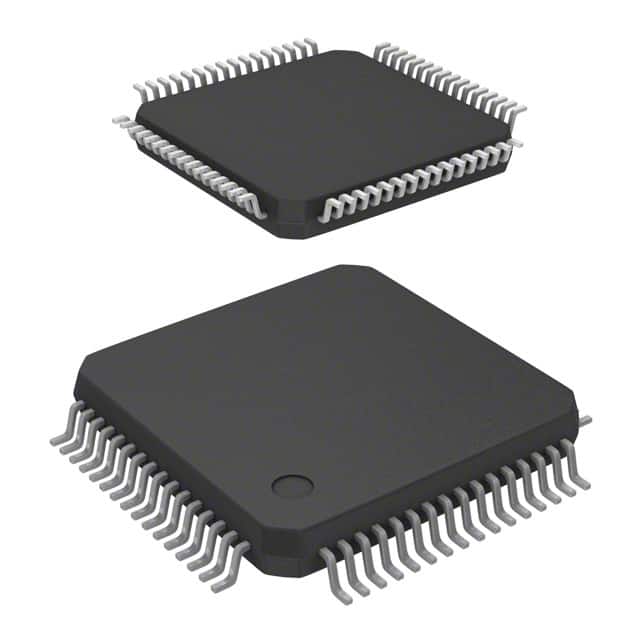
- Part No.:
- AT43USB325E-AC
- Manufacturer:
- Microchip Technology
- Category:
- Application Specific Microcontrollers
- Package:
- 64-LQFP
- Datasheet:
-
 AT43USB325E-AC.pdf
- Description:
- IC USB KEYBOARD CTRLR HUB 64LQFP
- Quantity:
- Payment:

- Shipping:

Inventory:1,600
Please send an inquiry. Send us your inquiry, and we will respond immediately.
Product details
Overview
AT43USB325E-AC from Microchip (formerly Atmel) is an 8-bit AVR RISC microcontroller with integrated USB 2.0 hub and keyboard controller, delivering 12 MIPS throughput at 12 MHz, featuring 16 KB on-chip SRAM program memory, 512-byte data SRAM, and 42 programmable I/O pins - designed specifically for USB keyboard applications with embedded 20×8 matrix scanning and four LED drivers.
For engineers reviewing the AT43USB325E-AC datasheet, AT43USB325E-AC pinout, AT43USB325E-AC application, or AT43USB325E-AC equivalent, this page provides verified technical context, validated pin functions, confirmed USB hub architecture, real-world keyboard controller use cases, and two documented alternative parts for firmware-compatible keyboard designs.
Technical Context
The AT43USB325E-AC implements a compound USB device architecture: one permanently attached USB function (keyboard) on Port 1 and up to four external downstream ports (Ports 2–5), each with independent DP/DM differential pairs and dedicated status/control registers mapped to SRAM addresses $1F00–$1FFF. Its USB SIE operates from a 12 MHz clock derived internally via PLL from the 6 MHz oscillator.
It uses a Harvard architecture with single-cycle instruction execution, 32 general-purpose registers directly connected to the ALU, and dual timer/counter modules - an 8-bit unit with prescaler and a 16-bit unit supporting dual 8/9/10-bit PWM - all managed through standard AVR I/O registers ($20–$5F) plus extended USB control registers.
Key Specifications
| Parameter | Value and Actual Design Meaning |
|---|---|
| Core Architecture | AVR 8-bit RISC with 32 × 8-bit general-purpose registers and single-cycle ALU execution |
| USB Functionality | Compound device: 5-port hub (1 embedded + 4 external) with independent device addressing and endpoint control |
| Memory | 16 KB downloadable SRAM program memory; 512-byte internal SRAM data memory |
| USB Endpoints | Embedded keyboard function supports 4 programmable endpoints (0–3), each with 8-byte FIFO |
| Timing | 12 MHz system clock (83 ns instruction cycle); 6 MHz crystal + on-chip PLL for USB clock generation |
| I/O Capability | 42 programmable bi-directional I/O pins across Ports A–F, including keyboard matrix (PA–PB, PC, PE) and LED drive (PE4–PE7) |
| Power Supply | 5 V operation with integrated 3.3 V regulator; requires 2.2 µF (CEXT1) and 0.33 µF (CEXT2) external capacitors |
Pinout & Package
AT43USB325E-AC is housed in a 64-lead LQFP package (10 mm × 10 mm, 0.5 mm pitch) with exposed thermal pad. Power and ground pins are distributed across VCC1/VCC2 and VSS1/VSS2; USB differential pairs occupy dedicated high-speed routing positions (DP0/DM0, DP2–DP5/DM2–DM5); XTAL1/XTAL2 and CEXT1/CEXT2 support the internal PLL-based USB clock generator.
| Pin/Terminal | Circuit Role | Design Meaning |
|---|---|---|
| DP0 / DM0 | Upstream USB differential pair | Connects to host or upstream hub; DP0 requires 1.5 kΩ pull-up to VCC1 |
| DP2–DP5 / DM2–DM5 | Downstream USB differential pairs | Four external USB ports; each DP/DM pair requires 15 kΩ pull-down to VSS |
| PA0–PA7, PB0–PB7, PC0–PC7, PE0–PE3 | Keyboard matrix strobes and row inputs | PA/PB = COL[0:15], PC = ROW[0:7], PE0–PE3 = COL[16:19] for 20×8 matrix support |
| PE4–PE7 | LED driver outputs | Integrated series current-limiting resistors enable direct LED connection without external components |
| XTAL1 / XTAL2 | Oscillator interface | 6 MHz crystal input/output; drives internal PLL to generate precise 12 MHz USB clock |
| CEXT1 / CEXT2 | PLL voltage regulator decoupling | CEXT1: 2.2 µF ceramic cap; CEXT2: 0.33 µF ceramic cap - both mandatory for stable USB timing |
| RESETN | Active-low reset input | Asynchronous reset signal; must be held low for ≥2.5 µs after power stabilization |
| TEST | Factory test pin | Must be tied to ground in production; unused in normal operation |
Key Features
| Feature | Design Value |
|---|---|
| USB Keyboard Controller | Native support for USB HID consumer page; firmware-configurable endpoints enable full keyboard scan and report generation without external logic |
| Integrated USB Hub | 5-port compound hub with independent hub and function descriptors - eliminates need for discrete hub IC in compact keyboard designs |
| Matrix Scan Engine | Dedicated GPIO mapping (PA–PB–PC–PE) and internal pull-ups on PC pins allow direct 20×8 keyboard matrix interfacing with no external diodes or drivers |
| LED Drive Capability | PE4–PE7 provide current-limited outputs (typ. 15 mA) enabling direct connection of indicator LEDs without external resistors or transistors |
| Program Memory Loading | Automatic firmware load from external SPI SEEPROM (e.g., AT25HP256) at power-on reset - no external programmer required in final product |
| Interrupt Architecture | Eight external interrupt sources (INTA–INTD, INT0–INT3) with individual mask/enable bits - supports responsive key press detection and port status monitoring |
Applications
| Compact USB Keyboard | Gaming Peripheral Hub |
|---|---|
Use Scenario: Space-constrained mechanical keyboard with integrated USB hub for mouse, headset, and flash drive. IC Role / Device Role / Timing Role: AT43USB325E-AC acts as primary keyboard controller and embedded 4-port hub, managing HID reports and downstream device enumeration simultaneously. Use Value: Reduces BOM by eliminating separate hub IC and keyboard MCU; leverages shared 12 MHz clock for deterministic USB timing across both functions. |
Use Scenario: Multi-device gaming controller with programmable macro keys and passthrough USB ports. IC Role / Device Role / Timing Role: AT43USB325E-AC serves as HID keyboard processor and configurable hub controller, handling simultaneous key scan, LED feedback, and port power management. Use Value: Enables firmware-defined port behavior (e.g., selective suspend, overcurrent protection) using built-in HPSTAT/HPSCR registers without external logic. |
| Industrial Keypad Terminal | USB KVM Extension Module |
Use Scenario: Ruggedized HMI keypad with backlight control and USB connectivity for PLC interface. IC Role / Device Role / Timing Role: AT43USB325E-AC performs matrix scanning, LED dimming via PWM-capable timers, and USB HID reporting over single upstream connection. Use Value: Integrates 20×8 scan, four LED drivers, and USB transceiver in one 64-LQFP package - simplifies layout and improves ESD robustness vs. multi-chip solutions. |
Use Scenario: Compact KVM extender node that accepts keyboard/mouse and relays USB signals to remote host. IC Role / Device Role / Timing Role: AT43USB325E-AC operates as transparent USB hub while providing local HID processing for hotkey functions and status indicators. Use Value: Uses embedded hub's port control registers (HPCON, HPSTAT) to manage port enable/disable and detect cable insertion/removal locally - reduces host-side polling overhead. |
Equivalent & Alternatives
The following parts are listed as comparable options for similar USB keyboard controller applications.
| Alternative Part | Technical Difference | Application Difference | Selection Advice |
|---|---|---|---|
| AT43USB325M-AC | Masked ROM program memory (not SRAM); no SPI EEPROM interface; PF0–PF3 are GPIO-only | Fixed firmware only; no field updates; identical pinout, timing, and USB functionality | Select for cost-sensitive, unchangeable firmware deployments where EEPROM dependency must be eliminated |
| NUC123LD4AE0 | ARM Cortex-M0 core; 64 KB Flash; USB 2.0 device (no hub); requires external hub IC for multi-port support | Higher performance but lacks integrated hub; needs additional silicon and PCB area for hub functionality | Select when advanced firmware features (RTOS, encryption) are needed and external hub integration is acceptable |
Compared with AT43USB325M-AC, the AT43USB325E-AC enables field firmware updates via SPI EEPROM, while NUC123LD4AE0 offers greater processing headroom but requires external hub hardware - making AT43USB325E-AC uniquely suited for compact, updateable, all-in-one keyboard-hub designs.
Availability
AT43USB325E-AC is available at Aetrix Electronics and suitable for compact USB keyboard designs, industrial keypad terminals, gaming peripheral hubs, and USB KVM extension modules requiring stable component supply and long-term manufacturability.
Supply support for AT43USB325E-AC includes scheduled delivery planning, volume procurement assistance, BOM continuity management, traceable sourcing, and lifecycle availability coordination for OEM customers, industrial embedded developers, connected-device designers, and electronics production programs.
Manufacturer
Microchip Technology (acquired Atmel in 2016) is a leading provider of microcontrollers, analog, and Flash-IP solutions, serving automotive, industrial, and consumer markets with scalable, secure, and energy-efficient silicon.
The AT43USB325E-AC belongs to Microchip's legacy AVR USB microcontroller family, engineered specifically for cost-optimized, space-constrained human interface devices requiring integrated USB hub and keyboard controller functionality in a single chip.
FAQ
What is the role of the CEXT1 and CEXT2 pins on the AT43USB325E-AC?
The CEXT1 and CEXT2 pins on the AT43USB325E-AC connect to external capacitors (2.2 µF and 0.33 µF respectively) that stabilize the internal voltage regulator and PLL circuitry. These capacitors are mandatory for reliable 12 MHz USB clock generation; omitting or undersizing them causes USB enumeration failure or intermittent disconnects. The AT43USB325E-AC will not operate correctly without properly rated ceramic capacitors on both CEXT1 and CEXT2.
How does the AT43USB325E-AC load its firmware at startup?
The AT43USB325E-AC automatically loads firmware from an external SPI serial EEPROM (e.g., AT25HP256) during power-on reset. This process uses dedicated PF0–PF3 pins as SPI interface (SSN, SCK, MOSI, MISO) and cannot be accessed by user firmware. The AT43USB325E-AC reads exactly 16 KB of data with 16-bit addressing - no 24-bit SEEPROMs are supported. Once loaded, the SRAM program memory executes natively.
Can the AT43USB325E-AC support more than a 20×8 keyboard matrix?
No - the AT43USB325E-AC is hardware-optimized for exactly 20 column strobes (PA0–PA7, PB0–PB7, PE0–PE3) and 8 row inputs (PC0–PC7), forming a fixed 20×8 matrix. While additional GPIOs exist (e.g., PD, PF), they lack internal pull-ups, slew-rate control, or dedicated scan timing logic required for reliable matrix expansion. Firmware modifications cannot extend beyond this native configuration without external demultiplexers or shift registers.
What USB speed and compliance level does the AT43USB325E-AC support?
The AT43USB325E-AC supports full-speed USB 2.0 (12 Mbps) and complies with USB Specification Revision 2.0, USB HID Class Definition v1.11, and USB Hub Class Specification v1.0. It implements a compound device topology with independent hub and function descriptors, passing USB-IF certification requirements for keyboard + hub products when configured per Atmel's reference firmware and layout guidelines.
Is the AT43USB325E-AC pin-compatible with the AT43USB325M-AC?
Yes - the AT43USB325E-AC and AT43USB325M-AC share identical 64-lead LQFP pinouts, electrical characteristics, and firmware binary compatibility. The only hardware difference is that PF0 is an active SSN output on the AT43USB325E-AC (for EEPROM loading) but NC on the AT43USB325M-AC; all other pins, including USB DP/DM, I/O, and power, are functionally and physically identical between the two variants.
AT43USB325E-AC Specifications
- Product attributes
- Attribute value
- Manufacturer:
- Microchip Technology
- Series:
- AVR®
- Package/Case:
- 64-LQFP
- Packaging:
- Tray
- Product Status:
- Obsolete
- Programmable:
- Not Verified
- Applications:
- Keyboard Controller
- Core Processor:
- AVR
- Program Memory Type:
- SRAM (16kB)
- Controller Series:
- AT43USB
- RAM Size:
- 512 x 8
- Interface:
- SPI, 3-Wire Serial
- Number of I/O:
- 42
- Voltage - Supply:
- 4.4V ~ 5.25V
- Operating Temperature:
- 0°C ~ 70°C
- Grade:
- -
- Qualification:
- -
- Mounting Type:
- Surface Mount
- Supplier Device Package:
- 64-LQFP (10x10)
AT43USB325E-AC FAQ
1.How can I place an order for AT43USB325E-AC through Aetrix?
Please submit a Request for Quotation (RFQ) for AT43USB325E-AC on Aetrix. Our sales agent will provide a competitive quotation and guide you through the order confirmation once you accept the terms.
2.Are the price and stock information for AT43USB325E-AC reliable?
The price and inventory of AT43USB325E-AC are updated periodically and may fluctuate due to market conditions. Stock and pricing data are typically refreshed every 24 hours. Quotation validity for AT43USB325E-AC is usually 5 days.
3.What payment methods are accepted for AT43USB325E-AC?
We accept Wire Transfer, PayPal, Credit Card, Western Union, MoneyGram, and Escrow for AT43USB325E-AC transactions.
Note: Certain payment methods may incur a processing fee.
4.How is shipping managed for AT43USB325E-AC?
AT43USB325E-AC orders can be shipped via leading logistics carriers, including DHL, UPS, FedEx, TNT, or Registered Mail.
Once your AT43USB325E-AC order is processed, you will receive an email with the shipment details and tracking number.
Note: Tracking information may take up to 24 hours to appear. Express delivery typically takes 3–5 business days.
5.How can I obtain technical support or documentation for AT43USB325E-AC?
For technical support, including AT43USB325E-AC datasheets, pinout diagrams, or application guidance, please contact our engineering support team. They can provide detailed documentation and assistance for your AT43USB325E-AC requirements.
6.How does Aetrix verify that AT43USB325E-AC is sourced from the original manufacturer or authorized distributors?
All AT43USB325E-AC products on Aetrix are procured from qualified distributors and authorized channels. Our dedicated quality assurance team conducts strict verification, including traceability checks and, if necessary, third-party testing. This ensures that AT43USB325E-AC meets industry standards.
7.What is the process for return or replacement of AT43USB325E-AC?
All AT43USB325E-AC units undergo pre-shipment inspection (PSI). If there is an issue with AT43USB325E-AC, returns or replacements are accepted under the following conditions:
1.Quantity discrepancies, incorrect items, or visible external defects (such as breakage or corrosion), acknowledged by Aetrix.
2.The issue is reported within 90 days of delivery.
3.The AT43USB325E-AC part is unused and in its original packaging.
Return procedure for AT43USB325E-AC:
1.Submit a request within 90 days.
2.Obtain a Return Material Authorization (RMA) from Aetrix.
AT43USB325E-AC Tags
-
CYPD3175-24LQXQ
Infineon Technologies

-
SLB9672VU20FW1523XTMA1
Infineon Technologies
-
SLB9670VQ20FW785XTMA1
Infineon Technologies
-
SLB9672XU20FW1523XTMA1
Infineon Technologies
-
SLB9673XU20FW2613XTMA1
Infineon Technologies
-
CYPD3125-40LQXIT
Infineon Technologies
-
AT97SC3204-U2A1A-20
Microchip Technology
-
AT97SC3204-U2A1A-10
Microchip Technology
-
SLM9670AQ20FW1311XTMA1
Infineon Technologies
-
SLB9672XU20FW1613XTMA1
Infineon Technologies
-
SLB9672AU20FW1613XTMA1
Infineon Technologies
-
SLB9673AU20FW2613XTMA1
Infineon Technologies
Tech Hub

TTL and CMOS logic families differ in thresholds, loading, output drive, power and timing. This engineering guide compares 74HC and 74HCT, calculates noise margins and checks 3.3 V/5 V compatibility.

A practical engineering guide to 3.3V and 5V logic compatibility, input thresholds, resistor dividers, translator ICs, MOSFET level shifting, I2C pull-ups, timing limits and power-sequencing risks.

The 74HC595 uses push-pull logic outputs, while the TPIC6B595 uses 50 V open-drain DMOS sinks for higher-power loads. This guide compares timing, current limits, 3.3 V interfacing, load wiring, thermal…

The 74HC595 converts serial data into eight stable parallel outputs. This guide covers pin functions, shift and storage timing, OE and MR behavior, drive-current limits, cascading, voltage compatibilit…

A technical comparison of level-sensitive latches and edge-triggered flip-flops, covering timing windows, setup and hold limits, master–slave operation, time borrowing, race-through, HDL inference and…

A D latch stores one bit while Enable controls when data can pass. This reference covers gate-level operation, truth tables, transparency, setup and hold timing, LE versus OE, common ICs and practical …

An SR latch stores one bit through cross-coupled feedback. This engineering reference covers NOR and NAND implementations, truth tables, forbidden-state recovery, gated operation, switch debouncing, fa…

Latch circuits retain one bit through feedback. This technical reference covers SR and D latches, truth tables, transparency, timing limits, latch-versus-flip-flop behavior, applications and common log…

An engineering guide to LED driver operation, constant-current and constant-voltage outputs, linear and switching topologies, dimming, IC selection, calculations, replacement compatibility, and fault c…

Operational amplifier guide covering op amp basics, feedback, ideal vs real op amps, common configurations, buffer circuits, offset, bias current, gain-bandwidth, slew rate, rail-to-rail limits and sel…


