
 My Inquiry
 My Account


Microchip Technology AT43USB380E-AI
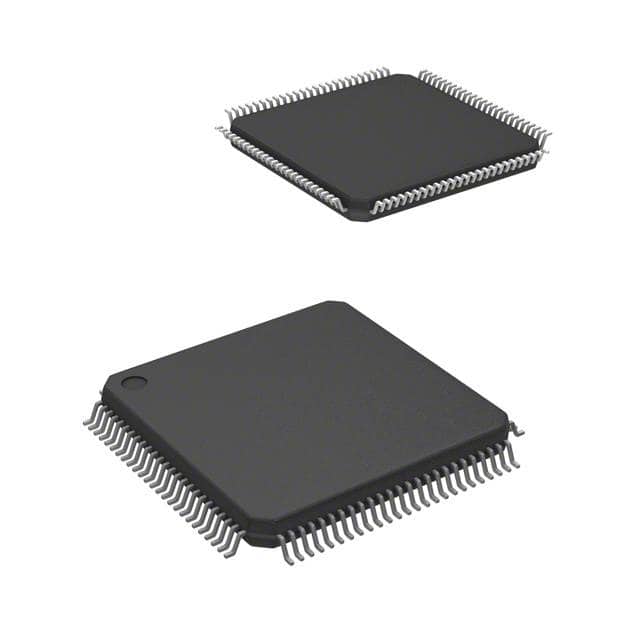
- Part No.:
- AT43USB380E-AI
- Manufacturer:
- Microchip Technology
- Category:
- Application Specific Microcontrollers
- Package:
- 100-LQFP
- Datasheet:
-
 AT43USB380E-AI.pdf
- Description:
- IC PROCESSOR USB 2.0 100-TQFP
- Quantity:
- Payment:

- Shipping:

Inventory:3,844
Please send an inquiry. Send us your inquiry, and we will respond immediately.
Product details
Overview
AT43USB380E-AI from Atmel (now Microchip) is a USB 2.0 Full-Speed Host/Function Processor with integrated On-The-Go (OTG) interface, supporting Host Negotiation Protocol (HNP) and Session Request Protocol (SRP). It operates as a single-chip USB controller in host or peripheral mode, requires external AT43CD001 charge pump for OTG session negotiation and VBUS power delivery, and features configurable 8/16/32-bit host processor interface for ARM-based embedded systems.
For engineers reviewing the AT43USB380E-AI datasheet, AT43USB380E-AI pinout, AT43USB380E-AI application, or AT43USB380E-AI equivalent, key selection considerations include OTG interface signal mapping (ID, SESS_VLD, DISCHARGE), firmware-compatible upgrade path from AT43USB370, GPIO multiplexing capability (up to 16 pins), and system clock synchronization via SYS_CLK and WAIT_N.
Technical Context
The AT43USB380E-AI implements a hardware-accelerated USB 2.0 Full-Speed (12 Mbps) transceiver with integrated OTG state machine and SRP/HNP protocol engines. Its on-chip OTG interface includes dedicated signals-ID, SESS_VLD, SESS_END, SESS_HIGH, SESS_LOW, DISCHARGE, PUMP_EN, LOW_CUR, and EN-for role detection and VBUS control during OTG sessions.
It supports three host interface widths (8/16/32-bit) selected by BWIDTH[1:0], eliminates legacy handshaking signals (PROG, SEL, READY, DONE, MORE, INTR_IN), and replaces them with direct register access over D[31:0]/GPIO[15:0] and simplified control (CS_N, OE_N, WE_N, DREQ_N, DACK_N, INTR_OUT).
Key Specifications
| Parameter | Value and Actual Design Meaning |
|---|---|
| USB Standard | USB 2.0 Full-Speed (12 Mbps); compliant with OTG Supplement 1.3 and SRP/HNP protocols. |
| Host Interface Width | Configurable 8/16/32-bit parallel bus; width set by BWIDTH[1:0] pins at reset; enables flexible integration with ARM processors of varying data bus widths. |
| GPIO Capability | Up to 16 GPIOs multiplexed with upper data bus (D[31:16]); available only when host interface is configured to 8- or 16-bit mode. |
| OTG Interface Signals | Includes ID, DISCHARGE, PUMP_EN, LOW_CUR, EN, SESS_VLD, SESS_END, SESS_HIGH, SESS_LOW - all required for external charge pump (e.g., AT43CD001) coordination. |
| Power Supply | Single 3.3V VDD supply; generates internal 1.8V (VEXT18) for core logic; no separate analog/digital rail required. |
| Clock Input | Supports crystal (XTAL1/XTAL2) or external oscillator via CLK_SEL; PLL with LFT pin for stable USB timing. |
| Firmware Compatibility | Shares same high-level ANSI C APIs and low-level libraries with AT43USB370; adds <10 OTG-specific APIs and embedded HNP/SRP firmware. |
Pinout & Package
AT43USB380E-AI is housed in a 100-pin TQFP package (14 mm × 14 mm, 0.5 mm pitch) with exposed thermal pad. Power distribution includes 5× VDD, 10× VSS, and 3× VDD18 pins for robust decoupling and noise immunity in embedded USB applications.
| Pin/Terminal | Circuit Role | Design Meaning |
|---|---|---|
| SYS_CLK | System clock input | Synchronizes WAIT_N and DREQ_N; synchronization enable/disable controlled via internal register. |
| ID | OTG device identification | Distinguishes Mini-A vs. Mini-B plug insertion; determines initial A/B-device role in OTG session. |
| SESS_VLD / SESS_END / SESS_HIGH / SESS_LOW | VBUS voltage monitoring inputs | Four threshold-sense inputs tied to external charge pump; detect VBUS presence and session validity per OTG spec. |
| DISCHARGE / PUMP_EN / LOW_CUR / EN | Charge pump control outputs | Drive external AT43CD001 to manage VBUS pulsing, discharge, current limiting, and enable sequencing during SRP/HNP. |
| D[31:16]/GPIO[15:0] | Multiplexed data/GPIO | Bi-directional pins repurposed as GPIOs when host interface width is set to 8 or 16 bits via BWIDTH[1:0]. |
| RPU_EN / RPD_EN | USB pull-up/down control | Enable internal resistive termination on DP/D– lines for device enumeration and OTG role switching. |
Key Features
| Feature | Design Value |
|---|---|
| OTG-ready hardware block | Dedicated ID, SESS_x, DISCHARGE, and PUMP_EN signal paths eliminate need for external logic to implement OTG session negotiation. |
| Configurable host interface width | Runtime-selectable 8/16/32-bit bus via BWIDTH[1:0]; reduces PCB complexity and enables reuse across multiple ARM platform generations. |
| Legacy signal elimination | Removes PROG, SEL, READY, DONE, MORE, INTR_IN, and WAIT_N (optional) - simplifies host processor interface and shortens firmware initialization sequence. |
| Integrated 1.8V regulator (VEXT18) | On-die LDO delivers stable 1.8V core supply from 3.3V VDD; eliminates external DC-DC converter or LDO in space-constrained designs. |
| Firmware backward compatibility | Same ANSI C API set and debug toolchain as AT43USB370; enables drop-in firmware migration with minimal code changes for OTG-aware applications. |
Applications
| Portable Media Player | Industrial Handheld Terminal |
|---|---|
|
Use Scenario: Dual-role USB connection for file transfer and peripheral hosting (e.g., connecting USB flash drive or keyboard). IC Role / Device Role / Timing Role: AT43USB380E-AI acts as OTG controller managing role swap between host and peripheral using HNP; handles USB packet framing and VBUS control via external charge pump. Use Value: Enables single USB port to serve both as client (when connected to PC) and host (when connected to peripherals), reducing connector count and mechanical complexity. |
Use Scenario: Field-deployable terminal requiring USB connectivity to barcode scanners, printers, and host PCs in mixed-role environments. IC Role / Device Role / Timing Role: AT43USB380E-AI serves as full-speed USB interface with deterministic interrupt latency (via INTR_OUT) and DMA handshake (DREQ_N/DACK_N) for real-time data capture. Use Value: Configurable 16-bit host interface and 16 GPIOs support custom expansion modules without additional level-shifting or glue logic. |
| Medical Diagnostic Handset | Automotive Infotainment Bridge |
|
Use Scenario: Secure, low-power USB link between diagnostic sensor module and tablet for firmware updates and log retrieval. IC Role / Device Role / Timing Role: AT43USB380E-AI operates in function mode with RPU_EN-controlled pull-up; uses SRP to initiate sessions from battery-powered peripheral side. Use Value: LOW_CUR output limits VBUS current during SRP pulsing, extending battery life and meeting USB battery charging specification constraints. |
Use Scenario: In-vehicle USB hub bridging head unit to mobile devices for audio streaming and control, supporting both accessory and host roles. IC Role / Device Role / Timing Role: AT43USB380E-AI manages OTG session arbitration (ID pin sensing + SESS_VLD monitoring) and isolates VBUS faults via DISCHARGE signal to protect downstream circuits. Use Value: Integrated SESS_x comparators and DISCHARGE control reduce external component count versus discrete comparator + MOSFET solutions. |
Equivalent & Alternatives
The following parts are listed as comparable options for similar USB OTG controller applications.
| Alternative Part | Technical Difference | Application Difference | Selection Advice |
|---|---|---|---|
| AT43USB370 | No on-chip OTG interface; lacks ID, SESS_x, DISCHARGE, PUMP_EN pins; supports only 32-bit host interface. | Cannot implement OTG functionality without external logic; suitable only for fixed-host or fixed-function USB designs. | Select AT43USB370 only if OTG is unnecessary and existing 32-bit ARM interface matches legacy design. |
| ISP1301 (NXP) | Separate USB transceiver + OTG transceiver IC; requires external microcontroller; no integrated host processor interface or GPIOs. | Demands external MCU for protocol handling; higher BOM count and firmware development effort than AT43USB380E-AI's single-chip solution. | Choose ISP1301 only when flexibility to mix transceivers with diverse MCUs outweighs integration benefits of AT43USB380E-AI. |
Compared with AT43USB370, the AT43USB380E-AI adds OTG capability and interface flexibility but retains firmware compatibility; compared with ISP1301, it integrates host interface and GPIOs, reducing system-level complexity and component count in ARM-based embedded USB designs.
Availability
AT43USB380E-AI is available at Aetrix Electronics and suitable for portable medical devices, industrial handheld terminals, and automotive infotainment bridges requiring stable component supply, long-term lifecycle support, and USB 2.0 Full-Speed OTG functionality.
Supply support for AT43USB380E-AI includes scheduled delivery planning, volume procurement assistance, BOM continuity management, traceable sourcing, and lifecycle availability coordination for OEM customers, industrial embedded developers, connected-device designers, and electronics production programs.
Manufacturer
Atmel Corporation (acquired by Microchip Technology in 2016) is a fabless semiconductor company specializing in microcontrollers, nonvolatile memory, and USB interface solutions for embedded systems.
The AT43USB380E-AI belongs to Atmel's USB Host/Function Processor product line, designed specifically to simplify USB OTG implementation in resource-constrained ARM-based devices without requiring external protocol stack processors.
FAQ
What is the primary function of the AT43USB380E-AI in an embedded system?
The AT43USB380E-AI serves as a USB 2.0 Full-Speed Host/Function Processor with integrated On-The-Go (OTG) interface. It enables dual-role USB connectivity-acting as either host or peripheral-while offloading USB protocol handling (including HNP and SRP) from the main ARM processor. The AT43USB380E-AI manages physical layer signaling, VBUS control via external charge pump, and register-level communication with the host system through its configurable parallel interface.
Does the AT43USB380E-AI require an external charge pump, and why?
Yes, the AT43USB380E-AI requires an external charge pump such as the AT43CD001 to implement USB OTG functionality. The AT43USB380E-AI provides control signals (DISCHARGE, PUMP_EN, LOW_CUR, EN, SESS_VLD, etc.) but does not generate or regulate VBUS voltage internally. The external charge pump supplies VBUS power during host-mode operation and performs session negotiation signaling, fulfilling the electrical requirements defined in the USB OTG specification.
How does the AT43USB380E-AI differ from the AT43USB370 in terms of pin compatibility?
The AT43USB380E-AI is not pin-compatible with the AT43USB370 due to added OTG interface pins (ID, SESS_VLD, DISCHARGE, PUMP_EN, etc.) and reassignment of D[31:16] to support GPIO multiplexing. While many system interface pins (CS_N, D[15:0], SYS_CLK, INTR_OUT) remain functionally aligned, the AT43USB380E-AI requires PCB layout changes-including routing for new OTG signals and updated power decoupling-to replace AT43USB370 in an existing design.
Can the AT43USB380E-AI operate without an external crystal oscillator?
Yes, the AT43USB380E-AI supports both crystal (XTAL1/XTAL2) and external clock input modes via the CLK_SEL pin. When CLK_SEL is asserted, the device accepts a single-ended external clock signal instead of relying on a crystal resonator. This allows flexibility in timing source selection depending on system-level clock architecture, though the external clock must meet USB Full-Speed jitter and stability requirements.
What GPIO capabilities does the AT43USB380E-AI provide, and how are they enabled?
The AT43USB380E-AI provides up to 16 GPIOs multiplexed with the upper data bus (D[31:16]/GPIO[15:0]). These pins become available as general-purpose I/O only when the host interface width is configured to 8-bit (BWIDTH[1:0]=00) or 16-bit (BWIDTH[1:0]=01) mode. Firmware accesses them via dedicated high-level APIs; no additional hardware configuration beyond BWIDTH pin strapping is required to activate GPIO functionality.
AT43USB380E-AI Specifications
- Product attributes
- Attribute value
- Manufacturer:
- Microchip Technology
- Series:
- AVR®
- Package/Case:
- 100-LQFP
- Packaging:
- Tray
- Product Status:
- Obsolete
- Programmable:
- Not Verified
- Applications:
- USB Host/Function Processor
- Core Processor:
- -
- Program Memory Type:
- -
- Controller Series:
- AT43USB
- RAM Size:
- -
- Interface:
- USB
- Number of I/O:
- 32
- Voltage - Supply:
- -
- Operating Temperature:
- -40°C ~ 85°C
- Grade:
- -
- Qualification:
- -
- Mounting Type:
- Surface Mount
- Supplier Device Package:
- 100-LQFP (14x14)
AT43USB380E-AI FAQ
1.How can I place an order for AT43USB380E-AI through Aetrix?
Please submit a Request for Quotation (RFQ) for AT43USB380E-AI on Aetrix. Our sales agent will provide a competitive quotation and guide you through the order confirmation once you accept the terms.
2.Are the price and stock information for AT43USB380E-AI reliable?
The price and inventory of AT43USB380E-AI are updated periodically and may fluctuate due to market conditions. Stock and pricing data are typically refreshed every 24 hours. Quotation validity for AT43USB380E-AI is usually 5 days.
3.What payment methods are accepted for AT43USB380E-AI?
We accept Wire Transfer, PayPal, Credit Card, Western Union, MoneyGram, and Escrow for AT43USB380E-AI transactions.
Note: Certain payment methods may incur a processing fee.
4.How is shipping managed for AT43USB380E-AI?
AT43USB380E-AI orders can be shipped via leading logistics carriers, including DHL, UPS, FedEx, TNT, or Registered Mail.
Once your AT43USB380E-AI order is processed, you will receive an email with the shipment details and tracking number.
Note: Tracking information may take up to 24 hours to appear. Express delivery typically takes 3–5 business days.
5.How can I obtain technical support or documentation for AT43USB380E-AI?
For technical support, including AT43USB380E-AI datasheets, pinout diagrams, or application guidance, please contact our engineering support team. They can provide detailed documentation and assistance for your AT43USB380E-AI requirements.
6.How does Aetrix verify that AT43USB380E-AI is sourced from the original manufacturer or authorized distributors?
All AT43USB380E-AI products on Aetrix are procured from qualified distributors and authorized channels. Our dedicated quality assurance team conducts strict verification, including traceability checks and, if necessary, third-party testing. This ensures that AT43USB380E-AI meets industry standards.
7.What is the process for return or replacement of AT43USB380E-AI?
All AT43USB380E-AI units undergo pre-shipment inspection (PSI). If there is an issue with AT43USB380E-AI, returns or replacements are accepted under the following conditions:
1.Quantity discrepancies, incorrect items, or visible external defects (such as breakage or corrosion), acknowledged by Aetrix.
2.The issue is reported within 90 days of delivery.
3.The AT43USB380E-AI part is unused and in its original packaging.
Return procedure for AT43USB380E-AI:
1.Submit a request within 90 days.
2.Obtain a Return Material Authorization (RMA) from Aetrix.
AT43USB380E-AI Tags
-
CYPD3175-24LQXQ
Infineon Technologies

-
SLB9672VU20FW1523XTMA1
Infineon Technologies
-
SLB9670VQ20FW785XTMA1
Infineon Technologies
-
SLB9672XU20FW1523XTMA1
Infineon Technologies
-
SLB9673XU20FW2613XTMA1
Infineon Technologies
-
CYPD3125-40LQXIT
Infineon Technologies
-
AT97SC3204-U2A1A-20
Microchip Technology
-
AT97SC3204-U2A1A-10
Microchip Technology
-
SLM9670AQ20FW1311XTMA1
Infineon Technologies
-
SLB9672XU20FW1613XTMA1
Infineon Technologies
-
SLB9672AU20FW1613XTMA1
Infineon Technologies
-
SLB9673AU20FW2613XTMA1
Infineon Technologies
Tech Hub

TTL and CMOS logic families differ in thresholds, loading, output drive, power and timing. This engineering guide compares 74HC and 74HCT, calculates noise margins and checks 3.3 V/5 V compatibility.

A practical engineering guide to 3.3V and 5V logic compatibility, input thresholds, resistor dividers, translator ICs, MOSFET level shifting, I2C pull-ups, timing limits and power-sequencing risks.

The 74HC595 uses push-pull logic outputs, while the TPIC6B595 uses 50 V open-drain DMOS sinks for higher-power loads. This guide compares timing, current limits, 3.3 V interfacing, load wiring, thermal…

The 74HC595 converts serial data into eight stable parallel outputs. This guide covers pin functions, shift and storage timing, OE and MR behavior, drive-current limits, cascading, voltage compatibilit…

A technical comparison of level-sensitive latches and edge-triggered flip-flops, covering timing windows, setup and hold limits, master–slave operation, time borrowing, race-through, HDL inference and…

A D latch stores one bit while Enable controls when data can pass. This reference covers gate-level operation, truth tables, transparency, setup and hold timing, LE versus OE, common ICs and practical …

An SR latch stores one bit through cross-coupled feedback. This engineering reference covers NOR and NAND implementations, truth tables, forbidden-state recovery, gated operation, switch debouncing, fa…

Latch circuits retain one bit through feedback. This technical reference covers SR and D latches, truth tables, transparency, timing limits, latch-versus-flip-flop behavior, applications and common log…

An engineering guide to LED driver operation, constant-current and constant-voltage outputs, linear and switching topologies, dimming, IC selection, calculations, replacement compatibility, and fault c…

Operational amplifier guide covering op amp basics, feedback, ideal vs real op amps, common configurations, buffer circuits, offset, bias current, gain-bandwidth, slew rate, rail-to-rail limits and sel…


