
 My Inquiry
 My Account


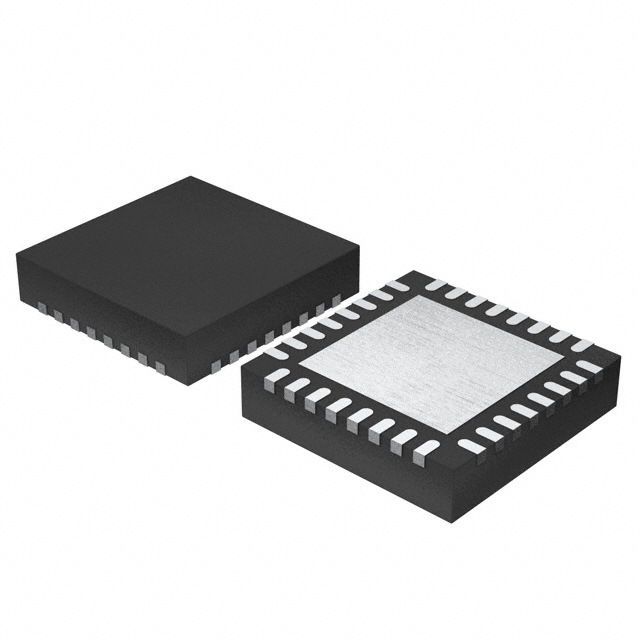
Microchip Technology AT73C209
- Part No.:
- AT73C209
- Manufacturer:
- Microchip Technology
- Category:
- Power Management - Specialized
- Package:
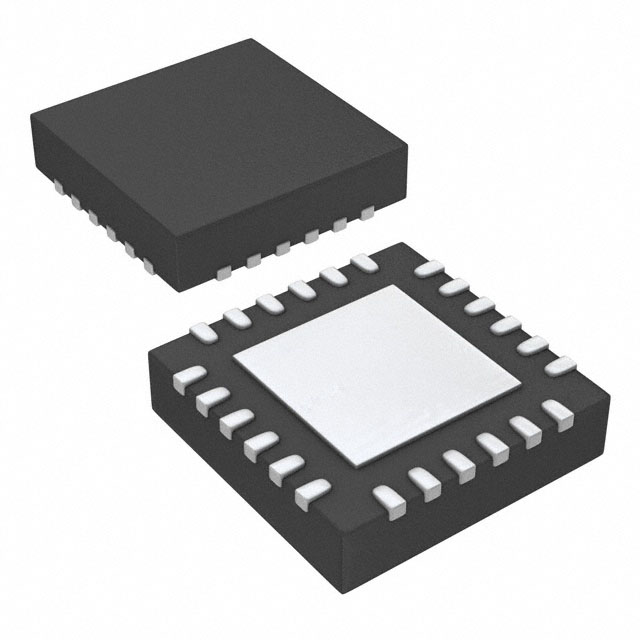
- 32-VQFN Exposed Pad
- Datasheet:
-
 AT73C209.pdf
- Description:
- IC PMAAC USB MP3 32QFN
- Quantity:
- Payment:

- Shipping:

Inventory:3,063
Please send an inquiry. Send us your inquiry, and we will respond immediately.
Product details
Overview
AT73C209 from Microchip Technology (formerly Atmel) is a fully integrated stereo audio DAC and power management IC for battery-powered portable audio devices. It delivers 93 dB SNR playback, supports 8–48 kHz sampling rates, integrates 32 Ω/20 mW headset drivers with volume/mute control, and includes a 100 mA DC/DC boost converter and dual LDOs for USB/battery supply management - used in MP3 players, digital cameras, and handheld GPS units.
For engineers reviewing the AT73C209 datasheet, AT73C209 pinout, AT73C209 application, or AT73C209 equivalent, key selection considerations include its programmable 16/18/20-bit DAC resolution, SPI-configurable LDO outputs (2.7–3.5 V @ 150 mA and 2.4–3.0 V @ 60 mA), I²S audio interface timing, and integrated microphone preamplifier with bias generation.
Technical Context
The AT73C209 implements a multibit sigma-delta DAC architecture with dithering and cascaded half-band + SINC interpolation filters, achieving high jitter immunity and eliminating baseband image artifacts. Its digital audio path supports I²S, MSB-justified, and LSB-justified formats with programmable word length (16/18/20 bits) and de-emphasis filtering.
Power management integrates a DC/DC boost converter (0.9–1.8 V input → 2.6–3.3 V @ 100 mA) with external inductor/diode, plus two digitally programmable LDOs: LDO1 (2.7–3.5 V / 150 mA, USB-supplied) and LDO2 (2.4–3.0 V / 60 mA, low-noise analog supply), both controlled via SPI registers.
Key Specifications
| Parameter | Value and Actual Design Meaning |
|---|---|
| DAC Resolution | Programmable 16-bit, 18-bit, or 20-bit data format via SPI register DAC_MISC[1:0] |
| SNR (Stereo Playback) | 93 dB - measured dynamic range enabling CD-quality audio reproduction |
| Sampling Rates | 8, 11.024, 16, 22.05, 24, 32, 44.1, and 48 kHz - covers all standard audio formats |
| Headset Drive Capability | 32 Ω load, 20 mW per channel - sufficient for direct drive of consumer earphones without external amplification |
| DC/DC Boost Output | 2.6 V to 3.3 V @ 100 mA - configurable via register DC_SEL_VOUT[4:3] for optimal system voltage rail alignment |
| LDO1 Output Range | 2.7 V to 3.5 V (9-step, 100 mV steps) @ 150 mA - supplies core logic and digital sections from USB |
| LDO2 Output Range | 2.4 V to 3.0 V (4-step, 200 mV steps) @ 60 mA - low-noise analog supply for DAC and codec section |
Pinout & Package
AT73C209 is housed in a 33-pin QFN package (5 mm × 5 mm, 0.5 mm pitch) with exposed thermal pad. Pin functions are defined per Table 5-1 of datasheet 6365A–PMAAC–12-Mar-08, including dedicated analog/digital supply, ground, audio I/O, SPI, and power management terminals.
| Pin/Terminal | Circuit Role | Design Meaning |
|---|---|---|
| SPI_DIN (Pin 1) | SPI Data Input | Serial command/data input referenced to VBOOST; accepts register address + write data (MSB first) |
| HSL / HSR (Pins 10/11) | Analog Headset Outputs | Direct-drive stereo headphone outputs (0–AVDDHS); support short-circuit detection flags |
| MICINN / MICOUT (Pins 7/8) | Microphone Interface | Differential mic input with programmable gain (−60 dB to +20 dB); single-ended output with bias (MICB, Pin 6) |
| FB / LX / IN / ONOFF (Pins 26/25/28/27) | DC/DC Boost Control | Feedback node (2.7–3.5 V), switching node, battery input (0.9–1.8 V), and enable - requires external inductor, diode, resistor |
| VBOOST / VANA (Pins 30/31) | Regulated Power Outputs | LDO1 output (2.7–3.5 V) and LDO2 output (2.4–3.0 V); both digitally programmable via SPI registers REG_CTRL and DC_SEL_VOUT |
Key Features
| Feature | Design Value |
|---|---|
| Integrated Stereo DAC + Power Management | Single-chip solution eliminates discrete regulators and audio codecs, reducing BOM count and PCB area in portable designs |
| Dynamic Power Management | Individual power-down control per DAC channel, line-in amplifier, and line-out driver via SPI registers (e.g., DAC_CTRL[4:5], DAC_CTRL[0:1]) |
| I²S Audio Interface Flexibility | Supports I²S, MSB-justified, and LSB-justified formats with programmable word length and master clock ratio (256× or 384× Fs) |
| USB/Battery Dual-Supply Architecture | Automatic source selection: battery input (0.9–1.8 V) boosted to 3.3 V, or USB (3.1–5.5 V) regulated down to 2.7–3.5 V via LDO1 |
| Headset Short-Circuit Detection | Dedicated persistent status flags (MISC_STATUS[0:1]) and interrupt masking (INT_MASK[0]) enable robust fault handling without MCU polling |
Applications
| MP3 Player Audio Subsystem | Digital Camera Audio Playback |
|---|---|
Use Scenario: Compact "walkman"-format MP3 player powered by single alkaline AA/AAA cell. IC Role / Device Role / Timing Role: Primary audio DAC and system power manager - converts digital music stream to analog headset output while regulating battery voltage to stable 3.3 V and analog 3.0 V rails. Use Value: Enables >10-hour playback on one cell via ultra-low quiescent current operation and dynamic DAC/channel power-down. | Use Scenario: High-resolution digital camera with voice memo and playback capability. IC Role / Device Role / Timing Role: Audio playback engine - receives compressed audio from SoC over I²S, drives internal speaker or external headphones, and supplies clean analog voltage to camera sensor interface. Use Value: 93 dB SNR ensures fidelity for voice notes; integrated line-in mixer allows simultaneous recording and playback. |
| Handheld GPS Navigation Unit | USB Mass Storage Audio Device |
Use Scenario: Portable GPS unit with spoken turn-by-turn directions and alert tones. IC Role / Device Role / Timing Role: Low-latency audio output subsystem - decodes navigation prompts via I²S, applies programmable volume/gain, and drives mono or stereo headset output. Use Value: Programmable 16/18/20-bit DAC resolution matches varying audio quality requirements; SPI-configurable LDO voltages optimize power efficiency across operating modes. | Use Scenario: USB-connected flash drive with embedded audio player functionality. IC Role / Device Role / Timing Role: Dual-role power/audio controller - switches between battery mode (DC/DC boost) and USB mode (LDO1 regulation), delivering consistent audio performance regardless of power source. Use Value: Seamless transition between power sources avoids audio dropouts; USBOK flag (MISC_STATUS[1]) enables firmware-aware power state management. |
Equivalent & Alternatives
The following parts are listed as comparable options for similar stereo audio DAC and power management applications.
| Alternative Part | Technical Difference | Application Difference | Selection Advice |
|---|---|---|---|
| AK4384VN | Standalone 24-bit DAC (no integrated power management); requires external regulators and clock sources | Used in higher-fidelity audio systems where power management is handled separately | Select when SNR > 105 dB and independent power domain control are required; not suitable for single-cell battery integration |
| TPA6138A2RTJR | Class-G stereo headphone amplifier only (no DAC, no regulators); 95 dB SNR, 30 mW into 32 Ω | Paired with external DAC and PMIC in space-constrained portable designs | Choose when audio path already includes a high-performance DAC and discrete power solution exists; adds no system-level power management |
Compared with AK4384VN and TPA6138A2RTJR, the AT73C209 uniquely combines DAC, headset drivers, microphone preamp, DC/DC boost, and dual LDOs in one die - reducing component count and simplifying layout for cost-sensitive, battery-operated consumer audio devices.
Availability
AT73C209 is available at Aetrix Electronics and suitable for portable music players, digital cameras, and handheld GPS navigation units requiring stable component supply and long-term production continuity.
Supply support for AT73C209 includes scheduled delivery planning, volume procurement assistance, BOM continuity management, traceable sourcing, and lifecycle availability coordination for OEM customers, industrial embedded developers, connected-device designers, and electronics production programs.
Manufacturer
Microchip Technology Inc. is a leading provider of microcontrollers, analog components, and connectivity solutions, acquired Atmel in 2016 and maintains full product support for legacy Atmel PMAAC portfolio.
The AT73C209 belongs to Microchip's Power Management and Analog Companions (PMAAC) product line, designed specifically to integrate audio conversion and multi-rail power regulation for ultra-low-power portable consumer electronics.
FAQ
What is the maximum supported sampling rate for the AT73C209 DAC?
The AT73C209 supports sampling rates up to 48 kHz, including standard audio frequencies such as 8, 11.024, 16, 22.05, 24, 32, 44.1, and 48 kHz. This is confirmed in the device description and DAC_CSFC register documentation, where master clock options (256× or 384× Fs) are explicitly tied to these input rates. The AT73C209 does not support 96 kHz or higher sampling rates.
Does the AT73C209 include hardware-based short-circuit protection for headset outputs?
Yes, the AT73C209 includes dedicated hardware short-circuit detection for both left and right headset channels. Pins HSL and HSR report short conditions via persistent status flags (MISC_STATUS[0:1]), which remain set until cleared by reset or explicit register write. This enables reliable fault monitoring without continuous software polling.
Can the AT73C209 operate from a single 0.9 V alkaline cell?
Yes, the AT73C209 is explicitly rated for battery input from 0.9 V to 1.8 V - supporting operation down to a nearly depleted alkaline AA/AAA cell. Its integrated DC/DC boost converter (SW1) generates a stable 3.3 V output under this condition, as verified in Section 9.1.1 and Absolute Maximum Ratings (Table 6-1).
How is the AT73C209's microphone bias voltage generated and controlled?
The AT73C209 generates microphone bias (MICB, Pin 6) internally and controls it via the MIC_CTRL register (0x17). Bit ONMIC (bit 0) enables the bias circuit, and the bias level is fixed per design - no external adjustment or programmable voltage selection is provided. MICB is intended for electret condenser microphones requiring ~2.0 V bias.
What audio interface protocols does the AT73C209 support besides standard I²S?
In addition to standard I²S, the AT73C209 supports MSB-justified and LSB-justified audio data formats. This is configured via the DINTSEL[5:4] bits in the DAC_MISC register (0x0A), allowing interoperability with diverse host processors and DSPs that use non-I²S-aligned serial audio interfaces.
AT73C209 Specifications
- Product attributes
- Attribute value
- Manufacturer:
- Microchip Technology
- Series:
- -
- Package/Case:
- 32-VQFN Exposed Pad
- Packaging:
- Tape & Reel (TR)
- Product Status:
- Obsolete
- Applications:
- Handheld/Mobile Devices
- Current - Supply:
- -
- Voltage - Supply:
- 2.4V ~ 3V
- Operating Temperature:
- -40°C ~ 85°C
- Grade:
- -
- Qualification:
- -
- Mounting Type:
- Surface Mount
- Supplier Device Package:
- 32-QFN (7x7)
AT73C209 FAQ
1.How can I place an order for AT73C209 through Aetrix?
Please submit a Request for Quotation (RFQ) for AT73C209 on Aetrix. Our sales agent will provide a competitive quotation and guide you through the order confirmation once you accept the terms.
2.Are the price and stock information for AT73C209 reliable?
The price and inventory of AT73C209 are updated periodically and may fluctuate due to market conditions. Stock and pricing data are typically refreshed every 24 hours. Quotation validity for AT73C209 is usually 5 days.
3.What payment methods are accepted for AT73C209?
We accept Wire Transfer, PayPal, Credit Card, Western Union, MoneyGram, and Escrow for AT73C209 transactions.
Note: Certain payment methods may incur a processing fee.
4.How is shipping managed for AT73C209?
AT73C209 orders can be shipped via leading logistics carriers, including DHL, UPS, FedEx, TNT, or Registered Mail.
Once your AT73C209 order is processed, you will receive an email with the shipment details and tracking number.
Note: Tracking information may take up to 24 hours to appear. Express delivery typically takes 3–5 business days.
5.How can I obtain technical support or documentation for AT73C209?
For technical support, including AT73C209 datasheets, pinout diagrams, or application guidance, please contact our engineering support team. They can provide detailed documentation and assistance for your AT73C209 requirements.
6.How does Aetrix verify that AT73C209 is sourced from the original manufacturer or authorized distributors?
All AT73C209 products on Aetrix are procured from qualified distributors and authorized channels. Our dedicated quality assurance team conducts strict verification, including traceability checks and, if necessary, third-party testing. This ensures that AT73C209 meets industry standards.
7.What is the process for return or replacement of AT73C209?
All AT73C209 units undergo pre-shipment inspection (PSI). If there is an issue with AT73C209, returns or replacements are accepted under the following conditions:
1.Quantity discrepancies, incorrect items, or visible external defects (such as breakage or corrosion), acknowledged by Aetrix.
2.The issue is reported within 90 days of delivery.
3.The AT73C209 part is unused and in its original packaging.
Return procedure for AT73C209:
1.Submit a request within 90 days.
2.Obtain a Return Material Authorization (RMA) from Aetrix.
AT73C209 Tags
-
TPS2511DGNR
Texas Instruments
-
UTC2000/MG
Microchip Technology
-
TUSB320HAIRWBR
Texas Instruments
-
TPS61252DSGR
Texas Instruments
-
PI5USB30216CXUAEX
Diodes Incorporated
-
SN6501DBVR
Texas Instruments
-
CYPD3177-24LQXQT
Infineon Technologies
-
SN6501QDBVRQ1
Texas Instruments
-
STUSB1600AQTR
STMicroelectronics

-
SN6505BDBVR
Texas Instruments
-
SN6501DBVT
Texas Instruments
-
TPS65150PWPR
Texas Instruments
Tech Hub

TTL and CMOS logic families differ in thresholds, loading, output drive, power and timing. This engineering guide compares 74HC and 74HCT, calculates noise margins and checks 3.3 V/5 V compatibility.

A practical engineering guide to 3.3V and 5V logic compatibility, input thresholds, resistor dividers, translator ICs, MOSFET level shifting, I2C pull-ups, timing limits and power-sequencing risks.

The 74HC595 uses push-pull logic outputs, while the TPIC6B595 uses 50 V open-drain DMOS sinks for higher-power loads. This guide compares timing, current limits, 3.3 V interfacing, load wiring, thermal…

The 74HC595 converts serial data into eight stable parallel outputs. This guide covers pin functions, shift and storage timing, OE and MR behavior, drive-current limits, cascading, voltage compatibilit…

A technical comparison of level-sensitive latches and edge-triggered flip-flops, covering timing windows, setup and hold limits, master–slave operation, time borrowing, race-through, HDL inference and…

A D latch stores one bit while Enable controls when data can pass. This reference covers gate-level operation, truth tables, transparency, setup and hold timing, LE versus OE, common ICs and practical …

An SR latch stores one bit through cross-coupled feedback. This engineering reference covers NOR and NAND implementations, truth tables, forbidden-state recovery, gated operation, switch debouncing, fa…

Latch circuits retain one bit through feedback. This technical reference covers SR and D latches, truth tables, transparency, timing limits, latch-versus-flip-flop behavior, applications and common log…

An engineering guide to LED driver operation, constant-current and constant-voltage outputs, linear and switching topologies, dimming, IC selection, calculations, replacement compatibility, and fault c…

Operational amplifier guide covering op amp basics, feedback, ideal vs real op amps, common configurations, buffer circuits, offset, bias current, gain-bandwidth, slew rate, rail-to-rail limits and sel…


