
 My Inquiry
 My Account


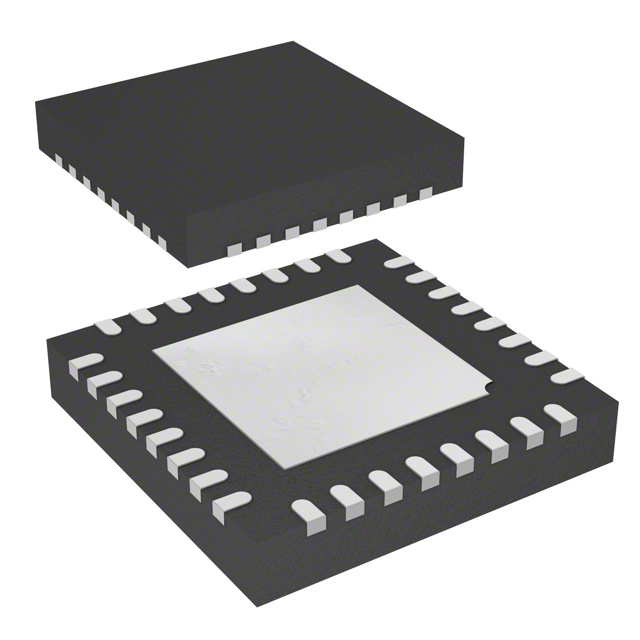
Microchip Technology AT73C213B
- Part No.:
- AT73C213B
- Manufacturer:
- Microchip Technology
- Category:
- Power Management - Specialized
- Package:
- 32-VQFN Exposed Pad
- Datasheet:
-
 AT73C213B.pdf
- Description:
- IC PWR MGMT ANALOG PMAAC 32QFN
- Quantity:
- Payment:

- Shipping:

Inventory:2,188
Please send an inquiry. Send us your inquiry, and we will respond immediately.
Product details
Overview
AT73C213B from Atmel (now Microchip Technology) is a fully integrated stereo audio DAC and mono AB-class audio power amplifier IC designed for portable Li-ion/Ni-Mh battery-powered devices. It delivers 93 dB SNR playback, 32 Ω/20 mW stereo headset drivers with master volume/mute, and 440 mW output into 8 Ω at 3.6 V - enabling compact, low-component-count audio subsystems in mobile handsets and music players.
For engineers reviewing the AT73C213B datasheet, AT73C213B pinout, AT73C213B application, or AT73C213B equivalent, key selection considerations include its dual-mode amplifier (high/low-power), programmable 20-bit I²S interface, SPI-configurable gain/volume across all signal paths (DAC, line-in, aux, PA), and integrated analog mixing of stereo line inputs and differential mono auxiliary input.
Technical Context
The AT73C213B integrates two independent signal chains: a high-fidelity 20-bit sigma-delta stereo DAC with multibit modulation, dithering, and cascaded half-band + SINC interpolation filters (8× oversampling), plus a digitally controlled mono AB-class power amplifier with differential input/output, programmable gain (–22 to +20 dB), and <2 µA power-down current. Both sections share a common analog reference architecture using VREF, VCM, and AVDDHS decoupling.
Audio routing is managed via an on-chip digital mixer supporting simultaneous playback from DAC output, stereo line inputs (LINEL/LINER), and differential mono auxiliary input (AUXP/AUXN), with per-path analog gain control and mute. All digital configuration-including sampling rate (8–48 kHz), master clock ratio (256×/384× Fs), de-emphasis, and data format (I²S/MSB/LSB justified)-is performed over a 4-wire SPI bus.
Key Specifications
| Parameter | Value and Actual Design Meaning |
|---|---|
| DAC Resolution | 20-bit sigma-delta with dither; enables >93 dB SNR and <0.1% THD+N at full scale. |
| Headset Driver Output | 32 Ω / 20 mW per channel; supports direct connection to standard stereo earpieces without external components. |
| Power Amplifier Output | 440 mW into 8 Ω @ 3.6 V (high-power mode); 8 mA quiescent current; <2 µA in power-down. |
| Sampling Rates | 8, 11.024, 16, 22.05, 24, 32, 44.1, 48 kHz; covers all standard audio formats including CD, MP3, and VoIP. |
| Digital Interface | I²S/MSB/LSB-justified serial audio (slave mode); 4-wire SPI for register configuration; no external clock generator required. |
| Analog Supply Range | AVDD/AVDDHS = 2.7–3.3 V; VDIG = 2.4–3.3 V; VBAT = 3–5.5 V; allows flexible power rail partitioning in battery systems. |
| Operating Temperature | –40°C to +85°C industrial grade; validated for use in smartphones, DECT phones, and portable cameras. |
Pinout & Package
AT73C213B is housed in a 33-pin QFN package (5 mm × 5 mm, 0.5 mm pitch) with exposed thermal pad. Pin functions are validated per Atmel document 6407A–PMAAC–22-Apr-08.
| Pin/Terminal | Circuit Role | Design Meaning |
|---|---|---|
| LPHN | Analog output | Low-power audio stage output; used in earpiece mode with reduced drive capability. |
| HPN / HPP | Analog outputs | Differential speaker outputs; support 8 Ω load in high-power mode or 150–300 Ω in low-power earpiece mode. |
| VBAT | Supply input | Main Li-ion battery supply (3–5.5 V) for power amplifier section only; isolated from analog/digital supplies. |
| HSL / HSR | Analog outputs | Stereo headset driver outputs; each drives 32 Ω loads with ±6 dB programmable level control. |
| SDIN / BCLK / LRFS / MCLK | Digital inputs | I²S audio interface pins; require synchronous timing from host controller; support 20-bit word length. |
| SPI_DIN / SPI_DOUT / SPI_CLK / SPI_CSB | Digital I/O | 4-wire SPI slave interface; enables real-time configuration of gain, mute, de-emphasis, and power modes. |
| AVDD / AVDDHS / VDIG | Supply inputs | Separate analog (DAC/line-in/aux/headset) and digital supplies; allow independent noise isolation and voltage scaling. |
| GNDD / GNDB | Ground terminals | Digital ground (GNDD) and analog ground (GNDB) are physically separated to minimize coupling between digital switching and sensitive analog paths. |
Key Features
| Feature | Design Value |
|---|---|
| Integrated stereo DAC + mono PA | Eliminates need for discrete codec and amplifier ICs; reduces BOM count and PCB area in space-constrained handsets. |
| Programmable gain across all inputs | Line-in (–33 to +20 dB), aux-in (–33 to +20 dB), DAC playback (–34.5 to +12 dB), PA output (–22 to +20 dB) - enables precise signal-level matching. |
| Digital mixer with source selection | Simultaneously mixes DAC output, stereo line inputs, and differential mono aux input; supports flexible audio routing without external switches. |
| Low-noise sigma-delta DAC architecture | 93 dB SNR, ±0.1 dB passband flatness (10 Hz–20 kHz), and 65 dB stopband attenuation - meets Hi-Fi playback requirements. |
| Configurable I²S interface | Supports 16/18/20-bit word lengths and I²S/MSB/LSB justification via SPI register DINTSEL<1:0> - interoperable with diverse SoCs and DSPs. |
Applications
| Smartphone Audio Subsystem | DECT Cordless Phone Base Station |
|---|---|
Use Scenario: Full-duplex voice call with simultaneous ringtone playback and headset monitoring. IC Role / Device Role / Timing Role: AT73C213B acts as the primary audio codec and loudspeaker driver, handling microphone pre-amplification, DAC playback, and handsfree speaker output. Use Value: Integrated line-in mixer and programmable PA gain enable seamless transition between earpiece and speakerphone modes without external switching. |
Use Scenario: High-fidelity ringtone generation and clear voice pickup during base station operation. IC Role / Device Role / Timing Role: AT73C213B serves as the audio interface for the base station's speaker and microphone, leveraging its 93 dB SNR DAC and low-distortion PA. Use Value: Differential mono aux input accepts analog output from voice codec; 440 mW PA output drives 8 Ω speaker directly with minimal external components. |
| Digital Still Camera Playback | Portable Music Player |
Use Scenario: Stereo audio playback of recorded video clips through built-in speaker or headphones. IC Role / Device Role / Timing Role: AT73C213B decodes PCM audio streams and drives both headset and speaker outputs with independent volume control. Use Value: Dual-mode PA (high/low power) allows same IC to drive speaker during playback and earpiece during private listening - reducing component count. |
Use Scenario: Battery-efficient stereo music playback with adjustable bass/treble via digital gain staging. IC Role / Device Role / Timing Role: AT73C213B functions as the complete audio front-end, accepting I²S from MP3 decoder and delivering amplified output to headphones or line-out. Use Value: 20-bit DAC resolution and A-weighted 93 dB SNR ensure fidelity comparable to dedicated audio players; 2.4–3.3 V digital supply supports low-voltage SoC integration. |
Equivalent & Alternatives
The following parts are listed as comparable options for similar stereo audio DAC + mono amplifier applications.
| Alternative Part | Technical Difference | Application Difference | Selection Advice |
|---|---|---|---|
| AK4413VN | 32-bit DAC, 100 dB SNR, but no integrated power amplifier; requires external Class-D PA. | Higher-resolution DAC for premium audio, but increases BOM and layout complexity for speaker drive. | Choose AK4413VN when SNR >98 dB is mandatory and external PA integration is acceptable. |
| TPA6138A2 | Dedicated mono Class-AB amplifier (440 mW @ 3.6 V), no DAC or line-in functionality. | Only amplifies existing analog signals; lacks DAC, mixer, and digital interface - cannot replace full AT73C213B function. | Use TPA6138A2 as a drop-in PA upgrade if DAC and analog inputs are already handled elsewhere in the design. |
Compared with AK4413VN and TPA6138A2, the AT73C213B uniquely combines 20-bit DAC, multi-source analog mixer, and configurable mono PA in one QFN package - offering lowest component count and smallest footprint for cost-sensitive portable audio designs requiring both playback and speaker drive.
Availability
AT73C213B is available at Aetrix Electronics and suitable for smartphone audio subsystems, DECT phone base stations, digital still camera playback, and portable music players requiring stable component supply, long-term lifecycle support, and consistent parametric performance across production batches.
Supply support for AT73C213B includes scheduled delivery planning, volume procurement assistance, BOM continuity management, traceable sourcing, and lifecycle availability coordination for OEM customers, industrial embedded developers, connected-device designers, and electronics production programs.
Manufacturer
Atmel Corporation, now part of Microchip Technology, is a global semiconductor manufacturer specializing in microcontrollers, nonvolatile memory, and mixed-signal ICs for embedded and portable applications.
The AT73C213B belongs to Atmel's Power Management and Analog Companions (PMAAC) product line, engineered specifically to reduce system-level audio BOM count and simplify PCB layout in battery-powered handheld devices.
FAQ
What is the maximum sampling frequency supported by the AT73C213B?
The AT73C213B supports standard audio sampling rates up to 48 kHz, including 8, 11.024, 16, 22.05, 24, 32, 44.1, and 48 kHz. Its internal digital filter and sigma-delta modulator are optimized for these rates, with master clock options of 256× or 384× Fs to accommodate jitter-sensitive applications. The AT73C213B does not support rates above 48 kHz.
Does the AT73C213B include a built-in microphone preamplifier?
No, the AT73C213B does not include a dedicated microphone preamplifier. It provides stereo line-level inputs (LINEL/LINER), a differential mono auxiliary input (AUXP/AUXN), and DAC playback paths - all configurable via SPI registers for gain and mute. For microphone interfacing, an external bias circuit or preamp is required before connecting to the AUX or line inputs. The AT73C213B itself handles only line-level signal conditioning.
Can the AT73C213B drive both headphones and a loudspeaker simultaneously?
Yes, the AT73C213B can drive headphones and a loudspeaker concurrently: stereo headset drivers (HSL/HSR) support 32 Ω loads, while the mono power amplifier (HPN/HPP) drives 8 Ω speakers. However, they operate on separate signal paths - the DAC output may be routed to both via the digital mixer, but independent volume control and mute settings must be configured per path using SPI registers DAC_OLC and PA_CTRL. The AT73C213B does not share output stages between them.
What is the purpose of the VCM and VREF pins on the AT73C213B?
VCM (Pin 9) provides the common-mode reference voltage for analog input and output stages, typically set to 0.5 × AVDD; it requires a decoupling capacitor (10 µF or 100 µF, selected via SPI register VCMCAPSEL). VREF (Pin 1) is the precision voltage reference for the DAC's analog output stage and must be decoupled with a 10 µF ceramic capacitor. Both pins stabilize DC operating points and suppress supply-induced noise - critical for achieving the AT73C213B's specified 93 dB SNR and <0.1% THD+N.
Is the AT73C213B compatible with 1.8 V digital I/O systems?
No, the AT73C213B digital I/Os (SDIN, BCLK, LRFS, MCLK, SPI lines) are referenced to VDIG and specified for 2.4 V to 3.3 V operation only. Input high threshold is 0.8 × VDIG, and input low threshold is 0.2 × VDIG - meaning at 1.8 V supply, VIH would be 1.44 V (exceeding typical 1.8 V logic high of 1.62 V), risking unreliable detection. To interface with 1.8 V hosts, level-shifting circuitry is required. The AT73C213B itself does not support 1.8 V native I/O.
AT73C213B Specifications
- Product attributes
- Attribute value
- Manufacturer:
- Microchip Technology
- Series:
- -
- Package/Case:
- 32-VQFN Exposed Pad
- Packaging:
- Tray
- Product Status:
- Obsolete
- Applications:
- Handheld/Mobile Devices
- Current - Supply:
- 6mA
- Voltage - Supply:
- 3V ~ 5.5V
- Operating Temperature:
- -40°C ~ 85°C
- Grade:
- -
- Qualification:
- -
- Mounting Type:
- Surface Mount
- Supplier Device Package:
- 32-QFN (7x7)
AT73C213B FAQ
1.How can I place an order for AT73C213B through Aetrix?
Please submit a Request for Quotation (RFQ) for AT73C213B on Aetrix. Our sales agent will provide a competitive quotation and guide you through the order confirmation once you accept the terms.
2.Are the price and stock information for AT73C213B reliable?
The price and inventory of AT73C213B are updated periodically and may fluctuate due to market conditions. Stock and pricing data are typically refreshed every 24 hours. Quotation validity for AT73C213B is usually 5 days.
3.What payment methods are accepted for AT73C213B?
We accept Wire Transfer, PayPal, Credit Card, Western Union, MoneyGram, and Escrow for AT73C213B transactions.
Note: Certain payment methods may incur a processing fee.
4.How is shipping managed for AT73C213B?
AT73C213B orders can be shipped via leading logistics carriers, including DHL, UPS, FedEx, TNT, or Registered Mail.
Once your AT73C213B order is processed, you will receive an email with the shipment details and tracking number.
Note: Tracking information may take up to 24 hours to appear. Express delivery typically takes 3–5 business days.
5.How can I obtain technical support or documentation for AT73C213B?
For technical support, including AT73C213B datasheets, pinout diagrams, or application guidance, please contact our engineering support team. They can provide detailed documentation and assistance for your AT73C213B requirements.
6.How does Aetrix verify that AT73C213B is sourced from the original manufacturer or authorized distributors?
All AT73C213B products on Aetrix are procured from qualified distributors and authorized channels. Our dedicated quality assurance team conducts strict verification, including traceability checks and, if necessary, third-party testing. This ensures that AT73C213B meets industry standards.
7.What is the process for return or replacement of AT73C213B?
All AT73C213B units undergo pre-shipment inspection (PSI). If there is an issue with AT73C213B, returns or replacements are accepted under the following conditions:
1.Quantity discrepancies, incorrect items, or visible external defects (such as breakage or corrosion), acknowledged by Aetrix.
2.The issue is reported within 90 days of delivery.
3.The AT73C213B part is unused and in its original packaging.
Return procedure for AT73C213B:
1.Submit a request within 90 days.
2.Obtain a Return Material Authorization (RMA) from Aetrix.
AT73C213B Tags
-
TPS2511DGNR
Texas Instruments
-
UTC2000/MG
Microchip Technology
-
TUSB320HAIRWBR
Texas Instruments
-
TPS61252DSGR
Texas Instruments
-
PI5USB30216CXUAEX
Diodes Incorporated
-
SN6501DBVR
Texas Instruments
-
CYPD3177-24LQXQT
Infineon Technologies
-
SN6501QDBVRQ1
Texas Instruments
-
STUSB1600AQTR
STMicroelectronics

-
SN6505BDBVR
Texas Instruments
-
SN6501DBVT
Texas Instruments
-
TPS65150PWPR
Texas Instruments
Tech Hub

TTL and CMOS logic families differ in thresholds, loading, output drive, power and timing. This engineering guide compares 74HC and 74HCT, calculates noise margins and checks 3.3 V/5 V compatibility.

A practical engineering guide to 3.3V and 5V logic compatibility, input thresholds, resistor dividers, translator ICs, MOSFET level shifting, I2C pull-ups, timing limits and power-sequencing risks.

The 74HC595 uses push-pull logic outputs, while the TPIC6B595 uses 50 V open-drain DMOS sinks for higher-power loads. This guide compares timing, current limits, 3.3 V interfacing, load wiring, thermal…

The 74HC595 converts serial data into eight stable parallel outputs. This guide covers pin functions, shift and storage timing, OE and MR behavior, drive-current limits, cascading, voltage compatibilit…

A technical comparison of level-sensitive latches and edge-triggered flip-flops, covering timing windows, setup and hold limits, master–slave operation, time borrowing, race-through, HDL inference and…

A D latch stores one bit while Enable controls when data can pass. This reference covers gate-level operation, truth tables, transparency, setup and hold timing, LE versus OE, common ICs and practical …

An SR latch stores one bit through cross-coupled feedback. This engineering reference covers NOR and NAND implementations, truth tables, forbidden-state recovery, gated operation, switch debouncing, fa…

Latch circuits retain one bit through feedback. This technical reference covers SR and D latches, truth tables, transparency, timing limits, latch-versus-flip-flop behavior, applications and common log…

An engineering guide to LED driver operation, constant-current and constant-voltage outputs, linear and switching topologies, dimming, IC selection, calculations, replacement compatibility, and fault c…

Operational amplifier guide covering op amp basics, feedback, ideal vs real op amps, common configurations, buffer circuits, offset, bias current, gain-bandwidth, slew rate, rail-to-rail limits and sel…


