
 My Inquiry
 My Account


Microchip Technology AT97SC3205T-X3A1620B
- Part No.:
- AT97SC3205T-X3A1620B
- Manufacturer:
- Microchip Technology
- Category:
- Application Specific Microcontrollers
- Package:
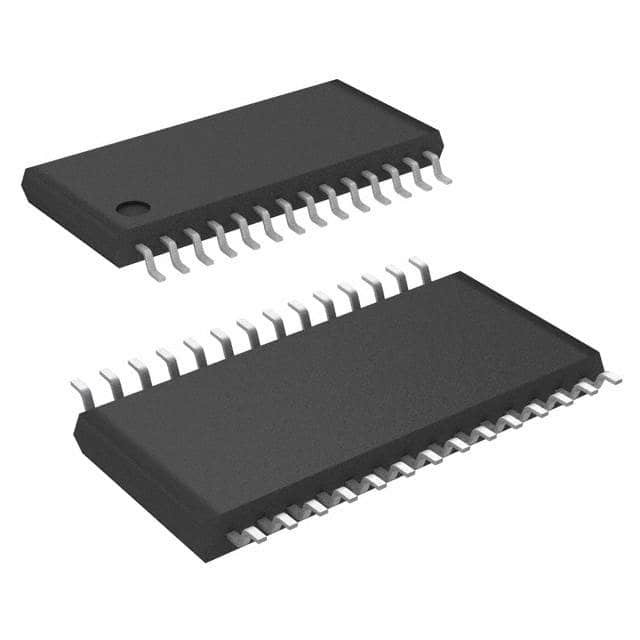
- 28-TSSOP (0.173", 4.40mm Width)
- Datasheet:
-
 AT97SC3205T-X3A1620B.pdf
- Description:
- MEM FF IND I2C TPM 28TSSOP
- Quantity:
- Payment:

- Shipping:

Inventory:4,509
Please send an inquiry. Send us your inquiry, and we will respond immediately.
Product details
Overview
AT97SC3205T-X3A1620B from Microchip Technology (formerly Atmel) is a TCG-compliant Trusted Platform Module (TPM) 1.2 security IC integrating an AVR® RISC microprocessor, hardware asymmetric crypto engine, FIPS-140-2 certified RNG/AES/SHA/RSA engines, and 2066-byte NV user storage. It operates at 3.3V with I²C interface up to 400kHz and supports industrial temperature range (−40°C to +85°C). Used in server motherboards and embedded systems requiring hardware-rooted trust.
For engineers reviewing the AT97SC3205T-X3A1620B datasheet, AT97SC3205T-X3A1620B pinout, AT97SC3205T-X3A1620B application, or AT97SC3205T-X3A1620B equivalent, key selection criteria include TPM 1.2 compliance, I²C timing constraints (SM_DAT pull-up ≤800Ω at 400kHz), GPIO-Express-00 mapping to TPM_NV_INDEX_GPIO_00, low-power deep-sleep recovery via TWI_Wakeup# dual-pin activation, and QFN/TSSOP package compatibility with decoupling requirements (2200–4700pF <5mm from VCC).
Technical Context
The AT97SC3205T-X3A1620B implements the full TCG TPM 1.2 stack in silicon, including secure boot attestation, sealed storage, and platform integrity measurement. Its AVR CPU executes firmware with protected EEPROM for RSA key storage and supports dynamic internal key cache management without host intervention.
Hardware security features include physical tamper detection via XTAMPER (TestBI/GPIO/XTAMPER pin), FIPS-140-2 certified cryptographic primitives (RNG, HMAC, AES-128, SHA-1, RSA-2048), and hardware-enforced access control for NV storage. The device enters automatic low-power state when idle and recovers only upon valid dual-pin TWI_Wakeup# pulse sequence.
Key Specifications
| Parameter | Value and Actual Design Meaning |
|---|---|
| TCG Compliance | TPM 1.2 specification fully implemented - enables standardized attestation, sealing, and platform configuration verification |
| I²C Interface Speed | 400kHz Fast Mode / 100kHz Standard Mode - requires SM_DAT pull-up ≤800Ω and SM_CLK pull-up ≤1.5kΩ for stable high-speed operation |
| Supply Voltage | 3.3V ±5% - mandates tight decoupling: 2200–4700pF capacitor within 5mm of each VCC pin and 0.1μF at VCC node |
| NV Storage Capacity | 2066 bytes user-defined data - allocated in TPM NV indices with hardware-enforced write-lock and authorization policies |
| Crypto Engines | FIPS-140-2 certified RNG, HMAC-SHA-1, AES-128, RSA-2048 - all executed in dedicated hardware, not software emulation |
| Operating Temperature | −40°C to +85°C industrial grade - validated across full range for reliability in embedded server and networking equipment |
| Package Options | 28-pin Thin TSSOP (4.4×9.7mm, 0.65mm pitch) or 32-pad QFN (4.0×4.0mm, 0.40mm pitch) - both RoHS-compliant and lead-free |
Pinout & Package
AT97SC3205T-X3A1620B is available in two RoHS-compliant packages: 28-pin Thin TSSOP (4.40mm × 9.70mm body, 0.65mm pitch) and 32-pad QFN (4.00mm × 4.00mm body, 0.40mm pitch). Both packages feature exposed thermal pad tied to GND in QFN; no-connect pins may be left floating or tied to VCC/GND per design needs.
| Pin/Terminal | Circuit Role | Design Meaning |
|---|---|---|
| VCC | Power supply input | 3.3V main supply - requires localized 2200–4700pF decoupling <5mm from pin and global 0.1μF bypass <10mm from device |
| SM_DAT / SM_CLK | I²C bidirectional data/clock | Compliant with SMBus v2.0 - SM_DAT pull-up ≤800Ω required for 400kHz; SM_CLK duty cycle near 50% improves stability |
| GPIO-Express-00 | Dedicated NV-indexed GPIO | Maps to TPM_NV_INDEX_GPIO_00 with internal pull-up - used for hardware-locked status signaling or policy-triggered events |
| PP/GPIO | Physical Presence indicator | Active-high hardware presence signal - internal pull-down; floats if unused; enables BIOS-level TPM enable/disable confirmation |
| TWI_Wakeup# (pins 7 & 22) | Low-power recovery trigger | Both pins must be pulsed low simultaneously to exit deep-sleep - prevents spurious wakeups and enforces secure resume protocol |
| TestBI/GPIO/XTAMPER | Multi-function terminal | Configurable as external tamper sensor (XTAMPER) or GPIO - default inactive; tie to GND if unused to prevent noise-induced faults |
Key Features
| Feature | Design Value |
|---|---|
| TCG TPM 1.2 Hardware Implementation | Full specification compliance without host CPU offload - enables standardized remote attestation and sealed storage in OEM firmware |
| FIPS-140-2 Certified Crypto Subsystem | RNG, HMAC, AES-128, SHA-1, and RSA-2048 engines validated to Level 2 - satisfies federal and enterprise security policy requirements |
| Secure Key Storage Architecture | Internal EEPROM stores RSA keys with hardware-enforced access control - keys never exposed to host memory or bus |
| Dynamic Key Cache Management | Automatic loading/unloading of keys via TPM_FlushSpecific/TPM_LoadKey2 - eliminates host-side key scheduling logic |
| Hardware Physical Presence Support | PP/GPIO pin provides BIOS-validated hardware confirmation before enabling sensitive operations - prevents unauthorized TPM configuration changes |
Applications
| Server Platform Integrity | Industrial Control System Security |
|---|---|
Use Scenario: Verifying firmware and bootloader integrity during POST on x86 server motherboards. IC Role / Device Role / Timing Role: Root-of-trust anchor performing SHA-1 hashing of BIOS/UEFI images and storing PCR values in protected registers. Use Value: Enables remote attestation via TCG-compliant protocols - detects unauthorized firmware modifications before system boot completes. | Use Scenario: Securing firmware updates and configuration parameters in programmable logic controllers (PLCs) deployed in factory automation. IC Role / Device Role / Timing Role: Secure NV storage manager for encrypted update payloads and signed configuration blobs with hardware-based decryption key protection. Use Value: Prevents malicious reprogramming by enforcing cryptographic signature validation and binding updates to authenticated hardware identity. |
| Embedded Network Appliance Trust | Medical Device Data Protection |
Use Scenario: Enabling TLS mutual authentication and certificate-based client identity in network-attached storage (NAS) devices. IC Role / Device Role / Timing Role: Hardware-backed private key store for X.509 certificate signing and TLS handshake acceleration via RSA-2048 engine. Use Value: Eliminates software-only key exposure risk - private keys remain isolated in on-die EEPROM and are never exported. | Use Scenario: Protecting patient data logs and calibration records in FDA-regulated diagnostic imaging equipment. IC Role / Device Role / Timing Role: Sealed storage controller for audit trails and calibration signatures using TPM_NV_WriteLock with authorization policies. Use Value: Meets HIPAA and IEC 62304 traceability requirements - ensures immutable, time-stamped, cryptographically verifiable data history. |
Equivalent & Alternatives
The following parts are listed as comparable options for similar TPM security module applications.
| Alternative Part | Technical Difference | Application Difference | Selection Advice |
|---|---|---|---|
| Infineon SLB9670 | TPM 2.0 compliant; supports ECC and SHA-256; larger 32KB NV space; requires SPI interface | Required for new designs targeting Windows 11 or Linux kernel ≥5.12; incompatible with legacy TPM 1.2-only BIOS stacks | Select SLB9670 only when upgrading to TPM 2.0 ecosystem - not drop-in compatible due to interface and command set differences |
| Nuvoton NPCT750 | TPM 1.2 compliant; same I²C interface; smaller 128-byte NV user space; lacks FIPS-140-2 certification | Suitable for cost-sensitive consumer electronics where formal crypto validation is not mandated | Choose NPCT750 for non-regulated applications needing basic TPM 1.2 functionality without FIPS assurance or extended NV capacity |
Compared with SLB9670 and NPCT750, AT97SC3205T-X3A1620B uniquely delivers FIPS-140-2 certification with TPM 1.2 compliance and 2066-byte NV storage in a dual-package option - making it optimal for industrial and enterprise systems requiring validated crypto assurance without migrating to TPM 2.0 infrastructure.
Availability
AT97SC3205T-X3A1620B is available at Aetrix Electronics and suitable for server motherboard manufacturing, industrial PLC security upgrades, and medical device data integrity solutions requiring stable component supply and long-term lifecycle support.
Supply support for AT97SC3205T-X3A1620B includes scheduled delivery planning, volume procurement assistance, BOM continuity management, traceable sourcing, and lifecycle availability coordination for OEM customers, industrial embedded developers, connected-device designers, and electronics production programs.
Manufacturer
Microchip Technology acquired Atmel in 2016 and maintains its trusted computing product line, delivering secure microcontrollers and TPM solutions for industrial, communications, and computing markets.
The AT97SC3205T-X3A1620B belongs to Atmel's TPM security IC family, designed specifically to provide hardware-rooted trust for embedded platforms requiring TCG-compliant attestation, sealed storage, and cryptographic key protection without host CPU dependency.
FAQ
What is the primary compliance standard met by the AT97SC3205T-X3A1620B?
The AT97SC3205T-X3A1620B is fully compliant with the Trusted Computing Group (TCG) Trusted Platform Module (TPM) Version 1.2 Specification. It implements the complete TPM 1.2 stack-including attestation, sealing, and platform configuration registers-in hardware. This compliance enables interoperability with industry-standard BIOS/UEFI implementations and remote attestation services that require TPM 1.2 functionality. The AT97SC3205T-X3A1620B does not support TPM 2.0 commands or algorithms.
Does the AT97SC3205T-X3A1620B support both TSSOP and QFN packages, and how do they differ electrically?
Yes, the AT97SC3205T-X3A1620B is offered in both 28-pin Thin TSSOP and 32-pad QFN packages. Electrically, both variants share identical pin functions, timing specifications, and I²C interface behavior. The QFN variant includes an exposed thermal pad internally connected to GND, while the TSSOP has no thermal pad. Decoupling requirements (2200–4700pF near VCC pins) apply identically to both packages. No electrical performance difference exists between them.
How is low-power mode managed in the AT97SC3205T-X3A1620B, and what is required to wake it?
The AT97SC3205T-X3A1620B automatically enters low-power sleep when idle. To recover, the system must assert TWI_Wakeup# on *both* designated pins (TSSOP pin 7 and pin 22; QFN pin 7 and pin 22) with an active-low pulse sequence. This dual-pin requirement prevents accidental wakeups and enforces secure resume protocol. If unused, pin 7 may float or tie to GND; pin 22 must be tied to GND or VCC. The AT97SC3205T-X3A1620B does not support single-pin wake events.
What cryptographic primitives are FIPS-140-2 certified in the AT97SC3205T-X3A1620B?
The AT97SC3205T-X3A1620B includes FIPS-140-2 Level 2 certified implementations of the Random Number Generator (RNG), HMAC-SHA-1, AES-128, and RSA-2048 engines. These modules were validated under FIPS-140-2 Annex A and are used for key generation, digital signatures, symmetric encryption, and hash-based message authentication. The certification covers the hardware execution path - no software-based crypto is included in the FIPS boundary. SHA-256 and ECC are not supported.
Can the AT97SC3205T-X3A1620B be used as a direct replacement for other Atmel TPMs like the AT97SC3204?
No, the AT97SC3205T-X3A1620B is not a direct replacement for the AT97SC3204. While both are TPM 1.2 devices, the AT97SC3205T-X3A1620B adds GPIO-Express-00, enhanced tamper sensing via TestBI/GPIO/XTAMPER, and revised TWI_Wakeup# dual-pin recovery. Pinouts differ significantly - AT97SC3204 uses 32-pin QFN only and lacks PP/GPIO and GPIO-Express-00 mappings. Board-level redesign is required to migrate from AT97SC3204 to AT97SC3205T-X3A1620B.
AT97SC3205T-X3A1620B Specifications
- Product attributes
- Attribute value
- Manufacturer:
- Microchip Technology
- Series:
- -
- Package/Case:
- 28-TSSOP (0.173", 4.40mm Width)
- Packaging:
- Tube
- Product Status:
- Obsolete
- Programmable:
- Not Verified
- Applications:
- Trusted Platform Module (TPM)
- Core Processor:
- AVR
- Program Memory Type:
- EEPROM
- Controller Series:
- -
- RAM Size:
- -
- Interface:
- I2C
- Number of I/O:
- 4
- Voltage - Supply:
- 3.3V
- Operating Temperature:
- 0°C ~ 70°C
- Grade:
- -
- Qualification:
- -
- Mounting Type:
- Surface Mount
- Supplier Device Package:
- 28-TSSOP
AT97SC3205T-X3A1620B FAQ
1.How can I place an order for AT97SC3205T-X3A1620B through Aetrix?
Please submit a Request for Quotation (RFQ) for AT97SC3205T-X3A1620B on Aetrix. Our sales agent will provide a competitive quotation and guide you through the order confirmation once you accept the terms.
2.Are the price and stock information for AT97SC3205T-X3A1620B reliable?
The price and inventory of AT97SC3205T-X3A1620B are updated periodically and may fluctuate due to market conditions. Stock and pricing data are typically refreshed every 24 hours. Quotation validity for AT97SC3205T-X3A1620B is usually 5 days.
3.What payment methods are accepted for AT97SC3205T-X3A1620B?
We accept Wire Transfer, PayPal, Credit Card, Western Union, MoneyGram, and Escrow for AT97SC3205T-X3A1620B transactions.
Note: Certain payment methods may incur a processing fee.
4.How is shipping managed for AT97SC3205T-X3A1620B?
AT97SC3205T-X3A1620B orders can be shipped via leading logistics carriers, including DHL, UPS, FedEx, TNT, or Registered Mail.
Once your AT97SC3205T-X3A1620B order is processed, you will receive an email with the shipment details and tracking number.
Note: Tracking information may take up to 24 hours to appear. Express delivery typically takes 3–5 business days.
5.How can I obtain technical support or documentation for AT97SC3205T-X3A1620B?
For technical support, including AT97SC3205T-X3A1620B datasheets, pinout diagrams, or application guidance, please contact our engineering support team. They can provide detailed documentation and assistance for your AT97SC3205T-X3A1620B requirements.
6.How does Aetrix verify that AT97SC3205T-X3A1620B is sourced from the original manufacturer or authorized distributors?
All AT97SC3205T-X3A1620B products on Aetrix are procured from qualified distributors and authorized channels. Our dedicated quality assurance team conducts strict verification, including traceability checks and, if necessary, third-party testing. This ensures that AT97SC3205T-X3A1620B meets industry standards.
7.What is the process for return or replacement of AT97SC3205T-X3A1620B?
All AT97SC3205T-X3A1620B units undergo pre-shipment inspection (PSI). If there is an issue with AT97SC3205T-X3A1620B, returns or replacements are accepted under the following conditions:
1.Quantity discrepancies, incorrect items, or visible external defects (such as breakage or corrosion), acknowledged by Aetrix.
2.The issue is reported within 90 days of delivery.
3.The AT97SC3205T-X3A1620B part is unused and in its original packaging.
Return procedure for AT97SC3205T-X3A1620B:
1.Submit a request within 90 days.
2.Obtain a Return Material Authorization (RMA) from Aetrix.
AT97SC3205T-X3A1620B Tags
-
CYPD3175-24LQXQ
Infineon Technologies

-
SLB9672VU20FW1523XTMA1
Infineon Technologies
-
SLB9670VQ20FW785XTMA1
Infineon Technologies
-
SLB9672XU20FW1523XTMA1
Infineon Technologies
-
SLB9673XU20FW2613XTMA1
Infineon Technologies
-
CYPD3125-40LQXIT
Infineon Technologies
-
AT97SC3204-U2A1A-20
Microchip Technology
-
AT97SC3204-U2A1A-10
Microchip Technology
-
SLM9670AQ20FW1311XTMA1
Infineon Technologies
-
SLB9672XU20FW1613XTMA1
Infineon Technologies
-
SLB9672AU20FW1613XTMA1
Infineon Technologies
-
SLB9673AU20FW2613XTMA1
Infineon Technologies
Tech Hub

TTL and CMOS logic families differ in thresholds, loading, output drive, power and timing. This engineering guide compares 74HC and 74HCT, calculates noise margins and checks 3.3 V/5 V compatibility.

A practical engineering guide to 3.3V and 5V logic compatibility, input thresholds, resistor dividers, translator ICs, MOSFET level shifting, I2C pull-ups, timing limits and power-sequencing risks.

The 74HC595 uses push-pull logic outputs, while the TPIC6B595 uses 50 V open-drain DMOS sinks for higher-power loads. This guide compares timing, current limits, 3.3 V interfacing, load wiring, thermal…

The 74HC595 converts serial data into eight stable parallel outputs. This guide covers pin functions, shift and storage timing, OE and MR behavior, drive-current limits, cascading, voltage compatibilit…

A technical comparison of level-sensitive latches and edge-triggered flip-flops, covering timing windows, setup and hold limits, master–slave operation, time borrowing, race-through, HDL inference and…

A D latch stores one bit while Enable controls when data can pass. This reference covers gate-level operation, truth tables, transparency, setup and hold timing, LE versus OE, common ICs and practical …

An SR latch stores one bit through cross-coupled feedback. This engineering reference covers NOR and NAND implementations, truth tables, forbidden-state recovery, gated operation, switch debouncing, fa…

Latch circuits retain one bit through feedback. This technical reference covers SR and D latches, truth tables, transparency, timing limits, latch-versus-flip-flop behavior, applications and common log…

An engineering guide to LED driver operation, constant-current and constant-voltage outputs, linear and switching topologies, dimming, IC selection, calculations, replacement compatibility, and fault c…

Operational amplifier guide covering op amp basics, feedback, ideal vs real op amps, common configurations, buffer circuits, offset, bias current, gain-bandwidth, slew rate, rail-to-rail limits and sel…


