
 My Inquiry
 My Account


STMicroelectronics AVS1ACP08
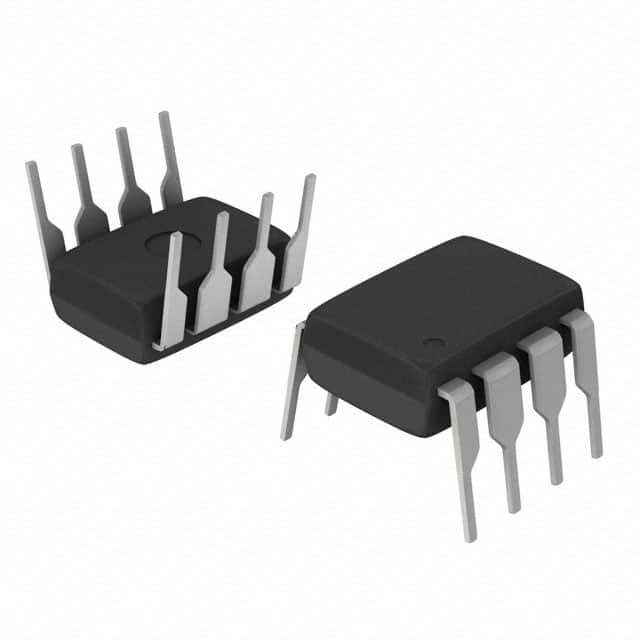
- Part No.:
- AVS1ACP08
- Manufacturer:
- STMicroelectronics
- Category:
- Power Management - Specialized
- Package:
- 8-DIP (0.300", 7.62mm)
- Datasheet:
-
 AVS1ACP08.pdf
- Description:
- IC OFF-LINE CTRLR HV 8DIP
- Quantity:
- Payment:

- Shipping:

Inventory:1,008
Please send an inquiry. Send us your inquiry, and we will respond immediately.
Product details
Overview
AVS1ACP08 from STMicroelectronics is a dedicated automatic voltage switch controller IC for 110/220V AC mains selection in SMPS < 500 W. It integrates a shunt regulator (VSS = −9 V), zero-crossing detector, oscillator (44 kHz), peak voltage detector, and triac trigger logic. Its mode pin enables lockout against high-voltage spikes during 220V restoration after 110V drop, and it operates from 0°C to +70°C in DIP-8 package.
For engineers reviewing the AVS1ACP08 datasheet, AVS1ACP08 pinout, AVS1ACP08 application, or AVS1ACP08 equivalent, this controller delivers precise mains-mode detection, low-quiescent-current operation (0.7 mA), robust noise immunity (6.2 V on main supply), and integrated parasitic filtering - critical for reliable dual-voltage SMPS design and safety-compliant power sequencing.
Technical Context
The AVS1ACP08 implements a dual-threshold zero-crossing detection (95–125 mV high-threshold, 27–80 mV hysteresis) referenced to VSS, enabling accurate 50/60 Hz synchronization. Its oscillator generates a stable 42–46 kHz signal (R = 91 kΩ, C = 100 pF) to drive timing-critical triac triggering pulses.
It features a programmable mode input that configures voltage-spike lockout behavior: when tied to VSS, it retains 220V-mode state during brownout; when tied to VDD, lockout is disabled. The internal shunt regulator maintains VSS at −9 V (−10 to −8 V) with 0.4–30 mA supply current capability.
Key Specifications
| Parameter | Value and Actual Design Meaning |
|---|---|
| VSS Regulator | −9 V nominal shunt reference; enables self-biased operation without external regulator |
| Oscillator Freq | 44 kHz typical; sets precise timing for triac gate pulse train generation |
| ZCD High Threshold | 110 mV typical (referred to VSS); ensures reliable zero-cross detection under noisy line conditions |
| ZCD Hysteresis | 50 mV typical; prevents chatter during slow-rising/falling zero crossings |
| Mode Pin Logic | VIL ≤ 0.7×Vreg, VIH ≥ 0.3×Vreg; supports direct connection to VSS (lockout active) or VDD (lockout disabled) |
| Quiescent Current | 0.7 mA with triac gate unconnected; minimizes standby power in always-on voltage selector circuits |
| Operating Temp | 0°C to +70°C ('C' grade); validated for industrial-grade SMPS ambient environments |
Pinout & Package
DIP-8 plastic package (10.16 mm × 7.62 mm body, 2.54 mm lead pitch), through-hole mount, RoHS-compliant.
| Pin/Terminal | Circuit Role | Design Meaning |
|---|---|---|
| 1 (VSS) | Shunt regulator output / reference ground | Internal −9 V regulated node; serves as analog ground and ZCD reference |
| 2 (VM) | Peak voltage detection input | Monitors rectified mains peak via resistor divider; threshold = 4.25 V (hysteresis = 0.4 V) |
| 3 (VG) | Oscillator timing node | Connects external RC (91 kΩ/100 pF) to set 44 kHz oscillator frequency |
| 4 (NC) | No connect | Internally unused; must remain floating or grounded per layout guidelines |
| 5 (VDD) | Positive supply input | Accepts +5 V to +15 V; powers internal logic and drives mode pin high |
| 6 (Mode) | Configuration control input | Selects spike-lockout mode: VSS = enabled, VDD = disabled |
| 7 (Osc/In) | Oscillator input / reset sync | Accepts external clock or resets internal oscillator on power-up |
| 8 (Osc/Out) | Oscillator output / trigger source | Drives external triac gate driver or feeds internal pulse generator |
Key Features
| Feature | Design Value |
|---|---|
| Integrated zero-crossing detector | Two-stage hysteresis (50 mV) referenced to VSS enables noise-immune AC phase sensing |
| Programmable voltage-spike lockout | Mode pin selects retention of 220V state during 110V brownout, preventing destructive re-triggering |
| On-chip shunt regulator | VSS = −9 V output eliminates need for external bias supply in triac gate circuitry |
| Parasitic filter integration | Internal RC network suppresses EMI-induced false triggering on VM and Mode pins |
| Low-power operation | 0.7 mA quiescent current allows use in energy-sensitive auxiliary supplies |
Applications
| Universal Input SMPS | Industrial AC-DC Adapters |
|---|---|
Use Scenario: Mains-powered 250 W server PSU accepting 100–240 VAC input without manual switch. IC Role / Device Role / Timing Role: Controller determines input voltage level, locks triac state during dips, and triggers AVS12CB at correct zero-cross for safe mode transition. Use Value: Eliminates mechanical selector switch and prevents 220V surge damage during recovery from 110V brownout. | Use Scenario: Factory automation power module requiring automatic 110/220 VAC adaptation across global sites. IC Role / Device Role / Timing Role: Synchronizes triac switching with AC zero-cross to minimize EMI and ensure clean mode transitions under variable load. Use Value: Reduces system-level certification effort by guaranteeing repeatable, low-noise voltage selection behavior. |
| Medical Equipment Power Supplies | Test & Measurement Instruments |
Use Scenario: Portable diagnostic device with dual-voltage AC adapter used in clinics with unstable grid infrastructure. IC Role / Device Role / Timing Role: Monitors peak voltage (VM pin) and uses hysteresis-based ZCD to avoid mis-triggering during line sags or harmonics. Use Value: Ensures uninterrupted operation during brief 220V→110V drops and safe re-engagement upon restoration. | Use Scenario: Benchtop oscilloscope with auto-ranging AC input supporting lab deployments in North America and Europe. IC Role / Device Role / Timing Role: Generates precise 44 kHz oscillator signal to time triac gate pulses, ensuring consistent conduction angle control. Use Value: Maintains stable DC bus regulation across voltage modes without user intervention or firmware overhead. |
Equivalent & Alternatives
The following parts are listed as comparable options for similar automatic voltage switch controller applications.
| Alternative Part | Technical Difference | Application Difference | Selection Advice |
|---|---|---|---|
| L6564TR | Active PFC controller with voltage selector logic; no integrated shunt regulator or ZCD hysteresis tuning | Designed for high-efficiency PFC stages, not standalone voltage switching | Only suitable if PFC functionality is required alongside voltage selection |
| TDA1085C | Motor control IC with basic mains sensing; lacks VM peak detection, mode lockout, and oscillator | Targeted at universal motor speed control, not SMPS input switching | Not functionally equivalent; missing critical triac timing and safety features |
Compared with L6564TR and TDA1085C, AVS1ACP08 uniquely combines dedicated voltage-mode detection, programmable spike lockout, and integrated oscillator/ZCD - making it the only single-chip solution validated for reliable 110/220V SMPS switching below 500 W.
Availability
AVS1ACP08 is available at Aetrix Electronics and suitable for universal-input SMPS, industrial AC-DC adapters, and medical equipment power supplies requiring stable component supply and long-term lifecycle support.
Supply support for AVS1ACP08 includes scheduled delivery planning, volume procurement assistance, BOM continuity management, traceable sourcing, and lifecycle availability coordination for OEM customers, industrial embedded developers, connected-device designers, and electronics production programs.
Manufacturer
STMicroelectronics is a global semiconductor leader headquartered in Geneva, designing and manufacturing microcontrollers, power devices, sensors, and analog ICs for industrial, automotive, and consumer markets.
AVS1ACP08 belongs to ST's legacy power management controller family, engineered specifically for automatic mains voltage selection in offline SMPS - emphasizing safety, noise immunity, and seamless dual-voltage operation without firmware dependency.
FAQ
What is the function of the Mode pin (Pin 6) on AVS1ACP08?
The Mode pin selects voltage-spike lockout behavior: when connected to VSS (−9 V), it enables retention of 220V-mode state during 110V brownout to prevent destructive re-triggering upon voltage restoration; when connected to VDD, lockout is disabled. This is implemented via internal comparator thresholds referenced to Vreg.
Can AVS1ACP08 operate without an external triac?
No - AVS1ACP08 is a controller-only IC and requires external triac AVS12CB (or equivalent ±600 V, 12 A RMS device) to perform mains switching. It provides gate drive timing and logic but lacks power handling capability; its output (Osc/Out) drives an external gate driver stage.
What is the purpose of the VM pin (Pin 2) and its voltage thresholds?
VM pin monitors rectified mains peak voltage via resistor divider. Its high-threshold (4.25 V) and hysteresis (0.4 V) detect whether input is ≥220 VAC or ≤110 VAC. Thresholds are referenced to VSS (−9 V), enabling accurate discrimination independent of VDD fluctuations.
How does the AVS1ACP08 achieve noise immunity on the zero-crossing detector?
It uses dual-threshold zero-crossing detection with 50 mV hysteresis and 110 mV high-threshold, both referenced to VSS. Combined with internal parasitic filtering on VM and Mode pins, this yields 6.2 V noise margin on the main supply - verified per ST's application note AN1085 and test data on Fig. 1.
AVS1ACP08 Specifications
- Product attributes
- Attribute value
- Manufacturer:
- STMicroelectronics
- Series:
- -
- Package/Case:
- 8-DIP (0.300", 7.62mm)
- Packaging:
- Tube
- Product Status:
- Active
- Applications:
- Automatic Voltage Switch
- Current - Supply:
- 30mA
- Voltage - Supply:
- 110VAC, 220VAC
- Operating Temperature:
- 0°C ~ 70°C
- Grade:
- -
- Qualification:
- -
- Mounting Type:
- Through Hole
- Supplier Device Package:
- 8-DIP
AVS1ACP08 FAQ
1.How can I place an order for AVS1ACP08 through Aetrix?
Please submit a Request for Quotation (RFQ) for AVS1ACP08 on Aetrix. Our sales agent will provide a competitive quotation and guide you through the order confirmation once you accept the terms.
2.Are the price and stock information for AVS1ACP08 reliable?
The price and inventory of AVS1ACP08 are updated periodically and may fluctuate due to market conditions. Stock and pricing data are typically refreshed every 24 hours. Quotation validity for AVS1ACP08 is usually 5 days.
3.What payment methods are accepted for AVS1ACP08?
We accept Wire Transfer, PayPal, Credit Card, Western Union, MoneyGram, and Escrow for AVS1ACP08 transactions.
Note: Certain payment methods may incur a processing fee.
4.How is shipping managed for AVS1ACP08?
AVS1ACP08 orders can be shipped via leading logistics carriers, including DHL, UPS, FedEx, TNT, or Registered Mail.
Once your AVS1ACP08 order is processed, you will receive an email with the shipment details and tracking number.
Note: Tracking information may take up to 24 hours to appear. Express delivery typically takes 3–5 business days.
5.How can I obtain technical support or documentation for AVS1ACP08?
For technical support, including AVS1ACP08 datasheets, pinout diagrams, or application guidance, please contact our engineering support team. They can provide detailed documentation and assistance for your AVS1ACP08 requirements.
6.How does Aetrix verify that AVS1ACP08 is sourced from the original manufacturer or authorized distributors?
All AVS1ACP08 products on Aetrix are procured from qualified distributors and authorized channels. Our dedicated quality assurance team conducts strict verification, including traceability checks and, if necessary, third-party testing. This ensures that AVS1ACP08 meets industry standards.
7.What is the process for return or replacement of AVS1ACP08?
All AVS1ACP08 units undergo pre-shipment inspection (PSI). If there is an issue with AVS1ACP08, returns or replacements are accepted under the following conditions:
1.Quantity discrepancies, incorrect items, or visible external defects (such as breakage or corrosion), acknowledged by Aetrix.
2.The issue is reported within 90 days of delivery.
3.The AVS1ACP08 part is unused and in its original packaging.
Return procedure for AVS1ACP08:
1.Submit a request within 90 days.
2.Obtain a Return Material Authorization (RMA) from Aetrix.
AVS1ACP08 Tags
-
TPS2511DGNR
Texas Instruments
-
UTC2000/MG
Microchip Technology
-
TUSB320HAIRWBR
Texas Instruments
-
TPS61252DSGR
Texas Instruments
-
PI5USB30216CXUAEX
Diodes Incorporated
-
SN6501DBVR
Texas Instruments
-
CYPD3177-24LQXQT
Infineon Technologies
-
SN6501QDBVRQ1
Texas Instruments
-
STUSB1600AQTR
STMicroelectronics

-
SN6505BDBVR
Texas Instruments
-
SN6501DBVT
Texas Instruments
-
TPS65150PWPR
Texas Instruments
Tech Hub

A practical engineering and sourcing framework covering lifecycle verification, lifetime-buy calculations, replacement qualification, supplier checks and counterfeit-risk controls.

TTL and CMOS logic families differ in thresholds, loading, output drive, power and timing. This engineering guide compares 74HC and 74HCT, calculates noise margins and checks 3.3 V/5 V compatibility.

A practical engineering guide to 3.3V and 5V logic compatibility, input thresholds, resistor dividers, translator ICs, MOSFET level shifting, I2C pull-ups, timing limits and power-sequencing risks.

The 74HC595 uses push-pull logic outputs, while the TPIC6B595 uses 50 V open-drain DMOS sinks for higher-power loads. This guide compares timing, current limits, 3.3 V interfacing, load wiring, thermal…

The 74HC595 converts serial data into eight stable parallel outputs. This guide covers pin functions, shift and storage timing, OE and MR behavior, drive-current limits, cascading, voltage compatibilit…

A technical comparison of level-sensitive latches and edge-triggered flip-flops, covering timing windows, setup and hold limits, master–slave operation, time borrowing, race-through, HDL inference and…

A D latch stores one bit while Enable controls when data can pass. This reference covers gate-level operation, truth tables, transparency, setup and hold timing, LE versus OE, common ICs and practical …

An SR latch stores one bit through cross-coupled feedback. This engineering reference covers NOR and NAND implementations, truth tables, forbidden-state recovery, gated operation, switch debouncing, fa…

Latch circuits retain one bit through feedback. This technical reference covers SR and D latches, truth tables, transparency, timing limits, latch-versus-flip-flop behavior, applications and common log…

An engineering guide to LED driver operation, constant-current and constant-voltage outputs, linear and switching topologies, dimming, IC selection, calculations, replacement compatibility, and fault c…


