
 My Inquiry
 My Account


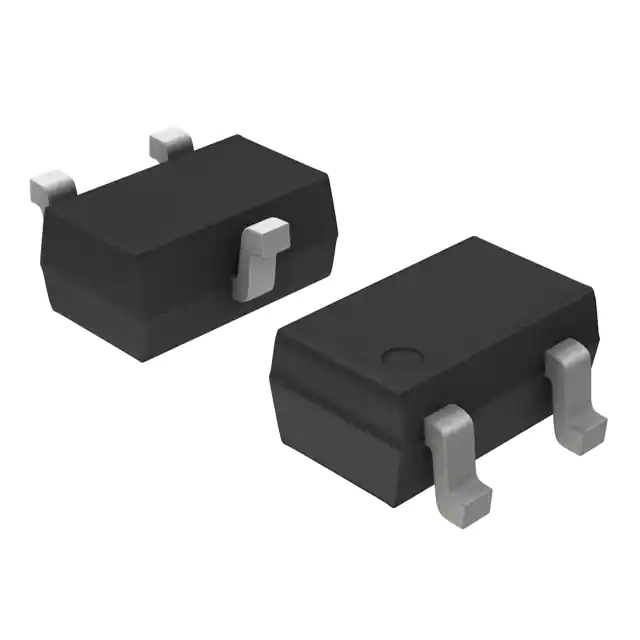
Diodes Incorporated BAS70-04-7-F
- Part No.:
- BAS70-04-7-F
- Manufacturer:
- Diodes Incorporated
- Category:
- Diode Arrays
- Package:
- TO-236-3, SC-59, SOT-23-3
- Datasheet:
-
 BAS70-04-7-F.pdf
- Description:
- DIODE ARR SCHOTT 70V 70MA SOT233
- Quantity:
- Payment:

- Shipping:

Inventory:70,389
Please send an inquiry. Send us your inquiry, and we will respond immediately.
Product details
Overview
BAS70-04-7-F from Diodes Incorporated is a surface-mount Schottky barrier diode in SOT23 package, rated for 70 V peak reverse voltage, 70 mA forward current, and 0.41 V max forward voltage at 1.0 mA, with 2.0 ns reverse recovery time - optimized for high-speed switching in low-voltage signal routing and ESD-protected interface circuits.
For engineers reviewing the BAS70-04-7-F datasheet, BAS70-04-7-F pinout, BAS70-04-7-F application, or BAS70-04-7-F equivalent, key selection criteria include its ultra-fast 2.0 ns tRR, low 0.41 V VF at 1 mA, 70 V VRWM, integrated PN junction guard ring for transient suppression, and SOT23 footprint compatibility with space-constrained PCB layouts.
Technical Context
This Schottky diode uses a planar epitaxial structure with a PN junction guard ring to enhance ESD robustness (IEC 61000-4-2 Level 4 compliant per design intent) and suppress edge breakdown under transient stress. Its low barrier height enables sub-0.45 V turn-on at microamp-level currents.
The device operates across –55 °C to +125 °C junction temperature, with thermal resistance RθJA = 625 °C/W on FR-4 board, and exhibits 2.0 pF total capacitance at 0 V bias - enabling use in RF detector, clamp, and high-frequency sample-and-hold paths where capacitive loading must remain below 2.5 pF.
Key Specifications
| Parameter | Value and Actual Design Meaning |
|---|---|
| VRWM | 70 V - supports DC blocking in 48 V industrial bus interfaces and 24 V PLC I/O protection circuits |
| VF max @ 1.0 mA | 0.41 V - minimizes voltage drop in low-power logic-level clamping and battery-sensor signal conditioning |
| tRR | 2.0 ns - enables reliable operation in >200 MHz digital signal steering and RF envelope detection |
| IR max @ 50 V | 100 nA - ensures negligible leakage in high-impedance analog front-ends and precision reference buffers |
| CT @ 0 V | 2.0 pF - maintains signal integrity in USB 2.0 data line ESD protection and high-speed GPIO clamping |
| PD | 200 mW - allows continuous operation at 70 mA in ambient up to +70 °C with standard SOT23 pad layout |
Pinout & Package
Package: SOT23 - 3-terminal surface-mount plastic package, 2.9 mm × 1.3 mm × 1.0 mm body, moisture sensitivity level 1, lead-free matte tin plating over Alloy 42 leadframe.
| Pin/Terminal | Circuit Role | Design Meaning |
|---|---|---|
| Anode (Pin 1) | Forward current entry | Connected to lower-potential node in clamping or rectification path; polarity-marked by device top-side notch |
| Cathode (Pin 2) | Forward current exit / reverse-blocking terminal | Typically tied to VCC or signal return; serves as ESD current sink during positive transients |
| No-Connect (Pin 3) | Internal die attach flag / thermal slug | Not electrically connected; provides mechanical stability and minor thermal relief; must not be biased |
Key Features
| Feature | Design Value |
|---|---|
| PN junction guard ring | Enables >8 kV HBM ESD tolerance and stable reverse breakdown without snapback in transient events |
| Ultra-fast reverse recovery | 2.0 ns tRR ensures minimal switching loss and ringing in 50–200 MHz clock/data line protection |
| Low forward voltage | 0.41 V VF at 1 mA preserves signal headroom in 1.8 V/3.3 V logic-level interface clamping |
| Green compound packaging | Halogen- and antimony-free molding compound (<900 ppm Br+Cl, <1000 ppm Sb) meets IPC-1752A Class 3 reporting |
Applications
| USB 2.0 Data Line Protection | Low-Voltage Logic-Level Clamping |
|---|---|
Use Scenario: Protecting D+ and D− lines from ESD events in portable USB peripherals and host controllers. IC Role / Device Role / Timing Role: Bidirectional transient voltage suppressor with sub-2 ns response, placed directly at connector. Use Value: Maintains 480 Mbps signal integrity while meeting IEC 61000-4-2 ±8 kV contact discharge requirement. | Use Scenario: Clamping GPIO signals between mixed-voltage domains (e.g., 1.8 V MCU to 3.3 V sensor). IC Role / Device Role / Timing Role: Passive level-shifting clamp diode with minimal forward drop and no active control. Use Value: Prevents latch-up with 0.41 V VF, adds <2.0 pF parasitic capacitance to preserve rise/fall times. |
| RF Detector Input Stage | High-Speed Sample-and-Hold Hold Capacitor Discharge Path |
Use Scenario: Demodulating AM/FM envelope signals in 100–500 MHz receiver front-ends. IC Role / Device Role / Timing Role: Zero-bias Schottky detector diode operating in square-law region. Use Value: Delivers >30 dB dynamic range with 2.0 pF CT and <100 nA IR enabling accurate low-level RF detection. | Use Scenario: Rapidly discharging hold capacitor after acquisition phase in 1 MSPS+ SAR ADC drivers. IC Role / Device Role / Timing Role: Fast-switching discharge switch activated during reset cycle. Use Value: 2.0 ns tRR and 0.41 V VF enable sub-10 ns discharge window without charge injection error. |
Equivalent & Alternatives
The following parts are listed as comparable options for similar Schottky diode applications.
| Alternative Part | Technical Difference | Application Difference | Selection Advice |
|---|---|---|---|
| NSR0230HT1G | Higher VF (0.45 V @ 1 mA), same 70 V VRWM, 3.5 ns tRR | Less suitable for >100 MHz signal paths due to slower recovery | Preferred where cost sensitivity outweighs speed requirement and 0.04 V higher VF is acceptable |
| RB521S-30T2R | Lower VRWM (30 V), identical SOT23-3 package, 0.35 V VF @ 1 mA | Not usable in 48 V bus or industrial I/O protection requiring ≥70 V rating | Select only for ≤3.3 V systems where ultra-low VF and compact size are prioritized over voltage margin |
Compared with NSR0230HT1G and RB521S-30T2R, BAS70-04-7-F uniquely balances 70 V blocking, 2.0 ns switching, and 0.41 V forward drop - making it optimal for high-speed, medium-voltage interface protection where both speed and voltage margin are non-negotiable.
Availability
BAS70-04-7-F is available at Aetrix Electronics and suitable for USB 2.0 interface protection, low-voltage logic clamping, RF detector front-ends, and high-speed sample-and-hold discharge paths requiring stable component supply and consistent SOT23 assembly compatibility.
Supply support for BAS70-04-7-F includes scheduled delivery planning, volume procurement assistance, BOM continuity management, traceable sourcing, and lifecycle availability coordination for OEM customers, industrial embedded developers, connected-device designers, and electronics production programs.
Manufacturer
Diodes Incorporated is a global manufacturer of discrete semiconductors and analog ICs, headquartered in Plano, Texas, with design centers across Asia and manufacturing in ASE, J-Devices, and internal fabs.
The BAS70 series belongs to Diodes' high-speed Schottky diode product line, engineered specifically for ESD-hardened signal routing in portable, industrial, and communications equipment where fast recovery and low leakage are critical.
FAQ
What is the maximum junction temperature for continuous operation?
The BAS70-04-7-F has an operating junction temperature range of –55 °C to +125 °C. Continuous operation at full 70 mA forward current is supported up to +70 °C ambient when mounted on FR-4 with recommended pad layout, based on its 625 °C/W thermal resistance and 200 mW power dissipation rating.
Is BAS70-04-7-F qualified for automotive applications?
No - only the BAS70-04Q-7-F variant is AEC-Q101 qualified, PPAP capable, and manufactured in IATF 16949 certified facilities. The standard BAS70-04-7-F is intended for commercial and industrial applications, with no automotive qualification documentation or change control process applied.
How does the PN junction guard ring improve reliability?
The integrated PN junction guard ring prevents premature edge breakdown under high electric field stress, increasing ESD withstand capability (HBM >8 kV) and improving long-term stability during repetitive transient events. It also reduces parameter drift over temperature and lifetime compared to unguarded Schottky structures.
Can BAS70-04-7-F replace BAS70-05 or BAS70-06 in a design?
No - BAS70-04-7-F has 2.0 ns tRR, while BAS70-05 and BAS70-06 specify 3.0 ns and 5.0 ns respectively. Substituting without circuit revalidation risks timing violations in high-speed paths. Forward voltage and reverse voltage ratings are identical, but recovery time is not interchangeable in critical switching applications.
BAS70-04-7-F Specifications
- Product attributes
- Attribute value
- Manufacturer:
- Diodes Incorporated
- Series:
- -
- Package/Case:
- TO-236-3, SC-59, SOT-23-3
- Packaging:
- Tape & Reel (TR)
- Product Status:
- Active
- Diode Configuration:
- 1 Pair Series Connection
- Technology:
- Schottky
- Voltage - DC Reverse (Vr) (Max):
- 70 V
- Current - Average Rectified (Io) (per Diode):
- 70mA (DC)
- Voltage - Forward (Vf) (Max) @ If:
- 1 V @ 15 mA
- Speed:
- Small Signal =< 200mA (Io), Any Speed
- Reverse Recovery Time (trr):
- 5 ns
- Current - Reverse Leakage @ Vr:
- 100 nA @ 50 V
- Operating Temperature - Junction:
- -55°C ~ 125°C
- Grade:
- -
- Qualification:
- -
- Mounting Type:
- Surface Mount
- Supplier Device Package:
- SOT-23-3
BAS70-04-7-F FAQ
1.How can I place an order for BAS70-04-7-F through Aetrix?
Please submit a Request for Quotation (RFQ) for BAS70-04-7-F on Aetrix. Our sales agent will provide a competitive quotation and guide you through the order confirmation once you accept the terms.
2.Are the price and stock information for BAS70-04-7-F reliable?
The price and inventory of BAS70-04-7-F are updated periodically and may fluctuate due to market conditions. Stock and pricing data are typically refreshed every 24 hours. Quotation validity for BAS70-04-7-F is usually 5 days.
3.What payment methods are accepted for BAS70-04-7-F?
We accept Wire Transfer, PayPal, Credit Card, Western Union, MoneyGram, and Escrow for BAS70-04-7-F transactions.
Note: Certain payment methods may incur a processing fee.
4.How is shipping managed for BAS70-04-7-F?
BAS70-04-7-F orders can be shipped via leading logistics carriers, including DHL, UPS, FedEx, TNT, or Registered Mail.
Once your BAS70-04-7-F order is processed, you will receive an email with the shipment details and tracking number.
Note: Tracking information may take up to 24 hours to appear. Express delivery typically takes 3–5 business days.
5.How can I obtain technical support or documentation for BAS70-04-7-F?
For technical support, including BAS70-04-7-F datasheets, pinout diagrams, or application guidance, please contact our engineering support team. They can provide detailed documentation and assistance for your BAS70-04-7-F requirements.
6.How does Aetrix verify that BAS70-04-7-F is sourced from the original manufacturer or authorized distributors?
All BAS70-04-7-F products on Aetrix are procured from qualified distributors and authorized channels. Our dedicated quality assurance team conducts strict verification, including traceability checks and, if necessary, third-party testing. This ensures that BAS70-04-7-F meets industry standards.
7.What is the process for return or replacement of BAS70-04-7-F?
All BAS70-04-7-F units undergo pre-shipment inspection (PSI). If there is an issue with BAS70-04-7-F, returns or replacements are accepted under the following conditions:
1.Quantity discrepancies, incorrect items, or visible external defects (such as breakage or corrosion), acknowledged by Aetrix.
2.The issue is reported within 90 days of delivery.
3.The BAS70-04-7-F part is unused and in its original packaging.
Return procedure for BAS70-04-7-F:
1.Submit a request within 90 days.
2.Obtain a Return Material Authorization (RMA) from Aetrix.
BAS70-04-7-F Tags
-
BAV99-7-F
Diodes Incorporated
-
BAT54C-7-F
Diodes Incorporated
-
BAV99,215
Nexperia USA Inc.
-
BAT54SLT1G
onsemi
-
BAV70LT1G
onsemi
-
BAT54CLT1G
onsemi
-
BAT54S-7-F
Diodes Incorporated
-
BAV99LT1G
onsemi
-
BAT54S,215
Nexperia USA Inc.
-
BAS40-04LT1G
onsemi
-
MMBD1503-TP
Micro Commercial Co
-
BAV99WT1G
onsemi
Tech Hub

Operational amplifier guide covering op amp basics, feedback, ideal vs real op amps, common configurations, buffer circuits, offset, bias current, gain-bandwidth, slew rate, rail-to-rail limits and sel…

Jumper cables guide covering safe connection order, red and black clamp placement, final ground connection, cable gauge, length, clamp quality, copper vs CCA cables, jump starter comparison and battery…

LDO regulator guide covering low dropout voltage, power dissipation, thermal design, PSRR, output noise, capacitor stability, adjustable LDO circuits, LDO vs buck converter and datasheet selection chec…

Conditional Access Module guide covering CAM meaning, CI/CI+ interface, smart card authorization, DVB security workflow, TV and set-top box compatibility, internal electronics, ESD protection, connecto…

Guide to electronic component obsolescence covering EOL risk, PCN/PDN notices, last-time buy planning, replacement options, form-fit-function validation, counterfeit risk and BOM lifecycle management.

18650 battery guide covering lithium-ion cell basics, 3.6V/3.7V voltage, 4.2V charging, mAh and Wh capacity, protected cells, chargers, BMS, series-parallel packs, holders, welding and sourcing checks.…

Hall effect sensor guide covering working principle, linear and digital sensors, Arduino circuits, current sensing, speed detection, automotive applications, A3144 examples, signal filtering and datash…

Product Change Notification guide for electronic components, covering PCN meaning, PCN vs PDN/EOL, common change types, risk levels, form-fit-function review, engineering validation, BOM control, LTB/L…

A practical guide to blend door actuators, covering HVAC function, symptoms, location, AC and heater issues, reset and calibration, replacement cost, electrical diagnosis, compatibility checks, and rep…

Engineering guide to Raspberry Pi alternatives, covering chip-level differences, Orange Pi, ROCK, Jetson, Banana Pi, NanoPi, Compute Module, Pico, GPIO, camera, HAT compatibility, and replacement risks…


