
 My Inquiry
 My Account


Infineon Technologies BSP320S E6433

- Part No.:
- BSP320S E6433
- Manufacturer:
- Infineon Technologies
- Category:
- FETs, MOSFETs
- Package:
- TO-261-4, TO-261AA
- Datasheet:
-
 BSP320S E6433.pdf
- Description:
- MOSFET N-CH 60V 2.9A SOT223-4
- Quantity:
- Payment:

- Shipping:

Inventory:5,643
Please send an inquiry. Send us your inquiry, and we will respond immediately.
Product details
Overview
BSP320S E6433 from Infineon Technologies is a P-channel enhancement-mode MOSFET in SOT-223 package, rated for −60 V VDS, −3.5 A ID (TC = 25 °C), and RDS(on) ≤ 1.4 Ω at VGS = −10 V. It serves as a low-side load switch in automotive body electronics, industrial power management, and LED lighting control circuits.
For engineers reviewing the BSP320S E6433 datasheet, BSP320S E6433 pinout, BSP320S E6433 application, or BSP320S E6433 equivalent, key selection criteria include guaranteed RDS(on) at −10 V gate drive, specified avalanche energy rating (EAS = 75 mJ), and AEC-Q101 qualification for automotive use.
Technical Context
This discrete MOSFET operates in enhancement mode with gate threshold voltage VGS(th) between −1 V and −3 V, enabling reliable turn-on with standard logic-level negative gate drive. Its SOA is characterized up to TC = 100 °C with pulse-width-limited safe operating area curves defined per JEDEC JESD82-1.
The device features an integrated body diode with reverse recovery time trr = 45 ns and Qrr = 29 nC at IF = −3.5 A, supporting moderate-frequency switching in DC-DC and load-switching topologies without external snubbing.
Key Specifications
| Parameter | Value and Actual Design Meaning |
|---|---|
| VDS | −60 V - Maximum drain-source blocking voltage under continuous DC operation |
| ID (TC = 25 °C) | −3.5 A - Continuous DC current capability with heatsink at case temperature 25 °C |
| RDS(on) (VGS = −10 V) | ≤ 1.4 Ω - On-resistance defining conduction loss in high-side or low-side switch configurations |
| VGS(th) | −1 V to −3 V - Gate threshold range ensuring predictable turn-on with standard microcontroller outputs |
| EAS | 75 mJ - Single-pulse avalanche energy rating confirming ruggedness against inductive switching transients |
| Qg | 11 nC - Total gate charge determining required driver current for 100 kHz–500 kHz switching |
Pinout & Package
Package: SOT-223 (TO-261AA), surface-mount, thermally enhanced plastic package with exposed drain pad for PCB heat sinking.
| Pin/Terminal | Circuit Role | Design Meaning |
|---|---|---|
| 1 (Gate) | Control terminal | Receives negative gate drive relative to source to enable channel conduction |
| 2 (Source) | Reference node | Common return path for load current; tied to system ground or floating rail |
| 3 (Drain) | Power output node | Connected to load or supply rail; electrically and thermally coupled to exposed pad |
| 4 (Drain tab) | Thermal & electrical connection | Exposed metal pad soldered to large copper pour for thermal dissipation and low-inductance current path |
Key Features
| Feature | Design Value |
|---|---|
| AEC-Q101 qualified | Validated for automotive applications including engine control modules and lighting ECUs |
| 100 % UIS tested | Each unit screened for unclamped inductive switching robustness per JESD22-A109 |
| Low gate charge (Qg = 11 nC) | Enables efficient driving from low-power MCU GPIOs or dedicated gate drivers |
| Enhancement-mode P-channel | Ensures default-OFF behavior for fail-safe load control without external pull-up components |
Applications
| Automotive Body Control Module | Industrial LED Driver |
|---|---|
Use Scenario: Switching 12 V incandescent and LED loads (e.g., interior lamps, door locks) in centralized BCM units. IC Role / Device Role / Timing Role: Low-side load switch controlling current path to ground; driven by 3.3 V/5 V microcontroller with level-shifting or direct −10 V gate bias. Use Value: Eliminates need for external flyback diodes due to specified body diode recovery performance and 75 mJ avalanche rating. |
Use Scenario: Dimmable constant-current LED string control in factory lighting and signage systems. IC Role / Device Role / Timing Role: PWM-controlled current sink switch operating at 1–10 kHz; placed between LED cathode and ground. Use Value: RDS(on) ≤ 1.4 Ω ensures <1.7 W conduction loss at 3.5 A, reducing heatsink requirements in enclosed fixtures. |
| Smart Power Outlet | 12 V DC Power Distribution Unit |
Use Scenario: Remote-controllable AC/DC outlet with overcurrent and short-circuit protection. IC Role / Device Role / Timing Role: Primary load switch in eFuse-like architecture; coordinated with current-sense amplifier and comparator. Use Value: Guaranteed RDS(on) tolerance enables accurate current limit calibration across production lots. |
Use Scenario: Centralized 12 V bus distribution with individual branch switching in test equipment racks. IC Role / Device Role / Timing Role: High-reliability power switch with fault reporting via gate driver feedback loop. Use Value: AEC-Q101 qualification provides extended lifetime assurance (>15 years) under thermal cycling stress. |
Equivalent & Alternatives
The following parts are listed as comparable options for similar P-channel MOSFET load switch applications.
| Alternative Part | Technical Difference | Application Difference | Selection Advice |
|---|---|---|---|
| STP3PF50 | VDS = −50 V, RDS(on) = 1.8 Ω @ −10 V, non-AEC-Q101 | Limited to industrial/non-automotive use; lower voltage rating restricts 24 V system compatibility | Select when cost sensitivity outweighs automotive qualification and 60 V margin |
| IRF9540NPBF | VDS = −100 V, RDS(on) = 200 mΩ @ −10 V, TO-220 package | Higher voltage headroom but larger footprint and higher gate charge (Qg = 54 nC) | Prefer for 48 V systems requiring >60 V blocking, accepting trade-off in board space and drive complexity |
Compared with STP3PF50 and IRF9540NPBF, BSP320S E6433 uniquely balances AEC-Q101 compliance, 60 V rating, compact SOT-223 footprint, and low gate charge-making it optimal for space-constrained automotive and industrial load-switch designs where reliability and thermal efficiency are prioritized.
Availability
BSP320S E6433 is available at Aetrix Electronics and suitable for automotive body electronics, industrial LED drivers, and smart power outlets requiring stable component supply and long-term lifecycle support.
Supply support for BSP320S E6433 includes scheduled delivery planning, volume procurement assistance, BOM continuity management, traceable sourcing, and lifecycle availability coordination for OEM customers, industrial embedded developers, connected-device designers, and electronics production programs.
Manufacturer
Infineon Technologies is a German semiconductor manufacturer specializing in power semiconductors, automotive ICs, and security solutions, with global manufacturing and R&D infrastructure.
BSP320S belongs to Infineon's OptiMOS™ family of low-voltage power MOSFETs, engineered specifically for high-efficiency, high-reliability load switching in automotive and industrial environments.
FAQ
Is BSP320S E6433 suitable for 24 V automotive systems?
Yes. With a −60 V VDS rating and AEC-Q101 qualification, BSP320S E6433 supports 24 V nominal systems including load-dump transients up to ±60 V. Its avalanche energy rating (EAS = 75 mJ) ensures survivability during inductive switching events common in solenoid and relay control.
What is the maximum junction temperature for continuous operation?
The absolute maximum junction temperature is 150 °C. For continuous DC operation at ID = −3.5 A, thermal design must maintain TJ ≤ 150 °C using the SOT-223 package's RthJC = 50 K/W and appropriate PCB copper area. Derating is required above TC = 25 °C per the datasheet SOA curve.
Does BSP320S E6433 require a gate resistor for PWM switching?
A gate resistor (typically 10–47 Ω) is recommended to dampen ringing and limit peak gate current during 1–10 kHz PWM operation. The device's Qg = 11 nC allows clean switching with standard logic drivers, but uncontrolled gate drive may cause oscillation due to PCB trace inductance interacting with Ciss = 340 pF.
Can BSP320S E6433 replace BSP317 in existing designs?
No. BSP317 is an N-channel MOSFET (VDS = 60 V, ID = 2.2 A), requiring high-side or level-shifted gate drive. BSP320S E6433 is P-channel and intended for low-side switching. Direct replacement would invert control logic and compromise safety; redesign of gate drive and layout is required.
BSP320S E6433 Specifications
- Product attributes
- Attribute value
- Manufacturer:
- Infineon Technologies
- Series:
- SIPMOS®
- Package/Case:
- TO-261-4, TO-261AA
- Packaging:
- Tape & Reel (TR)
- Product Status:
- Discontinued at Digi-Key
- FET Type:
- N-Channel
- Technology:
- MOSFET (Metal Oxide)
- Drain to Source Voltage (Vdss):
- 60 V
- Current - Continuous Drain (Id) @ 25°C:
- 2.9A (Ta)
- Drive Voltage (Max Rds On, Min Rds On):
- 10V
- Rds On (Max) @ Id, Vgs:
- 120mOhm @ 2.9A, 10V
- Vgs(th) (Max) @ Id:
- 4V @ 20µA
- Gate Charge (Qg) (Max) @ Vgs:
- 12 nC @ 10 V
- Vgs (Max):
- ±20V
- Input Capacitance (Ciss) (Max) @ Vds:
- 340 pF @ 25 V
- FET Feature:
- -
- Power Dissipation (Max):
- 1.8W (Ta)
- Operating Temperature:
- -55°C ~ 150°C (TJ)
- Grade:
- -
- Qualification:
- -
- Mounting Type:
- Surface Mount
- Supplier Device Package:
- PG-SOT223-4
BSP320S E6433 FAQ
1.How can I place an order for BSP320S E6433 through Aetrix?
Please submit a Request for Quotation (RFQ) for BSP320S E6433 on Aetrix. Our sales agent will provide a competitive quotation and guide you through the order confirmation once you accept the terms.
2.Are the price and stock information for BSP320S E6433 reliable?
The price and inventory of BSP320S E6433 are updated periodically and may fluctuate due to market conditions. Stock and pricing data are typically refreshed every 24 hours. Quotation validity for BSP320S E6433 is usually 5 days.
3.What payment methods are accepted for BSP320S E6433?
We accept Wire Transfer, PayPal, Credit Card, Western Union, MoneyGram, and Escrow for BSP320S E6433 transactions.
Note: Certain payment methods may incur a processing fee.
4.How is shipping managed for BSP320S E6433?
BSP320S E6433 orders can be shipped via leading logistics carriers, including DHL, UPS, FedEx, TNT, or Registered Mail.
Once your BSP320S E6433 order is processed, you will receive an email with the shipment details and tracking number.
Note: Tracking information may take up to 24 hours to appear. Express delivery typically takes 3–5 business days.
5.How can I obtain technical support or documentation for BSP320S E6433?
For technical support, including BSP320S E6433 datasheets, pinout diagrams, or application guidance, please contact our engineering support team. They can provide detailed documentation and assistance for your BSP320S E6433 requirements.
6.How does Aetrix verify that BSP320S E6433 is sourced from the original manufacturer or authorized distributors?
All BSP320S E6433 products on Aetrix are procured from qualified distributors and authorized channels. Our dedicated quality assurance team conducts strict verification, including traceability checks and, if necessary, third-party testing. This ensures that BSP320S E6433 meets industry standards.
7.What is the process for return or replacement of BSP320S E6433?
All BSP320S E6433 units undergo pre-shipment inspection (PSI). If there is an issue with BSP320S E6433, returns or replacements are accepted under the following conditions:
1.Quantity discrepancies, incorrect items, or visible external defects (such as breakage or corrosion), acknowledged by Aetrix.
2.The issue is reported within 90 days of delivery.
3.The BSP320S E6433 part is unused and in its original packaging.
Return procedure for BSP320S E6433:
1.Submit a request within 90 days.
2.Obtain a Return Material Authorization (RMA) from Aetrix.
BSP320S E6433 Tags
-
BSZ180P03NS3EGATMA1
Infineon Technologies
-
SIRA14DP-T1-GE3
Vishay Siliconix

-
AO4419
Alpha & Omega Semiconductor Inc.
-
SISA14BDN-T1-GE3
Vishay Siliconix
-
PSMN9R5-30YLC,115
Nexperia USA Inc.
-
BUK9Y21-40E,115
Nexperia USA Inc.
-
RTQ035N03HZGTR
Rohm Semiconductor
-
FDMS7680
onsemi
-
RQ3E180BNTB
Rohm Semiconductor
-
STL6N2VH5
STMicroelectronics
-
DMPH4029LFGQ-7
Diodes Incorporated
-
DMT6015LSS-13
Diodes Incorporated
Tech Hub

Guide to electronic component obsolescence covering EOL risk, PCN/PDN notices, last-time buy planning, replacement options, form-fit-function validation, counterfeit risk and BOM lifecycle management.

18650 battery guide covering lithium-ion cell basics, 3.6V/3.7V voltage, 4.2V charging, mAh and Wh capacity, protected cells, chargers, BMS, series-parallel packs, holders, welding and sourcing checks.…

Hall effect sensor guide covering working principle, linear and digital sensors, Arduino circuits, current sensing, speed detection, automotive applications, A3144 examples, signal filtering and datash…

Product Change Notification guide for electronic components, covering PCN meaning, PCN vs PDN/EOL, common change types, risk levels, form-fit-function review, engineering validation, BOM control, LTB/L…

A practical guide to blend door actuators, covering HVAC function, symptoms, location, AC and heater issues, reset and calibration, replacement cost, electrical diagnosis, compatibility checks, and rep…

Engineering guide to Raspberry Pi alternatives, covering chip-level differences, Orange Pi, ROCK, Jetson, Banana Pi, NanoPi, Compute Module, Pico, GPIO, camera, HAT compatibility, and replacement risks…
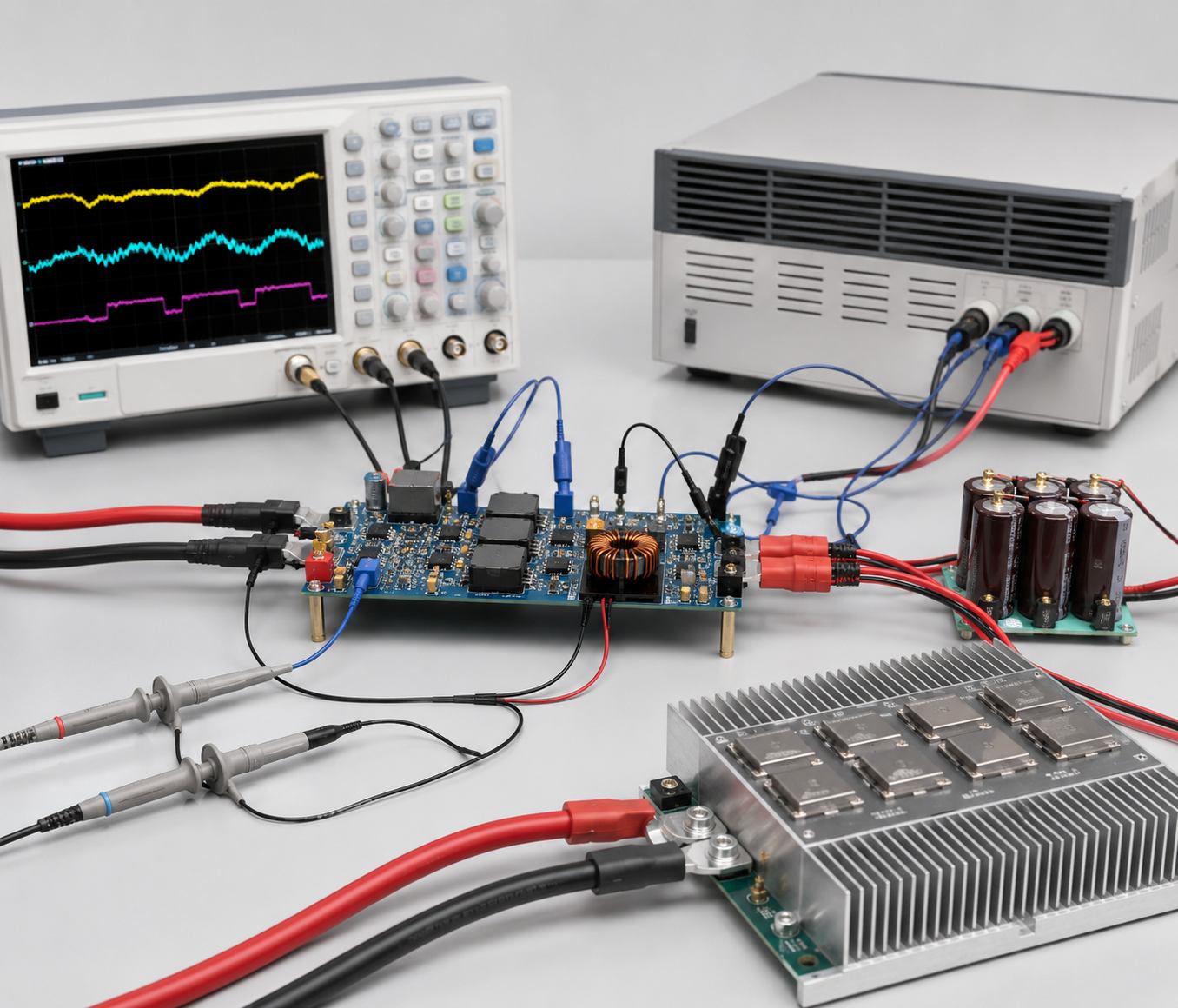
Engineering guide to dynamic load response testing for high-current buck converters, covering load step setup, slew rate, Vcore undershoot, overshoot, recovery time, probe location, output capacitors a…

Engineering guide to output capacitor selection for ASIC Vcore rails, covering bulk capacitors, polymer capacitors, MLCC decoupling, DC bias, ESR, ESL, placement, transient response and substitution ri…
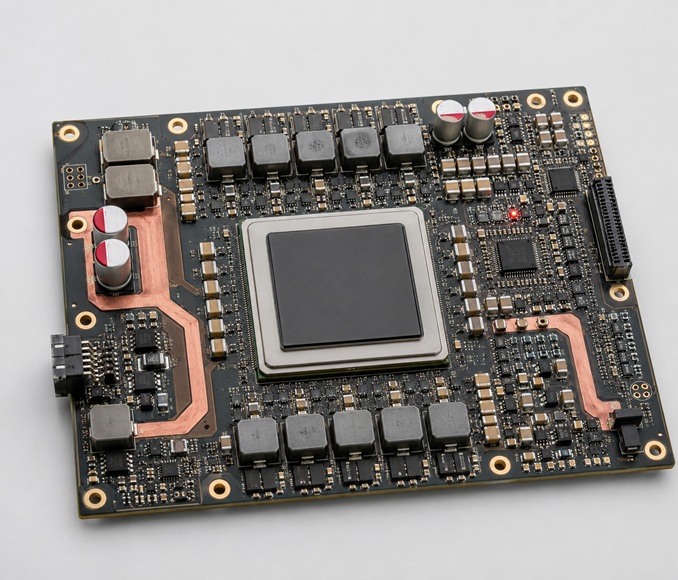
Engineering guide to high-current ASIC Vcore rails, covering 12-phase buck architecture, PMBus control, dynamic load testing, output capacitor networks, smart power stage selection, thermal design and …
Voltage regulator guide covering linear, LDO, 7805, Zener, adjustable, buck, VRM and alternator regulators, with design checks, testing methods, troubleshooting and datasheet-based selection.


