
 My Inquiry
 My Account


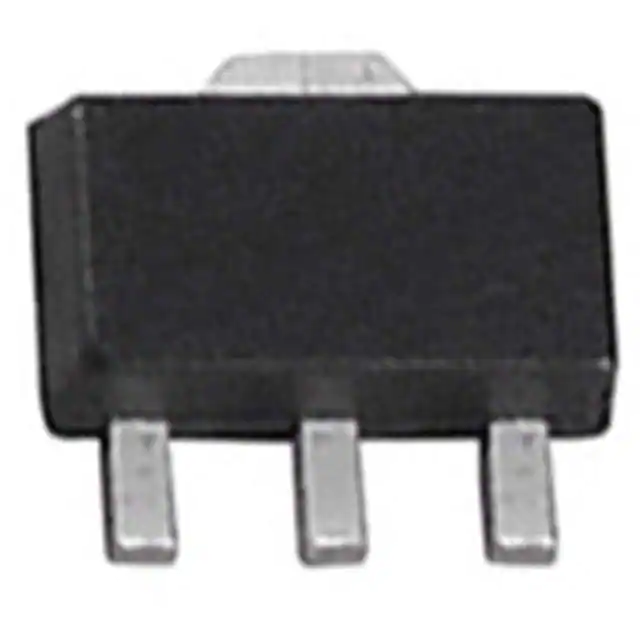
Infineon Technologies BSS225
- Part No.:
- BSS225
- Manufacturer:
- Infineon Technologies
- Category:
- FETs, MOSFETs
- Package:
- TO-243AA
- Datasheet:
-
 BSS225.pdf
- Description:
- MOSFET N-CH 600V 90MA SOT89
- Quantity:
- Payment:

- Shipping:

Inventory:7,346
Please send an inquiry. Send us your inquiry, and we will respond immediately.
Product details
Overview
BSS225 from Infineon Technologies is an n-channel enhancement-mode SIPMOS® small-signal MOSFET rated for 600 V drain-source voltage, 45 Ω max RDS(on) at VGS = 4.5 V, and 90 mA continuous drain current in SOT-89 package; it features logic-level gate drive (VGS(th) = 1.3–2.3 V), 6 kV/µs dv/dt immunity, and AEC-Q101 qualification for automotive power switching.
For engineers reviewing the BSS225 datasheet, BSS225 pinout, BSS225 application, or BSS225 equivalent, this device supports high-voltage, low-current switching in space-constrained automotive and industrial control circuits where robust dv/dt performance and logic-compatible gate drive are required.
Technical Context
This MOSFET operates in enhancement mode with a threshold voltage tightly specified between 1.3 V and 2.3 V at ID = 94 µA, enabling direct interface with 3.3 V and 5 V logic controllers. Its 600 V V(BR)DSS rating and 6 kV/µs dv/dt capability support reliable operation in inductive load switching environments such as solenoid drivers and relay interfaces.
Thermal resistance RthJA is 125 K/W under minimal footprint conditions, and its reverse diode exhibits trr = 246–370 ns and Qrr = 248–373 nC at VR = 300 V, supporting moderately fast commutation without external snubbing in low-frequency (<100 kHz) applications.
Key Specifications
| Parameter | Value and Actual Design Meaning |
|---|---|
| VDS | 600 V - supports switching of 400 V DC bus or 280 V AC RMS lines with margin |
| RDS(on), max | 45 Ω at VGS = 4.5 V - delivers ≤90 mA with <2 V drop at logic-level gate drive |
| ID, cont. | 90 mA at TA = 25 °C - suitable for low-power load switching, not motor drives |
| VGS(th) | 1.3–2.3 V - ensures turn-on with standard 3.3 V microcontroller GPIO |
| dv/dt rating | 6 kV/µs - suppresses false triggering in noisy inductive load environments |
| trr | 246–370 ns - enables clean turn-off in 20–50 kHz PWM-controlled solenoids |
| Qg | 3.9–5.8 nC - allows efficient gate driving with <1 mA average current at 100 kHz |
Pinout & Package
SOT-89 package: surface-mount, 3-pin, single-ended lead frame with exposed drain pad for thermal conduction; requires conformal coating per datasheet note due to creepage sensitivity at high voltage.
| Pin/Terminal | Circuit Role | Design Meaning |
|---|---|---|
| Pin 1 (Source) | Source terminal | Reference node for gate control; connects to ground or low-side return path |
| Pin 2 (Gate) | Control input | High-impedance node requiring <1 µA leakage; driven by logic-level MCU output |
| Pin 3 (Drain) | High-voltage switch node | Connected to load and 600 V rail; thermally coupled to PCB copper via exposed pad |
Key Features
| Feature | Design Value |
|---|---|
| Logic-level gate drive | Operates fully enhanced at VGS ≥ 4.5 V, compatible with 3.3 V/5 V digital outputs without level shifters |
| AEC-Q101 qualified | Validated for automotive temperature range (−55 °C to +150 °C) and mechanical stress requirements |
| dv/dt immune | Rated 6 kV/µs - prevents spurious turn-on during fast voltage transients across inductive loads |
| Integrated body diode | Reverse recovery time 246–370 ns and Qrr 248–373 nC enable controlled freewheeling in flyback configurations |
Applications
| Automotive Solenoid Driver | Industrial Relay Interface |
|---|---|
Use Scenario: Driving 12 V/24 V automotive fuel injectors or HVAC actuators with PWM control. IC Role / Device Role / Timing Role: High-side or low-side switch managing inductive coil current with precise timing and dv/dt immunity. Use Value: Eliminates need for external gate driver or snubber due to logic-level compatibility and 6 kV/µs transient tolerance. | Use Scenario: Replacing electromechanical relays in PLC output modules for 24–48 V DC control signals. IC Role / Device Role / Timing Role: Solid-state replacement providing faster switching, longer life, and reduced EMI vs. mechanical contacts. Use Value: Enables compact SOT-89 mounting on dense control boards while maintaining 600 V isolation margin. |
| Low-Power HV DC-DC Bias Supply | LED String Switching in Harsh Environments |
Use Scenario: Controlling startup sequencing or auxiliary bias rails in isolated flyback converters. IC Role / Device Role / Timing Role: Primary-side switch for low-duty-cycle, low-ID auxiliary windings. Use Value: Leverages 600 V rating and low Qg (3.9–5.8 nC) for efficient gate drive at <100 kHz. | Use Scenario: Switching LED strings in outdoor signage or vehicle lighting exposed to vibration and humidity. IC Role / Device Role / Timing Role: Low-current constant-current path switch with integrated diode for reverse polarity protection. Use Value: AEC-Q101 qualification and conformal-coating-ready SOT-89 package ensure reliability in extended temperature and contamination cycles. |
Equivalent & Alternatives
The following parts are listed as comparable options for similar n-channel logic-level MOSFET applications.
| Alternative Part | Technical Difference | Application Difference | Selection Advice |
|---|---|---|---|
| STP1NK60Z | 600 V, 1 A ID, RDS(on) = 70 Ω @ 10 V - higher current but higher on-resistance and non-logic-level (VGS(th) = 2–4 V) | Requires gate driver for reliable 3.3 V logic; better suited for higher-current, lower-frequency switching | Select when >100 mA load current is needed and gate drive voltage ≥5 V is available |
| DMN2004LK-7 | 20 V, 4.2 A, RDS(on) = 30 mΩ @ 4.5 V - much lower voltage rating, optimized for battery-powered logic-level apps | Not suitable for >60 V systems; lacks dv/dt rating and AEC-Q101 qualification | Select only for low-voltage (<24 V), high-current portable electronics with strict gate drive constraints |
Compared with STP1NK60Z and DMN2004LK-7, BSS225 uniquely balances 600 V capability, true logic-level operation, AEC-Q101 compliance, and SOT-89 compactness-making it optimal for automotive and industrial 24–48 V control nodes where space, voltage margin, and noise immunity are jointly critical.
Availability
BSS225 is available at Aetrix Electronics and suitable for automotive solenoid drivers, industrial relay interfaces, low-power HV DC-DC bias supplies, and LED string switching requiring stable component supply and long-term lifecycle assurance.
Supply support for BSS225 includes scheduled delivery planning, volume procurement assistance, BOM continuity management, traceable sourcing, and lifecycle availability coordination for OEM customers, industrial embedded developers, connected-device designers, and electronics production programs.
Manufacturer
Infineon Technologies is a German semiconductor manufacturer specializing in power management, automotive electronics, and industrial control ICs and discrete devices.
The SIPMOS® small-signal transistor product line targets high-reliability, high-voltage switching in automotive and industrial applications where logic-level drive, dv/dt immunity, and AEC-Q101 qualification are mandatory.
FAQ
Is BSS225 suitable for use in high-frequency switching applications above 500 kHz?
No. BSS225 has a total gate charge of 3.9–5.8 nC and turn-off delay/fall times totaling ~155 ns minimum, limiting practical PWM operation to ≤100 kHz. Its capacitance profile (Ciss = 99–131 pF, Crss = 3.1–4.4 pF) and RDS(on) thermal behavior are optimized for low-to-moderate frequency switching, not RF or resonant topologies.
Does BSS225 require a gate resistor for stability in automotive applications?
Yes. A series gate resistor of 10–47 Ω is recommended to dampen ringing caused by PCB trace inductance interacting with Ciss and Crss, especially in noisy 12 V/24 V vehicle electrical systems. This improves EMI performance and prevents unintended oscillation during fast edge transitions.
Can BSS225 replace a bipolar junction transistor (BJT) in existing 24 V relay driver designs?
Yes, with minor redesign. Replace base resistor with direct MCU GPIO connection (no current-limiting needed), relocate load to drain (high-side) or source (low-side), and verify that 90 mA ID meets relay coil hold current. The MOSFET eliminates base drive current and provides faster, more predictable switching than a BJT.
What is the maximum allowable PCB copper area for thermal relief under the SOT-89 drain pad?
Per Infineon's layout guidelines, a minimum 25 mm² copper pour connected to the drain pad via ≥4 thermal vias (0.3 mm diameter) is required to achieve the stated RthJA = 125 K/W. Reducing copper area increases junction temperature disproportionately-e.g., halving copper area raises RthJA by ~40%, risking thermal runaway at full ID.
BSS225 Specifications
- Product attributes
- Attribute value
- Manufacturer:
- Infineon Technologies
- Series:
- SIPMOS®
- Package/Case:
- TO-243AA
- Packaging:
- Tape & Reel (TR)
- Product Status:
- Obsolete
- FET Type:
- N-Channel
- Technology:
- MOSFET (Metal Oxide)
- Drain to Source Voltage (Vdss):
- 600 V
- Current - Continuous Drain (Id) @ 25°C:
- 90mA (Ta)
- Drive Voltage (Max Rds On, Min Rds On):
- 4.5V, 10V
- Rds On (Max) @ Id, Vgs:
- 45Ohm @ 90mA, 10V
- Vgs(th) (Max) @ Id:
- 2.3V @ 94µA
- Gate Charge (Qg) (Max) @ Vgs:
- 5.8 nC @ 10 V
- Vgs (Max):
- ±20V
- Input Capacitance (Ciss) (Max) @ Vds:
- 131 pF @ 25 V
- FET Feature:
- -
- Power Dissipation (Max):
- 1W (Ta)
- Operating Temperature:
- -55°C ~ 150°C (TJ)
- Grade:
- -
- Qualification:
- -
- Mounting Type:
- Surface Mount
- Supplier Device Package:
- PG-SOT89
BSS225 FAQ
1.How can I place an order for BSS225 through Aetrix?
Please submit a Request for Quotation (RFQ) for BSS225 on Aetrix. Our sales agent will provide a competitive quotation and guide you through the order confirmation once you accept the terms.
2.Are the price and stock information for BSS225 reliable?
The price and inventory of BSS225 are updated periodically and may fluctuate due to market conditions. Stock and pricing data are typically refreshed every 24 hours. Quotation validity for BSS225 is usually 5 days.
3.What payment methods are accepted for BSS225?
We accept Wire Transfer, PayPal, Credit Card, Western Union, MoneyGram, and Escrow for BSS225 transactions.
Note: Certain payment methods may incur a processing fee.
4.How is shipping managed for BSS225?
BSS225 orders can be shipped via leading logistics carriers, including DHL, UPS, FedEx, TNT, or Registered Mail.
Once your BSS225 order is processed, you will receive an email with the shipment details and tracking number.
Note: Tracking information may take up to 24 hours to appear. Express delivery typically takes 3–5 business days.
5.How can I obtain technical support or documentation for BSS225?
For technical support, including BSS225 datasheets, pinout diagrams, or application guidance, please contact our engineering support team. They can provide detailed documentation and assistance for your BSS225 requirements.
6.How does Aetrix verify that BSS225 is sourced from the original manufacturer or authorized distributors?
All BSS225 products on Aetrix are procured from qualified distributors and authorized channels. Our dedicated quality assurance team conducts strict verification, including traceability checks and, if necessary, third-party testing. This ensures that BSS225 meets industry standards.
7.What is the process for return or replacement of BSS225?
All BSS225 units undergo pre-shipment inspection (PSI). If there is an issue with BSS225, returns or replacements are accepted under the following conditions:
1.Quantity discrepancies, incorrect items, or visible external defects (such as breakage or corrosion), acknowledged by Aetrix.
2.The issue is reported within 90 days of delivery.
3.The BSS225 part is unused and in its original packaging.
Return procedure for BSS225:
1.Submit a request within 90 days.
2.Obtain a Return Material Authorization (RMA) from Aetrix.
BSS225 Tags
-
BSZ180P03NS3EGATMA1
Infineon Technologies
-
SIRA14DP-T1-GE3
Vishay Siliconix

-
AO4419
Alpha & Omega Semiconductor Inc.
-
SISA14BDN-T1-GE3
Vishay Siliconix
-
PSMN9R5-30YLC,115
Nexperia USA Inc.
-
BUK9Y21-40E,115
Nexperia USA Inc.
-
RTQ035N03HZGTR
Rohm Semiconductor
-
FDMS7680
onsemi
-
RQ3E180BNTB
Rohm Semiconductor
-
STL6N2VH5
STMicroelectronics
-
DMPH4029LFGQ-7
Diodes Incorporated
-
DMT6015LSS-13
Diodes Incorporated
Tech Hub

18650 battery guide covering lithium-ion cell basics, 3.6V/3.7V voltage, 4.2V charging, mAh and Wh capacity, protected cells, chargers, BMS, series-parallel packs, holders, welding and sourcing checks.…

Hall effect sensor guide covering working principle, linear and digital sensors, Arduino circuits, current sensing, speed detection, automotive applications, A3144 examples, signal filtering and datash…

Product Change Notification guide for electronic components, covering PCN meaning, PCN vs PDN/EOL, common change types, risk levels, form-fit-function review, engineering validation, BOM control, LTB/L…

A practical guide to blend door actuators, covering HVAC function, symptoms, location, AC and heater issues, reset and calibration, replacement cost, electrical diagnosis, compatibility checks, and rep…

Engineering guide to Raspberry Pi alternatives, covering chip-level differences, Orange Pi, ROCK, Jetson, Banana Pi, NanoPi, Compute Module, Pico, GPIO, camera, HAT compatibility, and replacement risks…

Engineering guide to dynamic load response testing for high-current buck converters, covering load step setup, slew rate, Vcore undershoot, overshoot, recovery time, probe location, output capacitors a…

Engineering guide to output capacitor selection for ASIC Vcore rails, covering bulk capacitors, polymer capacitors, MLCC decoupling, DC bias, ESR, ESL, placement, transient response and substitution ri…
Engineering guide to high-current ASIC Vcore rails, covering 12-phase buck architecture, PMBus control, dynamic load testing, output capacitor networks, smart power stage selection, thermal design and …
Voltage regulator guide covering linear, LDO, 7805, Zener, adjustable, buck, VRM and alternator regulators, with design checks, testing methods, troubleshooting and datasheet-based selection.

Amplifier guide covering voltage, current and power amplification, gain, feedback, amplifier classes, audio and RF applications, op-amp circuits, transimpedance amplifiers, datasheet selection and trou…


