
 My Inquiry
 My Account


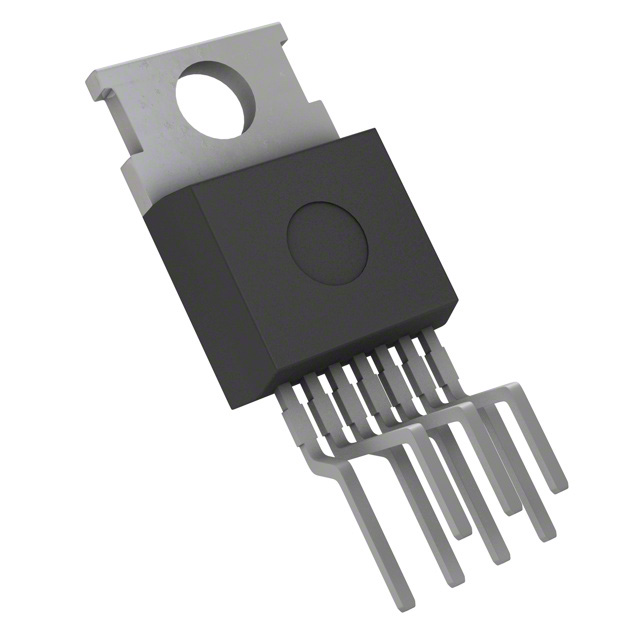
Infineon Technologies BTS282ZAKSA1
- Part No.:
- BTS282ZAKSA1
- Manufacturer:
- Infineon Technologies
- Category:
- FETs, MOSFETs
- Package:
- TO-220-7
- Datasheet:
-
 BTS282ZAKSA1.pdf
- Description:
- MOSFET N-CH 49V 80A TO220-7
- Quantity:
- Payment:

- Shipping:

Inventory:2,337
Please send an inquiry. Send us your inquiry, and we will respond immediately.
Product details
Overview
BTS282ZAKSA1 from Infineon Technologies is a Speed TEMPFET™ monolithic N-channel logic-level power MOSFET with integrated potential-free thyristor-based temperature sensor and overtemperature protection. It features 49 V VDS, 6.5 mΩ RDS(on) at VGS = 10 V, 80 A continuous drain current at TC = 100 °C, and fast switching up to 1 MHz - used in automotive body control modules for high-side load driving with thermal trip at 150–170 °C.
For engineers reviewing the BTS282ZAKSA1 datasheet, BTS282ZAKSA1 pinout, BTS282ZAKSA1 application, or BTS282ZAKSA1 equivalent, key selection criteria include its dual-function integration (power switch + self-resetting thermal sensor), avalanche-rated ruggedness, ISO 10483-compliant load current rating, and P-TO220-7-3 package with three source pins for low-inductance parallel conduction.
Technical Context
This device combines a high-current N-channel MOSFET and an independent thyristor-type temperature sensor on a single die. The sensor operates with zero external bias, triggers at 150–170 °C, and latches until reset via a 100 µs pulse applied between anode (Pin 3) and cathode (Pin 5); turn-off time is under 2.5 µs when gate and anode are shorted to source.
The MOSFET supports logic-level drive (VGS(th) = 1.2–2.0 V), delivers 320 A pulsed drain current, and exhibits low dynamic losses: Ciss = 3850–4800 pF, Qg(total) = 155–232 nC, and tr/tf < 60 ns at 80 A. Its RthJC = 0.5 K/W enables high-power operation with minimal heatsink requirements.
Key Specifications
| Parameter | Value and Actual Design Meaning |
|---|---|
| VDS | 49 V - Maximum blocking voltage; defines safe operating range in 24 V automotive systems with load dump margin. |
| RDS(on) | 6.5 mΩ @ VGS = 10 V - Enables ≤52 A continuous current at TC = 85 °C per ISO 10483 without forced cooling. |
| ID(continuous) | 80 A @ TC = 100 °C - Supports high-current loads like HVAC blowers or seat heaters with single-device implementation. |
| TTS(on) | 150–170 °C - Thermal trip threshold; provides precise, self-contained overtemperature shutdown before silicon damage. |
| EAS | 2 J - Single-pulse avalanche energy rating; ensures robustness against inductive switching transients in motor drives. |
| Qg(total) | 155–232 nC - Gate charge magnitude defining driver strength requirement for 1 MHz switching at full load. |
| toff (sensor) | 0.5–2.5 µs - Fast thermal latch deactivation time enabling rapid system recovery after fault clearance. |
Pinout & Package
Packaged in P-TO220-7-3 (7-pin through-hole, 3-source-tab configuration), this device uses the metal tab as Drain (Pin 4 + TAB) for direct heatsinking, with three dedicated Source terminals (Pins 1, 6, 7) to minimize bond-wire inductance and enable parallel current paths.
| Pin/Terminal | Circuit Role | Design Meaning |
|---|---|---|
| 1 S | Source | Primary low-side return path; electrically tied to Pins 6 and 7 for distributed current sharing and reduced loop inductance. |
| 2 G | Gate | Logic-level MOSFET control input; compatible with 3.3 V/5 V microcontrollers without level-shifting. |
| 3 A | Anode (Temp Sensor) | Thyristor anode terminal; connects to external reset circuit to deactivate thermal latch after overtemperature event. |
| 4 D / TAB | Drain / Heatsink Interface | Main power output and thermal interface; metal tab must be electrically isolated and thermally coupled to heatsink. |
| 5 K | Cathode (Temp Sensor) | Thyristor cathode; referenced to source during sensing; forms latching pair with Pin 3 for autonomous thermal cutoff. |
| 6 S | Source | Secondary source connection; reduces IR drop and improves current distribution across PCB layout. |
| 7 S | Source | Third source connection; enhances thermal spreading and minimizes localized heating at source bonding points. |
Key Features
| Feature | Design Value |
|---|---|
| Integrated temperature sensor | Self-contained thyristor-based thermal protection with 150–170 °C trip point and sub-3 µs reset-to-off latency. |
| Avalanche ruggedness | 2 J single-pulse EAS rating ensures reliable operation under inductive load switching without external snubbers. |
| Logic-level gate drive | VGS(th) = 1.2–2.0 V enables direct interfacing with automotive MCUs and low-voltage GPIOs. |
| High-current source configuration | Three independent source pins reduce effective source inductance and improve transient current sharing in PWM applications. |
| Fast switching capability | Turn-on/off times < 50 ns at 80 A support 1 MHz PWM for precision analog driving of resistive and inductive loads. |
Applications
| Automotive Body Control Module | Industrial Motor Starter |
|---|---|
Use Scenario: Driving high-current 24 V DC loads such as radiator fans, headlight leveling actuators, or door lock solenoids in vehicle body electronics. IC Role / Device Role / Timing Role: High-side power switch with embedded thermal cutoff; replaces discrete MOSFET + external thermal IC solution. Use Value: Eliminates need for separate temperature monitoring circuitry while maintaining ISO 10483 compliance and supporting 52 A sustained load current. | Use Scenario: Controlling 3-phase BLDC motor pre-charge or auxiliary pump startup in industrial PLC-controlled machinery. IC Role / Device Role / Timing Role: Robust high-current switching element with built-in overtemperature response for infrequent but critical overload events. Use Value: Prevents thermal runaway during stalled-rotor conditions without requiring external thermal feedback loop or firmware intervention. |
| Electric Power Steering Assist | Commercial HVAC Blower Control |
Use Scenario: Managing assist torque actuator power stages where compact size and thermal autonomy are essential in confined EPS housing. IC Role / Device Role / Timing Role: Compact, thermally self-protecting high-side driver delivering peak currents >300 A in pulsed mode. Use Value: Enables smaller heatsink design due to 0.5 K/W RthJC and eliminates thermal sensor placement complexity in tight mechanical envelopes. | Use Scenario: Regulating airflow in rooftop HVAC units using PWM-driven centrifugal blowers rated up to 80 A continuous. IC Role / Device Role / Timing Role: Analog-driving-capable MOSFET with linear-mode stability for smooth fan speed ramping and acoustic noise reduction. Use Value: Supports analog dimming-style control without oscillation, leveraging low RDS(on) drift over temperature (±15% from −40 to +150 °C). |
Equivalent & Alternatives
The following parts are listed as comparable options for similar high-current thermally protected switching applications.
| Alternative Part | Technical Difference | Application Difference | Selection Advice |
|---|---|---|---|
| BTS282ZKSA1 | Same die, P-TO220-7-180 package with bent leads; identical electrical specs and thermal trip behavior. | Designed for horizontal PCB mounting with lead-forming; lacks vertical heatsink compatibility of BTS282ZAKSA1's straight-lead variant. | Select when board space constraints favor surface-mount-like footprint or automated insertion is required. |
| IPB180N04S4-02 | 40 V, 180 A MOSFET without integrated temperature sensor; RDS(on) = 2.0 mΩ; requires external thermal monitoring circuit. | Higher current capacity but no autonomous thermal protection; suitable only where system-level thermal management is already implemented. | Choose only if thermal sensing is handled by MCU ADC or dedicated sensor, and lower on-resistance justifies added BOM complexity. |
Compared with BTS282ZKSA1, the AKSA1 variant offers superior thermal interface capability via straight leads and direct tab mounting, while IPB180N04S4-02 trades integrated protection for higher current density - making BTS282ZAKSA1 optimal for space-constrained, safety-critical automotive loads needing self-contained thermal fail-safe behavior.
Availability
BTS282ZAKSA1 is available at Aetrix Electronics and suitable for automotive body control modules, industrial motor starters, electric power steering assist systems, and commercial HVAC blower control requiring stable component supply and long-term lifecycle assurance.
Supply support for BTS282ZAKSA1 includes scheduled delivery planning, volume procurement assistance, BOM continuity management, traceable sourcing, and lifecycle availability coordination for OEM customers, industrial embedded developers, connected-device designers, and electronics production programs.
Manufacturer
Infineon Technologies is a German semiconductor manufacturer specializing in power management, automotive electronics, and industrial control ICs, with leadership in high-reliability power discretes and intelligent switching solutions.
The Speed TEMPFET™ product line was engineered specifically for automotive and industrial applications demanding integrated thermal protection, high-current switching, and ruggedized operation in harsh environments - eliminating external thermal monitoring components without sacrificing performance or safety.
FAQ
What is the thermal trip mechanism of BTS282ZAKSA1, and how is it reset?
The device integrates a thyristor-based temperature sensor that latches ON when junction temperature reaches 150–170 °C. Reset requires applying a ≥100 µs pulse between Pin 3 (Anode) and Pin 5 (Cathode) while referencing both to source potential. Turn-off latency is 0.5–2.5 µs when gate and anode are shorted to source, enabling rapid system recovery after fault clearance.
Can BTS282ZAKSA1 operate in linear (analog) mode, and what limits its safe operating area?
Yes - the datasheet explicitly states "Analog driving possible" and provides SOA curves for DC and pulsed operation. Safe operation in linear mode is limited by maximum power dissipation (300 W at TC = 25 °C), transient thermal impedance (ZthJC), and RDS(on) temperature coefficient. At 80 A and 1 V VDS, power dissipation exceeds 80 W, requiring active heatsinking and careful duty-cycle management.
How does the three-source-pin configuration improve performance compared to standard TO-220 MOSFETs?
The three-source terminals (Pins 1, 6, 7) reduce total source inductance and distribute current across multiple bond wires and PCB traces. This lowers parasitic oscillation risk during fast switching, improves current sharing in high-di/dt applications, and reduces localized heating at the source bonding interface - directly enhancing reliability in 1 MHz PWM and avalanche-prone motor drive circuits.
Is the temperature sensor electrically isolated from the MOSFET channel, and what is its leakage behavior at high temperature?
Yes - the sensor is potential-free and galvanically isolated from the MOSFET's main channel. At Tj = 150 °C, sensor leakage current (IAK(off)) is ≤4 µA, ensuring negligible standby power draw and stable latching behavior. The sensor operates independently of VDS or VGS, relying solely on junction temperature to trigger conduction between Pins 3 and 5.
BTS282ZAKSA1 Specifications
- Product attributes
- Attribute value
- Manufacturer:
- Infineon Technologies
- Series:
- TEMPFET®
- Package/Case:
- TO-220-7
- Packaging:
- Tube
- Product Status:
- Obsolete
- FET Type:
- N-Channel
- Technology:
- MOSFET (Metal Oxide)
- Drain to Source Voltage (Vdss):
- 49 V
- Current - Continuous Drain (Id) @ 25°C:
- 80A (Tc)
- Drive Voltage (Max Rds On, Min Rds On):
- 4.5V, 10V
- Rds On (Max) @ Id, Vgs:
- 6.5mOhm @ 36A, 10V
- Vgs(th) (Max) @ Id:
- 2V @ 240µA
- Gate Charge (Qg) (Max) @ Vgs:
- 232 nC @ 10 V
- Vgs (Max):
- ±20V
- Input Capacitance (Ciss) (Max) @ Vds:
- 4800 pF @ 25 V
- FET Feature:
- Temperature Sensing Diode
- Power Dissipation (Max):
- 300W (Tc)
- Operating Temperature:
- -40°C ~ 175°C (TJ)
- Grade:
- -
- Qualification:
- -
- Mounting Type:
- Through Hole
- Supplier Device Package:
- P-TO220-7-3
BTS282ZAKSA1 FAQ
1.How can I place an order for BTS282ZAKSA1 through Aetrix?
Please submit a Request for Quotation (RFQ) for BTS282ZAKSA1 on Aetrix. Our sales agent will provide a competitive quotation and guide you through the order confirmation once you accept the terms.
2.Are the price and stock information for BTS282ZAKSA1 reliable?
The price and inventory of BTS282ZAKSA1 are updated periodically and may fluctuate due to market conditions. Stock and pricing data are typically refreshed every 24 hours. Quotation validity for BTS282ZAKSA1 is usually 5 days.
3.What payment methods are accepted for BTS282ZAKSA1?
We accept Wire Transfer, PayPal, Credit Card, Western Union, MoneyGram, and Escrow for BTS282ZAKSA1 transactions.
Note: Certain payment methods may incur a processing fee.
4.How is shipping managed for BTS282ZAKSA1?
BTS282ZAKSA1 orders can be shipped via leading logistics carriers, including DHL, UPS, FedEx, TNT, or Registered Mail.
Once your BTS282ZAKSA1 order is processed, you will receive an email with the shipment details and tracking number.
Note: Tracking information may take up to 24 hours to appear. Express delivery typically takes 3–5 business days.
5.How can I obtain technical support or documentation for BTS282ZAKSA1?
For technical support, including BTS282ZAKSA1 datasheets, pinout diagrams, or application guidance, please contact our engineering support team. They can provide detailed documentation and assistance for your BTS282ZAKSA1 requirements.
6.How does Aetrix verify that BTS282ZAKSA1 is sourced from the original manufacturer or authorized distributors?
All BTS282ZAKSA1 products on Aetrix are procured from qualified distributors and authorized channels. Our dedicated quality assurance team conducts strict verification, including traceability checks and, if necessary, third-party testing. This ensures that BTS282ZAKSA1 meets industry standards.
7.What is the process for return or replacement of BTS282ZAKSA1?
All BTS282ZAKSA1 units undergo pre-shipment inspection (PSI). If there is an issue with BTS282ZAKSA1, returns or replacements are accepted under the following conditions:
1.Quantity discrepancies, incorrect items, or visible external defects (such as breakage or corrosion), acknowledged by Aetrix.
2.The issue is reported within 90 days of delivery.
3.The BTS282ZAKSA1 part is unused and in its original packaging.
Return procedure for BTS282ZAKSA1:
1.Submit a request within 90 days.
2.Obtain a Return Material Authorization (RMA) from Aetrix.
BTS282ZAKSA1 Tags
-
BSZ180P03NS3EGATMA1
Infineon Technologies
-
SIRA14DP-T1-GE3
Vishay Siliconix

-
AO4419
Alpha & Omega Semiconductor Inc.
-
SISA14BDN-T1-GE3
Vishay Siliconix
-
PSMN9R5-30YLC,115
Nexperia USA Inc.
-
BUK9Y21-40E,115
Nexperia USA Inc.
-
RTQ035N03HZGTR
Rohm Semiconductor
-
FDMS7680
onsemi
-
RQ3E180BNTB
Rohm Semiconductor
-
STL6N2VH5
STMicroelectronics
-
DMPH4029LFGQ-7
Diodes Incorporated
-
DMT6015LSS-13
Diodes Incorporated
Tech Hub

18650 battery guide covering lithium-ion cell basics, 3.6V/3.7V voltage, 4.2V charging, mAh and Wh capacity, protected cells, chargers, BMS, series-parallel packs, holders, welding and sourcing checks.…

Hall effect sensor guide covering working principle, linear and digital sensors, Arduino circuits, current sensing, speed detection, automotive applications, A3144 examples, signal filtering and datash…

Product Change Notification guide for electronic components, covering PCN meaning, PCN vs PDN/EOL, common change types, risk levels, form-fit-function review, engineering validation, BOM control, LTB/L…

A practical guide to blend door actuators, covering HVAC function, symptoms, location, AC and heater issues, reset and calibration, replacement cost, electrical diagnosis, compatibility checks, and rep…

Engineering guide to Raspberry Pi alternatives, covering chip-level differences, Orange Pi, ROCK, Jetson, Banana Pi, NanoPi, Compute Module, Pico, GPIO, camera, HAT compatibility, and replacement risks…

Engineering guide to dynamic load response testing for high-current buck converters, covering load step setup, slew rate, Vcore undershoot, overshoot, recovery time, probe location, output capacitors a…

Engineering guide to output capacitor selection for ASIC Vcore rails, covering bulk capacitors, polymer capacitors, MLCC decoupling, DC bias, ESR, ESL, placement, transient response and substitution ri…
Engineering guide to high-current ASIC Vcore rails, covering 12-phase buck architecture, PMBus control, dynamic load testing, output capacitor networks, smart power stage selection, thermal design and …
Voltage regulator guide covering linear, LDO, 7805, Zener, adjustable, buck, VRM and alternator regulators, with design checks, testing methods, troubleshooting and datasheet-based selection.
Amplifier guide covering voltage, current and power amplification, gain, feedback, amplifier classes, audio and RF applications, op-amp circuits, transimpedance amplifiers, datasheet selection and trou…


