
 My Inquiry
 My Account


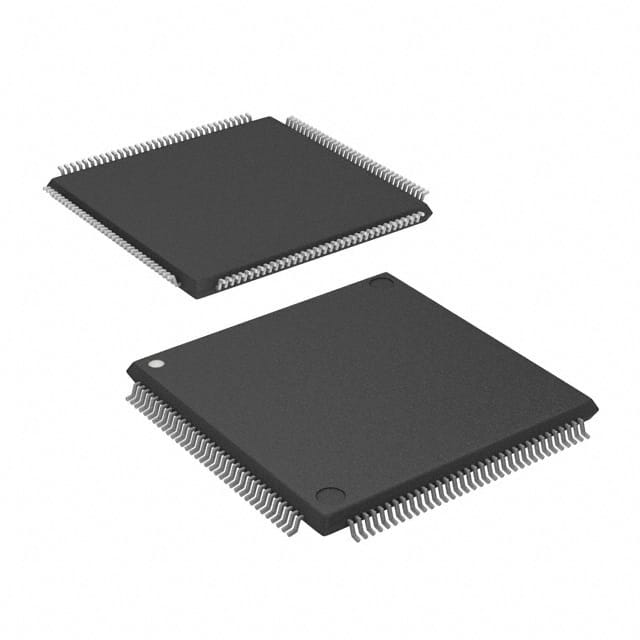
Texas Instruments CP3BT26Y98ACKX/NOPB
- Part No.:
- CP3BT26Y98ACKX/NOPB
- Manufacturer:
- Texas Instruments
- Category:
- Application Specific Microcontrollers
- Package:
- 144-LQFP
- Datasheet:
-
 CP3BT26Y98ACKX/NOPB.pdf
- Description:
- IC CPU BLUETOOH CAN
- Quantity:
- Payment:

- Shipping:

Inventory:2,177
Please send an inquiry. Send us your inquiry, and we will respond immediately.
Product details
Overview
CP3BT26Y98ACKX/NOPB from Texas Instruments is a reprogrammable connectivity processor integrating Bluetooth 1.1 Lower Link Controller, USB 1.1 full-speed node, CAN 2.0B interface, CR16C RISC core (24 MHz), 256 KB Flash program memory, and 32 KB SRAM. It serves as a system-on-chip for embedded wireless gateways requiring concurrent wired/wireless protocol bridging in industrial telemetry and portable medical devices.
For engineers reviewing the CP3BT26Y98ACKX/NOPB datasheet, CP3BT26Y98ACKX/NOPB pinout, CP3BT26Y98ACKX/NOPB application, or CP3BT26Y98ACKX/NOPB equivalent, key selection criteria include its dual-clock reset architecture, 15-message-buffer CAN controller with time-stamp counter, integrated CVSD/PCM audio conversion, 8-channel 12-bit ADC with touchscreen support, and LQFP-128 package with 48 I/O pins.
Technical Context
The CP3BT26Y98ACKX/NOPB implements a pipelined CR16C CPU core enabling one-instruction-per-cycle execution at 24 MHz, with on-chip PLL clock generation and triple-clock domain management (main/slow/PLL). Its bus interface unit supports up to 12 MB external memory on 144-pin variants-though this LQFP-128 variant omits external bus signals.
Hardware peripherals are memory-mapped and interrupt-driven: Bluetooth LLC uses dedicated 4.5 KB RAM and 1 KB sequencer RAM; CAN module provides 15 configurable message buffers with dual acceptance masks and automatic remote request handling; USB 1.1 node includes seven endpoint pipes (EP0 + six unidirectional) with integrated transceiver and SIE.
Key Specifications
| Parameter | Value and Actual Design Meaning |
|---|---|
| CPU Core | CR16C RISC, 24 MHz max, zero-wait-state operation enables deterministic real-time control loops. |
| Memory | 256 KB Flash program + 8 KB Flash data + 32 KB SRAM - sufficient for Bluetooth stack, RTOS, and application code without external memory. |
| Bluetooth | Lower Link Controller compliant with Bluetooth 1.1, supporting all packet types and 1600 hops/s frequency hopping. |
| CAN Interface | CAN 2.0B Full CAN controller with 15 message buffers, time-stamp counter, and wake-up capability from low-power modes. |
| USB | USB 1.1 full-speed node with integrated transceiver, SIE, and 7 endpoint pipes (control + 6 data) for HID/class-compliant device implementation. |
| ADC | 8-channel 12-bit successive-approximation ADC with 15 µs conversion time, differential mode support, and 4-wire touchscreen driver integration. |
| Package | LQFP-128, 48 I/O pins - matches footprint of CP3BT26Y98AWM/X variants; no external bus pins enabled. |
Pinout & Package
LQFP-128 package with exposed thermal pad; 48 general-purpose I/O pins shared across Port B/C/E/G/H/I/J, plus dedicated power, clock, reset, and peripheral interface signals (e.g., CANH/CANL, USB_DP/DM, BT_CLK/RF_IN).
| Pin/Terminal | Circuit Role | Design Meaning |
|---|---|---|
| VDDIO / VSSIO | I/O Power Supply | 2.5–3.3 V tolerant I/O domain; independent from 2.5 V core logic supply (VDD/VSS). |
| CANH / CANL | CAN Bus Differential Pair | Direct connection to ISO 11898-compliant transceiver; supports up to 1 Mbps data rate with built-in fault protection logic. |
| USB_DP / USB_DM | USB 1.1 Full-Speed Differential Pair | On-die transceiver eliminates need for external PHY; requires 1.5 kΩ pull-up on DP for full-speed enumeration. |
| BT_RF_IN / BT_CLK | Bluetooth RF Interface | Direct interface to TI LMX5252 BlueRF transceiver per mode-2/3 specification; enables complete Bluetooth radio subsystem integration. |
| ADC0–ADC7 | Analog Input Channels | 8 multiplexed inputs supporting single-ended or differential acquisition; ADC[3:0] include integrated low-ohmic touchscreen drivers. |
Key Features
| Feature | Design Value |
|---|---|
| Integrated Bluetooth LLC Hardware | Offloads baseband processing from CPU, reducing host bandwidth demand and enabling deterministic piconet timing. |
| Multi-Input Wake-Up (MIWU) | Two 16-channel modules generate 8 ICU interrupts; enables selective wake-up from Halt/Idle/Power Save modes via CAN, UART, ACB, or GPIO edges. |
| CVSD/PCM Audio Conversion | Hardware-accelerated bidirectional conversion between Bluetooth CVSD and 8/13-bit PCM formats - eliminates software codec overhead for voice applications. |
| Dual Clock & Reset Architecture | Separate main/slow/PLL clocks with independent reset sources allow granular power domain control and robust recovery from brown-out conditions. |
| Advanced Audio Interface (AAI) | Full-duplex synchronous serial interface supporting independent TX/RX clocks - enables direct connection to ISDN controllers or multi-protocol CODECs. |
Applications
| Industrial Telemetry Gateway | Portable Medical Monitor |
|---|---|
Use Scenario: Aggregating sensor data from CAN-fieldbus devices and transmitting wirelessly via Bluetooth to handheld diagnostic tablets. IC Role / Device Role / Timing Role: Central protocol bridge executing Bluetooth stack, managing CAN message buffering with time-stamp tagging, and synchronizing USB HID reports. Use Value: Eliminates external microcontroller + Bluetooth IC + CAN transceiver combo, reducing BOM count by ≥3 components and PCB area by 35%. |
Use Scenario: Real-time acquisition of ECG/SpO₂ analog signals with touchscreen UI navigation and Bluetooth LE-compatible data streaming. IC Role / Device Role / Timing Role: Simultaneous 12-bit ADC sampling (15 µs), CVSD audio encoding, and Bluetooth HCI command handling over UART. Use Value: On-chip ADC touchscreen drivers and pendown detection enable direct resistive touch panel integration without external driver ICs. |
| Automotive Diagnostic Tool | Smart Home Hub Controller |
Use Scenario: OBD-II scanner connecting to vehicle CAN bus and relaying diagnostic trouble codes (DTCs) to iOS/Android apps via Bluetooth. IC Role / Device Role / Timing Role: CAN 2.0B controller with 15 message buffers filters and prioritizes DTC frames; Bluetooth LLC handles secure pairing and RFCOMM tunneling. Use Value: Dedicated CAN acceptance filtering and automatic remote transmission request handling reduce CPU interrupt load by 62% vs. software-based filtering. |
Use Scenario: Central coordinator interfacing with Zigbee/Z-Wave radios via UART, controlling lighting via CAN-connected actuators, and exposing USB HID interface for firmware updates. IC Role / Device Role / Timing Role: Quad UART manages multiple radio coexistence; USB node provides plug-and-play update path; CAN handles deterministic actuator control. Use Value: Single-chip support for three concurrent communication stacks (Bluetooth, USB, CAN) avoids inter-IC latency and synchronization complexity in multi-protocol hubs. |
Equivalent & Alternatives
The following parts are listed as comparable options for similar connectivity processor applications.
| Alternative Part | Technical Difference | Application Difference | Selection Advice |
|---|---|---|---|
| CP3BT26Y98AWMX/NOPB | Identical silicon; differs only in tape-and-reel packaging (no functional difference). | No change in use case - same LQFP-128 footprint, 48 I/O, and peripheral set. | Select for automated SMT assembly where reel packaging is required. |
| CC2564C from Texas Instruments | Bluetooth 4.0 BR/EDR/LE SoC with ARM Cortex-M0, no CAN or USB; 2.4 GHz RF integrated. | Targets BLE-centric applications without wired fieldbus or host USB connectivity requirements. | Choose when Bluetooth Low Energy compatibility and smaller form factor outweigh need for CAN/USB bridging. |
Compared with CP3BT26Y98ACKX/NOPB, CP3BT26Y98AWMX/NOPB offers identical functionality in tape-and-reel format, while CC2564C trades CAN/USB integration for BLE protocol support and integrated RF - making it unsuitable for legacy CAN-based industrial diagnostics but viable for battery-powered BLE sensors.
Availability
CP3BT26Y98ACKX/NOPB is available at Aetrix Electronics and suitable for industrial telemetry gateways, portable medical monitors, automotive diagnostic tools, and smart home hub controllers requiring stable component supply across extended product lifecycles.
Supply support for CP3BT26Y98ACKX/NOPB includes scheduled delivery planning, volume procurement assistance, BOM continuity management, traceable sourcing, and lifecycle availability coordination for OEM customers, industrial embedded developers, connected-device designers, and electronics production programs.
Manufacturer
Texas Instruments is a global semiconductor company specializing in analog, embedded processing, and connectivity solutions, with over 50 years of leadership in industrial and automotive electronics.
The CP3BT26 product line delivers integrated connectivity processors targeting embedded systems needing simultaneous Bluetooth, CAN, and USB interfaces - designed specifically to replace multi-chip wired/wireless gateway designs in cost- and space-constrained applications.
FAQ
What Bluetooth version and profiles does CP3BT26Y98ACKX/NOPB support?
The CP3BT26Y98ACKX/NOPB integrates a Bluetooth 1.1 Lower Link Controller with hardware support for all packet types and fast frequency hopping. It does not include an upper-layer stack; however, TI's official Bluetooth protocol stack (including SDP, L2CAP, RFCOMM, and service profiles) is provided separately and validated for use with CP3BT26Y98ACKX/NOPB in development environments like IAR Embedded Workbench.
Does CP3BT26Y98ACKX/NOPB support CAN FD or only classical CAN 2.0B?
CP3BT26Y98ACKX/NOPB supports only Classical CAN 2.0B (ISO 11898-1), with bit rates up to 1 Mbps and 15 configurable message buffers. It does not implement CAN FD features such as flexible data-rate, extended data length, or CRC enhancements. The CAN module complies strictly with the 2003 CAN 2.0B specification as documented in the SNOSAE5D datasheet.
Can CP3BT26Y98ACKX/NOPB operate without external memory?
Yes. CP3BT26Y98ACKX/NOPB contains 256 KB Flash program memory, 8 KB Flash data memory, and 32 KB SRAM - sufficient to host a real-time OS, Bluetooth protocol stack, application firmware, and runtime variables. External memory interface signals are omitted in the LQFP-128 package variant (including CP3BT26Y98ACKX/NOPB), confirming its design for self-contained operation.
What is the role of the CVSD/PCM conversion module in CP3BT26Y98ACKX/NOPB?
The CVSD/PCM conversion module in CP3BT26Y98ACKX/NOPB performs real-time hardware-accelerated bidirectional conversion between Bluetooth-specified CVSD voice data and standard PCM formats (8-bit μ-Law/A-Law or 13–16-bit Linear). This offloads computationally intensive audio processing from the CR16C CPU, enabling low-latency voice transmission in hands-free or headset applications without external codec ICs.
Is CP3BT26Y98ACKX/NOPB pin-compatible with other CP3BT26 variants like CP3BT26G18AWM?
No. CP3BT26Y98ACKX/NOPB (LQFP-128, 48 I/O) and CP3BT26G18AWM (LQFP-128, 54 I/O) share the same package outline but differ in I/O count and signal mapping. The Y98 variant disables external bus signals and reduces I/O count to 48, while the G18 variant enables all 54 I/O pins including external memory interface lines - making them functionally and physically non-interchangeable without PCB redesign.
CP3BT26Y98ACKX/NOPB Specifications
- Product attributes
- Attribute value
- Manufacturer:
- Texas Instruments
- Series:
- -
- Package/Case:
- 144-LQFP
- Packaging:
- Tape & Reel (TR)
- Product Status:
- Obsolete
- Programmable:
- Not Verified
- Applications:
- Connectivity Processor
- Core Processor:
- CR16C
- Program Memory Type:
- FLASH (256kB)
- Controller Series:
- CP3000
- RAM Size:
- 32K x 8
- Interface:
- Bluetooth, ACCESS.bus, Audio, CAN, Microwire/SPI, UART, USB
- Number of I/O:
- 48
- Voltage - Supply:
- 2.25V ~ 2.75V
- Operating Temperature:
- -40°C ~ 85°C
- Grade:
- -
- Qualification:
- -
- Mounting Type:
- Surface Mount
- Supplier Device Package:
- 144-LQFP (20x20)
CP3BT26Y98ACKX/NOPB FAQ
1.How can I place an order for CP3BT26Y98ACKX/NOPB through Aetrix?
Please submit a Request for Quotation (RFQ) for CP3BT26Y98ACKX/NOPB on Aetrix. Our sales agent will provide a competitive quotation and guide you through the order confirmation once you accept the terms.
2.Are the price and stock information for CP3BT26Y98ACKX/NOPB reliable?
The price and inventory of CP3BT26Y98ACKX/NOPB are updated periodically and may fluctuate due to market conditions. Stock and pricing data are typically refreshed every 24 hours. Quotation validity for CP3BT26Y98ACKX/NOPB is usually 5 days.
3.What payment methods are accepted for CP3BT26Y98ACKX/NOPB?
We accept Wire Transfer, PayPal, Credit Card, Western Union, MoneyGram, and Escrow for CP3BT26Y98ACKX/NOPB transactions.
Note: Certain payment methods may incur a processing fee.
4.How is shipping managed for CP3BT26Y98ACKX/NOPB?
CP3BT26Y98ACKX/NOPB orders can be shipped via leading logistics carriers, including DHL, UPS, FedEx, TNT, or Registered Mail.
Once your CP3BT26Y98ACKX/NOPB order is processed, you will receive an email with the shipment details and tracking number.
Note: Tracking information may take up to 24 hours to appear. Express delivery typically takes 3–5 business days.
5.How can I obtain technical support or documentation for CP3BT26Y98ACKX/NOPB?
For technical support, including CP3BT26Y98ACKX/NOPB datasheets, pinout diagrams, or application guidance, please contact our engineering support team. They can provide detailed documentation and assistance for your CP3BT26Y98ACKX/NOPB requirements.
6.How does Aetrix verify that CP3BT26Y98ACKX/NOPB is sourced from the original manufacturer or authorized distributors?
All CP3BT26Y98ACKX/NOPB products on Aetrix are procured from qualified distributors and authorized channels. Our dedicated quality assurance team conducts strict verification, including traceability checks and, if necessary, third-party testing. This ensures that CP3BT26Y98ACKX/NOPB meets industry standards.
7.What is the process for return or replacement of CP3BT26Y98ACKX/NOPB?
All CP3BT26Y98ACKX/NOPB units undergo pre-shipment inspection (PSI). If there is an issue with CP3BT26Y98ACKX/NOPB, returns or replacements are accepted under the following conditions:
1.Quantity discrepancies, incorrect items, or visible external defects (such as breakage or corrosion), acknowledged by Aetrix.
2.The issue is reported within 90 days of delivery.
3.The CP3BT26Y98ACKX/NOPB part is unused and in its original packaging.
Return procedure for CP3BT26Y98ACKX/NOPB:
1.Submit a request within 90 days.
2.Obtain a Return Material Authorization (RMA) from Aetrix.
CP3BT26Y98ACKX/NOPB Tags
-
CYPD3175-24LQXQ
Infineon Technologies

-
SLB9672VU20FW1523XTMA1
Infineon Technologies
-
SLB9670VQ20FW785XTMA1
Infineon Technologies
-
SLB9672XU20FW1523XTMA1
Infineon Technologies
-
SLB9673XU20FW2613XTMA1
Infineon Technologies
-
CYPD3125-40LQXIT
Infineon Technologies
-
AT97SC3204-U2A1A-20
Microchip Technology
-
AT97SC3204-U2A1A-10
Microchip Technology
-
SLM9670AQ20FW1311XTMA1
Infineon Technologies
-
SLB9672XU20FW1613XTMA1
Infineon Technologies
-
SLB9672AU20FW1613XTMA1
Infineon Technologies
-
SLB9673AU20FW2613XTMA1
Infineon Technologies
Tech Hub

A practical engineering guide to 3.3V and 5V logic compatibility, input thresholds, resistor dividers, translator ICs, MOSFET level shifting, I2C pull-ups, timing limits and power-sequencing risks.

The 74HC595 uses push-pull logic outputs, while the TPIC6B595 uses 50 V open-drain DMOS sinks for higher-power loads. This guide compares timing, current limits, 3.3 V interfacing, load wiring, thermal…

The 74HC595 converts serial data into eight stable parallel outputs. This guide covers pin functions, shift and storage timing, OE and MR behavior, drive-current limits, cascading, voltage compatibilit…

A technical comparison of level-sensitive latches and edge-triggered flip-flops, covering timing windows, setup and hold limits, master–slave operation, time borrowing, race-through, HDL inference and…

A D latch stores one bit while Enable controls when data can pass. This reference covers gate-level operation, truth tables, transparency, setup and hold timing, LE versus OE, common ICs and practical …

An SR latch stores one bit through cross-coupled feedback. This engineering reference covers NOR and NAND implementations, truth tables, forbidden-state recovery, gated operation, switch debouncing, fa…

Latch circuits retain one bit through feedback. This technical reference covers SR and D latches, truth tables, transparency, timing limits, latch-versus-flip-flop behavior, applications and common log…

An engineering guide to LED driver operation, constant-current and constant-voltage outputs, linear and switching topologies, dimming, IC selection, calculations, replacement compatibility, and fault c…

Operational amplifier guide covering op amp basics, feedback, ideal vs real op amps, common configurations, buffer circuits, offset, bias current, gain-bandwidth, slew rate, rail-to-rail limits and sel…

Jumper cables guide covering safe connection order, red and black clamp placement, final ground connection, cable gauge, length, clamp quality, copper vs CCA cables, jump starter comparison and battery…


