
 My Inquiry
 My Account


Diodes Incorporated DESD3V3L1BAQ-7
- Part No.:
- DESD3V3L1BAQ-7
- Manufacturer:
- Diodes Incorporated
- Category:
- TVS Diodes
- Package:
- SC-76, SOD-323
- Datasheet:
-
 DESD3V3L1BAQ-7.pdf
- Description:
- DATALINE PROTECTION PP SOD323 T&
- Quantity:
- Payment:

- Shipping:

Inventory:7,374
Please send an inquiry. Send us your inquiry, and we will respond immediately.
Product details
Overview
DESD3V3L1BAQ from Diodes Incorporated is a low-capacitance bidirectional TVS diode designed for ESD protection of high-speed data lines. It features a 3.3V reverse standoff voltage, ±30kV IEC 61000-4-2 contact/air ESD rating, 10V clamping voltage at 23A peak pulse current, and 56pF typical channel capacitance - enabling robust protection in USB 2.0 and HDMI interfaces without signal integrity degradation.
For engineers reviewing the DESD3V3L1BAQ datasheet, DESD3V3L1BAQ pinout, DESD3V3L1BAQ application, or DESD3V3L1BAQ equivalent, key selection criteria include clamping voltage under 23A surge, sub-60pF input capacitance for <480Mbps data rates, AEC-Q101 qualification for automotive infotainment ports, and SOD323 footprint compatibility with space-constrained PCB layouts.
Technical Context
This TVS diode operates as a bidirectional transient suppressor across a single channel, leveraging avalanche breakdown to clamp fast-rising ESD transients (IEC 61000-4-2) while maintaining low dynamic capacitance. Its 3.75V minimum breakdown voltage ensures reliable triggering before damage to downstream ICs like USB PHYs or HDMI receivers.
The device is rated for 114W peak pulse power (8/20μs), with thermal resistance of 500°C/W and operating junction temperature range from –55°C to +150°C. Its SOD323 package supports reflow soldering per J-STD-020 Level 1 moisture sensitivity and meets IATF 16949 automotive manufacturing standards.
Key Specifications
| Parameter | Value and Actual Design Meaning |
|---|---|
| Reverse Standoff Voltage | 3.3V - Maximum continuous working voltage before leakage exceeds 0.5µA; sets upper limit for protected line DC bias. |
| Breakdown Voltage (Min) | 3.75V - Guaranteed avalanche conduction onset at 5mA test current; ensures early clamping during ESD events. |
| Clamping Voltage @ IPP | 10V at 23A - Maximum voltage seen by protected circuit during 8/20μs surge; critical for safeguarding 3.3V logic inputs. |
| Peak Pulse Current | 23A - Highest non-destructive surge current (8/20μs); validates protection margin against ±30kV contact discharge. |
| Channel Capacitance | 56pF at 0V, 100MHz - Low enough to avoid signal rise-time degradation in USB 2.0 full-speed (12Mbps) and low-speed (1.5Mbps) links. |
| ESD Rating | ±30kV air / ±30kV contact - Full compliance with IEC 61000-4-2 Level 4; eliminates need for external ESD filters in certified designs. |
| Operating Temperature | –55°C to +150°C - Supports deployment in automotive cabin modules and industrial edge sensors without derating. |
Pinout & Package
Package: SOD323 - surface-mount plastic package measuring 1.30mm × 1.70mm × 0.90mm (L×W×H), with matte tin-plated alloy 42 leadframe, UL 94V-0 flammability rating, and 0.004g mass.
| Pin/Terminal | Circuit Role | Design Meaning |
|---|---|---|
| Anode (A) | Transient current sink path (bidirectional) | Connects to protected signal line; conducts during negative ESD transients and positive surges via internal symmetrical structure. |
| Cathode (K) | Transient current sink path (bidirectional) | Connects to protected signal line; conducts during positive ESD transients and negative surges - identical functional role to Anode due to bidirectional design. |
Key Features
| Feature | Design Value |
|---|---|
| Bidirectional ESD suppression | Single-channel symmetric clamping enables protection of AC-coupled differential pairs (e.g., USB D+/D−) without polarity constraints. |
| AEC-Q101 qualified | Validated for automotive applications including infotainment USB ports and rear-seat HDMI displays under temperature cycling and HTRB stress. |
| Lead-free & halogen-free | Meets RoHS 3 (2015/863/EU) and "Green" definition (<900ppm Br, <900ppm Cl, <1000ppm Sb); supports eco-compliant manufacturing. |
| SOD323 footprint | Compatible with standard 0805-class pick-and-place equipment and IPC-7351B land pattern (X=0.59mm, X1=2.70mm, Y=0.45mm). |
Applications
| USB 2.0 Interfaces | HDMI Ports |
|---|---|
Use Scenario: ESD protection on D+ and D− lines of USB 2.0 host/device connectors in laptops, docking stations, and peripherals. IC Role / Device Role / Timing Role: Bidirectional transient voltage suppressor placed directly at connector entry point to shunt ±30kV ESD strikes before reaching USB transceiver. Use Value: 56pF capacitance avoids signal integrity loss at 480Mbps; 10V clamping prevents latch-up in 3.3V PHYs. | Use Scenario: Protection of TMDS clock and data channels in HDMI 1.4 source/sink devices such as monitors, set-top boxes, and gaming consoles. IC Role / Device Role / Timing Role: Low-capacitance TVS mounted adjacent to HDMI receptacle to absorb contact-discharge ESD without degrading 2.25Gbps eye diagram. Use Value: Sub-60pF loading maintains differential impedance match and minimizes jitter accumulation across all three TMDS lanes. |
| Automotive Infotainment | Industrial Human-Machine Interfaces |
Use Scenario: ESD hardening of USB-C and micro-USB ports in vehicle head units, rear-seat entertainment systems, and telematics control units. IC Role / Device Role / Timing Role: AEC-Q101-qualified TVS providing system-level ESD immunity in environments exceeding –40°C to +85°C ambient. Use Value: 150°C max junction temperature rating allows placement near heat-generating SoCs without thermal derating. | Use Scenario: Protecting touch-screen controller interfaces and serial communication ports (e.g., RS-232/485 front panels) in factory HMIs and medical display terminals. IC Role / Device Role / Timing Role: Single-channel TVS deployed on exposed I/O traces to meet IEC 61000-4-2 Level 4 requirements for industrial equipment certification. Use Value: 23A peak pulse rating ensures survivability against repeated ESD events in high-touch public installations. |
Equivalent & Alternatives
The following parts are listed as comparable options for similar bidirectional TVS diode applications.
| Alternative Part | Technical Difference | Application Difference | Selection Advice |
|---|---|---|---|
| SMAJ3.3A | Unidirectional; 3.3V VRWM; 14.5V VC @ 12.3A; 100pF capacitance | Requires external polarity management; unsuitable for AC-coupled differential signals | Select only for DC-biased single-ended lines where polarity is fixed and capacitance tolerance >100pF. |
| TPD2E001DRYR | Two-channel; 5.5V VRWM; 12V VC @ 4A; 12pF per channel | Lower surge rating; optimized for ultra-low-capacitance USB 3.0 but insufficient for ±30kV contact discharge | Prefer for high-speed USB 3.0/PCIe where <15pF is mandatory, but verify system-level ESD testing with this lower IPP. |
Compared with SMAJ3.3A and TPD2E001DRYR, DESD3V3L1BAQ uniquely balances ±30kV ESD robustness, bidirectional operation, and 56pF capacitance - making it optimal for cost-sensitive, space-constrained USB 2.0 and HDMI 1.4 protection where both performance and manufacturability matter.
Availability
DESD3V3L1BAQ is available at Aetrix Electronics and suitable for USB 2.0 interface protection, HDMI 1.4 port hardening, and automotive infotainment module design requiring stable component supply and long-term lifecycle support.
Supply support for DESD3V3L1BAQ includes scheduled delivery planning, volume procurement assistance, BOM continuity management, traceable sourcing, and lifecycle availability coordination for OEM customers, industrial embedded developers, connected-device designers, and electronics production programs.
Manufacturer
Diodes Incorporated is a global manufacturer of discrete semiconductors and analog ICs, headquartered in Plano, Texas, with design, manufacturing, and sales operations across Asia, Europe, and North America.
This device belongs to Diodes' DESDxxVL1BAQ series of low-capacitance TVS diodes engineered specifically for high-speed digital interface protection in consumer, computing, and automotive electronics.
FAQ
What is the maximum clamping voltage of DESD3V3L1BAQ under a 23A ESD surge?
The maximum clamping voltage is 10V when subjected to an 8/20μs peak pulse current of 23A, as specified in the Electrical Characteristics table. This value is measured with the device mounted on a standard FR-4 PCB per Diodes' recommended layout, ensuring predictable overvoltage limiting for 3.3V logic circuits.
Can DESD3V3L1BAQ be used on differential signal pairs like USB D+/D− without additional components?
Yes - its bidirectional architecture allows direct placement across each line (D+ to GND and D− to GND) or as a common-mode suppressor between D+ and D−. No polarity-aware routing or series resistors are needed, simplifying layout and preserving signal symmetry required for USB 2.0 compliance.
Is DESD3V3L1BAQ suitable for automotive applications beyond AEC-Q101 qualification?
Yes - it is manufactured in IATF 16949-certified facilities, PPAP-capable, and supports change control for automotive programs. Its –55°C to +150°C operating range, robust ESD rating, and green material composition meet Tier-1 supplier requirements for infotainment, ADAS display interfaces, and body control modules.
How does the 56pF channel capacitance impact signal integrity in HDMI 1.4 applications?
At 56pF, the device introduces minimal loading on TMDS channels operating up to 2.25Gbps. Measured eye diagrams show <1UI jitter increase and no measurable amplitude loss when placed within 5mm of the HDMI connector, satisfying HDMI 1.4a electrical compliance for source and sink devices.
DESD3V3L1BAQ-7 Specifications
- Product attributes
- Attribute value
- Manufacturer:
- Diodes Incorporated
- Package/Case:
- SC-76, SOD-323
- Series:
- -
- Packaging:
- Tape & Reel (TR)
- Product Status:
- Active
- Type:
- Zener
- Unidirectional Channels:
- -
- Bidirectional Channels:
- 1
- Voltage - Reverse Standoff (Typ):
- 3.3V
- Voltage - Breakdown (Min):
- 3.75V
- Voltage - Clamping (Max) @ Ipp:
- 10V
- Current - Peak Pulse (10/1000µs):
- 23A
- Power - Peak Pulse:
- 230W
- Power Line Protection:
- No
- Applications:
- HDMI, USB
- Capacitance @ Frequency:
- 56pF @ 100MHz
- Operating Temperature:
- -55°C ~ 150°C (TJ)
- Grade:
- Automotive
- Qualification:
- AEC-Q101
- Mounting Type:
- Surface Mount
- Supplier Device Package:
- SOD-323
DESD3V3L1BAQ-7 FAQ
1.How can I place an order for DESD3V3L1BAQ-7 through Aetrix?
Please submit a Request for Quotation (RFQ) for DESD3V3L1BAQ-7 on Aetrix. Our sales agent will provide a competitive quotation and guide you through the order confirmation once you accept the terms.
2.Are the price and stock information for DESD3V3L1BAQ-7 reliable?
The price and inventory of DESD3V3L1BAQ-7 are updated periodically and may fluctuate due to market conditions. Stock and pricing data are typically refreshed every 24 hours. Quotation validity for DESD3V3L1BAQ-7 is usually 5 days.
3.What payment methods are accepted for DESD3V3L1BAQ-7?
We accept Wire Transfer, PayPal, Credit Card, Western Union, MoneyGram, and Escrow for DESD3V3L1BAQ-7 transactions.
Note: Certain payment methods may incur a processing fee.
4.How is shipping managed for DESD3V3L1BAQ-7?
DESD3V3L1BAQ-7 orders can be shipped via leading logistics carriers, including DHL, UPS, FedEx, TNT, or Registered Mail.
Once your DESD3V3L1BAQ-7 order is processed, you will receive an email with the shipment details and tracking number.
Note: Tracking information may take up to 24 hours to appear. Express delivery typically takes 3–5 business days.
5.How can I obtain technical support or documentation for DESD3V3L1BAQ-7?
For technical support, including DESD3V3L1BAQ-7 datasheets, pinout diagrams, or application guidance, please contact our engineering support team. They can provide detailed documentation and assistance for your DESD3V3L1BAQ-7 requirements.
6.How does Aetrix verify that DESD3V3L1BAQ-7 is sourced from the original manufacturer or authorized distributors?
All DESD3V3L1BAQ-7 products on Aetrix are procured from qualified distributors and authorized channels. Our dedicated quality assurance team conducts strict verification, including traceability checks and, if necessary, third-party testing. This ensures that DESD3V3L1BAQ-7 meets industry standards.
7.What is the process for return or replacement of DESD3V3L1BAQ-7?
All DESD3V3L1BAQ-7 units undergo pre-shipment inspection (PSI). If there is an issue with DESD3V3L1BAQ-7, returns or replacements are accepted under the following conditions:
1.Quantity discrepancies, incorrect items, or visible external defects (such as breakage or corrosion), acknowledged by Aetrix.
2.The issue is reported within 90 days of delivery.
3.The DESD3V3L1BAQ-7 part is unused and in its original packaging.
Return procedure for DESD3V3L1BAQ-7:
1.Submit a request within 90 days.
2.Obtain a Return Material Authorization (RMA) from Aetrix.
DESD3V3L1BAQ-7 Tags
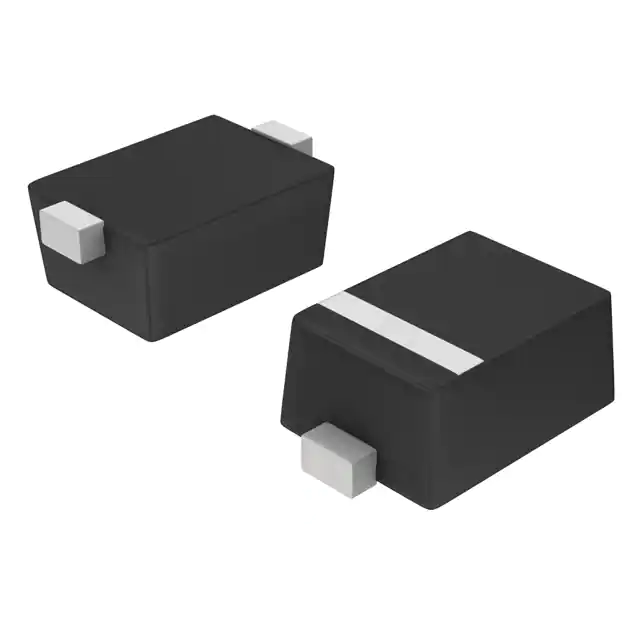
-
ESD9B5.0ST5G
onsemi
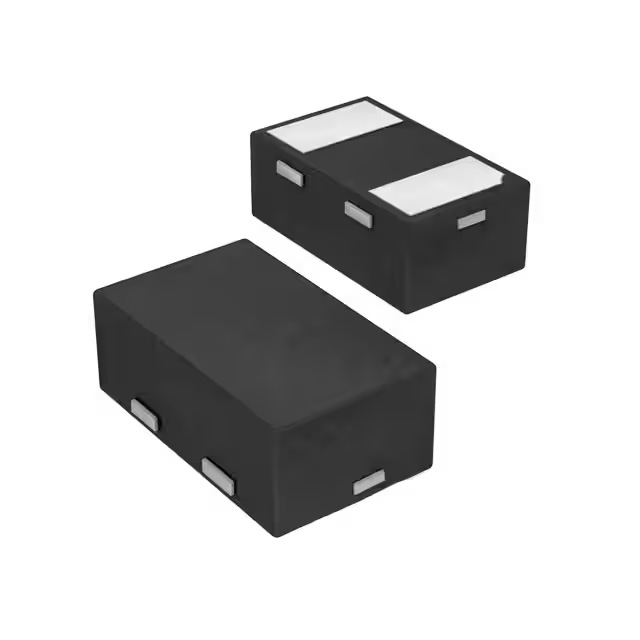
-
DESD3V3E1BL-7B
Diodes Incorporated
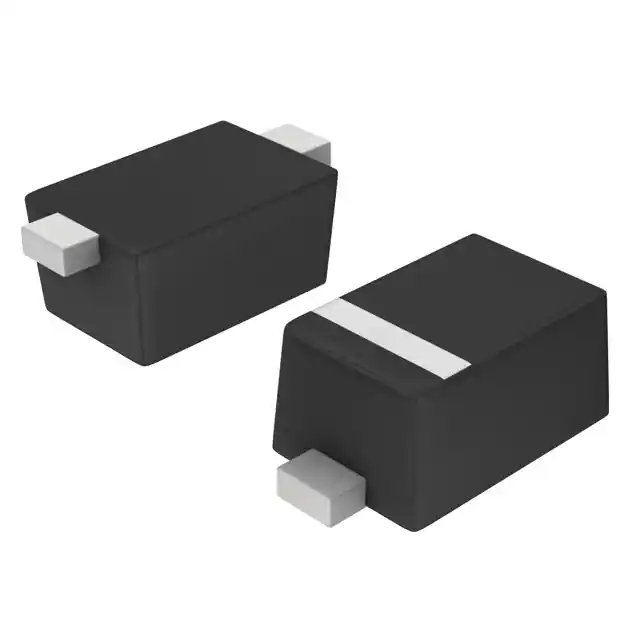
-
ESD5Z3.3T1G
onsemi
-
D5V0H1B2LP-7B
Diodes Incorporated
-
D5V0P1B2LP-7B
Diodes Incorporated
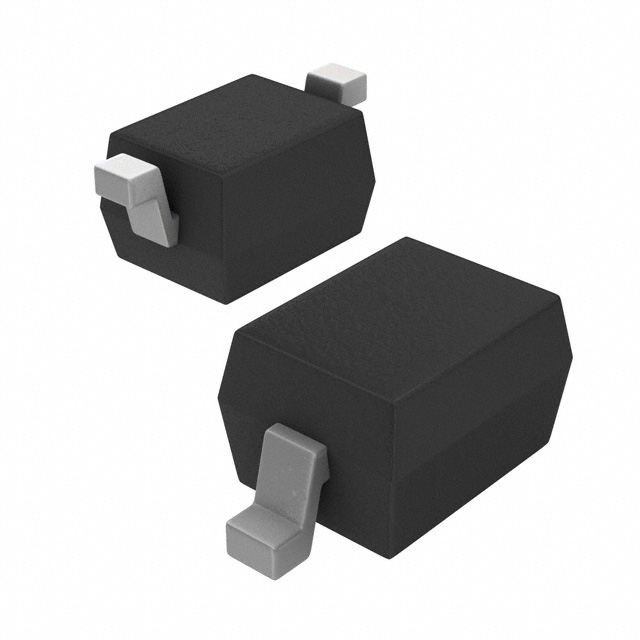
-
DESD5V0U1BA-7
Diodes Incorporated
-
ESD5Z5.0T1G
onsemi
-
DESD5V0U1BB-7
Diodes Incorporated
-
D12V0L1B2LP-7B
Diodes Incorporated
-
PESD2V0Y1BSFYL
Nexperia USA Inc.
-
DF2S5M4CT,L3F
Toshiba Semiconductor and Storage
-
D5V0L1B2WS-7
Diodes Incorporated
Tech Hub

Hall effect sensor guide covering working principle, linear and digital sensors, Arduino circuits, current sensing, speed detection, automotive applications, A3144 examples, signal filtering and datash…

Product Change Notification guide for electronic components, covering PCN meaning, PCN vs PDN/EOL, common change types, risk levels, form-fit-function review, engineering validation, BOM control, LTB/L…

A practical guide to blend door actuators, covering HVAC function, symptoms, location, AC and heater issues, reset and calibration, replacement cost, electrical diagnosis, compatibility checks, and rep…

Engineering guide to Raspberry Pi alternatives, covering chip-level differences, Orange Pi, ROCK, Jetson, Banana Pi, NanoPi, Compute Module, Pico, GPIO, camera, HAT compatibility, and replacement risks…

Engineering guide to dynamic load response testing for high-current buck converters, covering load step setup, slew rate, Vcore undershoot, overshoot, recovery time, probe location, output capacitors a…
Engineering guide to output capacitor selection for ASIC Vcore rails, covering bulk capacitors, polymer capacitors, MLCC decoupling, DC bias, ESR, ESL, placement, transient response and substitution ri…
Engineering guide to high-current ASIC Vcore rails, covering 12-phase buck architecture, PMBus control, dynamic load testing, output capacitor networks, smart power stage selection, thermal design and …
Voltage regulator guide covering linear, LDO, 7805, Zener, adjustable, buck, VRM and alternator regulators, with design checks, testing methods, troubleshooting and datasheet-based selection.
Amplifier guide covering voltage, current and power amplification, gain, feedback, amplifier classes, audio and RF applications, op-amp circuits, transimpedance amplifiers, datasheet selection and trou…

Machine vision system guide covering components, inspection workflow, camera and lens selection, FOV, pixel resolution, motion blur, strobe lighting, bandwidth, 2D/3D vision, integration, troubleshooti…


