
 My Inquiry
 My Account


NXP Semiconductors FXTH87EH02DT1
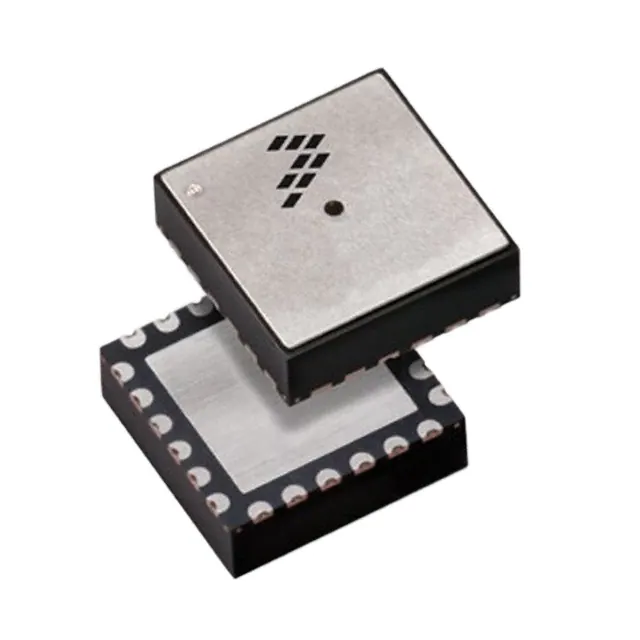
- Part No.:
- FXTH87EH02DT1
- Manufacturer:
- NXP Semiconductors
- Category:
- Specialized Sensors
- Package:
- Datasheet:
-
 FXTH87EH02DT1.pdf
- Description:
- SENSOR TIRE PRESSURE RF
- Quantity:
- Payment:

- Shipping:

Inventory:1,968
Please send an inquiry. Send us your inquiry, and we will respond immediately.
Product details
Overview
FXTH87EH02DT1 from NXP Semiconductors is a fully integrated tire pressure monitoring sensor (TPMS) IC featuring an 8-bit S08 MCU core, on-die pressure sensor, optional XZ- or Z-axis accelerometer, internal 315/434 MHz RF transmitter with OOK/FSK modulation, and 16 kB FLASH + 512-byte RAM. It operates in automotive wheel environments with low-power measurement cycles and supports LF wake-up via differential LFA/LFB inputs.
For engineers reviewing the FXTH87EH02DT1 datasheet, FXTH87EH02DT1 pinout, FXTH87EH02DT1 application, or FXTH87EH02DT1 equivalent, key selection criteria include its QFN-24 package with pressure port, dual-axis accelerometer configuration, RF output buffer size (256-bit), programmable data encoding (Manchester/Bi-Phase/NRZ), and integrated voltage reference for ADC10 calibration.
Technical Context
The FXTH87EH02DT1 implements a dedicated TPMS system-on-chip architecture with hardware state machines for autonomous pressure/accelerometer sampling and RF transmission sequencing-reducing MCU intervention and power consumption. Its RF subsystem uses a PLL-based fractional-N divider with external 26 MHz crystal (XI/XO pins) to generate precise 315/434 MHz carriers.
Measurement integrity is maintained through separate analog (AVDD/AVSS) and RF (RFVSS) ground domains, star-connected decoupling, and internal bandgap reference feeding a six-channel 10-bit ADC10. The device supports STOP1/STOP4 low-power modes, real-time interrupts at intervals from 2–128 ms, and LF receiver activation via LFA/LFB differential input for external trigger-based wake-up.
Key Specifications
| Parameter | Value and Actual Design Meaning |
|---|---|
| Core | S08 8-bit MCU with SIM and interrupt controller - enables deterministic real-time control of sensor acquisition and RF transmission timing. |
| Memory | 16 kB FLASH + 512-byte RAM + 64-byte parameter registers - sufficient for firmware, calibration data, and runtime variables in sealed TPMS modules. |
| RF Output | 315/434 MHz OOK/FSK transmitter with 256-bit variable-length buffer - supports flexible packet formats for regional TPMS protocols (e.g., SAE J2952). |
| ADC | 6-channel, 10-bit ADC10 with internal voltage reference - provides calibrated digitization of pressure, temperature, and accelerometer signals without external references. |
| Accelerometer | Optional XZ- or Z-axis configuration with adjustable offset - enables motion-triggered wake-up and orientation-aware pressure reporting in rotating wheel assemblies. |
| Power Modes | STOP1 (deep sleep, RAM retention off) and STOP4 (fast wake-up, full regulation) - allows trade-off between battery life (10+ years) and response latency (< 10 ms). |
| LF Interface | Differential LFA/LFB inputs with ~500 kΩ input impedance - enables robust reception of 125 kHz LF commands from vehicle base stations for diagnostics and relearn. |
Pinout & Package
FXTH87EH02DT1 is housed in a 7 × 7 mm QFN-24 package with exposed thermal pad and integrated pressure port oriented upward (per Figure 3). Pin 1 (PTB1) is located at top-left when pressure port faces up and ID feature is visible on top lid.
| Pin/Terminal | Circuit Role | Design Meaning |
|---|---|---|
| PTA0–PTA3, PTB0–PTB1 | General-purpose I/O | Seven multipurpose GPIOs; four support STOP4 wake-up interrupt and internal pullup/pulldown; two configurable as ADC10 inputs; two as TPM1 timer inputs. |
| LFA / LFB | LF receiver differential input | High-impedance (≈500 kΩ to VSS) inputs for 125 kHz LF coil interface - enables vehicle-initiated wake-up and programming without battery drain. |
| RF | RF energy output | Direct connection point for matching network and antenna - delivers modulated 315/434 MHz signal with no external PA required. |
| XI / XO | Crystal oscillator terminals | Interface for external 26 MHz fundamental-mode crystal - provides stable reference for PLL-based RF carrier generation and data rate accuracy. |
| BKGD/PTA4 | Background debug mode enable | Active-low entry to BDM for firmware development; functions as output-only GPIO when debug disabled - eliminates need for external debug header in production modules. |
| VDD / VSS | Digital supply / ground | Single 3.0 V digital rail; requires local 0.1 µF decoupling - powers MCU core, timers, and logic; isolated from analog/RF domains to prevent noise coupling. |
| AVDD / AVSS | Analog supply / ground | Separate 3.0 V analog rail with dedicated decoupling - powers pressure sensor, ADC10, and bandgap reference to ensure measurement stability. |
| RFVSS | RF amplifier ground | Dedicated ground return for RF output stage - must be star-connected to minimize EMI and preserve RF efficiency in compact wheel module layouts. |
| VREG | Analog regulator stabilization | Connection point for external capacitor to AVSS - stabilizes internal analog voltage regulator for consistent ADC and sensor biasing across temperature. |
| RESET | External reset input | Active-low asynchronous reset with internal pullup; triggers MCU vector jump - used for factory programming and emergency recovery without power cycle. |
Key Features
| Feature | Design Value |
|---|---|
| Dedicated TPMS state machines | Hardware-automated pressure/accelerometer sampling and RF transmission sequencing - eliminates software timing jitter and reduces active MCU time by >70% per measurement cycle. |
| Integrated pressure transducer | Monolithic silicon piezoresistive sensor with one of three calibrated ranges (e.g., 0–900 kPa) - enables direct mounting into valve-stem or patch-type TPMS modules without external sensing elements. |
| Programmable RF encoding | Support for Manchester, Bi-Phase, and NRZ data formats with user-defined packet structure - allows compliance with OEM-specific TPMS message protocols without hardware change. |
| Low-frequency wake-up | Differential LFA/LFB receiver with automatic gain control and digital decoder - achieves reliable 125 kHz command detection at < –40 dBm while consuming < 5 µA in STOP4 mode. |
| Temperature compensation | On-chip temperature sensor and ADC10 channel - enables real-time correction of pressure sensor drift across –40°C to +125°C operating range. |
| Secure firmware protection | SEC[1:0] register-controlled flash lock with secure boot vector - prevents unauthorized readout or overwrite of calibration data and application firmware in field-deployed sensors. |
Applications
| Direct-Mount Valve Stem TPMS | Band-Mount Wheel Rim TPMS |
|---|---|
|
Use Scenario: Sensor mounted directly inside aluminum or rubber valve stem, exposed to tire inflation pressure and rotational G-forces. IC Role / Device Role / Timing Role: Primary pressure/temperature/acceleration acquisition node; initiates RF transmission upon pressure threshold exceedance or periodic wake-up. Use Value: Integrated pressure port and Z-axis accelerometer eliminate external transducers and mechanical alignment; QFN-24 package fits within tight valve-stem diameter constraints. |
Use Scenario: Sensor embedded in elastomeric band clamped to inner wheel rim, subject to vibration, moisture, and wide thermal cycling. IC Role / Device Role / Timing Role: Autonomous measurement node with LF-triggered relearn capability; uses STOP4 mode for sub-10 ms wake-up after vehicle ignition. Use Value: Dual-axis (XZ) accelerometer option detects wheel rotation direction and enables motion-activated transmission - reducing unnecessary RF bursts during parking. |
| OEM Tire Relearn Systems | Aftermarket TPMS Service Tools |
|
Use Scenario: Factory-installed TPMS requiring synchronized initialization across all four wheels using vehicle-mounted LF antennas. IC Role / Device Role / Timing Role: LF receiver endpoint responding to 125 kHz diagnostic commands; executes secure relearn sequence with encrypted ID exchange. Use Value: Differential LFA/LFB input rejects common-mode noise from vehicle electrical systems; built-in decoder handles OEM-specific command framing without host MCU involvement. |
Use Scenario: Handheld service tool activating dormant TPMS sensors during replacement or battery replacement procedures. IC Role / Device Role / Timing Role: LF transmitter target and RF responder; enters ACTIVE BACKGROUND mode via BKGD/PTA4 for firmware update or calibration adjustment. Use Value: BKGD/PTA4 pin supports in-circuit debug with standard BDM interface - enabling field recalibration without sensor disassembly or reflow soldering. |
Equivalent & Alternatives
The following parts are listed as comparable options for similar tire pressure monitoring sensor applications.
| Alternative Part | Technical Difference | Application Difference | Selection Advice |
|---|---|---|---|
| FXTH871H09DT1 | Same FXTH87E family; differs in pressure range calibration (0–1200 kPa vs. 0–900 kPa) and default accelerometer axis (Z-only vs. XZ-selectable). | Targeted at heavy-duty truck tires with higher pressure ratings; lacks XZ-axis flexibility for motion-aware algorithms. | Select FXTH87EH02DT1 when dual-axis motion detection and mid-range pressure (≤900 kPa) are required for passenger/light-truck applications. |
| SP370-315 | Infineon SP370 family; 315 MHz only; no integrated pressure sensor - requires external piezoresistive element and signal conditioning. | Used in legacy designs where modular sensor + ASIC approach is preferred; higher BOM cost and larger PCB footprint. | Choose FXTH87EH02DT1 for single-chip integration, reduced assembly steps, and guaranteed sensor-to-ASIC matching over temperature. |
Compared with FXTH871H09DT1 and SP370-315, FXTH87EH02DT1 offers superior integration density, factory-calibrated pressure/accelerometer correlation, and unified firmware control - reducing validation effort and improving long-term drift performance in automotive wheel environments.
Availability
FXTH87EH02DT1 is available at Aetrix Electronics and suitable for automotive TPMS module manufacturing, OEM tire relearn system integration, and aftermarket service tool development requiring stable component supply and long-lifecycle support.
Supply support for FXTH87EH02DT1 includes scheduled delivery planning, volume procurement assistance, BOM continuity management, traceable sourcing, and lifecycle availability coordination for OEM customers, industrial embedded developers, connected-device designers, and electronics production programs.
Manufacturer
NXP Semiconductors is a global semiconductor company headquartered in Eindhoven, Netherlands, specializing in secure connectivity solutions for automotive, industrial, and IoT applications.
The FXTH87E product line was designed specifically for ultra-low-power, high-reliability tire pressure monitoring in rotating wheel environments - integrating sensing, processing, and RF transmission into a single hermetic-grade QFN package with media-protected bond wires.
FAQ
What is the pressure measurement range supported by FXTH87EH02DT1?
The FXTH87EH02DT1 supports a calibrated pressure range of 0–900 kPa (0–130 psi), optimized for passenger car and light-truck tire applications. This range is factory-trimmed and stored in on-chip parameter registers; it does not require external scaling or software compensation. The FXTH87EH02DT1's monolithic pressure transducer maintains ±1.5 kPa total error band over –40°C to +125°C, as verified in NXP's production test flow.
Does FXTH87EH02DT1 include an integrated temperature sensor?
Yes, FXTH87EH02DT1 includes an on-die temperature sensor connected to the ADC10 module. It provides direct die-temperature readings with ±2°C accuracy across –40°C to +125°C, enabling real-time compensation of pressure sensor offset and sensitivity drift. The temperature value is accessible via dedicated ADC channel and used automatically in NXP's reference firmware for pressure linearization.
Can FXTH87EH02DT1 operate without an external crystal?
No, FXTH87EH02DT1 requires an external 26 MHz fundamental-mode crystal connected to XI/XO pins to drive its PLL-based RF transmitter. The internal oscillators (HFO, MFO, LFO) do not provide sufficient frequency stability for compliant 315/434 MHz RF transmission. Crystal load capacitance and PCB layout must follow NXP's layout guidelines in Section 4.3 of the FXTH87ERM to meet FCC/ETSI spectral mask requirements.
How is the accelerometer configured on FXTH87EH02DT1?
The FXTH87EH02DT1 supports either XZ-axis or Z-axis-only accelerometer configurations, selected at manufacturing via laser trimming of internal fuses. The XZ option enables motion-triggered wake-up and rotation-direction detection; the Z-only option reduces current draw by disabling the X-axis sensing element. Configuration is fixed per unit and cannot be changed in-field - verify ordering code suffix (e.g., "H02" denotes XZ-capable variant).
What debug interface does FXTH87EH02DT1 support?
FXTH87EH02DT1 supports Background Debug Mode (BDM) via the BKGD/PTA4 pin, compatible with standard HCS08 BDM tools. It enables full memory access, register inspection, breakpoint setting, and flash programming without halting system clocks. In production, BKGD/PTA4 functions as output-only GPIO; debug entry requires pulling the pin low during power-on reset - no additional pins or protocols are needed.
FXTH87EH02DT1 Specifications
- Product attributes
- Attribute value
- Manufacturer:
- NXP Semiconductors
- Series:
- -
- Packaging:
- Tape & Reel (TR)
- Product Status:
- Obsolete
- Sensor Type:
- Tire Pressure Monitoring (TPMS)
- Output Type:
- RF
- Operating Temperature:
- -
- Grade:
- -
- Qualification:
- -
FXTH87EH02DT1 FAQ
1.How can I place an order for FXTH87EH02DT1 through Aetrix?
Please submit a Request for Quotation (RFQ) for FXTH87EH02DT1 on Aetrix. Our sales agent will provide a competitive quotation and guide you through the order confirmation once you accept the terms.
2.Are the price and stock information for FXTH87EH02DT1 reliable?
The price and inventory of FXTH87EH02DT1 are updated periodically and may fluctuate due to market conditions. Stock and pricing data are typically refreshed every 24 hours. Quotation validity for FXTH87EH02DT1 is usually 5 days.
3.What payment methods are accepted for FXTH87EH02DT1?
We accept Wire Transfer, PayPal, Credit Card, Western Union, MoneyGram, and Escrow for FXTH87EH02DT1 transactions.
Note: Certain payment methods may incur a processing fee.
4.How is shipping managed for FXTH87EH02DT1?
FXTH87EH02DT1 orders can be shipped via leading logistics carriers, including DHL, UPS, FedEx, TNT, or Registered Mail.
Once your FXTH87EH02DT1 order is processed, you will receive an email with the shipment details and tracking number.
Note: Tracking information may take up to 24 hours to appear. Express delivery typically takes 3–5 business days.
5.How can I obtain technical support or documentation for FXTH87EH02DT1?
For technical support, including FXTH87EH02DT1 datasheets, pinout diagrams, or application guidance, please contact our engineering support team. They can provide detailed documentation and assistance for your FXTH87EH02DT1 requirements.
6.How does Aetrix verify that FXTH87EH02DT1 is sourced from the original manufacturer or authorized distributors?
All FXTH87EH02DT1 products on Aetrix are procured from qualified distributors and authorized channels. Our dedicated quality assurance team conducts strict verification, including traceability checks and, if necessary, third-party testing. This ensures that FXTH87EH02DT1 meets industry standards.
7.What is the process for return or replacement of FXTH87EH02DT1?
All FXTH87EH02DT1 units undergo pre-shipment inspection (PSI). If there is an issue with FXTH87EH02DT1, returns or replacements are accepted under the following conditions:
1.Quantity discrepancies, incorrect items, or visible external defects (such as breakage or corrosion), acknowledged by Aetrix.
2.The issue is reported within 90 days of delivery.
3.The FXTH87EH02DT1 part is unused and in its original packaging.
Return procedure for FXTH87EH02DT1:
1.Submit a request within 90 days.
2.Obtain a Return Material Authorization (RMA) from Aetrix.
FXTH87EH02DT1 Tags

-
AS7057-BWLT WLP LF T&R
ams-OSRAM USA INC.
-
LSM6DSO32XTR
STMicroelectronics
-
AS3935-BQFT
ScioSense
-
BAF147B002-00A0
Amphenol Advanced Sensors (Thermometrics)
-
MAX86174AENE+T
Analog Devices Inc./Maxim Integrated
-
VL53L8CXV0GC/1
STMicroelectronics
-
BME680
Bosch Sensortec
-
SEN-12969
SparkFun Electronics
-
BME688
Bosch Sensortec
-
MAXM86161EFD+T
Analog Devices Inc./Maxim Integrated
-
A111-001-T&R
Acconeer AB

-
MAX30101EFD+T
Analog Devices Inc./Maxim Integrated
Tech Hub

A practical engineering guide to 3.3V and 5V logic compatibility, input thresholds, resistor dividers, translator ICs, MOSFET level shifting, I2C pull-ups, timing limits and power-sequencing risks.

The 74HC595 uses push-pull logic outputs, while the TPIC6B595 uses 50 V open-drain DMOS sinks for higher-power loads. This guide compares timing, current limits, 3.3 V interfacing, load wiring, thermal…

The 74HC595 converts serial data into eight stable parallel outputs. This guide covers pin functions, shift and storage timing, OE and MR behavior, drive-current limits, cascading, voltage compatibilit…

A technical comparison of level-sensitive latches and edge-triggered flip-flops, covering timing windows, setup and hold limits, master–slave operation, time borrowing, race-through, HDL inference and…

A D latch stores one bit while Enable controls when data can pass. This reference covers gate-level operation, truth tables, transparency, setup and hold timing, LE versus OE, common ICs and practical …

An SR latch stores one bit through cross-coupled feedback. This engineering reference covers NOR and NAND implementations, truth tables, forbidden-state recovery, gated operation, switch debouncing, fa…

Latch circuits retain one bit through feedback. This technical reference covers SR and D latches, truth tables, transparency, timing limits, latch-versus-flip-flop behavior, applications and common log…

An engineering guide to LED driver operation, constant-current and constant-voltage outputs, linear and switching topologies, dimming, IC selection, calculations, replacement compatibility, and fault c…

Operational amplifier guide covering op amp basics, feedback, ideal vs real op amps, common configurations, buffer circuits, offset, bias current, gain-bandwidth, slew rate, rail-to-rail limits and sel…

Jumper cables guide covering safe connection order, red and black clamp placement, final ground connection, cable gauge, length, clamp quality, copper vs CCA cables, jump starter comparison and battery…


