
 My Inquiry
 My Account


NXP Semiconductors FXTH87EH116T1
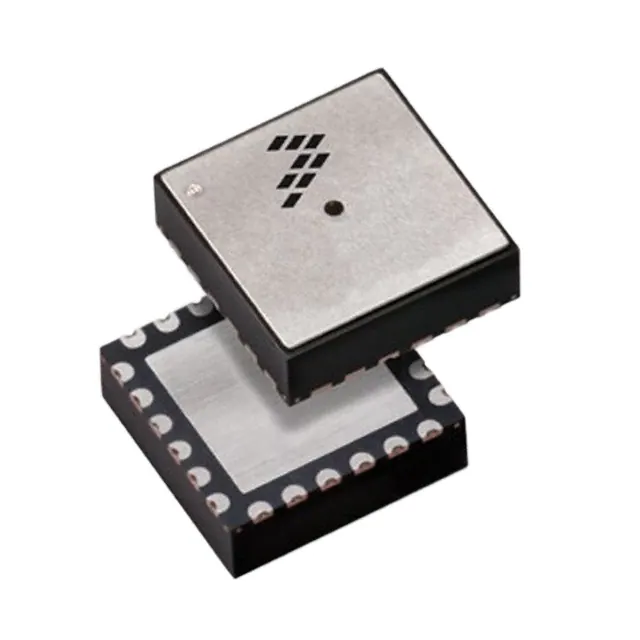
- Part No.:
- FXTH87EH116T1
- Manufacturer:
- NXP Semiconductors
- Category:
- Specialized Sensors
- Package:
- Datasheet:
-
 FXTH87EH116T1.pdf
- Description:
- SENSOR TIRE PRESSURE RF
- Quantity:
- Payment:

- Shipping:

Inventory:683
Please send an inquiry. Send us your inquiry, and we will respond immediately.
Product details
Overview
FXTH87EH116T1 from NXP Semiconductors is a fully integrated tire pressure monitoring sensor (TPMS) IC combining an S08 8-bit MCU, MEMS pressure sensor, optional XZ- or Z-axis accelerometer, internal 315/434 MHz RF transmitter, and 10-bit ADC - all in a 7 × 7 mm QFN package. It delivers low-power operation with programmable wake-up intervals (2–128 ms), supports OOK/FSK modulation, and targets direct mounting inside automotive tire valve stems.
For engineers reviewing the FXTH87EH116T1 datasheet, FXTH87EH116T1 pinout, FXTH87EH116T1 application, or FXTH87EH116T1 equivalent, key selection criteria include calibrated pressure range support, dual-axis accelerometer configuration options, RF output power stability over temperature, LF receiver sensitivity for TPMS activation, and FLASH memory retention under vibration stress.
Technical Context
The FXTH87EH116T1 implements a dedicated TPMS measurement sequence using hardware state machines to minimize active MCU time - enabling ultra-low average current consumption (<15 µA typical in periodic transmit mode). Its RF subsystem uses a PLL-based fractional-N synthesizer with external 26 MHz crystal (XI/XO pins) to generate stable 315 MHz or 434 MHz carrier frequencies.
Pressure and acceleration data are acquired via custom analog interfaces: the pressure sensor connects directly to internal SMI circuitry, while the optional XZ- or Z-axis accelerometer feeds into dedicated signal conditioning paths before ADC10 conversion. The LFA/LFB differential inputs provide robust 125 kHz LF wake-up detection for vehicle-side interrogation signals.
Key Specifications
| Parameter | Value and Actual Design Meaning |
|---|---|
| Core | S08 8-bit MCU with 16 kB FLASH, 512 B RAM, and 64-byte parameter registers - enables firmware-defined measurement logic without external controller. |
| Pressure Sensing | Integrated MEMS pressure transducer with one of three factory-calibrated ranges - eliminates need for external calibration in production. |
| Accelerometer | Optional XZ-axis or Z-axis MEMS accelerometer with adjustable offset - supports both vertical (Z-only) and lateral (XZ) motion detection for wheel rotation and impact sensing. |
| RF Transmitter | Internal 315/434 MHz transmitter with OOK/FSK modulation, 256-bit variable-length buffer, and direct MCU register access - allows custom packet formatting for OEM-specific protocols. |
| LF Receiver | Differential LFA/LFB inputs supporting 125 kHz LF wake-up with hardware decoder - enables reliable activation by vehicle base station without MCU intervention. |
| Power Management | Multiple stop modes (STOP1/STOP4), LFO-driven RTI timer (2–128 ms intervals), and free-running wake-up counter - achieves multi-year battery life in sealed TPMS modules. |
| ADC | 6-channel, 10-bit ADC with two external I/O inputs - digitizes pressure, temperature, and supply voltage for on-chip compensation algorithms. |
Pinout & Package
FXTH87EH116T1 is housed in a 24-pin QFN package (7 mm × 7 mm, 0.5 mm pitch) with exposed thermal pad. Pin 1 is located at top-left when pressure port faces up; orientation matches Figure 3 in NXP FXTH87ERM Rev. 6.1.
| Pin/Terminal | Circuit Role | Design Meaning |
|---|---|---|
| PTA0–PTA3, PTB0–PTB1 | General-purpose I/O | Seven configurable GPIOs; four support STOP4 wake-up interrupt, two connect to ADC10, two to TPM1 - enables flexible sensor interface and diagnostics wiring. |
| LFA / LFB | LF receiver differential input | High-impedance (≈500 kΩ to VSS) inputs for 125 kHz magnetic field detection - requires external coil between pins; enables vehicle-initiated wake-up without battery drain. |
| RF | RF energy output | Direct connection point for matching network and antenna - delivers modulated 315/434 MHz signal with no external PA required. |
| XI / XO | Crystal oscillator interface | Connects to external 26 MHz fundamental-mode crystal - provides reference for PLL-based RF synthesis and precise timing control. |
| BKGD/PTA4 | Background debug enable | Active-low entry to BDM mode; internal pullup - used for firmware development and in-circuit programming; functions as output-only GPIO when debug disabled. |
| RESET | External reset input | Asynchronous reset trigger (threshold: 0.3×VDD); internal pullup - supports system-level recovery and BDM voltage injection during programming. |
| VDD / VSS | Digital supply / ground | Single 3.0 V digital rail; star-connected decoupling required - powers MCU core, FLASH, and digital peripherals with noise isolation from analog sections. |
| AVDD / AVSS | Analog supply / ground | Separate 3.0 V analog rail; isolated routing mandatory - powers pressure sensor, ADC, and RF front-end to maintain measurement accuracy. |
| RFVSS | RF amplifier ground | Dedicated ground return for RF output stage - prevents RF noise coupling into digital or analog supplies; must be star-connected. |
| VREG | Analog regulator stabilization | External capacitor connection to AVSS - stabilizes internal analog voltage regulator for consistent sensor biasing across temperature. |
Key Features
| Feature | Design Value |
|---|---|
| Dedicated TPMS state machines | Hardware-controlled pressure/accelerometer sampling, processing, and RF transmission sequencing - reduces firmware complexity and guarantees deterministic timing. |
| Programmable RF data encoding | Support for Manchester, Bi-Phase, or NRZ encoding with user-configurable bit rate generator - enables compliance with regional TPMS standards (SAE J2952, ETSI EN 300 220). |
| Temperature-compensated pressure output | On-chip temperature sensor and ADC10 used in real-time compensation algorithms - maintains ±10 kPa accuracy across –40°C to +125°C operating range. |
| Low-frequency wake-up capability | Integrated LF receiver with automatic gain control and digital decoder - detects vehicle-side 125 kHz interrogation pulses with <–100 dBm sensitivity. |
| Robust mechanical design | Gel-protected bond wires and non-hermetic construction rated for 10+ bar burst pressure - withstands tire inflation, centrifugal force, and road shock without calibration shift. |
Applications
| Direct-Mount Tire Valve Integration | OEM TPMS Module Assembly |
|---|---|
Use Scenario: FXTH87EH116T1 mounted directly onto aluminum or brass tire valve stem with pressure port exposed to inner tire cavity. IC Role / Device Role / Timing Role: Primary sensor node performing autonomous pressure/temperature/acceleration acquisition, RF transmission, and LF wake-up response. Use Value: Eliminates interconnect wiring and external signal conditioning - reduces module size, cost, and failure points in high-vibration environments. |
Use Scenario: FXTH87EH116T1 embedded in sealed epoxy-filled TPMS PCB module with integrated antenna and battery. IC Role / Device Role / Timing Role: System-on-chip solution handling all sensing, computation, communication, and power management functions. Use Value: Enables AEC-Q200 qualified modules meeting ISO 21848 lifetime requirements (>10 years at 85°C) with single-component sourcing. |
| Aftermarket TPMS Sensor Replacement | Commercial Vehicle Tire Monitoring |
Use Scenario: FXTH87EH116T1 used in universal-fit aftermarket sensors programmed via LF command to emulate OEM protocols. IC Role / Device Role / Timing Role: Programmable TPMS transponder supporting multiple pressure ranges and modulation schemes via on-chip FLASH. Use Value: Reduces inventory SKUs - one hardware platform supports passenger car, SUV, and light-truck applications through firmware configuration. |
Use Scenario: FXTH87EH116T1 deployed in heavy-duty truck/trailer tires where extended pressure range (up to 13.8 bar) and high-G acceleration tolerance are required. IC Role / Device Role / Timing Role: High-reliability sensor node delivering pressure telemetry at extended intervals (e.g., every 5 minutes) to reduce battery load. Use Value: Extended Z-axis accelerometer range (–285 g to +400 g) captures pothole impacts and braking forces without saturation - improves fault detection accuracy. |
Equivalent & Alternatives
The following parts are listed as comparable options for similar tire pressure monitoring sensor applications.
| Alternative Part | Technical Difference | Application Difference | Selection Advice |
|---|---|---|---|
| Infineon SP370BTA | 32-bit ARM Cortex-M0+ core, 128 kB FLASH, integrated 434 MHz transceiver, but no on-chip pressure sensor - requires external MEMS element. | Targets higher-complexity TPMS with OTA firmware updates and advanced diagnostics; not drop-in compatible due to different pinout and sensor interface architecture. | Select SP370BTA only when needing >64 kB code space or external pressure sensor flexibility; FXTH87EH116T1 offers lower BOM cost and faster time-to-market for standard valve-stem designs. |
| NXP FXTH87116T1 | Same S08 core, package, and pinout; differs in pressure range calibration (FXTH87116T1 supports 0–10 bar vs. FXTH87EH116T1's 0–13.8 bar) and accelerometer option (Z-axis only vs. XZ/Z-selectable). | Valid for passenger vehicles with lower max pressure requirements; lacks extended-range capability needed for commercial tires or high-performance applications. | Choose FXTH87EH116T1 when full 0–13.8 bar range and XZ-axis accelerometer support are required; FXTH87116T1 is suitable for cost-optimized passenger-car variants. |
Compared with SP370BTA, FXTH87EH116T1 delivers faster integration via monolithic pressure sensing and lower power in periodic transmit mode; compared with FXTH87116T1, it adds extended pressure range and XZ-axis accelerometer configurability - critical for commercial vehicle and ruggedized TPMS deployments.
Availability
FXTH87EH116T1 is available at Aetrix Electronics and suitable for automotive TPMS module manufacturing, commercial vehicle tire monitoring systems, and aftermarket sensor replacement programs requiring stable component supply, long-lifecycle support, and AEC-Q200-aligned qualification evidence.
Supply support for FXTH87EH116T1 includes scheduled delivery planning, volume procurement assistance, BOM continuity management, traceable sourcing, and lifecycle availability coordination for OEM customers, industrial embedded developers, connected-device designers, and electronics production programs.
Manufacturer
NXP Semiconductors is a global semiconductor company headquartered in Eindhoven, Netherlands, specializing in secure connectivity solutions for automotive, industrial, and IoT applications - with leadership in RF, sensor fusion, and automotive-grade microcontrollers.
FXTH87EH116T1 belongs to NXP's dedicated TPMS sensor family, designed specifically for direct-mount, battery-powered tire pressure monitoring in passenger and commercial vehicles - emphasizing ultra-low power, mechanical robustness, and regulatory compliance (FCC/IC/ETSI).
FAQ
What is the maximum pressure range supported by FXTH87EH116T1?
The FXTH87EH116T1 supports a factory-calibrated pressure range of 0 to 13.8 bar (0 to 200 psi), optimized for commercial vehicle and high-performance tire applications. This extended range is confirmed in NXP's FXTH87ERM Rev. 6.1 Section 2.2 and distinguishes FXTH87EH116T1 from variants like FXTH87116T1 (0–10 bar). Calibration data is stored in on-chip FLASH and applied automatically during measurement.
Does FXTH87EH116T1 include an integrated pressure sensor?
Yes, FXTH87EH116T1 integrates a MEMS-based pressure transducer directly into the package - no external sensor is required. As stated in Section 2.1 of the FXTH87ERM reference manual, it is a "fully integrated tire pressure monitoring sensor" with on-die pressure sensing, temperature compensation, and signal conditioning. This monolithic design eliminates interconnect drift and simplifies module assembly.
Can FXTH87EH116T1 operate with both XZ-axis and Z-axis accelerometer configurations?
FXTH87EH116T1 supports either XZ-axis or Z-axis accelerometer operation - selected at configuration time via internal fuse settings or firmware initialization. Section 2.2 of FXTH87ERM Rev. 6.1 specifies "Optional XZ- or Z-axis accelerometer with adjustable offset option", and Table 163 (Section 16.2.2) confirms CODE1 field bits control accelerometer type selection. Hardware supports both; only one is active per device configuration.
What RF frequency bands does FXTH87EH116T1 support?
FXTH87EH116T1 supports 315 MHz and 434 MHz ISM band operation using its internal PLL-based RF transmitter. Section 2.2 states "Internal 315-/434-MHz RF transmitter", and Figure 2 confirms the PLL/Fractional-N divider architecture driven by the external 26 MHz crystal (XI/XO). Frequency selection is controlled via register configuration - no hardware change required.
Is FXTH87EH116T1 pin-compatible with earlier FXTH87 series devices?
Yes, FXTH87EH116T1 maintains pin-for-pin electrical compatibility with FXTH87-based customer applications, as explicitly stated in Section 2.2 of FXTH87ERM Rev. 6.1. The QFN-24 package, pin functions (e.g., LFA/LFB, RF, XI/XO), and power domains (VDD/VSS, AVDD/AVSS, RFVSS) match prior generation devices - enabling drop-in replacement in existing PCB layouts without redesign.
FXTH87EH116T1 Specifications
- Product attributes
- Attribute value
- Manufacturer:
- NXP Semiconductors
- Series:
- -
- Packaging:
- Tape & Reel (TR)
- Product Status:
- Obsolete
- Sensor Type:
- Tire Pressure Monitoring (TPMS)
- Output Type:
- RF
- Operating Temperature:
- -
- Grade:
- -
- Qualification:
- -
FXTH87EH116T1 FAQ
1.How can I place an order for FXTH87EH116T1 through Aetrix?
Please submit a Request for Quotation (RFQ) for FXTH87EH116T1 on Aetrix. Our sales agent will provide a competitive quotation and guide you through the order confirmation once you accept the terms.
2.Are the price and stock information for FXTH87EH116T1 reliable?
The price and inventory of FXTH87EH116T1 are updated periodically and may fluctuate due to market conditions. Stock and pricing data are typically refreshed every 24 hours. Quotation validity for FXTH87EH116T1 is usually 5 days.
3.What payment methods are accepted for FXTH87EH116T1?
We accept Wire Transfer, PayPal, Credit Card, Western Union, MoneyGram, and Escrow for FXTH87EH116T1 transactions.
Note: Certain payment methods may incur a processing fee.
4.How is shipping managed for FXTH87EH116T1?
FXTH87EH116T1 orders can be shipped via leading logistics carriers, including DHL, UPS, FedEx, TNT, or Registered Mail.
Once your FXTH87EH116T1 order is processed, you will receive an email with the shipment details and tracking number.
Note: Tracking information may take up to 24 hours to appear. Express delivery typically takes 3–5 business days.
5.How can I obtain technical support or documentation for FXTH87EH116T1?
For technical support, including FXTH87EH116T1 datasheets, pinout diagrams, or application guidance, please contact our engineering support team. They can provide detailed documentation and assistance for your FXTH87EH116T1 requirements.
6.How does Aetrix verify that FXTH87EH116T1 is sourced from the original manufacturer or authorized distributors?
All FXTH87EH116T1 products on Aetrix are procured from qualified distributors and authorized channels. Our dedicated quality assurance team conducts strict verification, including traceability checks and, if necessary, third-party testing. This ensures that FXTH87EH116T1 meets industry standards.
7.What is the process for return or replacement of FXTH87EH116T1?
All FXTH87EH116T1 units undergo pre-shipment inspection (PSI). If there is an issue with FXTH87EH116T1, returns or replacements are accepted under the following conditions:
1.Quantity discrepancies, incorrect items, or visible external defects (such as breakage or corrosion), acknowledged by Aetrix.
2.The issue is reported within 90 days of delivery.
3.The FXTH87EH116T1 part is unused and in its original packaging.
Return procedure for FXTH87EH116T1:
1.Submit a request within 90 days.
2.Obtain a Return Material Authorization (RMA) from Aetrix.
FXTH87EH116T1 Tags

-
AS7057-BWLT WLP LF T&R
ams-OSRAM USA INC.
-
LSM6DSO32XTR
STMicroelectronics
-
AS3935-BQFT
ScioSense
-
BAF147B002-00A0
Amphenol Advanced Sensors (Thermometrics)
-
MAX86174AENE+T
Analog Devices Inc./Maxim Integrated
-
VL53L8CXV0GC/1
STMicroelectronics
-
BME680
Bosch Sensortec
-
SEN-12969
SparkFun Electronics
-
BME688
Bosch Sensortec
-
MAXM86161EFD+T
Analog Devices Inc./Maxim Integrated
-
A111-001-T&R
Acconeer AB

-
MAX30101EFD+T
Analog Devices Inc./Maxim Integrated
Tech Hub

A practical engineering guide to 3.3V and 5V logic compatibility, input thresholds, resistor dividers, translator ICs, MOSFET level shifting, I2C pull-ups, timing limits and power-sequencing risks.

The 74HC595 uses push-pull logic outputs, while the TPIC6B595 uses 50 V open-drain DMOS sinks for higher-power loads. This guide compares timing, current limits, 3.3 V interfacing, load wiring, thermal…

The 74HC595 converts serial data into eight stable parallel outputs. This guide covers pin functions, shift and storage timing, OE and MR behavior, drive-current limits, cascading, voltage compatibilit…

A technical comparison of level-sensitive latches and edge-triggered flip-flops, covering timing windows, setup and hold limits, master–slave operation, time borrowing, race-through, HDL inference and…

A D latch stores one bit while Enable controls when data can pass. This reference covers gate-level operation, truth tables, transparency, setup and hold timing, LE versus OE, common ICs and practical …

An SR latch stores one bit through cross-coupled feedback. This engineering reference covers NOR and NAND implementations, truth tables, forbidden-state recovery, gated operation, switch debouncing, fa…

Latch circuits retain one bit through feedback. This technical reference covers SR and D latches, truth tables, transparency, timing limits, latch-versus-flip-flop behavior, applications and common log…

An engineering guide to LED driver operation, constant-current and constant-voltage outputs, linear and switching topologies, dimming, IC selection, calculations, replacement compatibility, and fault c…

Operational amplifier guide covering op amp basics, feedback, ideal vs real op amps, common configurations, buffer circuits, offset, bias current, gain-bandwidth, slew rate, rail-to-rail limits and sel…

Jumper cables guide covering safe connection order, red and black clamp placement, final ground connection, cable gauge, length, clamp quality, copper vs CCA cables, jump starter comparison and battery…


