
 My Inquiry
 My Account


Taiwan Semiconductor Corporation GBU604-K

- Part No.:
- GBU604-K
- Manufacturer:
- Taiwan Semiconductor Corporation
- Category:
- Bridge Rectifiers
- Package:
- 4-ESIP, GBU
- Datasheet:
-
 GBU604-K.pdf
- Description:
- BRIDGE RECT 1PHASE 400V 6A GBU
- Quantity:
- Payment:

- Shipping:

Inventory:7,109
Please send an inquiry. Send us your inquiry, and we will respond immediately.
Product details
Overview
GBU604-K from Taiwan Semiconductor is a 6A, 400V standard single-phase bridge rectifier in GBU package, featuring 175A non-repetitive surge current capability, 1.1V max forward voltage at 6A/25°C, and <5µA reverse leakage at rated voltage and 25°C - used in AC/DC front-end conversion for compact switching mode power supplies.
For engineers reviewing the GBU604-K datasheet, GBU604-K pinout, GBU604-K application, or GBU604-K equivalent, key selection criteria include peak reverse voltage (400V), thermal resistance (RθJA = 21°C/W), junction temperature range (–55°C to +150°C), and UL recognition (E-326243) for safety-compliant power designs.
Technical Context
The GBU604-K integrates four silicon diodes in a single-phase full-wave bridge configuration with quad internal layout, enabling direct AC-to-DC conversion without external interconnection. Its 211pF junction capacitance per diode at 1MHz/4V supports stable high-frequency operation in SMPS input stages.
Thermally, it delivers RθJC = 2°C/W to the case and RθJA = 21°C/W in free-air mounting, allowing reliable 6A continuous conduction up to 125°C ambient when heatsinked. The device is rated for 1500VRMS dielectric strength between case and terminals.
Key Specifications
| Parameter | Value and Actual Design Meaning |
|---|---|
| Forward Current (IF) | 6 A continuous - supports sustained output in 50–100W AC/DC adapters and lighting drivers |
| Peak Reverse Voltage (VRRM) | 400 V - defines maximum AC input voltage (≈280V RMS) before breakdown |
| Surge Current (IFSM) | 175 A (8.3ms half-sine) - withstands inrush during cold-start of offline converters |
| Forward Voltage (VF) | 1.1 V max at 6A/25°C - limits conduction loss to ≤6.6W per device at full load |
| Junction Temp Range (TJ) | –55°C to +150°C - enables operation in industrial ambient environments without derating |
| Reverse Leakage (IR) | ≤5 µA at 400V/25°C - ensures minimal standby power loss in energy-efficient designs |
| Thermal Resistance (RθJA) | 21 °C/W - requires ≥1.5 cm² copper pour for 6A operation at 70°C ambient |
Pinout & Package
Package: GBU - molded plastic case with matte tin-plated leads, UL 94V-0 rated, 4.0g weight, 0.56 N·m max mounting torque.
| Pin/Terminal | Circuit Role | Design Meaning |
|---|---|---|
| AC1 | Input AC terminal 1 | One leg of AC input; connects to live or neutral depending on PCB layout |
| AC2 | Input AC terminal 2 | Second leg of AC input; completes full-wave bridge input path |
| + (Anode) | Positive DC output | Rectified DC output node; ties to bulk capacitor positive rail |
| – (Cathode) | Negative DC output | Rectified DC return node; ties to bulk capacitor negative rail and system ground |
Key Features
| Feature | Design Value |
|---|---|
| UL Recognition | File #E-326243 - satisfies safety agency requirements for end-equipment certification |
| Dielectric Strength | 1500VRMS isolation - prevents arcing between case and terminals under transient overvoltage |
| RoHS & Halogen-Free | Complies with IEC 61249-2-21 - meets environmental compliance for global electronics manufacturing |
| Solderability | Meets J-STD-002 - ensures reliable reflow and wave solder joint formation |
Applications
| Switching Mode Power Supply (SMPS) | AC/DC Adapter |
|---|---|
Use Scenario: Front-end rectification in 30–65W open-frame SMPS for industrial control modules. IC Role / Device Role / Timing Role: Bridge rectifier converting 85–264V AC mains to pulsating DC prior to PFC and DC/DC stages. Use Value: 400V VRRM provides 1.4× margin over 280V peak line voltage; 175A IFSM handles startup surges without failure. | Use Scenario: Input stage of universal-input wall-mount adapters for consumer electronics. IC Role / Device Role / Timing Role: Full-wave AC rectification feeding bulk electrolytic capacitor and downstream flyback controller. Use Value: Low 1.1V VF minimizes conduction loss at 6A; UL recognition simplifies adapter safety certification. |
| LED Driver Power Stage | Industrial Lighting Ballast |
Use Scenario: Rectification in constant-current LED drivers for commercial downlights (20–40W). IC Role / Device Role / Timing Role: Converts AC line to DC bus for buck or buck-boost LED current regulation ICs. Use Value: 150°C TJMAX supports sealed fixture thermal environments; 21°C/W RθJA enables compact heatsinking. | Use Scenario: Input rectification in electronic ballasts for T5/T8 fluorescent replacements. IC Role / Device Role / Timing Role: Provides isolated DC bus for high-frequency inverter driving lamp electrodes. Use Value: 1500VRMS dielectric strength withstands lightning-induced transients on building wiring. |
Equivalent & Alternatives
The following parts are listed as comparable options for similar bridge rectifier applications.
| Alternative Part | Technical Difference | Application Difference | Selection Advice |
|---|---|---|---|
| GBU6K (ON Semiconductor) | Same 6A/400V rating, but RθJA = 25°C/W and no UL file number published | Lacks UL recognition - may require additional safety testing in end equipment | Select GBU604-K when UL compliance and lower thermal resistance are required |
| KBU6K (Shindengen) | Identical 6A/400V/175A specs; junction capacitance 200pF vs. 211pF; RoHS compliant but halogen status unspecified | Compatible in footprint and electrical performance; halogen-free status not confirmed per IEC 61249-2-21 | Choose GBU604-K where halogen-free material declaration is mandatory for supply chain reporting |
Compared with GBU6K and KBU6K, the GBU604-K offers verified UL recognition, tighter thermal resistance (21°C/W), and documented halogen-free compliance - critical for certified, thermally constrained, and environmentally regulated power designs.
Availability
GBU604-K is available at Aetrix Electronics and suitable for switching mode power supplies, AC/DC adapters, and LED driver applications requiring stable component supply, long-term manufacturability, and consistent parametric performance across production lots.
Supply support for GBU604-K includes scheduled delivery planning, volume procurement assistance, BOM continuity management, traceable sourcing, and lifecycle availability coordination for OEM customers, industrial embedded developers, connected-device designers, and electronics production programs.
Manufacturer
Taiwan Semiconductor Corporation (TSC) is a vertically integrated analog and discrete semiconductor manufacturer headquartered in Hsinchu, Taiwan, serving global power, industrial, and consumer markets since 1979.
The GBU604-K belongs to TSC's standard bridge rectifier product line, engineered for cost-effective, high-reliability AC/DC front-end conversion in space-constrained, safety-certified power systems.
FAQ
What is the maximum operating temperature for the GBU604-K?
The GBU604-K has a specified junction temperature range of –55°C to +150°C. Its maximum continuous operating case temperature depends on thermal design: at 6A load with RθJA = 21°C/W, ambient must be ≤70°C for safe operation without heatsinking. Derating curves in the datasheet define precise current limits above 25°C ambient.
Does the GBU604-K require a heatsink in typical 6A applications?
The GBU604-K can operate at 6A without an external heatsink only if ambient temperature remains ≤45°C and PCB copper area exceeds 1.5 cm² per lead. For sustained 6A operation at 70°C ambient or higher, a heatsink or thermal pad is recommended to maintain junction temperature below 150°C per its absolute maximum rating.
Is the GBU604-K pin-compatible with other GBU-series bridge rectifiers?
Yes - all GBU-series devices including GBU604-K, GBU605-K, GBU606-K, and GBU607-K share identical GBU package dimensions, lead pitch, and 4-pin pinout (AC1, AC2, +, –). Voltage rating differences do not affect mechanical or electrical interface compatibility.
What does the "-K" suffix indicate in GBU604-K?
The "-K" suffix in GBU604-K denotes tape-and-reel packaging per Taiwan Semiconductor's ordering convention. However, the datasheet specifies tube packing (20 per tube) for GBU6x-K parts. This reflects internal part-numbering alignment rather than actual reel packaging - GBU604-K ships in tubes unless custom reel packaging is separately ordered.
How does the GBU604-K's junction capacitance impact EMI in SMPS designs?
The GBU604-K exhibits 211pF junction capacitance per diode at 1MHz/4V. This parasitic capacitance contributes to common-mode noise coupling during reverse recovery. In high-frequency SMPS, pairing it with an X-capacitor and common-mode choke helps suppress EMI generated by this capacitance-driven displacement current.
GBU604-K Specifications
- Product attributes
- Attribute value
- Manufacturer:
- Taiwan Semiconductor Corporation
- Series:
- -
- Package/Case:
- 4-ESIP, GBU
- Packaging:
- Tube
- Product Status:
- Active
- Diode Type:
- Single Phase
- Technology:
- Standard
- Voltage - Peak Reverse (Max):
- 400 V
- Current - Average Rectified (Io):
- 6 A
- Voltage - Forward (Vf) (Max) @ If:
- 1.1 V @ 6 A
- Current - Reverse Leakage @ Vr:
- 5 µA @ 400 V
- Operating Temperature:
- -55°C ~ 150°C (TJ)
- Grade:
- -
- Qualification:
- -
- Mounting Type:
- Through Hole
- Supplier Device Package:
- GBU
GBU604-K FAQ
1.How can I place an order for GBU604-K through Aetrix?
Please submit a Request for Quotation (RFQ) for GBU604-K on Aetrix. Our sales agent will provide a competitive quotation and guide you through the order confirmation once you accept the terms.
2.Are the price and stock information for GBU604-K reliable?
The price and inventory of GBU604-K are updated periodically and may fluctuate due to market conditions. Stock and pricing data are typically refreshed every 24 hours. Quotation validity for GBU604-K is usually 5 days.
3.What payment methods are accepted for GBU604-K?
We accept Wire Transfer, PayPal, Credit Card, Western Union, MoneyGram, and Escrow for GBU604-K transactions.
Note: Certain payment methods may incur a processing fee.
4.How is shipping managed for GBU604-K?
GBU604-K orders can be shipped via leading logistics carriers, including DHL, UPS, FedEx, TNT, or Registered Mail.
Once your GBU604-K order is processed, you will receive an email with the shipment details and tracking number.
Note: Tracking information may take up to 24 hours to appear. Express delivery typically takes 3–5 business days.
5.How can I obtain technical support or documentation for GBU604-K?
For technical support, including GBU604-K datasheets, pinout diagrams, or application guidance, please contact our engineering support team. They can provide detailed documentation and assistance for your GBU604-K requirements.
6.How does Aetrix verify that GBU604-K is sourced from the original manufacturer or authorized distributors?
All GBU604-K products on Aetrix are procured from qualified distributors and authorized channels. Our dedicated quality assurance team conducts strict verification, including traceability checks and, if necessary, third-party testing. This ensures that GBU604-K meets industry standards.
7.What is the process for return or replacement of GBU604-K?
All GBU604-K units undergo pre-shipment inspection (PSI). If there is an issue with GBU604-K, returns or replacements are accepted under the following conditions:
1.Quantity discrepancies, incorrect items, or visible external defects (such as breakage or corrosion), acknowledged by Aetrix.
2.The issue is reported within 90 days of delivery.
3.The GBU604-K part is unused and in its original packaging.
Return procedure for GBU604-K:
1.Submit a request within 90 days.
2.Obtain a Return Material Authorization (RMA) from Aetrix.
GBU604-K Tags
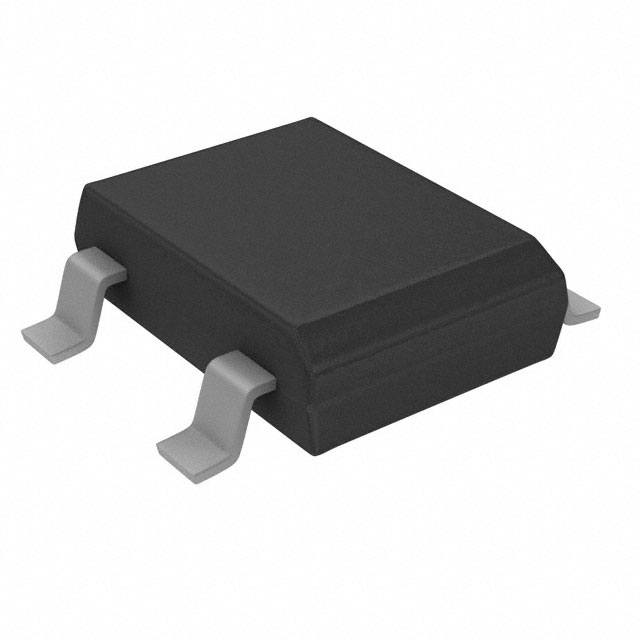
-
HDS10M-13
Diodes Incorporated
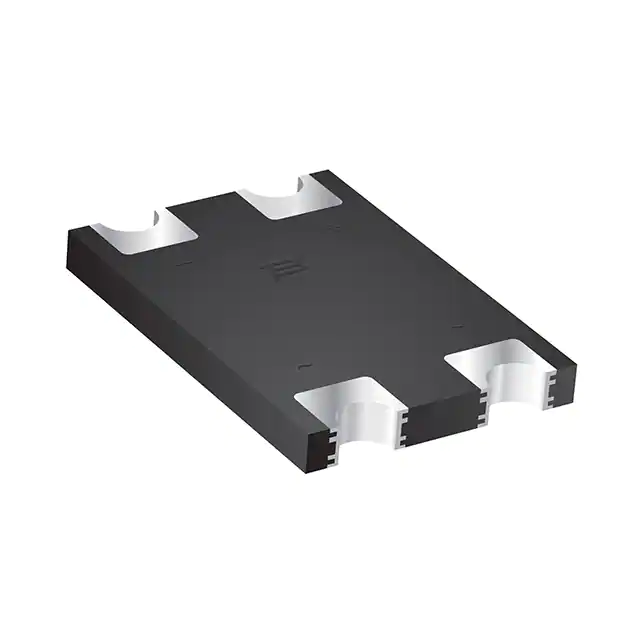
-
CD-MBL106S
Bourns Inc.
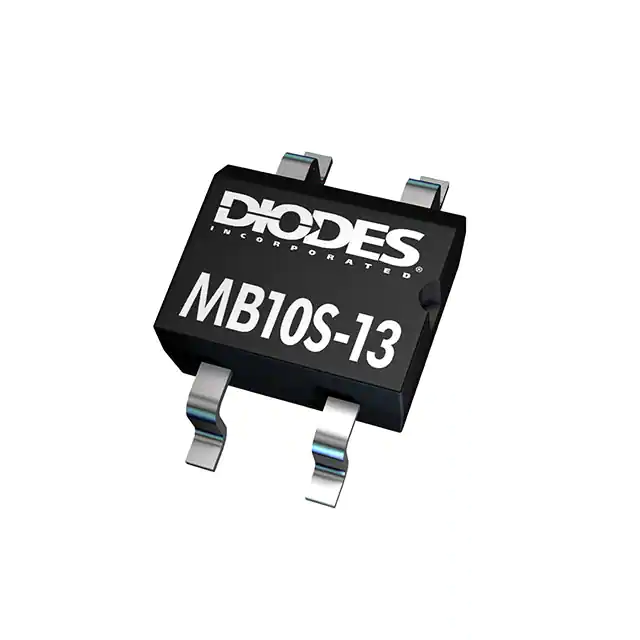
-
MB10S-13
Diodes Incorporated
-
CD-MBL206SL
Bourns Inc.
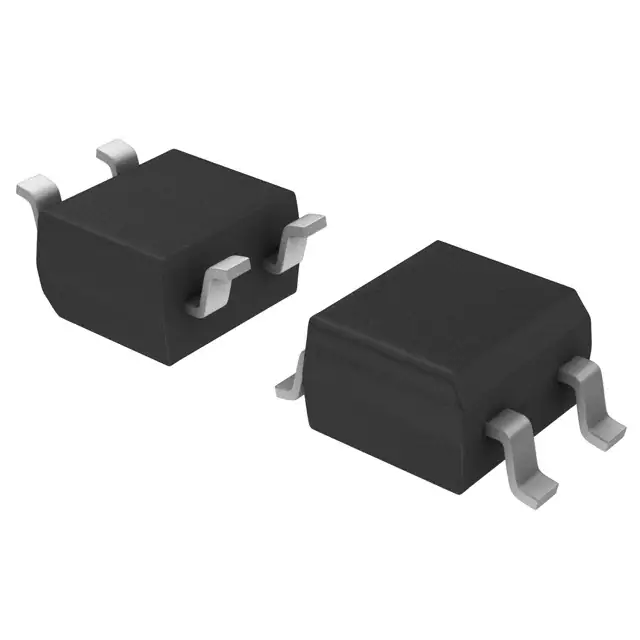
-
MB4S-TP
Micro Commercial Co
-
MB6S-TP
Micro Commercial Co
-
CD-MBL210S
Bourns Inc.
-
BAS3007ARPPE6327HTSA1
Infineon Technologies
-
DF02M
Diodes Incorporated
-
CD-MBL210SL
Bourns Inc.
-
DF04M
Diodes Incorporated
-
DF01M
Diodes Incorporated
Tech Hub
Counterfeit components can hide behind convincing markings and passing basic function tests. This engineering reference covers source traceability, external inspection, X-ray, XRF, electrical testing, …

A practical engineering and sourcing framework covering lifecycle verification, lifetime-buy calculations, replacement qualification, supplier checks and counterfeit-risk controls.

TTL and CMOS logic families differ in thresholds, loading, output drive, power and timing. This engineering guide compares 74HC and 74HCT, calculates noise margins and checks 3.3 V/5 V compatibility.

A practical engineering guide to 3.3V and 5V logic compatibility, input thresholds, resistor dividers, translator ICs, MOSFET level shifting, I2C pull-ups, timing limits and power-sequencing risks.

The 74HC595 uses push-pull logic outputs, while the TPIC6B595 uses 50 V open-drain DMOS sinks for higher-power loads. This guide compares timing, current limits, 3.3 V interfacing, load wiring, thermal…

The 74HC595 converts serial data into eight stable parallel outputs. This guide covers pin functions, shift and storage timing, OE and MR behavior, drive-current limits, cascading, voltage compatibilit…

A technical comparison of level-sensitive latches and edge-triggered flip-flops, covering timing windows, setup and hold limits, master–slave operation, time borrowing, race-through, HDL inference and…

A D latch stores one bit while Enable controls when data can pass. This reference covers gate-level operation, truth tables, transparency, setup and hold timing, LE versus OE, common ICs and practical …

An SR latch stores one bit through cross-coupled feedback. This engineering reference covers NOR and NAND implementations, truth tables, forbidden-state recovery, gated operation, switch debouncing, fa…

Latch circuits retain one bit through feedback. This technical reference covers SR and D latches, truth tables, transparency, timing limits, latch-versus-flip-flop behavior, applications and common log…


