
 My Inquiry
 My Account


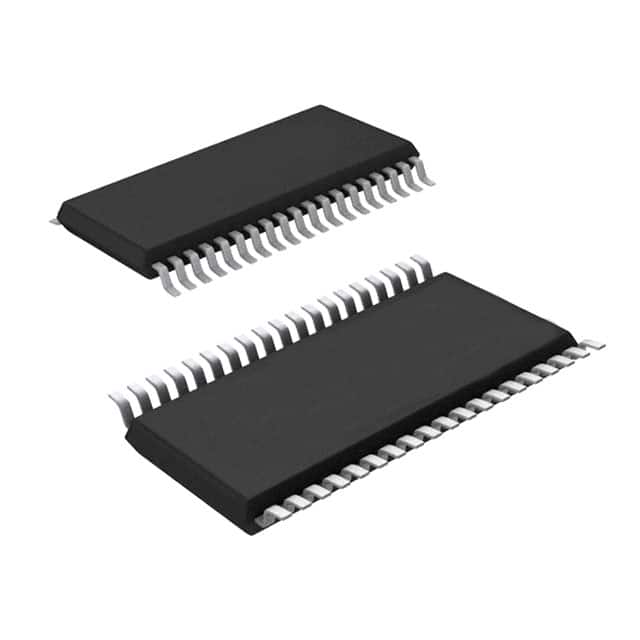
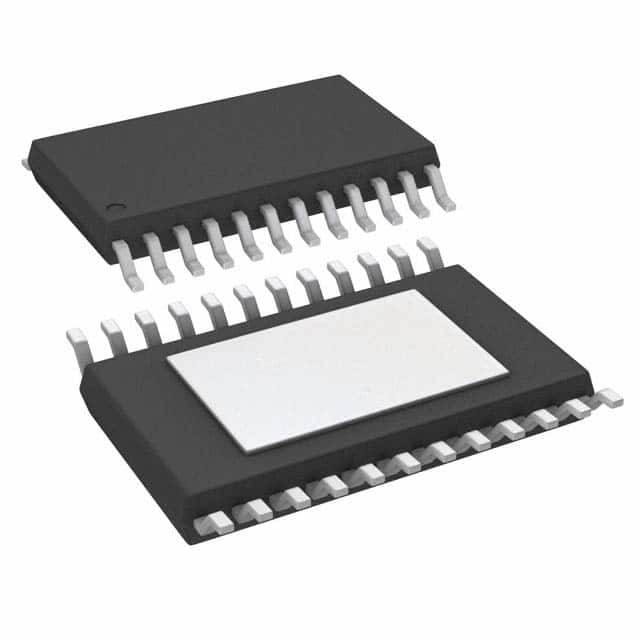
Renesas ISL6218CVZ-T
- Part No.:
- ISL6218CVZ-T
- Manufacturer:
- Renesas
- Category:
- Power Management - Specialized
- Package:
- 38-TFSOP (0.173", 4.40mm Width)
- Datasheet:
-
 ISL6218CVZ-T.pdf
- Description:
- IC CTRLR INTEL PENT M 38-TSSOP
- Quantity:
- Payment:

- Shipping:

Inventory:2,488
Please send an inquiry. Send us your inquiry, and we will respond immediately.
Product details
Overview
ISL6218CVZ-T from Renesas Electronics (formerly Intersil) is a precision single-phase buck PWM controller with integrated half-bridge gate driver, designed for Intel Mobile Voltage Positioning (IMVP-IV™/IMVP-IV+™) CORE regulation in notebook computers. It delivers 0.700V–1.708V output via 6-bit VID DAC, supports 250kHz–500kHz programmable switching frequency, and implements lossless MOSFET rDS(ON) current sensing with ±0.8% system accuracy over temperature.
For engineers reviewing the ISL6218CVZ-T datasheet, ISL6218CVZ-T pinout, ISL6218CVZ-T application, or ISL6218CVZ-T equivalent, key selection considerations include IMVP-IV compliance, droop-based voltage positioning, deep/deeper sleep mode logic interface (DSEN/DRSEN), PGOOD delay masking during VID transitions, and TSSOP-38 package thermal performance (θJA = 72°C/W).
Technical Context
The ISL6218CVZ-T employs average current mode control combined with input voltage feed-forward to achieve fast transient response for mobile CPU CORE voltage regulation. Its proprietary droop architecture uses a load-proportional current source (12–16µA) referenced to EA+ to implement IMVP-IV-specified output impedance compensation.
It integrates dual-mode operation: synchronous buck in Active mode and discontinuous conduction (PSI-like diode emulation) in Deep/Deeper Sleep modes-triggered automatically by negative inductor current detection at ISEN, eliminating external control signals. Protection includes latched OCP (32-cycle shutdown), OVP (112% of VID setpoint), and UVP (84% of VID setpoint), all monitored via VSEN with remote sensing.
Key Specifications
| Parameter | Value and Actual Design Meaning |
|---|---|
| Output Voltage Range | 0.700V to 1.708V in 16mV steps via 6-bit VID inputs - enables precise IMVP-IV-compliant CORE voltage positioning |
| Switching Frequency | 250kHz to 500kHz, resistor-programmable via FSET pin - balances efficiency, EMI, and inductor size for mobile power stages |
| System Accuracy | ±0.8% over -10°C to +85°C - ensures stable CORE voltage under thermal variation without calibration |
| Current Sensing | "Loss-less" rDS(ON) sensing on low-side MOSFET - eliminates sense resistor, saving board area and conduction loss |
| Protection Thresholds | OVP = 112%, UVP = 84% of VID setpoint; OCP = user-set via OCSET resistor - provides latched fault response for microprocessor safety |
| Thermal Resistance | θJA = 72°C/W (TSSOP-38) - defines maximum power dissipation capability in standard PCB layout |
| Supply Voltage | VDD = 5V ±5%; VBAT = 5.6V to 21V - supports wide-input battery-fed mobile platforms |
Pinout & Package
ISL6218CVZ-T is housed in a Pb-free 38-lead TSSOP package (M38.173), optimized for thermal performance in space-constrained notebook VRMs. Pin functions are validated per FN9101 Rev 6.00 datasheet, Page 5.
| Pin/Terminal | Circuit Role | Design Meaning |
|---|---|---|
| VDD | Primary IC supply input | +5V ±5% main power rail; POR threshold 4.39–4.5V rising / 4.10–4.37V falling |
| EN | Enable control input | VR_ON signal interface; >2.0V enables soft-start, <1.0V resets latched faults |
| VID0–VID5 | Digital voltage identification inputs | 6-bit bus setting DACOUT voltage (0.700V–1.708V); CMOS-compatible (1.0/3.3/5.0V logic) |
| PGOOD | Power-good status I/O | Open-drain output masked during VID/mode changes; 3–12ms delay after VCCP/VCC_MCH regulation |
| UG / LG | High-side / low-side gate drivers | Integrated 2A source / 4A sink drivers with bootstrapped high-side drive (UG/BOOT/PHASE) |
| ISEN | Current sense input | Accepts scaled rDS(ON) voltage or discrete resistor feedback; full-scale = 32µA |
| VSEN | Remote voltage sense input | Direct connection to CPU CORE VIN for accurate load-line regulation and UVP/OVP monitoring |
| DSEN / DRSEN | Sleep mode control inputs | DSEN = STP_CPU (Active/Deep Sleep), DRSEN = DPRSLPVR (Deeper Sleep); logic-level interface per Table 2 |
| FSET | Frequency programming input | Resistor-to-ground sets fSW; 243kΩ yields 250kHz (±1%), scalable to 500kHz |
| SOFT | Soft-start and slew rate control | Capacitor-to-ground sets output voltage ramp rate; also configures Deep/Deeper Sleep transition timing |
Key Features
| Feature | Design Value |
|---|---|
| IMVP-IV™ Compliance | Fully implements Intel mobile voltage positioning spec including droop, VID decoding, and sleep mode sequencing |
| Discontinuous Mode (PSI) | Automatic diode-emulation in Deep/Deeper Sleep - shuts off both MOSFETs during light-load reverse current to boost efficiency |
| Integrated Gate Drivers | 4A low-side sink + 2A source with internal bootstrap diode - drives modern low-Qg MOSFETs without external drivers |
| Programmable Droop | External RDROOP resistor sets load-line slope; IDROOP = 12–16µA proportional to IOUT - enables precise CORE voltage vs. current tracking |
| Three-State Fault Response | Latched shutdown on OVP/UVP/OCP; reset via EN toggle or VDD cycle - prevents uncontrolled CPU operation during fault |
Applications
| Mobile Notebook CPU CORE Regulator | Intel Pentium-M Platform VRM |
|---|---|
Use Scenario: Primary voltage regulator supplying CORE power to Intel Pentium-M microprocessors in ultra-portable notebooks. IC Role / Device Role / Timing Role: Single-phase buck PWM controller with IMVP-IV VID interface, droop compensation, and sleep-mode sequencing. Use Value: Enables dynamic voltage scaling across Active/Deep/Deeper Sleep states while maintaining ±0.8% regulation accuracy and fast transient response. | Use Scenario: Integrated into reference VRM designs for Intel chipset-based mobile platforms requiring VCCP and VCC_MCH coordination. IC Role / Device Role / Timing Role: CORE regulator synchronized with ISL6225 dual-supply controller via shared PGOOD handshake and VR_ON enable. Use Value: Eliminates need for external current sense resistors and discrete gate drivers, reducing BOM count and PCB area by >15%. |
| IMVP-IV Compliant Laptop Power System | Low-Power Mobile Embedded CPU Supply |
Use Scenario: Final-stage regulation in multi-rail laptop power architectures where battery input ranges from 5.6V to 21V. IC Role / Device Role / Timing Role: Precision buck controller using VBAT feed-forward and average current mode control for optimal dynamic response. Use Value: Achieves <600ns VID code transition time with PGOOD masking, ensuring glitch-free voltage slewing during CPU state changes. | Use Scenario: CORE supply for embedded mobile CPUs operating in thermally constrained environments with aggressive sleep requirements. IC Role / Device Role / Timing Role: Discontinuous conduction mode (DCM) controller that auto-enables PSI-like operation below ~1A load without external signals. Use Value: Improves light-load efficiency by >25% compared to forced CCM, extending battery life in standby and idle states. |
Equivalent & Alternatives
The following parts are listed as comparable options for similar buck PWM controller applications.
| Alternative Part | Technical Difference | Application Difference | Selection Advice |
|---|---|---|---|
| ISL6223CRZ-T | Single-phase IMVP-IV+ controller in 40-lead QFN; adds adaptive voltage positioning and enhanced thermal monitoring | Targets newer Pentium-M variants requiring IMVP-IV+ timing and tighter OVP tolerance (±1.5% vs. ±2%) | Choose ISL6223CRZ-T when upgrading to IMVP-IV+ platforms or requiring lower θJA (32°C/W) for higher power density |
| RT8802AGQW | Single-phase IMVP-6 controller with integrated MOSFET drivers; supports 0.3–1.5V output, 300–1000kHz fSW | Designed for Core i-series CPUs; lacks DSEN/DRSEN sleep logic but offers digital interface (SVID) | Choose RT8802AGQW only for post-IMVP-IV platforms; not drop-in compatible due to SVID vs. VID protocol and pinout mismatch |
Compared with ISL6218CVZ-T, ISL6223CRZ-T offers improved thermal performance and IMVP-IV+ compliance in QFN packaging, while RT8802AGQW targets next-generation SVID-based systems - neither is pin-compatible, and migration requires PCB redesign and firmware updates.
Availability
ISL6218CVZ-T is available at Aetrix Electronics and suitable for mobile computing, notebook VRM design, and Intel Pentium-M platform development requiring stable component supply and long-term lifecycle support.
Supply support for ISL6218CVZ-T includes scheduled delivery planning, volume procurement assistance, BOM continuity management, traceable sourcing, and lifecycle availability coordination for OEM customers, industrial embedded developers, connected-device designers, and electronics production programs.
Manufacturer
Renesas Electronics Corporation is a global semiconductor leader delivering trusted embedded solutions for automotive, industrial, infrastructure, and IoT applications.
The ISL6218CVZ-T belongs to Renesas' legacy Intersil mobile power management portfolio, engineered specifically for Intel IMVP-IV-compliant notebook CPU CORE regulation with emphasis on efficiency, accuracy, and sleep-mode intelligence.
FAQ
What is the supported input voltage range for ISL6218CVZ-T?
The ISL6218CVZ-T accepts VDD = 5V ±5% for internal circuitry and VBAT = 5.6V to 21V for battery feed-forward functionality. The VDD supply must exceed 4.39V (rising POR threshold) to initiate operation, and drops below 4.10V (falling POR threshold) to trigger shutdown. These ratings are specified in the Absolute Maximum and Recommended Operating Conditions tables of FN9101 Rev 6.00.
How does ISL6218CVZ-T implement "loss-less" current sensing?
The ISL6218CVZ-T implements loss-less current sensing by measuring the voltage drop across the low-side MOSFET's rDS(ON) via the ISEN pin, eliminating the need for a discrete current-sense resistor. This method reduces board area, conduction losses, and cost. The IC scales the sensed signal to a full-scale input of 32µA at ISEN, and supports optional discrete resistor sensing if higher precision is required.
What are the key differences between Active, Deep Sleep, and Deeper Sleep modes on ISL6218CVZ-T?
ISL6218CVZ-T enters Active mode when DSEN = HIGH and DRSEN = LOW, regulating to VID voltage minus droop. Deep Sleep activates when DSEN = LOW and DRSEN = LOW, regulating to DSV voltage minus droop. Deeper Sleep triggers when DSEN = LOW and DRSEN = HIGH (or both HIGH), regulating to DRSV voltage minus droop. Each mode uses discontinuous conduction to improve light-load efficiency, and all transitions are controlled solely by logic levels on DSEN/DRSEN pins.
Can ISL6218CVZ-T be used with modern Intel processors beyond Pentium-M?
No - the ISL6218CVZ-T is specifically designed for Intel IMVP-IV™ and IMVP-IV+™ specifications used exclusively with Pentium-M and early Core Solo/Duo mobile processors. It does not support SVID, IMVP-6, or later protocols. For newer platforms, Renesas recommends ISL6223CRZ-T (IMVP-IV+) or RT8802AGQW (IMVP-6/SVID), though these require hardware and firmware redesign.
What is the purpose of the PGOOD delay circuit in ISL6218CVZ-T?
The PGOOD delay circuit in ISL6218CVZ-T holds the PGOOD pin low for 3ms to 12ms after VCCP and VCC_MCH regulators reach regulation, ensuring stable auxiliary supplies before enabling CORE voltage slewing. During VID code changes or sleep mode transitions, PGOOD is masked to prevent false system resets. This behavior is hardwired and non-adjustable, as confirmed in the Functional Pin Description and Theory of Operation sections of FN9101 Rev 6.00.
ISL6218CVZ-T Specifications
- Product attributes
- Attribute value
- Manufacturer:
- Renesas
- Series:
- -
- Package/Case:
- 38-TFSOP (0.173", 4.40mm Width)
- Packaging:
- Tape & Reel (TR)
- Product Status:
- Obsolete
- Applications:
- Processor
- Current - Supply:
- 1.4mA
- Voltage - Supply:
- 4.75V ~ 5.25V
- Operating Temperature:
- -10°C ~ 85°C
- Grade:
- -
- Qualification:
- -
- Mounting Type:
- Surface Mount
- Supplier Device Package:
- 38-TSSOP
ISL6218CVZ-T FAQ
1.How can I place an order for ISL6218CVZ-T through Aetrix?
Please submit a Request for Quotation (RFQ) for ISL6218CVZ-T on Aetrix. Our sales agent will provide a competitive quotation and guide you through the order confirmation once you accept the terms.
2.Are the price and stock information for ISL6218CVZ-T reliable?
The price and inventory of ISL6218CVZ-T are updated periodically and may fluctuate due to market conditions. Stock and pricing data are typically refreshed every 24 hours. Quotation validity for ISL6218CVZ-T is usually 5 days.
3.What payment methods are accepted for ISL6218CVZ-T?
We accept Wire Transfer, PayPal, Credit Card, Western Union, MoneyGram, and Escrow for ISL6218CVZ-T transactions.
Note: Certain payment methods may incur a processing fee.
4.How is shipping managed for ISL6218CVZ-T?
ISL6218CVZ-T orders can be shipped via leading logistics carriers, including DHL, UPS, FedEx, TNT, or Registered Mail.
Once your ISL6218CVZ-T order is processed, you will receive an email with the shipment details and tracking number.
Note: Tracking information may take up to 24 hours to appear. Express delivery typically takes 3–5 business days.
5.How can I obtain technical support or documentation for ISL6218CVZ-T?
For technical support, including ISL6218CVZ-T datasheets, pinout diagrams, or application guidance, please contact our engineering support team. They can provide detailed documentation and assistance for your ISL6218CVZ-T requirements.
6.How does Aetrix verify that ISL6218CVZ-T is sourced from the original manufacturer or authorized distributors?
All ISL6218CVZ-T products on Aetrix are procured from qualified distributors and authorized channels. Our dedicated quality assurance team conducts strict verification, including traceability checks and, if necessary, third-party testing. This ensures that ISL6218CVZ-T meets industry standards.
7.What is the process for return or replacement of ISL6218CVZ-T?
All ISL6218CVZ-T units undergo pre-shipment inspection (PSI). If there is an issue with ISL6218CVZ-T, returns or replacements are accepted under the following conditions:
1.Quantity discrepancies, incorrect items, or visible external defects (such as breakage or corrosion), acknowledged by Aetrix.
2.The issue is reported within 90 days of delivery.
3.The ISL6218CVZ-T part is unused and in its original packaging.
Return procedure for ISL6218CVZ-T:
1.Submit a request within 90 days.
2.Obtain a Return Material Authorization (RMA) from Aetrix.
ISL6218CVZ-T Tags
-
TPS2511DGNR
Texas Instruments
-
UTC2000/MG
Microchip Technology
-
TUSB320HAIRWBR
Texas Instruments
-
TPS61252DSGR
Texas Instruments
-
PI5USB30216CXUAEX
Diodes Incorporated

-
SN6501DBVR
Texas Instruments
-
CYPD3177-24LQXQT
Infineon Technologies
-
SN6501QDBVRQ1
Texas Instruments
-
STUSB1600AQTR
STMicroelectronics

-
SN6505BDBVR
Texas Instruments
-
SN6501DBVT
Texas Instruments
-
TPS65150PWPR
Texas Instruments
Tech Hub

TTL and CMOS logic families differ in thresholds, loading, output drive, power and timing. This engineering guide compares 74HC and 74HCT, calculates noise margins and checks 3.3 V/5 V compatibility.

A practical engineering guide to 3.3V and 5V logic compatibility, input thresholds, resistor dividers, translator ICs, MOSFET level shifting, I2C pull-ups, timing limits and power-sequencing risks.

The 74HC595 uses push-pull logic outputs, while the TPIC6B595 uses 50 V open-drain DMOS sinks for higher-power loads. This guide compares timing, current limits, 3.3 V interfacing, load wiring, thermal…

The 74HC595 converts serial data into eight stable parallel outputs. This guide covers pin functions, shift and storage timing, OE and MR behavior, drive-current limits, cascading, voltage compatibilit…

A technical comparison of level-sensitive latches and edge-triggered flip-flops, covering timing windows, setup and hold limits, master–slave operation, time borrowing, race-through, HDL inference and…

A D latch stores one bit while Enable controls when data can pass. This reference covers gate-level operation, truth tables, transparency, setup and hold timing, LE versus OE, common ICs and practical …

An SR latch stores one bit through cross-coupled feedback. This engineering reference covers NOR and NAND implementations, truth tables, forbidden-state recovery, gated operation, switch debouncing, fa…

Latch circuits retain one bit through feedback. This technical reference covers SR and D latches, truth tables, transparency, timing limits, latch-versus-flip-flop behavior, applications and common log…

An engineering guide to LED driver operation, constant-current and constant-voltage outputs, linear and switching topologies, dimming, IC selection, calculations, replacement compatibility, and fault c…

Operational amplifier guide covering op amp basics, feedback, ideal vs real op amps, common configurations, buffer circuits, offset, bias current, gain-bandwidth, slew rate, rail-to-rail limits and sel…


