
 My Inquiry
 My Account


STMicroelectronics ISM303DACTR
- Part No.:
- ISM303DACTR
- Manufacturer:
- STMicroelectronics
- Category:
- Multifunction
- Package:
- Datasheet:
-
 ISM303DACTR.pdf
- Description:
- SENSOR MULT ACCELEROMETER/MAGNET
- Quantity:
- Payment:

- Shipping:

Inventory:5,693
Please send an inquiry. Send us your inquiry, and we will respond immediately.
Product details
Overview
ISM303DACTR from STMicroelectronics is a high-performance, low-power system-in-package integrating a 3-axis digital accelerometer and a 3-axis digital magnetometer. It delivers ±2/±4/±8/±16 g selectable acceleration full scales, up to ±50 gauss magnetic dynamic range, 16-bit data output, and dual SPI/I²C interfaces - enabling precise motion and orientation sensing in space-constrained IoT and portable devices.
For engineers reviewing the ISM303DACTR datasheet, ISM303DACTR pinout, ISM303DACTR application, or ISM303DACTR equivalent, this page provides verified technical context, validated pin functions, real-world use cases in robotics and navigation, and confirmed alternative parts with documented functional trade-offs.
Technical Context
The ISM303DACTR integrates two independent sensor blocks: a MEMS accelerometer supporting ODRs from 1 Hz to 6400 Hz and configurable low-pass filtering, and a magnetoresistive magnetometer operating at 10–150 Hz with hard-iron offset compensation and self-test capability. Both sensors share a common I²C/SPI bus but feature separate power control registers.
It embeds a 256-level FIFO for accelerometer data only, programmable interrupt generators for free-fall/motion/magnetic events, and an on-die temperature sensor. The device operates from 1.71 V to 1.98 V analog supply and supports extended industrial temperature range (−40 °C to +85 °C) in LGA-12 package.
Key Specifications
| Parameter | Value and Actual Design Meaning |
|---|---|
| Acceleration Full Scale | ±2/±4/±8/±16 g - enables selection of resolution vs. range for vibration monitoring or tilt sensing |
| Magnetic Dynamic Range | ±50 gauss - sufficient for Earth's field measurement and compass-grade heading estimation |
| Output Data Rate (Accel) | 1 Hz to 6400 Hz - supports both ultra-low-power wake-up detection and high-bandwidth motion capture |
| Output Data Rate (Mag) | 10 Hz to 150 Hz - balances noise performance and update rate for orientation fusion |
| Digital Interfaces | I²C (100 kHz–3.4 MHz) and SPI (4-wire/3-wire) - ensures compatibility with microcontrollers lacking dedicated sensor hubs |
| FIFO Depth | 256-level FIFO for accelerometer only - reduces host MCU polling overhead and enables burst-read efficiency |
| Supply Voltage | 1.71 V to 1.98 V - matches modern ultra-low-voltage SoC I/O domains without level-shifting |
Pinout & Package
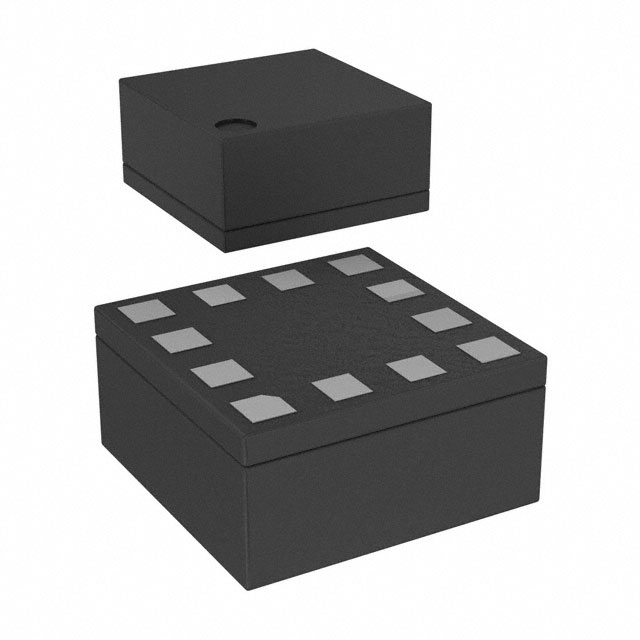
ISM303DACTR is housed in a 2.0 mm × 2.0 mm × 0.87 mm plastic land grid array (LGA-12) package with exposed thermal pad, optimized for compact wearable and portable electronics.
| Pin/Terminal | Circuit Role | Design Meaning |
|---|---|---|
| VDD | Analog power supply | 1.71–1.98 V input for internal sensor blocks and ADCs |
| GND | Ground reference | Common return path for analog and digital circuitry |
| SCL / SDA | I²C clock/data bidirectional lines | Support standard/fast/fast-plus/high-speed modes up to 3.4 MHz |
| SDO/SA0 | Slave address select / SPI data out | Configures I²C address (0x1C or 0x1E); outputs SPI MISO in 4-wire mode |
| CS | SPI chip select | Active-low enable for SPI communication; disables I²C when asserted |
| SCLK | SPI clock input | Accepts up to 10 MHz clock for high-throughput register access |
| INT1 / INT2 | Programmable interrupt outputs | Configurable as push-pull/open-drain for motion, free-fall, or magnetic event signaling |
Key Features
| Feature | Design Value |
|---|---|
| Embedded self-test | Validates accelerometer and magnetometer functionality in-system without external stimulus |
| Independent power control | Accelerometer and magnetometer can be enabled/disabled separately to minimize system power |
| 6D/4D orientation detection | Hardware-accelerated tilt recognition with programmable threshold and debounce for UI rotation |
| Hard-iron compensation | On-chip correction for static magnetic field distortion caused by nearby ferrous materials |
| Temperature sensor | Integrated die-temperature monitor (±5 °C accuracy) for thermal drift compensation in calibration |
Applications
| Smart Meter Anti-Tampering | Antenna Pointing Systems |
|---|---|
|
Use Scenario: Detect unauthorized physical manipulation (e.g., tilting, inversion, impact) of utility smart meters to prevent energy theft. IC Role / Device Role / Timing Role: Dual-sensor fusion engine providing tamper-triggered interrupt via INT1 based on combined accel/mag anomaly detection. Use Value: Enables reliable, low-power, always-on tamper logging without host MCU intervention - extending battery life beyond 10 years. |
Use Scenario: Maintain directional alignment of satellite or LoRaWAN antennas on moving platforms (e.g., agricultural drones, marine buoys). IC Role / Device Role / Timing Role: Real-time 3D orientation estimator feeding heading and pitch data to servo control loop at 100 Hz. Use Value: Delivers <1° heading error under dynamic conditions using factory-calibrated mag/accel cross-axis alignment. |
| Robotics Motion Tracking | Indoor Positioning Systems |
|
Use Scenario: Track joint angle and limb kinematics in collaborative robots and exoskeletons during human-robot interaction. IC Role / Device Role / Timing Role: High-ODR (≥1600 Hz) accelerometer captures transient shock events; magnetometer stabilizes yaw drift in AHRS fusion. Use Value: Achieves sub-degree attitude accuracy over time using embedded FIFO and synchronized timestamping across axes. |
Use Scenario: Enable pedestrian dead reckoning (PDR) in GPS-denied environments such as warehouses, hospitals, or underground facilities. IC Role / Device Role / Timing Role: Step detector and heading estimator feeding Kalman filter with calibrated mag bias and accel zero-g offset. Use Value: Reduces position drift to <2% distance error per 100 m walked using on-device 6D orientation and activity/inactivity logic. |
Equivalent & Alternatives
The following parts are listed as comparable options for similar 3-axis accel + 3-axis mag sensor applications.
| Alternative Part | Technical Difference | Application Difference | Selection Advice |
|---|---|---|---|
| BNO055 | Integrated sensor fusion ASIC (AHRS output), higher power (≈1.5 mA typical), larger QFN-24 package | Delivers quaternion/euler output directly; no host-side fusion required | Select when firmware resources are constrained and fused orientation is primary output |
| LSM9DS1 | Separate accel/mag dies in same package; wider accel range (±16 g), no hard-iron compensation; 3.3 V supply only | Lacks on-chip mag offset cancellation - requires external calibration routine | Select when cost sensitivity outweighs calibration complexity and 3.3 V rail is available |
Compared with BNO055, ISM303DACTR offers lower power and smaller footprint but requires host-based sensor fusion; versus LSM9DS1, it adds factory-trimmed hard-iron compensation and tighter voltage compliance - simplifying design for battery-powered edge nodes.
Availability
ISM303DACTR is available at Aetrix Electronics and suitable for robotics motion tracking, smart meter anti-tampering, and indoor positioning systems requiring stable component supply across multi-year production cycles.
Supply support for ISM303DACTR includes scheduled delivery planning, volume procurement assistance, BOM continuity management, traceable sourcing, and lifecycle availability coordination for OEM customers, industrial embedded developers, connected-device designers, and electronics production programs.
Manufacturer
STMicroelectronics is a global semiconductor leader specializing in MEMS sensors, microcontrollers, and power management ICs for industrial, automotive, and consumer markets.
The ISM303DACTR belongs to ST's iNEMO inertial module family, designed specifically for ultra-low-power, space-constrained motion sensing applications where co-location of accel and mag improves alignment stability and reduces PCB area.
FAQ
What is the maximum I²C clock frequency supported by ISM303DACTR?
The ISM303DACTR supports I²C up to 3.4 MHz in high-speed mode, as confirmed in Section 2.4.2 of the official datasheet (DocID030988 Rev 2). This allows rapid register reads during high-ODR operation and minimizes bus occupancy time in multi-sensor systems.
Does ISM303DACTR include factory calibration for magnetometer offset?
Yes - the ISM303DACTR includes factory-trimmed hard-iron offset compensation stored in non-volatile registers (OFFSET_X_REG_L_M through OFFSET_Z_REG_H_M), eliminating need for user-performed 3-axis magnetometer calibration in most deployments.
Can the accelerometer and magnetometer operate simultaneously at different output data rates?
Yes - the ISM303DACTR allows independent configuration of ODR for each sensor block: accelerometer (1–6400 Hz) and magnetometer (10–150 Hz), enabling optimal power/performance trade-offs for fusion algorithms without hardware synchronization constraints.
Is the embedded FIFO accessible for magnetometer data?
No - the 256-level FIFO is dedicated exclusively to accelerometer data, as specified in Section 4.4 and Table 10 of the datasheet. Magnetometer data must be read synchronously via I²C or SPI without buffering support.
ISM303DACTR Specifications
- Product attributes
- Attribute value
- Manufacturer:
- STMicroelectronics
- Series:
- -
- Packaging:
- Tape & Reel (TR)
- Product Status:
- Active
- Sensor Type:
- Accelerometer and Magnetometer
- Output Type:
- I2C, SPI
- Operating Temperature:
- -40°C ~ 85°C
ISM303DACTR FAQ
1.How can I place an order for ISM303DACTR through Aetrix?
Please submit a Request for Quotation (RFQ) for ISM303DACTR on Aetrix. Our sales agent will provide a competitive quotation and guide you through the order confirmation once you accept the terms.
2.Are the price and stock information for ISM303DACTR reliable?
The price and inventory of ISM303DACTR are updated periodically and may fluctuate due to market conditions. Stock and pricing data are typically refreshed every 24 hours. Quotation validity for ISM303DACTR is usually 5 days.
3.What payment methods are accepted for ISM303DACTR?
We accept Wire Transfer, PayPal, Credit Card, Western Union, MoneyGram, and Escrow for ISM303DACTR transactions.
Note: Certain payment methods may incur a processing fee.
4.How is shipping managed for ISM303DACTR?
ISM303DACTR orders can be shipped via leading logistics carriers, including DHL, UPS, FedEx, TNT, or Registered Mail.
Once your ISM303DACTR order is processed, you will receive an email with the shipment details and tracking number.
Note: Tracking information may take up to 24 hours to appear. Express delivery typically takes 3–5 business days.
5.How can I obtain technical support or documentation for ISM303DACTR?
For technical support, including ISM303DACTR datasheets, pinout diagrams, or application guidance, please contact our engineering support team. They can provide detailed documentation and assistance for your ISM303DACTR requirements.
6.How does Aetrix verify that ISM303DACTR is sourced from the original manufacturer or authorized distributors?
All ISM303DACTR products on Aetrix are procured from qualified distributors and authorized channels. Our dedicated quality assurance team conducts strict verification, including traceability checks and, if necessary, third-party testing. This ensures that ISM303DACTR meets industry standards.
7.What is the process for return or replacement of ISM303DACTR?
All ISM303DACTR units undergo pre-shipment inspection (PSI). If there is an issue with ISM303DACTR, returns or replacements are accepted under the following conditions:
1.Quantity discrepancies, incorrect items, or visible external defects (such as breakage or corrosion), acknowledged by Aetrix.
2.The issue is reported within 90 days of delivery.
3.The ISM303DACTR part is unused and in its original packaging.
Return procedure for ISM303DACTR:
1.Submit a request within 90 days.
2.Obtain a Return Material Authorization (RMA) from Aetrix.
ISM303DACTR Tags
-
ISM303DACTR
STMicroelectronics
-
MS860702BA01-50
TE Connectivity Measurement Specialties
-
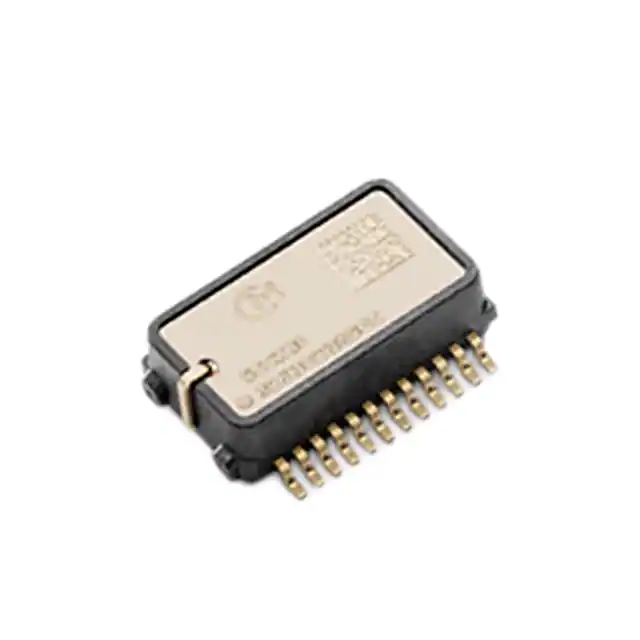
SCC2230-D08-05
Murata Electronics
-
SCC2230-E02-05
Murata Electronics
-
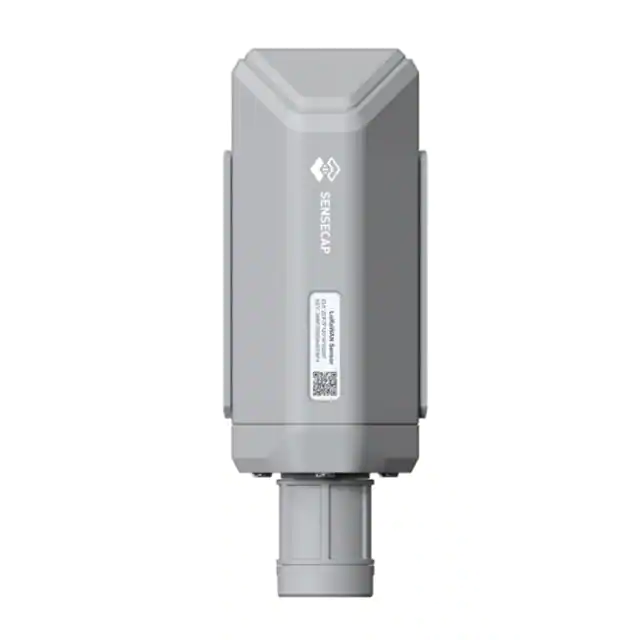
SCC2130-D08-05
Murata Electronics
-
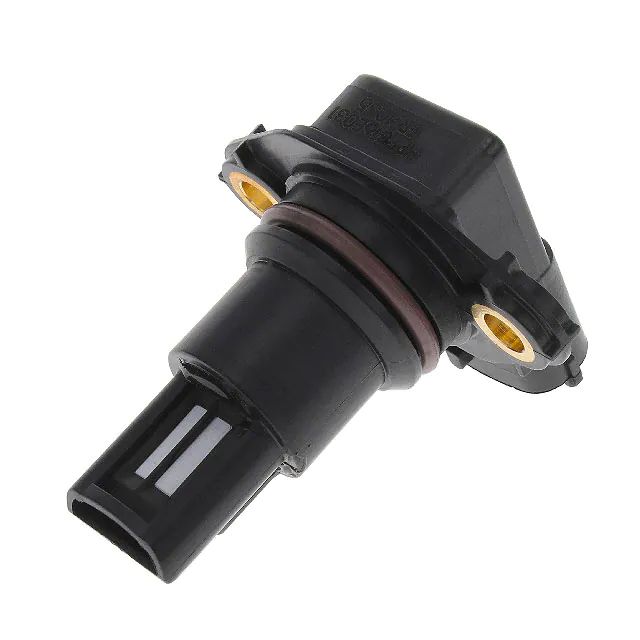
114992869
Seeed Technology Co., Ltd
-
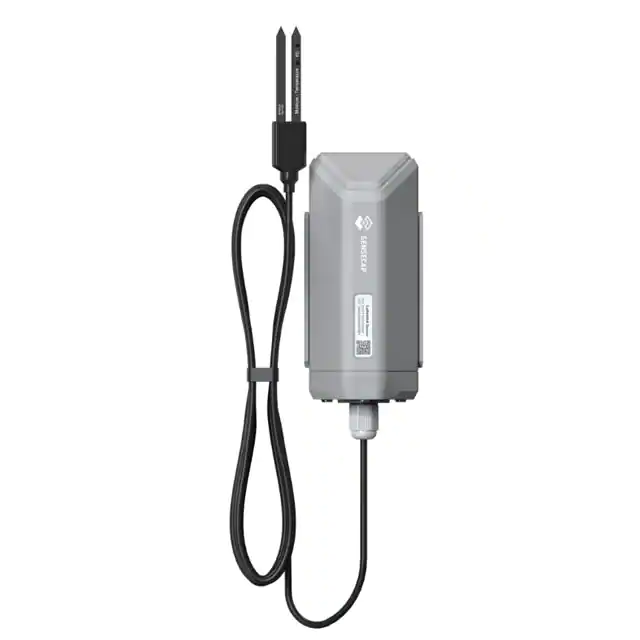
HPP816E031
TE Connectivity Measurement Specialties
-
114992871
Seeed Technology Co., Ltd
-
CS-12S6SS-A
Advanced Thermal Solutions Inc.
-
QM30VT2
Banner Engineering Corporation

-
GE-2099
Amphenol Advanced Sensors (Thermometrics)
-
GE-2098
Amphenol Advanced Sensors (Thermometrics)
Tech Hub

Jumper cables guide covering safe connection order, red and black clamp placement, final ground connection, cable gauge, length, clamp quality, copper vs CCA cables, jump starter comparison and battery…

LDO regulator guide covering low dropout voltage, power dissipation, thermal design, PSRR, output noise, capacitor stability, adjustable LDO circuits, LDO vs buck converter and datasheet selection chec…

Conditional Access Module guide covering CAM meaning, CI/CI+ interface, smart card authorization, DVB security workflow, TV and set-top box compatibility, internal electronics, ESD protection, connecto…

Guide to electronic component obsolescence covering EOL risk, PCN/PDN notices, last-time buy planning, replacement options, form-fit-function validation, counterfeit risk and BOM lifecycle management.

18650 battery guide covering lithium-ion cell basics, 3.6V/3.7V voltage, 4.2V charging, mAh and Wh capacity, protected cells, chargers, BMS, series-parallel packs, holders, welding and sourcing checks.…

Hall effect sensor guide covering working principle, linear and digital sensors, Arduino circuits, current sensing, speed detection, automotive applications, A3144 examples, signal filtering and datash…

Product Change Notification guide for electronic components, covering PCN meaning, PCN vs PDN/EOL, common change types, risk levels, form-fit-function review, engineering validation, BOM control, LTB/L…

A practical guide to blend door actuators, covering HVAC function, symptoms, location, AC and heater issues, reset and calibration, replacement cost, electrical diagnosis, compatibility checks, and rep…

Engineering guide to Raspberry Pi alternatives, covering chip-level differences, Orange Pi, ROCK, Jetson, Banana Pi, NanoPi, Compute Module, Pico, GPIO, camera, HAT compatibility, and replacement risks…
Engineering guide to dynamic load response testing for high-current buck converters, covering load step setup, slew rate, Vcore undershoot, overshoot, recovery time, probe location, output capacitors a…


