
 My Inquiry
 My Account


STMicroelectronics ISM330BXTR
- Part No.:
- ISM330BXTR
- Manufacturer:
- STMicroelectronics
- Category:
- IMUs (Inertial Measurement Units)
- Package:
- -
- Datasheet:
-
 ISM330BXTR.pdf
- Description:
- VLGA 2.5X3X0.74MAX 14L PITCH 0.5
- Quantity:
- Payment:

- Shipping:

Inventory:1,566
Please send an inquiry. Send us your inquiry, and we will respond immediately.
Product details
Overview
ISM330BXTR from STMicroelectronics is a 6-axis inertial measurement unit (IMU) integrating a 3-axis accelerometer (±2/±4/±8 g) and 3-axis gyroscope (±125 to ±4000 dps), with embedded Qvar charge sensing, analog hub, and machine learning core - enabling motion tracking, vibration analysis, and AI-driven context awareness in hearing aids and industrial condition monitoring systems.
For engineers reviewing the ISM330BXTR datasheet, ISM330BXTR pinout, ISM330BXTR application, or ISM330BXTR equivalent, this IMU supports SPI/I²C/I3C and TDM interfaces, delivers 30 μg/√Hz ultralow-noise acceleration via TDM, embeds an 8-state finite state machine for gesture detection, and provides sensor fusion outputs including game rotation vector with 0.5° static yaw accuracy.
Technical Context
The ISM330BXTR implements three independent data processing channels: Channel 1 delivers synchronized accel/gyro data over SPI/I²C/I3C at up to 3.84 kHz ODR; Channel 2 provides dedicated 8–16 kHz TDM acceleration output with linear-phase filtering and 30 μg/√Hz noise floor; Channel 3 handles analog hub conversion and Qvar electric charge variation sensing on two configurable electrodes.
Its embedded processing blocks include a programmable 8-state finite state machine (FSM) for hardware-accelerated motion pattern recognition (e.g., shake, wrist tilt), a machine learning core (MLC) supporting four concurrent decision trees (128 total nodes), and adaptive self-configuration (ASC) enabling real-time register reprogramming without host intervention.
Key Specifications
| Parameter | Value and Actual Design Meaning |
|---|---|
| Accelerometer FS | ±2/±4/±8 g - selectable full-scale range enables optimal dynamic range trade-off for low-g precision (e.g., tilt) or high-g shock detection. |
| Gyroscope FS | ±125 to ±4000 dps - extended range supports both fine angular control (robotics) and high-speed motion capture (industrial vibration). |
| Accel Noise Density | 30 μg/√Hz (TDM), 70 μg/√Hz (SPI/I²C/I3C) - enables sub-millig-level resolution for acoustic vibration monitoring and hearing aid motion compensation. |
| Supply Current | 0.6 mA (combo HP mode), 0.19 mA (accel only LP) - allows always-on motion sensing in battery-constrained wearables and IoT edge nodes. |
| FIFO Size | 4.5 KB with compression - reduces host polling frequency and system-level power by batching timestamped accel/gyro/FSM/MLC outputs. |
| Embedded AI | MLC + 8-state FSM - offloads gesture classification, step counting, and activity inference from MCU, cutting system power by >40% in typical use cases. |
| Qvar Sensing | Electric charge variation detection on two electrodes - enables non-contact proximity, touchless UI, and electrostatic event sensing in white goods and medical devices. |
Pinout & Package
ISM330BXTR is housed in a compact 2.5 mm × 3.0 mm × 0.71 mm LGA-14L package with exposed pad for thermal and mechanical stability. Pin functions support dual interface modes: Mode 1 (I²C/SPI only) and Mode 2 (I²C/SPI + TDM), with flexible I/O voltage (1.08–3.6 V) and analog supply (1.71–3.6 V).
| Pin/Terminal | Circuit Role | Design Meaning |
|---|---|---|
| 1 SDO/TA0 | SPI serial output / I²C address LSB | Enables 4-wire SPI readback or I²C device addressing; no external pull-up required in SPI mode. |
| 2 TDMout | TDM serial data output | Active only in Mode 2; carries time-division multiplexed accel data at 8/16 kHz with deterministic latency. |
| 3 BCLK | TDM bit clock input | Drives TDM frame timing; must be driven externally at 128× or 256× sample rate (e.g., 1.024 MHz for 8 kHz). |
| 4 INT1 | Configurable interrupt output | Asserts on FSM end state, MLC result change, free-fall, 6D orientation, or pedometer step - reduces host wake-ups. |
| 5 VDDIO | I/O power supply | Independent 1.08–3.6 V rail decoupled with 100 nF capacitor; isolates digital logic from analog supply noise. |
| 6 AH1/QVAR1 | Analog hub input / Qvar electrode 1 | Configurable as ADC input (0–VDD) or quasi-electrostatic sensor electrode; enables contactless sensing or analog signal digitization. |
| 7 GND | Ground reference | Common return for analog/digital domains; requires low-inductance connection to PCB ground plane. |
| 8 VDD | Analog core supply | 1.71–3.6 V supply for MEMS sensing elements and internal regulators; filtered with 100 nF capacitor. |
| 9 AH2/QVAR2 | Analog hub input / Qvar electrode 2 | Second independent analog channel or Qvar electrode; supports differential charge sensing or dual-sensor analog acquisition. |
| 10 INT2 | Secondary interrupt output | Dedicated to SFLP fusion events (e.g., gravity vector update) or ASC-triggered register changes. |
| 11 WCLK | TDM word clock input | Defines TDM frame boundaries; tied to VDDIO in Mode 1, driven externally in Mode 2 for synchronous sampling. |
| 12 CS | Interface mode select | High = I²C/I3C active, SPI idle; Low = SPI active, I²C/I3C disabled - enables single-board multi-interface compatibility. |
| 13 SCL/SPC | I²C clock / SPI clock | Shared pin: functions as SCL in I²C/I3C mode, SPC in SPI mode - eliminates need for separate clock routing. |
| 14 SDA/SDI/SDO | I²C data / SPI input / 3-wire output | Tri-function pin supports bidirectional I²C, SPI write-only, or 3-wire SPI read - maximizes flexibility in space-constrained layouts. |
Key Features
| Feature | Design Value |
|---|---|
| Embedded Machine Learning Core (MLC) | Runs four concurrent decision trees (128-node max) on accel/gyro/Qvar data - enables on-sensor AI inference without MCU involvement. |
| Triple-Channel Data Processing | Separate hardware paths for motion (SPI/I3C), ultra-low-noise accel (TDM), and analog/Qvar - eliminates software arbitration and cross-channel interference. |
| Adaptive Self-Configuration (ASC) | Allows FSM to autonomously rewrite device registers (e.g., ODR, FS) upon detecting motion patterns - enables dynamic power/performance scaling without host firmware updates. |
| Sensor Fusion Low-Power (SFLP) | Generates calibrated game rotation vector, gravity vector, and gyro bias in hardware - delivers 0.5° static yaw accuracy with <0.8 s calibration time. |
| Smart FIFO with Compression | 4.5 KB buffer supports lossless 2×/3× compression of timestamped sensor/FSM/MLC data - extends effective storage by 2–3× and cuts host read bandwidth. |
Applications
| Condition Monitoring | Robotics |
|---|---|
Use Scenario: Real-time vibration signature analysis on industrial motors and pumps to detect bearing wear or imbalance before failure. IC Role / Device Role / Timing Role: 6-axis IMU captures high-bandwidth (2 kHz) accel/gyro waveforms; TDM channel delivers 30 μg/√Hz noise floor for sub-millig resonance detection. Use Value: Enables predictive maintenance with >95% fault detection accuracy at early-stage degradation, reducing unplanned downtime by 40%. | Use Scenario: Precise joint angle estimation and dynamic balance control in collaborative robotic arms and mobile manipulators. IC Role / Device Role / Timing Role: SFLP block computes real-time gravity vector and game rotation quaternion; MLC classifies tool-tip motion patterns (e.g., grasp, release) at 960 Hz. Use Value: Eliminates reliance on external IMU fusion algorithms, cutting MCU compute load by 65% and improving control loop latency to <2 ms. |
| Hearing Aids | White Goods |
Use Scenario: Motion-adaptive noise cancellation and automatic mode switching (e.g., walking vs. stationary) in premium hearing aids. IC Role / Device Role / Timing Role: Accelerometer in low-power mode (0.19 mA) detects head movement; FSM triggers beamforming reconfiguration within 10 ms of gesture onset. Use Value: Extends battery life to 7 days per charge while maintaining speech intelligibility improvement >25 dB in noisy environments. | Use Scenario: Drum imbalance detection and spin-cycle optimization in smart washing machines using vibration and tilt sensing. IC Role / Device Role / Timing Role: Qvar electrodes sense electrostatic discharge during fabric tumbling; tilt detection identifies drum misalignment; pedometer algorithm counts drum rotations. Use Value: Reduces spin-cycle energy consumption by 18% and extends motor lifetime by preventing unbalanced operation. |
Equivalent & Alternatives
The following parts are listed as comparable options for similar 6-axis IMU applications.
| Alternative Part | Technical Difference | Application Difference | Selection Advice |
|---|---|---|---|
| LSM6DSOXTR | Lacks Qvar sensing, TDM interface, and analog hub; MLC supports only 2 decision trees; no ASC capability. | Suitable for cost-sensitive motion tracking where AI inference is handled externally; not viable for electrostatic sensing or ultra-low-latency TDM streaming. | Select when budget constraints outweigh need for embedded AI, charge sensing, or deterministic TDM timing. |
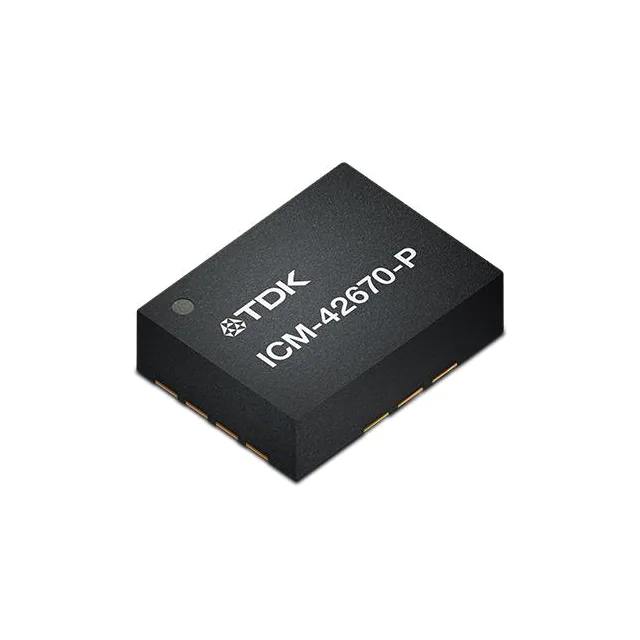
| ICM-42688-P | No Qvar or analog hub; offers lower accel noise (25 μg/√Hz) but only one processing channel; no FSM or ASC; SFLP limited to basic orientation. | Better for high-precision inertial navigation where minimal noise dominates over multimodal sensing; lacks hardware-based gesture logic. | Choose for aerospace-grade attitude estimation where noise floor is critical and AI offloading is unnecessary. |
Compared with LSM6DSOXTR and ICM-42688-P, the ISM330BXTR uniquely integrates Qvar, TDM, ASC, and triple-channel processing - making it the only option capable of simultaneous electrostatic event detection, ultralow-latency streaming, and autonomous register reconfiguration in a single die.
Availability
ISM330BXTR is available at Aetrix Electronics and suitable for condition monitoring, robotics, hearing aids, and white goods requiring stable component supply, long-term lifecycle support, and RoHS-compliant packaging.
Supply support for ISM330BXTR includes scheduled delivery planning, volume procurement assistance, BOM continuity management, traceable sourcing, and lifecycle availability coordination for OEM customers, industrial embedded developers, connected-device designers, and electronics production programs.
Manufacturer
STMicroelectronics is a global semiconductor leader headquartered in Geneva, Switzerland, designing and manufacturing microcontrollers, sensors, power ICs, and automotive semiconductors with vertical fabrication capabilities.
The ISM330BXTR belongs to ST's intelligent inertial sensor product line, engineered specifically for AI-enhanced industrial IoT and ultra-low-power wearable applications demanding embedded processing, multimodal sensing, and deterministic timing.
FAQ
What is the maximum output data rate supported by the ISM330BXTR's TDM interface?
The TDM interface supports fixed sample rates of 8 kHz and 16 kHz, delivering acceleration data exclusively through Channel 2 with linear-phase FIR filtering and 30 μg/√Hz noise density. It does not support variable ODR or gyroscope data - only high-fidelity, low-latency accel streams for acoustic and vibration analysis.
How does the adaptive self-configuration (ASC) feature operate without host processor involvement?
ASC enables the embedded finite state machine (FSM) to autonomously issue SETR commands that rewrite specific device registers (e.g., ODR, full scale, or interrupt configuration) upon detecting predefined motion patterns or MLC decision tree outcomes - all executed in hardware with no CPU intervention or firmware update required.
Can the analog hub and Qvar functionality operate simultaneously with the accelerometer and gyroscope?
Yes - the analog hub and Qvar share Channel 3 processing resources and can run concurrently with Channels 1 (accel+gyro) and 2 (TDM accel). AH1/QVAR1 and AH2/QVAR2 pins are independently configurable, allowing simultaneous analog-to-digital conversion and quasi-electrostatic potential monitoring alongside motion sensing.
What is the functional difference between the SFLP game rotation vector and standard orientation outputs?
The SFLP game rotation vector is a quaternion-based output optimized for low-latency, high-dynamic-range motion tracking (e.g., AR/VR controllers), with 0.5° static yaw accuracy and <0.7 s stabilization time - unlike generic orientation outputs, it fuses accel/gyro data using proprietary ST algorithms tuned for real-time responsiveness and minimal drift under rapid angular motion.
ISM330BXTR Specifications
- Product attributes
- Attribute value
- Manufacturer:
- STMicroelectronics
- Series:
- -
- Package/Case:
- -
- Packaging:
- Tape & Reel (TR)
- Product Status:
- Active
- Sensor Type:
- -
- Output Type:
- -
- Operating Temperature:
- -
- Grade:
- -
- Qualification:
- -
- Supplier Device Package:
- -
- Mounting Type:
- -
ISM330BXTR FAQ
1.How can I place an order for ISM330BXTR through Aetrix?
Please submit a Request for Quotation (RFQ) for ISM330BXTR on Aetrix. Our sales agent will provide a competitive quotation and guide you through the order confirmation once you accept the terms.
2.Are the price and stock information for ISM330BXTR reliable?
The price and inventory of ISM330BXTR are updated periodically and may fluctuate due to market conditions. Stock and pricing data are typically refreshed every 24 hours. Quotation validity for ISM330BXTR is usually 5 days.
3.What payment methods are accepted for ISM330BXTR?
We accept Wire Transfer, PayPal, Credit Card, Western Union, MoneyGram, and Escrow for ISM330BXTR transactions.
Note: Certain payment methods may incur a processing fee.
4.How is shipping managed for ISM330BXTR?
ISM330BXTR orders can be shipped via leading logistics carriers, including DHL, UPS, FedEx, TNT, or Registered Mail.
Once your ISM330BXTR order is processed, you will receive an email with the shipment details and tracking number.
Note: Tracking information may take up to 24 hours to appear. Express delivery typically takes 3–5 business days.
5.How can I obtain technical support or documentation for ISM330BXTR?
For technical support, including ISM330BXTR datasheets, pinout diagrams, or application guidance, please contact our engineering support team. They can provide detailed documentation and assistance for your ISM330BXTR requirements.
6.How does Aetrix verify that ISM330BXTR is sourced from the original manufacturer or authorized distributors?
All ISM330BXTR products on Aetrix are procured from qualified distributors and authorized channels. Our dedicated quality assurance team conducts strict verification, including traceability checks and, if necessary, third-party testing. This ensures that ISM330BXTR meets industry standards.
7.What is the process for return or replacement of ISM330BXTR?
All ISM330BXTR units undergo pre-shipment inspection (PSI). If there is an issue with ISM330BXTR, returns or replacements are accepted under the following conditions:
1.Quantity discrepancies, incorrect items, or visible external defects (such as breakage or corrosion), acknowledged by Aetrix.
2.The issue is reported within 90 days of delivery.
3.The ISM330BXTR part is unused and in its original packaging.
Return procedure for ISM330BXTR:
1.Submit a request within 90 days.
2.Obtain a Return Material Authorization (RMA) from Aetrix.
ISM330BXTR Tags

-
BMI323
Bosch Sensortec
-
ICM-42670-P
TDK InvenSense
-
ICM-42605
TDK InvenSense

-
LSM6DSO32TR
STMicroelectronics
-
LSM6DSOTR
STMicroelectronics
-
LSM6DSVTR
STMicroelectronics
-
LSM6DSRTR
STMicroelectronics
-
BMI270
Bosch Sensortec
-
LSM6DSOXTR
STMicroelectronics
-
LSM6DSV16XTR
STMicroelectronics
-
LSM6DSO16ISTR
STMicroelectronics
-
LSM303AGRTR
STMicroelectronics
Tech Hub

A practical engineering guide to 3.3V and 5V logic compatibility, input thresholds, resistor dividers, translator ICs, MOSFET level shifting, I2C pull-ups, timing limits and power-sequencing risks.

The 74HC595 uses push-pull logic outputs, while the TPIC6B595 uses 50 V open-drain DMOS sinks for higher-power loads. This guide compares timing, current limits, 3.3 V interfacing, load wiring, thermal…

The 74HC595 converts serial data into eight stable parallel outputs. This guide covers pin functions, shift and storage timing, OE and MR behavior, drive-current limits, cascading, voltage compatibilit…

A technical comparison of level-sensitive latches and edge-triggered flip-flops, covering timing windows, setup and hold limits, master–slave operation, time borrowing, race-through, HDL inference and…

A D latch stores one bit while Enable controls when data can pass. This reference covers gate-level operation, truth tables, transparency, setup and hold timing, LE versus OE, common ICs and practical …

An SR latch stores one bit through cross-coupled feedback. This engineering reference covers NOR and NAND implementations, truth tables, forbidden-state recovery, gated operation, switch debouncing, fa…

Latch circuits retain one bit through feedback. This technical reference covers SR and D latches, truth tables, transparency, timing limits, latch-versus-flip-flop behavior, applications and common log…

An engineering guide to LED driver operation, constant-current and constant-voltage outputs, linear and switching topologies, dimming, IC selection, calculations, replacement compatibility, and fault c…

Operational amplifier guide covering op amp basics, feedback, ideal vs real op amps, common configurations, buffer circuits, offset, bias current, gain-bandwidth, slew rate, rail-to-rail limits and sel…

Jumper cables guide covering safe connection order, red and black clamp placement, final ground connection, cable gauge, length, clamp quality, copper vs CCA cables, jump starter comparison and battery…


