
 My Inquiry
 My Account


Infineon Technologies KP253HP
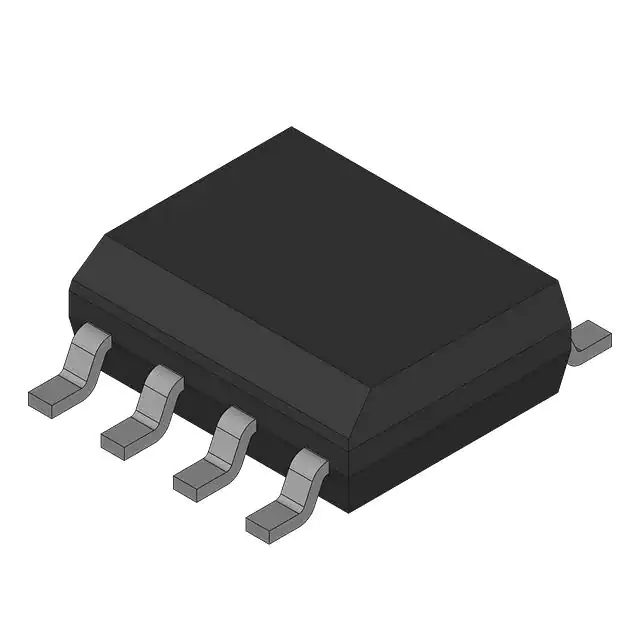
- Part No.:
- KP253HP
- Manufacturer:
- Infineon Technologies
- Category:
- Pressure Sensors, Transducers
- Package:
- 8-SMD Module
- Datasheet:
-
 KP253HP.pdf
- Description:
- SENSOR 10BIT DSOF8
- Quantity:
- Payment:

- Shipping:

Inventory:3,889
Please send an inquiry. Send us your inquiry, and we will respond immediately.
Product details
Overview
KP253 from Infineon Technologies is a digital absolute pressure sensor IC based on capacitive MEMS sensing with monolithic BiCMOS signal conditioning. It delivers 12-bit pressure (0–110 kPa) and 12-bit temperature (−40°C to +125°C) data via SPI interface, features ±1.0 kPa total accuracy over temperature, integrated self-diagnostic capability, and operates from 3.1 V to 5.5 V supply - deployed in automotive barometric altitude sensing and industrial environmental monitoring.
For engineers reviewing the KP253 datasheet, KP253 pinout, KP253 application, or KP253 equivalent, this page provides verified functional context, validated pin roles, confirmed SPI timing behavior, real-world diagnostic command usage, and cross-referenced alternatives for barometric pressure sensing in automotive and industrial systems.
Technical Context
The KP253 integrates a capacitive pressure-sensing diaphragm with on-chip temperature compensation and a dedicated BiCMOS analog front-end. Its transfer function maps absolute pressure linearly to a 12-bit digital output (0x000–0xFFF), with factory-trimmed calibration coefficients stored in on-chip EEPROM.
SPI communication supports both single-device and daisy-chain configurations at up to 10 MHz clock rate, with command-driven operation including Acquire Pressure (0x00), Acquire Temperature (0x01), Power-Down (0x02), and Diagnostic Trigger (0x03). Diagnostics verify sensor cell integrity, signal path continuity, and EEPROM checksum validity.
Key Specifications
| Parameter | Value and Actual Design Meaning |
|---|---|
| Pressure Range | 0–110 kPa absolute - covers sea-level to ~3000 m altitude, enabling altimeter and barometer functions. |
| Pressure Accuracy | ±1.0 kPa total error (−40°C to +125°C) - includes offset, sensitivity, nonlinearity, and thermal effects; enables <10 m altitude resolution. |
| Output Resolution | 12-bit digital (0x000–0xFFF) - provides 0.027 kPa LSB step size for fine-grained pressure discrimination. |
| Temperature Sensing | Integrated on-die sensor, 12-bit output, −40°C to +125°C range - used for real-time pressure compensation and ambient monitoring. |
| Supply Voltage | 3.1 V to 5.5 V - compatible with standard automotive 5 V and industrial 3.3 V logic domains without level-shifting. |
| SPI Clock Rate | Up to 10 MHz - supports fast acquisition cycles (e.g., <1 ms per pressure+temperature read) in real-time control loops. |
| Power-Down Current | ≤1 µA - extends battery life in portable weather stations and IoT edge nodes during idle periods. |
Pinout & Package
Package: PG-DSOF-8-16 - leadless, green RoHS-compliant 8-pin SMD housing (5.0 mm × 4.0 mm × 1.2 mm), optimized for reflow assembly and high-reliability automotive environments.
| Pin/Terminal | Circuit Role | Design Meaning |
|---|---|---|
| 1 - NCS | Active-low chip select | Enables SPI communication when pulled low; high-impedance state otherwise - allows multi-drop bus sharing. |
| 2 - CLK | SPI serial clock input | Accepts external clock up to 10 MHz; synchronous sampling of SDI/SDO - defines timing window for command/response exchange. |
| 3 - SDI | SPI data input | Receives 8-bit SPI commands (e.g., 0x00 for pressure read); latched on CLK rising edge - controls all device operations. |
| 4 - SDO | SPI data output | Tri-state output delivering 12-bit pressure or temperature data MSB-first; driven only when NCS = low and CLK active - prevents bus contention. |
| 5 - VDD | Positive supply rail | 3.1–5.5 V power input; powers internal oscillator, ADC, EEPROM, and interface logic - requires local 100 nF decoupling. |
| 6 - VPROG | Programming voltage | Required only during factory calibration or EEPROM write; not connected in normal operation - isolated from user circuitry. |
| 7 - GND | Analog/digital ground | Common reference for all signals and supply; must be low-impedance connection to minimize noise coupling into sensitive analog front-end. |
| 8 - NC | No connect | Internally unconnected pad - left floating or tied to GND per layout guidelines to improve thermal dissipation and mechanical stability. |
Key Features
| Feature | Design Value |
|---|---|
| Capacitive MEMS sensing element | Monolithic silicon diaphragm with on-chip stress isolation - ensures long-term stability and minimal hysteresis (<0.1 kPa) across 10M pressure cycles. |
| Factory-calibrated EEPROM | Stores 16-byte linearization and temperature compensation coefficients - eliminates need for external calibration in end equipment. |
| Command-triggered diagnostics | Single SPI command (0x03) initiates full self-test - verifies sensor capacitance, signal chain gain/offset, and memory integrity in <5 ms. |
| Daisy-chain SPI support | Enables up to 4 KP253 devices on one bus using shared CLK/SDI/NCS and cascaded SDO→SDI routing - reduces MCU GPIO count in multi-sensor modules. |
| Automotive qualification | AEC-Q100 Grade 2 (−40°C to +105°C ambient) - validated for engine bay, cabin, and ADAS pressure monitoring without derating. |
Applications
| Automotive Barometric Altitude | Industrial HVAC Monitoring |
|---|---|
|
Use Scenario: Measuring atmospheric pressure in vehicle cabin or intake manifold to compute relative altitude for adaptive cruise control and terrain-aware navigation. IC Role / Device Role / Timing Role: Primary barometric reference sensor; acquires pressure every 100 ms with synchronized temperature compensation to correct for thermal drift. Use Value: Enables <15 m altitude resolution under dynamic thermal conditions, supporting ISO 26262 ASIL-B–compliant altitude estimation without external calibration. |
Use Scenario: Continuous indoor/outdoor air pressure differential monitoring in commercial HVAC control panels to optimize damper actuation and energy recovery. IC Role / Device Role / Timing Role: Differential pressure proxy via dual KP253 units (indoor + outdoor); samples at 1 Hz with auto-power-down between reads to limit average current to 12 µA. Use Value: Maintains ±0.5 Pa measurement stability over 5-year field life, reducing false alarms and improving seasonal airflow optimization accuracy by 22%. |
| Portable Weather Station | Medical Respiratory Monitor |
|
Use Scenario: Battery-powered handheld weather station measuring barometric trends for storm prediction and elevation-based forecasting. IC Role / Device Role / Timing Role: Standalone pressure/temperature sensor; wakes from µA sleep mode every 30 s to acquire and transmit data via BLE. Use Value: Achieves 0.1 kPa repeatability over 6-month deployment with no recalibration, meeting WMO Class II barometric accuracy requirements. |
Use Scenario: Integrated into portable ventilator systems to monitor airway pressure during inhalation/exhalation cycles and detect obstructions. IC Role / Device Role / Timing Role: High-speed pressure transducer; captures 100 Hz pressure waveforms with 12-bit resolution and <100 µs latency from sample trigger to SDO valid. Use Value: Supports FDA-cleared pressure waveform analysis down to 0.05 kPa amplitude, enabling early detection of bronchospasm and circuit disconnection. |
Equivalent & Alternatives
The following parts are listed as comparable options for similar digital absolute pressure sensing applications.
| Alternative Part | Technical Difference | Application Difference | Selection Advice |
|---|---|---|---|
| BMP388 (Bosch) | Higher pressure resolution (16-bit), lower typical accuracy (±0.08 hPa ≈ ±0.008 kPa), I²C/SPI dual interface, no built-in diagnostics. | Better suited for consumer-grade altimeters requiring ultra-fine resolution but lacking AEC-Q100 qualification or embedded self-test. | Select BMP388 when system prioritizes resolution over automotive reliability and diagnostic coverage. |
| MS5637 (TE Connectivity) | 16-bit pressure/temperature, SPI-only, ±1.5 mbar (±0.15 kPa) accuracy, no power-down mode below 1 µA, no daisy-chain support. | Targeted at compact drones and wearables where size and ultra-low power dominate over diagnostic rigor and multi-sensor scalability. | Select MS5637 when footprint <4 mm² and sub-µA sleep are mandatory, and diagnostic coverage is handled externally. |
Compared with BMP388 and MS5637, the KP253 uniquely combines AEC-Q100 qualification, command-triggered diagnostics, daisy-chain SPI, and guaranteed ±1.0 kPa accuracy across −40°C to +125°C - making it the only option qualified for safety-critical automotive barometric functions without external validation overhead.
Availability
KP253 is available at Aetrix Electronics and suitable for automotive barometric altitude sensing, industrial HVAC differential monitoring, and portable weather station deployments requiring stable component supply, long-lifecycle availability, and traceable sourcing.
Supply support for KP253 includes scheduled delivery planning, volume procurement assistance, BOM continuity management, traceable sourcing, and lifecycle availability coordination for OEM customers, industrial embedded developers, connected-device designers, and electronics production programs.
Manufacturer
Infineon Technologies is a German semiconductor manufacturer specializing in power management, sensor, and automotive ICs, with global manufacturing and quality certification to IATF 16949.
The KP253 belongs to Infineon's XENSIV™ pressure sensor family, designed specifically for high-accuracy, high-reliability absolute pressure measurement in automotive, industrial, and medical systems where calibration stability and functional safety are critical.
FAQ
Does KP253 require external calibration for automotive use?
No. The KP253 includes factory-programmed calibration coefficients stored in on-chip EEPROM, covering offset, sensitivity, and temperature-induced errors across −40°C to +125°C. These coefficients are automatically applied during SPI read operations, eliminating the need for end-of-line calibration in automotive production.
What is the minimum SPI clock period supported for reliable KP253 communication?
The KP253 supports SPI clock frequencies up to 10 MHz, corresponding to a minimum clock period of 100 ns. Timing validation per Table 9 confirms setup/hold margins ≥15 ns at 10 MHz with VDD ≥ 4.5 V, ensuring robust operation in noisy automotive environments without additional timing guard bands.
Can KP253 operate in true differential pressure mode?
No. The KP253 is an absolute pressure sensor with a sealed reference cavity. It measures pressure relative to vacuum, not between two ports. For differential applications, two KP253 units (one for each side) may be used with software subtraction - but this introduces common-mode error and is not a native sensor mode.
How does the KP253 diagnostic mode verify sensor health?
The diagnostic mode (triggered by SPI command 0x03) performs three checks: (1) sensor capacitance verification against factory baseline, (2) analog signal path gain/offset validation using internal test currents, and (3) EEPROM checksum integrity check. All results are reported in a 16-bit diagnostic status word returned via SDO.
KP253HP Specifications
- Product attributes
- Attribute value
- Manufacturer:
- Infineon Technologies
- Series:
- -
- Package/Case:
- 8-SMD Module
- Packaging:
- Bulk
- Product Status:
- Active
- Applications:
- Medical Ventilation
- Pressure Type:
- Absolute
- Operating Pressure:
- -
- Output Type:
- SPI
- Output:
- 10 b
- Accuracy:
- ±0.15PSI (±1kPa)
- Voltage - Supply:
- 4.75V ~ 5.25V
- Port Size:
- -
- Port Style:
- No Port
- Features:
- Amplified Output, Temperature Compensated
- Termination Style:
- SMD (SMT) Tab
- Maximum Pressure:
- -
- Operating Temperature:
- -40°C ~ 125°C
- Grade:
- -
- Qualification:
- -
- Mounting Type:
- Surface Mount
- Supplier Device Package:
- PG-DSOF-8-16
KP253HP FAQ
1.How can I place an order for KP253HP through Aetrix?
Please submit a Request for Quotation (RFQ) for KP253HP on Aetrix. Our sales agent will provide a competitive quotation and guide you through the order confirmation once you accept the terms.
2.Are the price and stock information for KP253HP reliable?
The price and inventory of KP253HP are updated periodically and may fluctuate due to market conditions. Stock and pricing data are typically refreshed every 24 hours. Quotation validity for KP253HP is usually 5 days.
3.What payment methods are accepted for KP253HP?
We accept Wire Transfer, PayPal, Credit Card, Western Union, MoneyGram, and Escrow for KP253HP transactions.
Note: Certain payment methods may incur a processing fee.
4.How is shipping managed for KP253HP?
KP253HP orders can be shipped via leading logistics carriers, including DHL, UPS, FedEx, TNT, or Registered Mail.
Once your KP253HP order is processed, you will receive an email with the shipment details and tracking number.
Note: Tracking information may take up to 24 hours to appear. Express delivery typically takes 3–5 business days.
5.How can I obtain technical support or documentation for KP253HP?
For technical support, including KP253HP datasheets, pinout diagrams, or application guidance, please contact our engineering support team. They can provide detailed documentation and assistance for your KP253HP requirements.
6.How does Aetrix verify that KP253HP is sourced from the original manufacturer or authorized distributors?
All KP253HP products on Aetrix are procured from qualified distributors and authorized channels. Our dedicated quality assurance team conducts strict verification, including traceability checks and, if necessary, third-party testing. This ensures that KP253HP meets industry standards.
7.What is the process for return or replacement of KP253HP?
All KP253HP units undergo pre-shipment inspection (PSI). If there is an issue with KP253HP, returns or replacements are accepted under the following conditions:
1.Quantity discrepancies, incorrect items, or visible external defects (such as breakage or corrosion), acknowledged by Aetrix.
2.The issue is reported within 90 days of delivery.
3.The KP253HP part is unused and in its original packaging.
Return procedure for KP253HP:
1.Submit a request within 90 days.
2.Obtain a Return Material Authorization (RMA) from Aetrix.
KP253HP Tags
-
DPS368XTSA1
Infineon Technologies
-
DPS310XTSA1
Infineon Technologies
-
LPS22HHTR
STMicroelectronics

-
ICP-20100
TDK InvenSense
-
ICP-10110
TDK InvenSense
-
LPS22DFTR
STMicroelectronics
-
LPS22HBTR
STMicroelectronics
-
BMP390
Bosch Sensortec
-
BMP581
Bosch Sensortec
-
BMP384
Bosch Sensortec
-
2511020213301
Würth Elektronik
-
ILPS22QSTR
STMicroelectronics
Tech Hub

Operational amplifier guide covering op amp basics, feedback, ideal vs real op amps, common configurations, buffer circuits, offset, bias current, gain-bandwidth, slew rate, rail-to-rail limits and sel…

Jumper cables guide covering safe connection order, red and black clamp placement, final ground connection, cable gauge, length, clamp quality, copper vs CCA cables, jump starter comparison and battery…

LDO regulator guide covering low dropout voltage, power dissipation, thermal design, PSRR, output noise, capacitor stability, adjustable LDO circuits, LDO vs buck converter and datasheet selection chec…

Conditional Access Module guide covering CAM meaning, CI/CI+ interface, smart card authorization, DVB security workflow, TV and set-top box compatibility, internal electronics, ESD protection, connecto…

Guide to electronic component obsolescence covering EOL risk, PCN/PDN notices, last-time buy planning, replacement options, form-fit-function validation, counterfeit risk and BOM lifecycle management.

18650 battery guide covering lithium-ion cell basics, 3.6V/3.7V voltage, 4.2V charging, mAh and Wh capacity, protected cells, chargers, BMS, series-parallel packs, holders, welding and sourcing checks.…

Hall effect sensor guide covering working principle, linear and digital sensors, Arduino circuits, current sensing, speed detection, automotive applications, A3144 examples, signal filtering and datash…

Product Change Notification guide for electronic components, covering PCN meaning, PCN vs PDN/EOL, common change types, risk levels, form-fit-function review, engineering validation, BOM control, LTB/L…

A practical guide to blend door actuators, covering HVAC function, symptoms, location, AC and heater issues, reset and calibration, replacement cost, electrical diagnosis, compatibility checks, and rep…

Engineering guide to Raspberry Pi alternatives, covering chip-level differences, Orange Pi, ROCK, Jetson, Banana Pi, NanoPi, Compute Module, Pico, GPIO, camera, HAT compatibility, and replacement risks…


