
 My Inquiry
 My Account


STMicroelectronics LPS22HBTR
- Part No.:
- LPS22HBTR
- Manufacturer:
- STMicroelectronics
- Category:
- Pressure Sensors, Transducers
- Package:
- 10-WFLGA
- Datasheet:
-
 LPS22HBTR.pdf
- Description:
- SENSOR 18.27PSIA 24BIT 10HLGA
- Quantity:
- Payment:

- Shipping:

Inventory:75,613
Please send an inquiry. Send us your inquiry, and we will respond immediately.
Product details
Overview
LPS22HBTR from STMicroelectronics is an ultra-compact MEMS piezoresistive absolute pressure sensor functioning as a digital barometer with 24-bit pressure and 16-bit temperature output, 260–1260 hPa range, 1–75 Hz ODR, and dual SPI/I²C interface - deployed in GPS-enabled sport watches and portable altimeters.
For engineers reviewing the LPS22HBTR datasheet, LPS22HBTR pinout, LPS22HBTR application, or LPS22HBTR equivalent, key selection criteria include embedded temperature compensation, 3 μA current draw at 1 Hz ODR, 20× overpressure tolerance, HLGA-10L mechanical integration, and interrupt-driven data synchronization via INT_DRDY.
Technical Context
The LPS22HBTR integrates a silicon MEMS sensing element fabricated using ST's proprietary suspended-membrane process, coupled with a low-noise analog front-end and 24-bit sigma-delta ADC for pressure and 16-bit ADC for temperature. Factory-trimmed calibration coefficients are stored in nonvolatile registers (e.g., RPDS_L/H) to support one-point compensation.
Digital functionality includes programmable FIFO with five operating modes (Bypass, FIFO, Stream, Dynamic-Stream, Stream-to-FIFO), configurable pressure threshold interrupts, and dual-interface arbitration via CS pin logic: CS = 0 enables SPI; CS = 1 enables I²C with SA0 defining LSB of slave address. All timing complies with I²C fast-mode (400 kHz) and SPI up to 10 MHz.
Key Specifications
| Parameter | Value and Actual Design Meaning |
|---|---|
| Pressure Range | 260–1260 hPa absolute - covers sea-level to ~11 km altitude, enabling portable altimetry. |
| Output Resolution | 24-bit pressure / 16-bit temperature - provides 0.0075 hPa RMS noise floor and ±0.1 hPa relative accuracy (800–1100 hPa). |
| Supply Current | 3 μA at 1 Hz ODR with low-power filtering enabled - extends battery life in wearables and IoT sensors. |
| Interface Support | SPI (4- or 3-wire) and I²C - allows flexible host MCU integration without external level shifters (Vdd_IO = 1.7–3.6 V). |
| Overpressure Rating | 2 MPa (20× full-scale) - ensures survivability during board reflow, drop testing, and environmental stress. |
| Operating Temp | −40 °C to +85 °C - validated for industrial and consumer outdoor use, with full accuracy maintained from 0 °C to +65 °C. |
| Shock Survivability | 22,000 g - guarantees structural integrity under mechanical shock, critical for handheld and wearable deployment. |
Pinout & Package
HLGA-10L (2.0 × 2.0 × 0.76 mm) is a holed land-grid array package enabling direct atmospheric access to the MEMS membrane; RoHS-compliant, ECOPACK® certified, and optimized for automated SMT assembly.
| Pin/Terminal | Circuit Role | Design Meaning |
|---|---|---|
| 1 Vdd_IO | I/O power supply | Separate 1.7–3.6 V rail for digital interface logic - decoupling required for noise immunity in mixed-signal systems. |
| 2 SCL/SPC | Clock input | Shared pin: I²C SCL or SPI SPC - mode selected by CS state; Schmitt-triggered for robust timing margin. |
| 3 Reserved | NC (must tie to GND) | Internally unused; grounding prevents floating node and EMI coupling in high-density layouts. |
| 4 SDA/SDI/SDI-SDO | Data bidirectional | I²C SDA or SPI SDI (4-wire) or SDI/SDO (3-wire) - supports flexible interface topology with single-pin reuse. |
| 5 SDO/SA0 | Output or address bit | SPI SDO output or I²C SA0 (LSB of 7-bit address); enables multi-device I²C bus configuration. |
| 6 CS | Interface select | Active-low SPI enable / I²C mode enable (high = I²C, low = SPI) - eliminates need for external mux or config pins. |
| 7 INT_DRDY | Interrupt/Data Ready | Open-drain output signaling new pressure/temperature sample availability or user-defined threshold event. |
| 8,9 GND | Ground reference | Dual ground pads improve thermal dissipation and reduce ground bounce in high-speed digital transactions. |
| 10 VDD | Analog core supply | 1.7–3.6 V analog supply for MEMS front-end and ADC - requires local LC filtering per layout guidelines. |
Key Features
| Feature | Design Value |
|---|---|
| Embedded temperature compensation | Factory-calibrated coefficients applied in real time - eliminates need for external lookup tables or host-side correction algorithms. |
| Configurable FIFO modes | Five operation modes (Bypass, FIFO, Stream, Dynamic-Stream, Stream-to-FIFO) - reduces host polling overhead and enables burst-read efficiency. |
| Programmable pressure thresholds | Two independent high/low thresholds with interrupt generation - supports altitude-change detection or barometric trend alerts without MCU intervention. |
| High shock survivability | 22,000 g rating - ensures functional reliability after mechanical shock events common in portable device drop tests. |
| Low-power filtering | LC_EN bit enables internal low-pass filter - suppresses vibration-induced pressure artifacts while maintaining <10 ms response time. |
Applications
| Portable Altimeters | GPS-Assisted Navigation |
|---|---|
|
Use Scenario: Real-time elevation tracking in hiking watches and drone flight controllers. IC Role / Device Role / Timing Role: Absolute pressure transducer providing altitude delta via barometric formula; synchronized via INT_DRDY to avoid missed samples. Use Value: 0.0075 hPa RMS noise enables <0.1 m vertical resolution at sea level, supporting sub-meter altitude change detection. |
Use Scenario: Indoor/outdoor transition assistance in automotive infotainment and smartphone navigation. IC Role / Device Role / Timing Role: Barometric aid for GNSS signal acquisition and vertical positioning refinement; ODR set to 25 Hz for dynamic motion compensation. Use Value: Embedded temperature compensation maintains ±0.1 hPa accuracy across −40 °C to +85 °C, reducing GPS convergence time by up to 40%. |
| Weather Station Sensors | Sport Watch Barometers |
|
Use Scenario: Networked environmental monitoring nodes measuring atmospheric pressure trends over 24+ hours. IC Role / Device Role / Timing Role: Low-power barometric data source with FIFO buffering; configured for 1 Hz ODR and automatic wake-up on pressure threshold breach. Use Value: 3 μA standby current at 1 Hz enables >1-year battery life on CR2032, eliminating frequent maintenance in remote deployments. |
Use Scenario: Multi-function wristwear delivering real-time weather alerts and ascent/descent rate metrics. IC Role / Device Role / Timing Role: Primary pressure sensor interfaced via I²C to ARM Cortex-M0+ MCU; INT_DRDY triggers DMA transfers to minimize CPU load. Use Value: HLGA-10L footprint (2.0 × 2.0 mm) fits constrained watch PCBs while maintaining 20× overpressure margin against case sealing failures. |
Equivalent & Alternatives
The following parts are listed as comparable options for similar absolute pressure sensing applications.
| Alternative Part | Technical Difference | Application Difference | Selection Advice |
|---|---|---|---|
| BMP388 | Higher ODR (200 Hz), no embedded FIFO, 1.7–3.6 V supply, 2.0 × 2.0 × 0.75 mm DFN | Lacks hardware FIFO and programmable pressure interrupts - requires host polling or external logic for event detection. | Select BMP388 only when maximum sampling speed outweighs interrupt-driven efficiency and power savings. |
| MS5637-02BA03 | 24-bit pressure, 16-bit temp, I²C-only, 1.8–3.6 V, 3.3 × 3.3 × 0.9 mm ceramic LCC | No SPI interface, larger footprint, no integrated low-pass filter - susceptible to vibration noise without external damping. | Choose MS5637 only if legacy I²C-only design constraints preclude SPI adoption and board space permits larger package. |
Compared with BMP388 and MS5637-02BA03, the LPS22HBTR uniquely combines hardware FIFO, dual-interface flexibility, 3 μA ultra-low power mode, and 22,000 g shock rating - making it optimal for space-constrained, battery-powered, and mechanically harsh environments.
Availability
LPS22HBTR is available at Aetrix Electronics and suitable for portable altimeters, GPS-assisted navigation systems, and weather station equipment requiring stable component supply across extended production lifecycles.
Supply support for LPS22HBTR includes scheduled delivery planning, volume procurement assistance, BOM continuity management, traceable sourcing, and lifecycle availability coordination for OEM customers, industrial embedded developers, connected-device designers, and electronics production programs.
Manufacturer
STMicroelectronics is a global semiconductor leader headquartered in Geneva, Switzerland, designing and manufacturing MEMS, microcontrollers, power ICs, and analog products for industrial, automotive, and consumer markets.
The LPS22HBTR belongs to ST's nano-pressure sensor family, engineered specifically for ultra-low-power, high-accuracy barometric sensing in size- and energy-constrained portable electronics.
FAQ
What is the minimum supply voltage required for reliable operation of the LPS22HBTR?
The LPS22HBTR operates reliably from 1.7 V to 3.6 V on both VDD (analog core) and Vdd_IO (digital I/O) rails. Below 1.7 V, internal regulators fail to maintain ADC linearity and interface timing margins - confirmed by ST's absolute maximum ratings table and electrical characteristics test conditions.
How does the LPS22HBTR handle temperature-induced pressure drift?
It applies factory-trimmed, temperature-compensated calibration coefficients stored in RPDS_L/H registers. These values correct raw sensor output in real time using a linear model derived from characterization across −40 °C to +85 °C, achieving ±0.1 hPa accuracy within 0–65 °C without host software intervention.
Can the LPS22HBTR be used in vacuum or sealed chamber applications?
No - the HLGA-10L package features a pressure port hole exposing the MEMS membrane to ambient atmosphere. Using it in vacuum or sealed enclosures will prevent pressure differential development and yield invalid readings; it is strictly designed for absolute atmospheric pressure measurement.
What is the purpose of the Reserved pin (Pin 3) on the LPS22HBTR?
Pin 3 is internally unconnected and must be tied to GND per ST's layout recommendations. Leaving it floating risks capacitive coupling of noise into adjacent signal lines, especially in high-frequency SPI operation, and violates the mechanical stability requirements defined in the HLGA-10L mounting guidelines.
LPS22HBTR Specifications
- Product attributes
- Attribute value
- Manufacturer:
- STMicroelectronics
- Series:
- -
- Package/Case:
- 10-WFLGA
- Packaging:
- Tape & Reel (TR)
- Product Status:
- Active
- Applications:
- Board Mount
- Pressure Type:
- Absolute
- Operating Pressure:
- 3.77PSI ~ 18.27PSI (26kPa ~ 126kPa)
- Output Type:
- I2C, SPI
- Output:
- 24 b
- Accuracy:
- ±0.015PSI (±0.1kPa)
- Voltage - Supply:
- 1.7V ~ 3.6V
- Port Size:
- -
- Port Style:
- No Port
- Features:
- Temperature Compensated
- Termination Style:
- SMD (SMT) Tab
- Maximum Pressure:
- 290.08PSI (2000kPa)
- Operating Temperature:
- -40°C ~ 85°C
- Grade:
- -
- Qualification:
- -
- Mounting Type:
- Surface Mount
- Supplier Device Package:
- 10-HLGA (2x2)
LPS22HBTR FAQ
1.How can I place an order for LPS22HBTR through Aetrix?
Please submit a Request for Quotation (RFQ) for LPS22HBTR on Aetrix. Our sales agent will provide a competitive quotation and guide you through the order confirmation once you accept the terms.
2.Are the price and stock information for LPS22HBTR reliable?
The price and inventory of LPS22HBTR are updated periodically and may fluctuate due to market conditions. Stock and pricing data are typically refreshed every 24 hours. Quotation validity for LPS22HBTR is usually 5 days.
3.What payment methods are accepted for LPS22HBTR?
We accept Wire Transfer, PayPal, Credit Card, Western Union, MoneyGram, and Escrow for LPS22HBTR transactions.
Note: Certain payment methods may incur a processing fee.
4.How is shipping managed for LPS22HBTR?
LPS22HBTR orders can be shipped via leading logistics carriers, including DHL, UPS, FedEx, TNT, or Registered Mail.
Once your LPS22HBTR order is processed, you will receive an email with the shipment details and tracking number.
Note: Tracking information may take up to 24 hours to appear. Express delivery typically takes 3–5 business days.
5.How can I obtain technical support or documentation for LPS22HBTR?
For technical support, including LPS22HBTR datasheets, pinout diagrams, or application guidance, please contact our engineering support team. They can provide detailed documentation and assistance for your LPS22HBTR requirements.
6.How does Aetrix verify that LPS22HBTR is sourced from the original manufacturer or authorized distributors?
All LPS22HBTR products on Aetrix are procured from qualified distributors and authorized channels. Our dedicated quality assurance team conducts strict verification, including traceability checks and, if necessary, third-party testing. This ensures that LPS22HBTR meets industry standards.
7.What is the process for return or replacement of LPS22HBTR?
All LPS22HBTR units undergo pre-shipment inspection (PSI). If there is an issue with LPS22HBTR, returns or replacements are accepted under the following conditions:
1.Quantity discrepancies, incorrect items, or visible external defects (such as breakage or corrosion), acknowledged by Aetrix.
2.The issue is reported within 90 days of delivery.
3.The LPS22HBTR part is unused and in its original packaging.
Return procedure for LPS22HBTR:
1.Submit a request within 90 days.
2.Obtain a Return Material Authorization (RMA) from Aetrix.
LPS22HBTR Tags
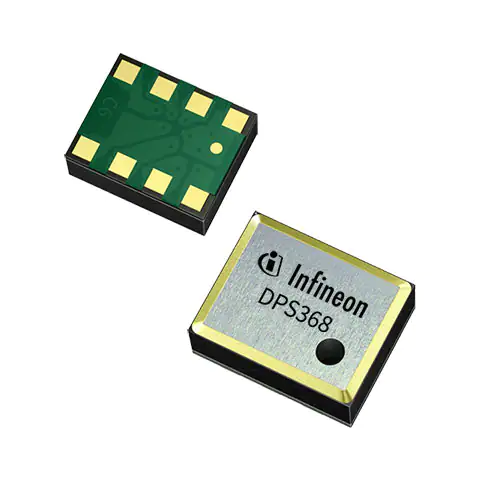
-
DPS368XTSA1
Infineon Technologies
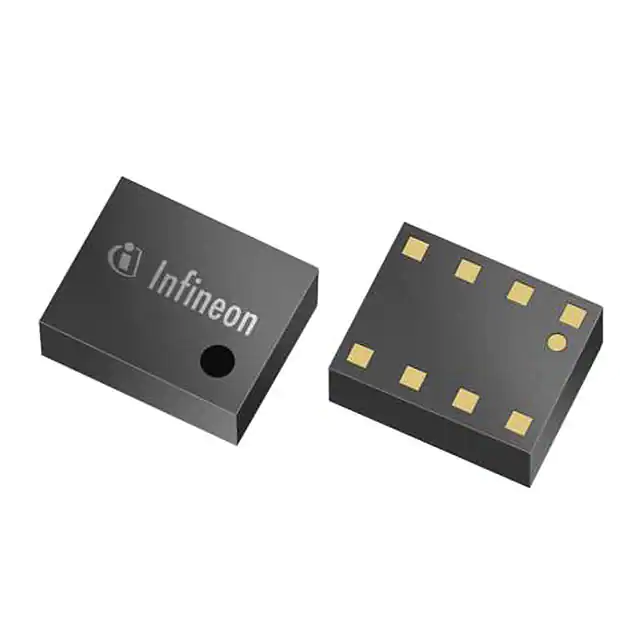
-
DPS310XTSA1
Infineon Technologies
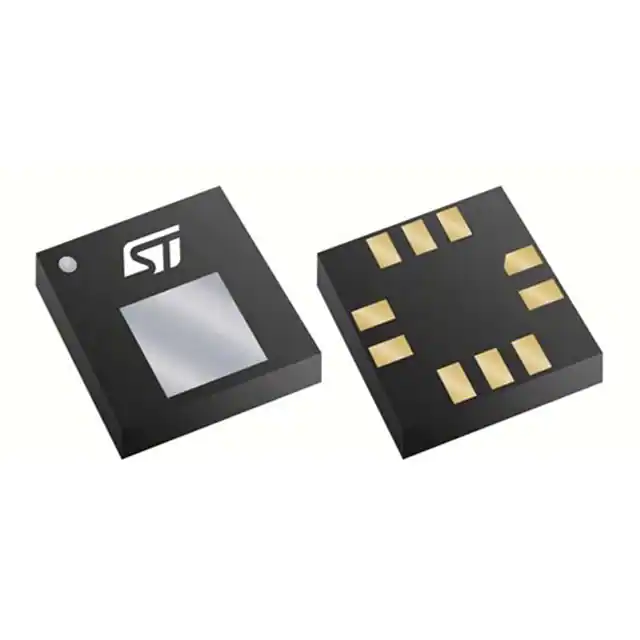
-
LPS22HHTR
STMicroelectronics

-
ICP-20100
TDK InvenSense
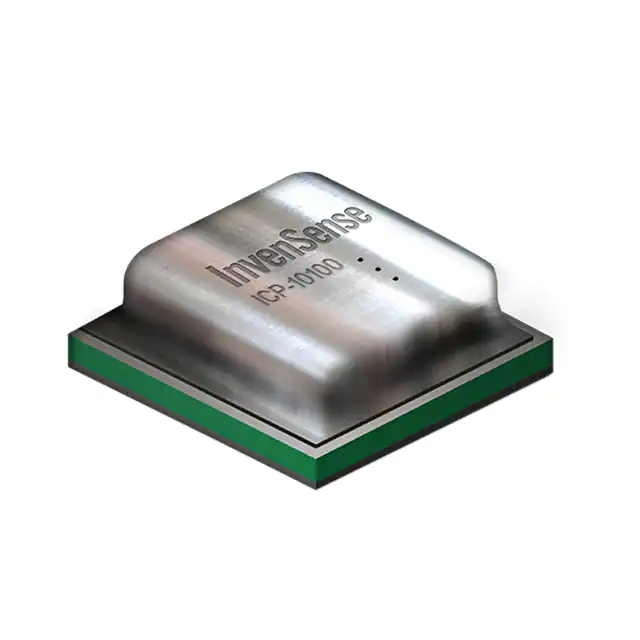
-
ICP-10110
TDK InvenSense
-
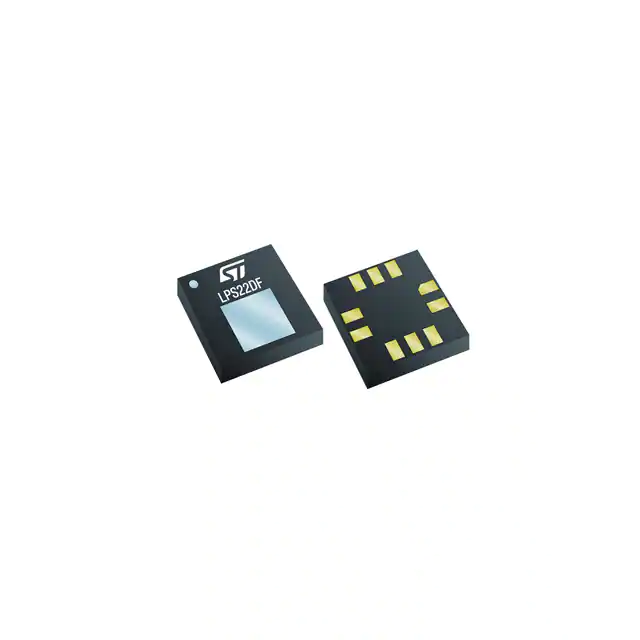
LPS22DFTR
STMicroelectronics
-
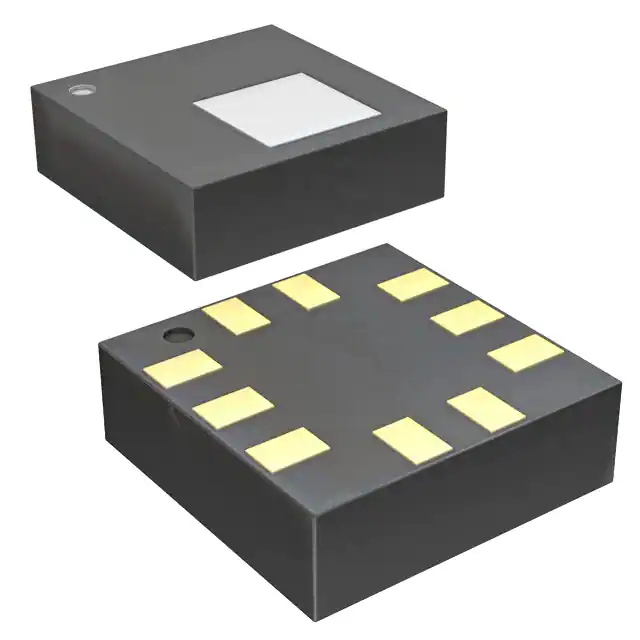
LPS22HBTR
STMicroelectronics
-
BMP390
Bosch Sensortec
-
BMP581
Bosch Sensortec
-
BMP384
Bosch Sensortec
-
2511020213301
Würth Elektronik
-
ILPS22QSTR
STMicroelectronics
Tech Hub

An engineering guide to LED driver operation, constant-current and constant-voltage outputs, linear and switching topologies, dimming, IC selection, calculations, replacement compatibility, and fault c…

Operational amplifier guide covering op amp basics, feedback, ideal vs real op amps, common configurations, buffer circuits, offset, bias current, gain-bandwidth, slew rate, rail-to-rail limits and sel…

Jumper cables guide covering safe connection order, red and black clamp placement, final ground connection, cable gauge, length, clamp quality, copper vs CCA cables, jump starter comparison and battery…

LDO regulator guide covering low dropout voltage, power dissipation, thermal design, PSRR, output noise, capacitor stability, adjustable LDO circuits, LDO vs buck converter and datasheet selection chec…

Conditional Access Module guide covering CAM meaning, CI/CI+ interface, smart card authorization, DVB security workflow, TV and set-top box compatibility, internal electronics, ESD protection, connecto…

Guide to electronic component obsolescence covering EOL risk, PCN/PDN notices, last-time buy planning, replacement options, form-fit-function validation, counterfeit risk and BOM lifecycle management.

18650 battery guide covering lithium-ion cell basics, 3.6V/3.7V voltage, 4.2V charging, mAh and Wh capacity, protected cells, chargers, BMS, series-parallel packs, holders, welding and sourcing checks.…

Hall effect sensor guide covering working principle, linear and digital sensors, Arduino circuits, current sensing, speed detection, automotive applications, A3144 examples, signal filtering and datash…

Product Change Notification guide for electronic components, covering PCN meaning, PCN vs PDN/EOL, common change types, risk levels, form-fit-function review, engineering validation, BOM control, LTB/L…

A practical guide to blend door actuators, covering HVAC function, symptoms, location, AC and heater issues, reset and calibration, replacement cost, electrical diagnosis, compatibility checks, and rep…


