
 My Inquiry
 My Account


Infineon Technologies KP253HPXTMA1
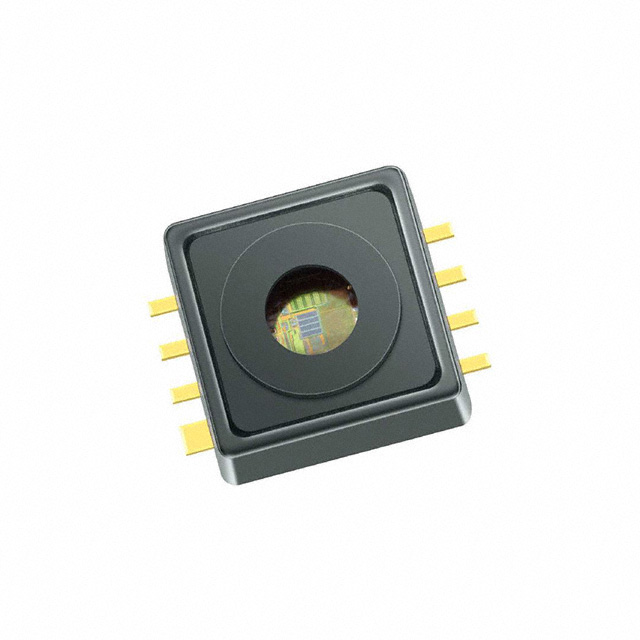
- Part No.:
- KP253HPXTMA1
- Manufacturer:
- Infineon Technologies
- Category:
- Pressure Sensors, Transducers
- Package:
- 8-SMD Module
- Datasheet:
-
 KP253HPXTMA1.pdf
- Description:
- SENSOR BAROMETRIC DSOF8
- Quantity:
- Payment:

- Shipping:

Inventory:3,538
Please send an inquiry. Send us your inquiry, and we will respond immediately.
Product details
Overview
KP253HPXTMA1 from Infineon Technologies is a digital absolute pressure sensor IC based on capacitive MEMS sensing with monolithic BiCMOS signal conditioning. It delivers 12-bit pressure (0–110 kPa) and 12-bit temperature (−40°C to +125°C) data via SPI interface, features ±1.0 kPa total accuracy over temperature, integrated self-diagnostic capability, and operates from 3.1 V to 5.5 V supply - deployed in automotive barometric altitude sensing and industrial environmental monitoring.
For engineers reviewing the KP253HPXTMA1 datasheet, KP253HPXTMA1 pinout, KP253HPXTMA1 application, or KP253HPXTMA1 equivalent, key selection criteria include SPI-compatible digital output resolution, automotive-grade reliability (AEC-Q100 qualified), pressure range suitability for altimetry, and diagnostic command support for functional safety validation.
Technical Context
The KP253HPXTMA1 integrates a capacitive pressure transducer with on-chip temperature sensor and fully calibrated 12-bit ADCs. Its signal chain includes offset/gain compensation, linearization, and CRC-protected SPI communication supporting both single-device and daisy-chain configurations.
It implements three operational modes: active measurement (pressure/temperature acquisition), power-down (≤1 µA standby current), and diagnostic mode (triggered via SPI command C12). The device uses a dedicated NCS pin for chip select and supports programmable VPROG for factory calibration - not user-accessible in normal operation.
Key Specifications
| Parameter | Value and Actual Design Meaning |
|---|---|
| Pressure Range | 0–110 kPa absolute - covers sea-level to ~3,000 m altitude, suitable for barometric altimeters and weather stations. |
| Pressure Accuracy | ±1.0 kPa total error (including linearity, hysteresis, temperature drift) - enables <±10 m altitude resolution at 25°C. |
| Output Resolution | 12-bit digital output (0–4095) for both pressure and temperature - provides 27 Pa LSB and 0.03°C LSB granularity. |
| Supply Voltage | 3.1 V to 5.5 V - compatible with standard 3.3 V and 5 V microcontroller I/O domains without level-shifting. |
| Operating Temp | −40°C to +125°C - meets AEC-Q100 Grade 2 requirements for under-hood automotive use. |
| Standby Current | ≤1 µA in power-down mode - extends battery life in portable weather or IoT sensor nodes. |
| SPI Interface | 4-wire, master-slave, 10 MHz max clock - supports daisy-chain topology for multi-sensor systems with shared CLK/SDI/NCS. |
Pinout & Package
Package: PG-DSOF-8-16 - lead-free, RoHS-compliant 8-pin SOIC variant with exposed thermal pad, optimized for reflow soldering and board-level stress relief in automotive modules.
| Pin/Terminal | Circuit Role | Design Meaning |
|---|---|---|
| 1 - NCS | Active-low chip select | Enables SPI communication when pulled low; high-impedance SDO state when high. |
| 2 - CLK | Serial clock input | Master-generated clock up to 10 MHz; timing-critical for data sampling alignment. |
| 3 - SDI | Serial data input | Receives SPI commands (e.g., acquire pressure, trigger diagnosis, read identifier). |
| 4 - SDO | Serial data output | Tri-state output delivering 12-bit pressure/temperature data or diagnostic responses. |
| 5 - VDD | Supply voltage | Primary power rail (3.1–5.5 V); decoupling capacitor required per datasheet layout guidelines. |
| 6 - VPROG | Programming voltage | Factory-only calibration reference; must be connected to VDD during production programming - not used in end application. |
| 7 - GND | Ground reference | Analog/digital common return; requires low-impedance connection to minimize noise coupling. |
| 8 - NC | No connect | Internally unconnected pin; left floating or tied to GND per PCB layout best practices. |
Key Features
| Feature | Design Value |
|---|---|
| Integrated diagnostics | On-demand SPI-triggered self-test verifies sensor cell integrity, analog path functionality, and EEPROM configuration validity. |
| Automotive qualification | AEC-Q100 Grade 2 certified - validated for operation across −40°C to +125°C ambient with robust ESD (±2 kV HBM) and EMC performance. |
| Daisy-chain SPI support | Enables up to 4 sensors on one bus using shared CLK/SDI/NCS lines - reduces MCU GPIO count and simplifies multi-zone pressure monitoring. |
| Low-power operation | 1 µA standby current and <1 ms wake-up time - ideal for battery-powered environmental loggers requiring periodic sampling. |
| Factory-calibrated transfer function | Linearized pressure output with temperature-compensated coefficients stored in on-chip EEPROM - eliminates host-side calibration overhead. |
Applications
| Automotive Cabin Pressure Monitoring | Portable Weather Station |
|---|---|
|
Use Scenario: Real-time cabin pressure tracking in HVAC control systems to maintain occupant comfort and optimize air recirculation. IC Role / Device Role / Timing Role: Primary barometric pressure transducer providing 12-bit digital output every 100 ms via SPI for closed-loop feedback. Use Value: ±1.0 kPa accuracy ensures reliable detection of altitude-induced pressure changes during vehicle ascent/descent, enabling adaptive ventilation strategies. |
Use Scenario: Compact, battery-operated outdoor weather station measuring atmospheric pressure trends for local forecasting. IC Role / Device Role / Timing Role: Standalone pressure/temperature sensor interfaced to an ultra-low-power MCU in 10-second sampling intervals. Use Value: 1 µA power-down mode extends coin-cell battery life beyond 1 year while maintaining fast (<1 ms) wake-up for scheduled measurements. |
| Industrial Altitude Sensing | Medical Respiratory Equipment |
|
Use Scenario: Altitude compensation in industrial drones or UAVs where precise elevation data improves GPS-assisted navigation stability. IC Role / Device Role / Timing Role: High-reliability pressure sensor operating in −40°C to +85°C extended range with diagnostic verification before each flight cycle. Use Value: Integrated self-diagnostic mode confirms sensor health pre-launch, reducing risk of in-flight pressure data corruption. |
Use Scenario: Pressure monitoring in portable ventilators and CPAP devices to regulate air delivery based on patient airway resistance. IC Role / Device Role / Timing Role: Safety-critical pressure transducer delivering calibrated 12-bit data for real-time flow control algorithms. Use Value: AEC-Q100 qualification and ±1.0 kPa accuracy meet IEC 60601-1 essential performance requirements for medical pressure sensing. |
Equivalent & Alternatives
The following parts are listed as comparable options for similar digital absolute pressure sensing applications.
| Alternative Part | Technical Difference | Application Difference | Selection Advice |
|---|---|---|---|
| BMP280 (Bosch) | ICP-based MEMS, I²C/SPI, ±0.12 hPa (±0.012 kPa) typical accuracy, no built-in diagnostics | Higher resolution but lacks on-chip self-test; requires external compensation for long-term drift | Preferred for consumer-grade altimeters where cost and size outweigh functional safety needs. |
| MS5637 (TE Connectivity) | Capacitive MEMS, I²C only, ±1.5 mbar (±0.15 kPa) accuracy, no power-down mode below 10 µA | Lacks SPI daisy-chain support and automotive qualification; limited to industrial/consumer use | Selected when I²C interface and minimal footprint are prioritized over automotive compliance or ultra-low standby current. |
Compared with BMP280 and MS5637, the KP253HPXTMA1 uniquely combines AEC-Q100 qualification, SPI daisy-chain capability, sub-µA power-down, and integrated diagnostics - making it the only option among the three qualified for ASIL-B–aligned automotive cabin pressure systems.
Availability
KP253HPXTMA1 is available at Aetrix Electronics and suitable for automotive cabin pressure monitoring, portable weather stations, industrial altitude sensing, and medical respiratory equipment requiring stable component supply, long-lifecycle support, and traceable sourcing.
Supply support for KP253HPXTMA1 includes scheduled delivery planning, volume procurement assistance, BOM continuity management, traceable sourcing, and lifecycle availability coordination for OEM customers, industrial embedded developers, connected-device designers, and electronics production programs.
Manufacturer
Infineon Technologies is a German semiconductor manufacturer specializing in power management, sensor, and automotive ICs, with global R&D and manufacturing infrastructure.
The KP253 belongs to Infineon's XENSIV™ pressure sensor family, engineered specifically for high-accuracy, safety-aware barometric and differential pressure measurement in automotive and industrial environments.
FAQ
Is KP253HPXTMA1 compatible with 3.3 V microcontrollers?
Yes. The KP253HPXTMA1 operates from 3.1 V to 5.5 V and is fully compatible with 3.3 V logic levels. Its SPI interface accepts 3.3 V–compliant CLK, NCS, and SDI signals, and outputs 3.3 V–level SDO data when VDD = 3.3 V - no level translation required in standard implementations.
Does KP253HPXTMA1 require external calibration components?
No. All calibration coefficients - including pressure offset, sensitivity, temperature compensation, and linearity correction - are factory-programmed into on-chip EEPROM. The device delivers fully compensated 12-bit digital output directly via SPI without host-side calibration routines or external passive components.
What is the purpose of the VPROG pin?
VPROG is a factory-only programming voltage pin used during final test and calibration to load trim parameters into internal nonvolatile memory. In end-user applications, VPROG must be connected to VDD per datasheet guidance - it is not an operational input and carries no functional role during normal sensor operation.
Can multiple KP253HPXTMA1 sensors share one SPI bus?
Yes. The KP253HPXTMA1 supports daisy-chain SPI operation: up to four devices can be connected in series using shared CLK, SDI, and NCS lines, with SDO of one device feeding SDI of the next. This configuration reduces MCU pin count and simplifies routing in multi-sensor systems like drone altitude arrays or HVAC zone monitors.
KP253HPXTMA1 Specifications
- Product attributes
- Attribute value
- Manufacturer:
- Infineon Technologies
- Series:
- -
- Package/Case:
- 8-SMD Module
- Packaging:
- Tape & Reel (TR)
- Product Status:
- Obsolete
- Applications:
- Board Mount
- Pressure Type:
- -
- Operating Pressure:
- -
- Output Type:
- -
- Output:
- -
- Accuracy:
- -
- Voltage - Supply:
- -
- Port Size:
- -
- Port Style:
- -
- Features:
- -
- Termination Style:
- -
- Maximum Pressure:
- -
- Operating Temperature:
- -
- Grade:
- -
- Qualification:
- -
- Mounting Type:
- Surface Mount
- Supplier Device Package:
- PG-DSOF-8-16
KP253HPXTMA1 FAQ
1.How can I place an order for KP253HPXTMA1 through Aetrix?
Please submit a Request for Quotation (RFQ) for KP253HPXTMA1 on Aetrix. Our sales agent will provide a competitive quotation and guide you through the order confirmation once you accept the terms.
2.Are the price and stock information for KP253HPXTMA1 reliable?
The price and inventory of KP253HPXTMA1 are updated periodically and may fluctuate due to market conditions. Stock and pricing data are typically refreshed every 24 hours. Quotation validity for KP253HPXTMA1 is usually 5 days.
3.What payment methods are accepted for KP253HPXTMA1?
We accept Wire Transfer, PayPal, Credit Card, Western Union, MoneyGram, and Escrow for KP253HPXTMA1 transactions.
Note: Certain payment methods may incur a processing fee.
4.How is shipping managed for KP253HPXTMA1?
KP253HPXTMA1 orders can be shipped via leading logistics carriers, including DHL, UPS, FedEx, TNT, or Registered Mail.
Once your KP253HPXTMA1 order is processed, you will receive an email with the shipment details and tracking number.
Note: Tracking information may take up to 24 hours to appear. Express delivery typically takes 3–5 business days.
5.How can I obtain technical support or documentation for KP253HPXTMA1?
For technical support, including KP253HPXTMA1 datasheets, pinout diagrams, or application guidance, please contact our engineering support team. They can provide detailed documentation and assistance for your KP253HPXTMA1 requirements.
6.How does Aetrix verify that KP253HPXTMA1 is sourced from the original manufacturer or authorized distributors?
All KP253HPXTMA1 products on Aetrix are procured from qualified distributors and authorized channels. Our dedicated quality assurance team conducts strict verification, including traceability checks and, if necessary, third-party testing. This ensures that KP253HPXTMA1 meets industry standards.
7.What is the process for return or replacement of KP253HPXTMA1?
All KP253HPXTMA1 units undergo pre-shipment inspection (PSI). If there is an issue with KP253HPXTMA1, returns or replacements are accepted under the following conditions:
1.Quantity discrepancies, incorrect items, or visible external defects (such as breakage or corrosion), acknowledged by Aetrix.
2.The issue is reported within 90 days of delivery.
3.The KP253HPXTMA1 part is unused and in its original packaging.
Return procedure for KP253HPXTMA1:
1.Submit a request within 90 days.
2.Obtain a Return Material Authorization (RMA) from Aetrix.
KP253HPXTMA1 Tags
-
DPS368XTSA1
Infineon Technologies
-
DPS310XTSA1
Infineon Technologies
-
LPS22HHTR
STMicroelectronics

-
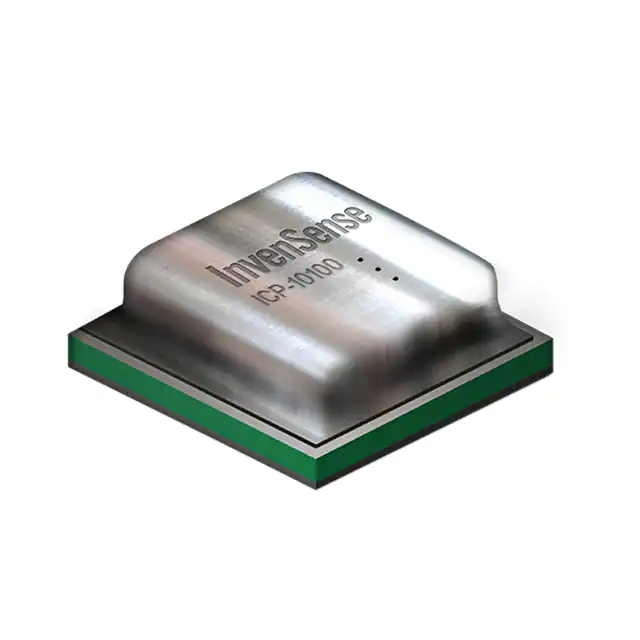
ICP-20100
TDK InvenSense
-
ICP-10110
TDK InvenSense
-
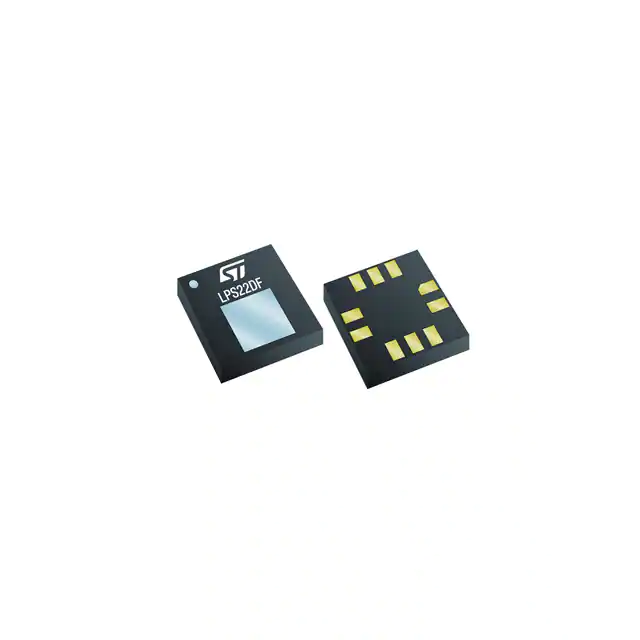
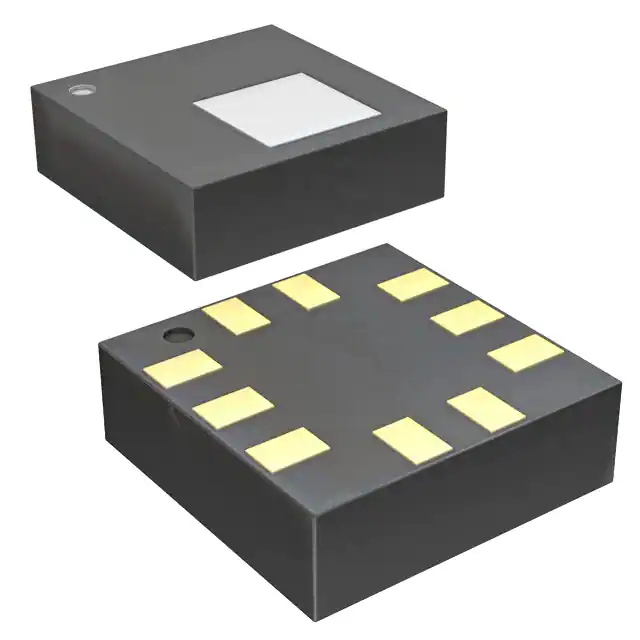
LPS22DFTR
STMicroelectronics
-
LPS22HBTR
STMicroelectronics
-
BMP390
Bosch Sensortec
-
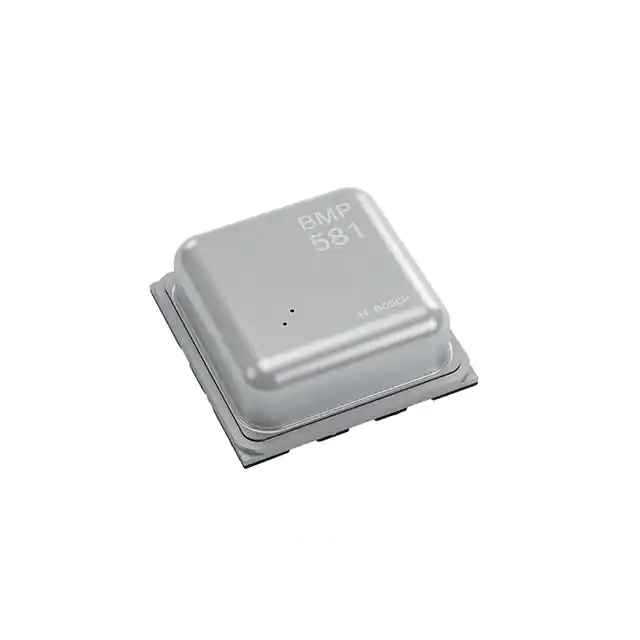
BMP581
Bosch Sensortec
-
BMP384
Bosch Sensortec
-
2511020213301
Würth Elektronik
-
ILPS22QSTR
STMicroelectronics
Tech Hub

Operational amplifier guide covering op amp basics, feedback, ideal vs real op amps, common configurations, buffer circuits, offset, bias current, gain-bandwidth, slew rate, rail-to-rail limits and sel…

Jumper cables guide covering safe connection order, red and black clamp placement, final ground connection, cable gauge, length, clamp quality, copper vs CCA cables, jump starter comparison and battery…

LDO regulator guide covering low dropout voltage, power dissipation, thermal design, PSRR, output noise, capacitor stability, adjustable LDO circuits, LDO vs buck converter and datasheet selection chec…

Conditional Access Module guide covering CAM meaning, CI/CI+ interface, smart card authorization, DVB security workflow, TV and set-top box compatibility, internal electronics, ESD protection, connecto…

Guide to electronic component obsolescence covering EOL risk, PCN/PDN notices, last-time buy planning, replacement options, form-fit-function validation, counterfeit risk and BOM lifecycle management.

18650 battery guide covering lithium-ion cell basics, 3.6V/3.7V voltage, 4.2V charging, mAh and Wh capacity, protected cells, chargers, BMS, series-parallel packs, holders, welding and sourcing checks.…

Hall effect sensor guide covering working principle, linear and digital sensors, Arduino circuits, current sensing, speed detection, automotive applications, A3144 examples, signal filtering and datash…

Product Change Notification guide for electronic components, covering PCN meaning, PCN vs PDN/EOL, common change types, risk levels, form-fit-function review, engineering validation, BOM control, LTB/L…

A practical guide to blend door actuators, covering HVAC function, symptoms, location, AC and heater issues, reset and calibration, replacement cost, electrical diagnosis, compatibility checks, and rep…

Engineering guide to Raspberry Pi alternatives, covering chip-level differences, Orange Pi, ROCK, Jetson, Banana Pi, NanoPi, Compute Module, Pico, GPIO, camera, HAT compatibility, and replacement risks…


